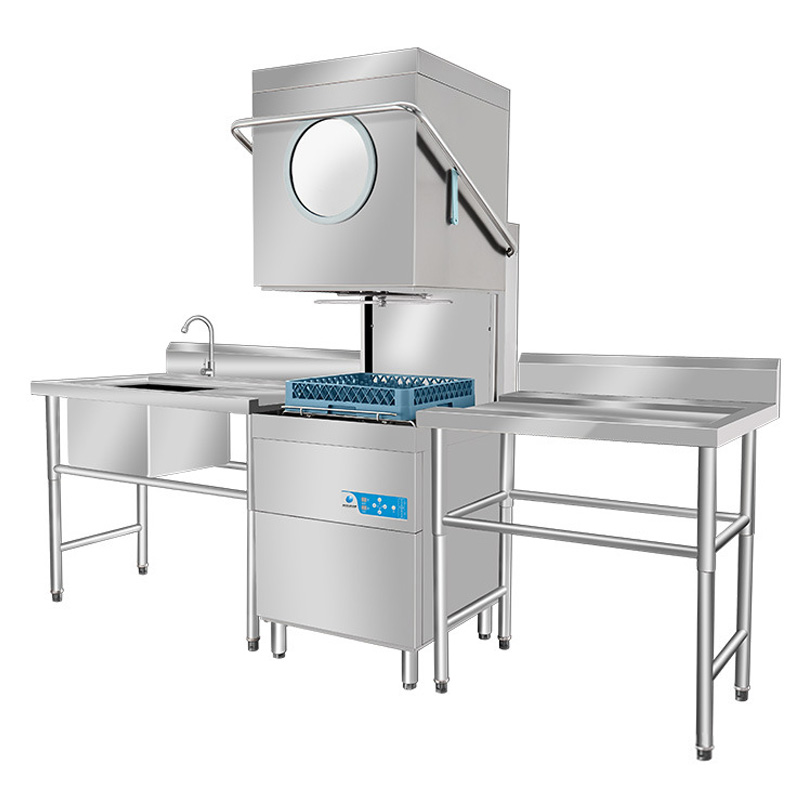
Paano Nakakaapekto ang Pagkonsumo ng Enerhiya ng Komersyal na Dishwasher sa Mga Gastos sa Operasyon?
Para sa mga may-ari ng restawran, mga tagapamahala ng hotel, at sinumang nagpapatakbo ng isang komersyal na kusina, ang mga gastos sa operasyon ay maaaring maging sanhi o makasira sa kakayahang kumita—at komersyal na dishwasher ang mga yunit ay isa sa pinakamalaking gumagamit ng enerhiya sa iyong espasyo. Hindi tulad ng mga residential na dishwasher, na tumatakbo ng ilang beses sa isang araw, komersyal na dishwasher ang mga modelo ay tumatakbo sa loob ng maraming oras araw-araw, nililinis ang daan-daan (o libu-libo) na mga rack ng pinggan, baso, at kagamitan. Ang kanilang pagkonsumo ng enerhiya—lalo na para sa pag-init ng tubig—ay direktang nakakaapekto sa iyong buwanang mga bayarin sa utility, at sa paglipas ng panahon, ang mga gastos na iyon ay maaaring higit na lumampas sa paunang presyo ng makina. Sa AT Cooker, gumugol kami ng 20 taon sa pagdidisenyo ng energy-efficient komersyal na dishwasher mga modelo na nagbabalanse ng pagganap sa pagtitipid. Sa gabay na ito, babalangkasin namin kung paano komersyal na dishwasher ang paggamit ng enerhiya ay nakakaapekto sa iyong kita, at kung paano ang pagpili ng tamang modelo (tulad ng aming ZFGT series) ay makakatulong sa iyo na bawasan ang mga gastos nang hindi isinasakripisyo ang kalinisan o pagsunod.
1. Ang Mga Komersyal na Yunit ng Dishwasher ay Malaking Gumagamit ng Enerhiya, Kung Saan ang Pag-init ng Tubig ang Pinakamalaking Bahagi ng Pagkonsumo
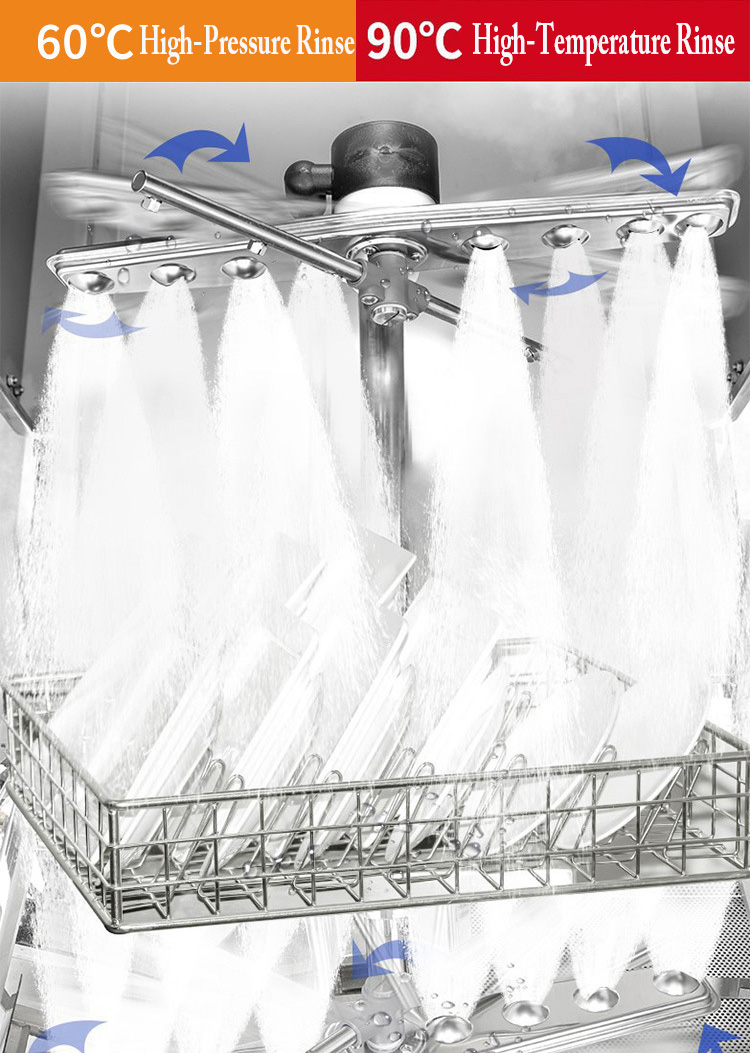
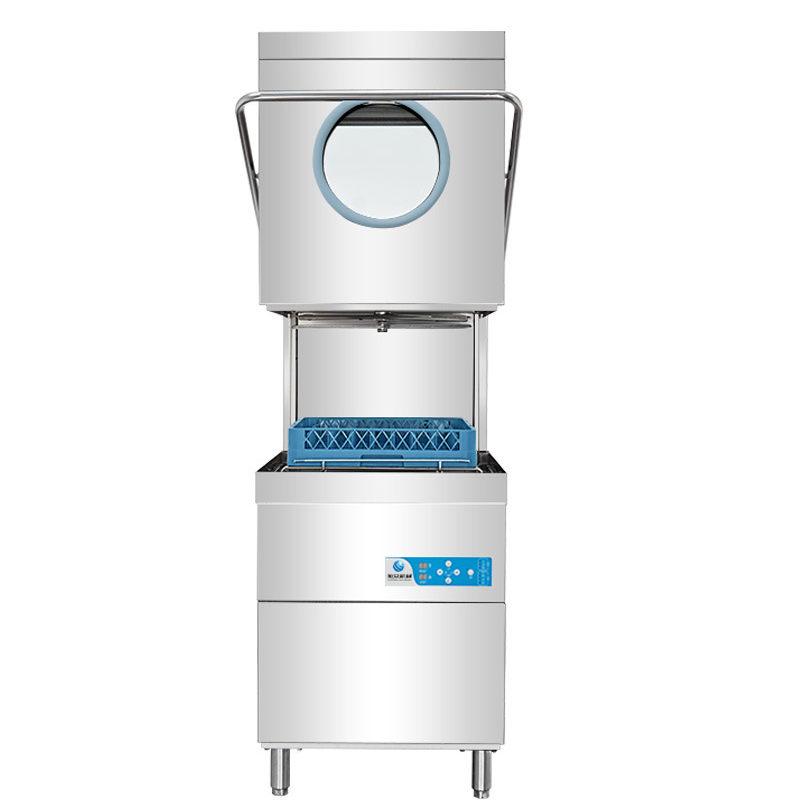
Ang unang bagay na dapat maunawaan tungkol sa komersyal na dishwasher paggamit ng enerhiya ay ang pag-init ng tubig ang nangingibabaw sa pagkonsumo—na bumubuo ng 60% hanggang 70% ng kabuuang enerhiya na ginagamit ng isang makina, ayon sa U.S. Department of Energy (DOE). Ito ay makatuwiran: ang mga komersyal na dishwasher ay nangangailangan ng mainit na tubig upang alisin ang grasa, naluto na pagkain, at bakterya, kung saan maraming modelo ang nangangailangan ng panghuling temperatura ng banlawan na 180°F (82°C) o mas mataas upang matugunan ang mga pamantayan ng health code. Halimbawa, isang karaniwang komersyal na dishwasher na may 9KW heating element (tulad ng aming AT Cooker ZFGT-A 90S) ay gumagamit ng karamihan sa kapangyarihan nito upang painitin ang malamig na tubig sa 95°C (203°F) para sa high-temperature sanitization.
AT Cooker Insight: Ang aming ZFGT-A 90S komersyal na dishwasher ay idinisenyo upang i-optimize ang kahusayan sa pag-init ng tubig. Gumagamit ito ng 9KW heating element na ipinares sa isang 65-degree rise booster heater—nangangahulugan na mabilis nitong mapataas ang temperatura ng tubig mula 30°C hanggang 95°C nang hindi nasasayang ang enerhiya sa sobrang pag-init. Ang naka-target na pag-init na ito ay nagbabawas sa hindi kinakailangang paggamit ng enerhiya kumpara sa mga mas lumang modelo na nagpapainit ng tubig sa labis na temperatura.
Upang ilagay ito sa perspektibo: isang komersyal na dishwasher na tumatakbo ng 100 rack bawat araw (isang tipikal na dami para sa isang katamtamang laki ng restawran) ay gumagamit ng humigit-kumulang 9 kWh ng enerhiya bawat oras. Kung ito ay tumatakbo ng 6 na oras araw-araw (peak meal times), iyon ay 54 kWh bawat araw—o 16,200 kWh bawat taon. Sa average na rate ng kuryente na $0.15/kWh, iyon ay $2,430 bawat taon para lamang sa enerhiya—sebelum na isinasaalang-alang ang mga gastos sa tubig. Para sa mas malalaking kusina na nagpapatakbo ng 200 rack bawat araw, ang mga numerong iyon ay doble sa $4,860 bawat taon. Ito ang dahilan kung bakit ang pag-unawa sa kahusayan sa pag-init ng tubig ay kritikal para sa pamamahala ng kagamitan sa kusina ng komersyal mga gastos.
2. Ang Mga Energy-Efficient na Komersyal na Modelo ng Dishwasher ay Nagbabawas ng Paggamit ng Tubig at Enerhiya Bawat Siklo, Nagpapababa ng Mga Bayarin sa Utility
Hindi lahat ng komersyal na dishwasher mga yunit ay pantay-pantay—ang mga energy-efficient na modelo ay maaaring magbawas ng paggamit ng tubig at enerhiya ng 20% hanggang 50% bawat siklo kumpara sa mga luma o mababang kalidad na makina. Ito ay nagiging direktang pagtitipid sa iyong mga bayarin sa utility. Halimbawa, ang aming AT Cooker ZFGT-A-2D undercounter dishwasher commercial uses just 0.66 gallons (2.5 liters) of water per rack and 8.6KW of power. In contrast, an inefficient undercounter model might use 1.2 gallons of water and 10KW of power per rack.
Let’s calculate the annual savings for a restaurant using 100 racks per day, 260 days per year:
Over 5 years, that’s $2,340 in savings—enough to cover the cost of routine maintenance or even offset a portion of the initial purchase price. Key features that make AT Cooker komersyal na dishwasher models efficient include:
- Low-flow spray arms: Deliver targeted water pressure to clean dishes without wasting water.
- Automatic water filling: Stops water flow once the tank reaches the optimal level, preventing overfilling.
- Variable power settings: Allows you to adjust energy use based on load size (e.g., 7KW for light loads, 9KW for heavy loads on our ZFGT-A 4D model).
3. High-Temperature Sanitizing Dishwasher Commercial Units Use More Energy Than Chemical-Sanitizing Options
Kapag pumipili ng isang komersyal na dishwasher, you’ll face a choice: high-temperature sanitization (using heat) or low-temperature sanitization (using chemicals). Both meet health standards, but they differ significantly in energy use—and thus operating costs. High-temperature komersyal na dishwasher models (like all AT Cooker units) use energy to heat water to 180°F (82°C) for the final rinse, while low-temperature models use 120°F (49°C) water and chemical sanitizers (like chlorine) to kill bacteria.
Important Note: High-temperature sanitization is preferred by many restaurants, hotels, and bars because it eliminates the need for chemical handling and reduces the risk of residue on dishes (critical for establishments serving sensitive customers, like those with allergies). However, it does come with higher energy costs.
Let’s compare the energy use of a high-temperature komersyal na dishwasher (AT Cooker ZFGT-A 90S, 9KW) and a low-temperature model (5KW):
- High-temperature model: 9KW per hour x 6 hours/day = 54 kWh/day = $8.10/day = $2,956.50/year
- Low-temperature model: 5KW per hour x 6 hours/day = 30 kWh/day = $4.50/day = $1,642.50/year
- Annual energy cost difference: $1,314
But low-temperature models aren’t entirely cheaper—you’ll need to budget for chemical sanitizers, which cost $300 to $500 per year. This reduces the net savings to $814 to $1,014 per year. For many restaurant kitchen equipment buyers, the trade-off isn’t worth it: high-temperature models offer better peace of mind (no chemical residue), faster cleaning cycles (60 seconds vs. 90 seconds for low-temp), and compatibility with all dish types (including delicate glassware). At AT Cooker, we prioritize high-temperature sanitization in our komersyal na dishwasher models because it aligns with our mission of “Cooking for a Healthier Life”—and we offset the energy cost with efficient heating design.
4. On-Demand Water Heating in Dishwasher Commercial Models Eliminates Separate Booster Heaters for Better Efficiency
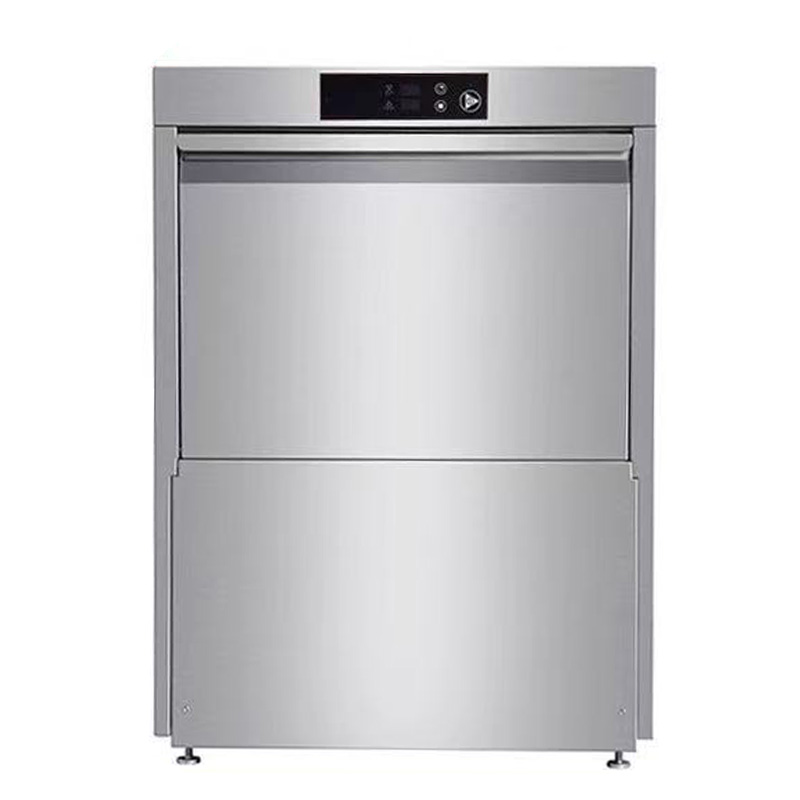
Many older komersyal na dishwasher units require a separate “booster heater”—a standalone device that heats water to sanitization temperatures before it enters the dishwasher. Booster heaters typically use 2KW to 3KW of energy and add another layer of inefficiency (heat loss between the heater and the dishwasher). Modern komersyal na dishwasher models, like our AT Cooker ZFGT-A 80S, integrate on-demand water heating directly into the machine, eliminating the need for a separate booster heater.
Eto ang epekto nito sa kahusayan at gastos:
- Walang pagkawala ng init: Ang tubig ay pinapainit sa loob ng dishwasher, kaya walang enerhiyang nasasayang sa pagpapanatiling mainit ng tubig habang ito ay dumadaloy mula sa isang hiwalay na pampainit.
- Nabawasan ang kabuuang paggamit ng enerhiya: Ang pinagsamang sistema ng pagpapainit (9KW para sa dishwasher + 0KW para sa booster) ay gumagamit ng 20-30% na mas kaunting enerhiya kaysa sa isang hiwalay na sistema (7KW dishwasher + 3KW booster).
- Pagtitipid sa espasyo: Ang on-demand heating ay nag-aalis ng pangangailangan para sa karagdagang espasyo sa sahig para sa isang booster heater—isang malaking kalamangan para sa maliliit na komersyal na kusina kung saan ang mga sukat ng komersyal na dishwasher ay mahalaga.
เดอะ International Association of Foodservice Equipment Manufacturers (IAFEM) ay nag-uulat na ang pinagsamang on-demand heating ay maaaring mabawasan ang komersyal na dishwasher’kabuuang paggamit ng enerhiya ng 15% taun-taon. Para sa karaniwang restaurant, iyon ay ₱364.50 na matitipid bawat taon (batay sa ₱2,430 na taunang gastos sa enerhiya)—sapat upang masakop ang 2-3 buwan ng gastos sa detergent.
5. Ang mga Energy Star Certified Dishwasher Commercial Units ay Sumusunod sa Mahigpit na Pamantayan sa Kahusayan upang Bawasan ang Mga Gastos sa Operasyon
Kung inuuna mo ang kahusayan sa enerhiya, hanapin ang komersyal na dishwasher mga modelong sertipikado ng Energy Star—isang pinagsamang programa ng U.S. EPA at DOE na nagtatakda ng mahigpit na pamantayan sa kahusayan para sa komersyal na kagamitan. Ang mga Energy Star certified commercial dishwasher ay dapat gumamit ng hindi bababa sa 15% na mas kaunting enerhiya at 20% na mas kaunting tubig kaysa sa mga modelong hindi sertipikado, ayon sa mga alituntunin ng programa.
AT Cooker Commitment: Habang ang aming komersyal na dishwasher mga modelo ay hindi pa Energy Star certified (nasa huling yugto na kami ng pagsubok), natutugunan o nalalampasan nila ang mga pamantayan sa kahusayan ng programa. Halimbawa, ang aming ZFGT-A-2D ay gumagamit ng 0.66 galon bawat rack—malayo sa maximum na 0.8 galon bawat rack ng Energy Star para sa mga undercounter model. Kapag sertipikado na, ang aming mga customer ay magiging karapat-dapat para sa karagdagang mga rebate (tingnan ang Seksyon 13) at mas malaking pangmatagalang pagtitipid.
Ang Energy Star ay nagbibigay ng tool sa paghahanap ng produkto upang matulungan kang ihambing ang mga sertipikadong komersyal na dishwasher unit. Kapag sinusuri ang mga modelo, bigyang-pansin ang dalawang pangunahing sukatan:
- Energy Factor (EF): Sinusukat kung gaano kahusay ginagamit ng makina ang enerhiya upang painitin ang tubig. Ang mas mataas na EF ay nangangahulugang mas mahusay na kahusayan.
- Water Factor (WF): Sinusukat ang paggamit ng tubig bawat rack. Ang mas mababang WF ay nangangahulugang mas kaunting paggamit ng tubig.
Halimbawa, ang isang Energy Star certified door-type komersyal na dishwasher ay may minimum na EF na 0.85 at maximum na WF na 0.5 galon bawat rack. Ang aming AT Cooker ZFGT-A 90S ay may EF na 0.92 at WF na 0.66 galon bawat rack—na naglalagay dito sa linya ng mga nangungunang sertipikadong modelo.
6. Ang Mga Gastos sa Pagpapainit ng Tubig ay Pinagsasama ang Mga Gastos sa Tubig at Enerhiya para sa Mga Komersyal na Yunit ng Dishwasher
Kapag kinakalkula kung paano komersyal na dishwasher nakakaapekto ang paggamit ng enerhiya sa mga gastos, mahalagang tandaan na ang mga gastos sa tubig at enerhiya ay magkakaugnay. Every gallon of water your dishwasher uses requires energy to heat—so wasting water also wastes energy. This “combined cost” is often overlooked but can add up quickly.
Let’s break down the combined cost of water and energy for a single rack in an AT Cooker ZFGT-A 90S komersyal na dishwasher:
- Water use per rack: 0.66 gallons
- Water cost per rack: 0.66 gallons x $0.01/gallon = $0.0066
- Energy to heat 0.66 gallons to 95°C: ~0.09 kWh (based on water heating calculations)
- Energy cost per rack: 0.09 kWh x $0.15/kWh = $0.0135
- Combined cost per rack: $0.0066 + $0.0135 = $0.0201
For 100 racks per day, that’s $2.01 per day—or $733.65 per year. For an inefficient model using 1.2 gallons per rack and 0.15 kWh per rack, the combined cost jumps to $0.024 + $0.0225 = $0.0465 per rack, or $1,697.25 per year. The difference? $963.60 per year—enough to buy a new set of kitchen tools and equipment or invest in employee training.
7. Regular Maintenance Preserves Peak Energy Efficiency of Dishwasher Commercial Machines Over Time
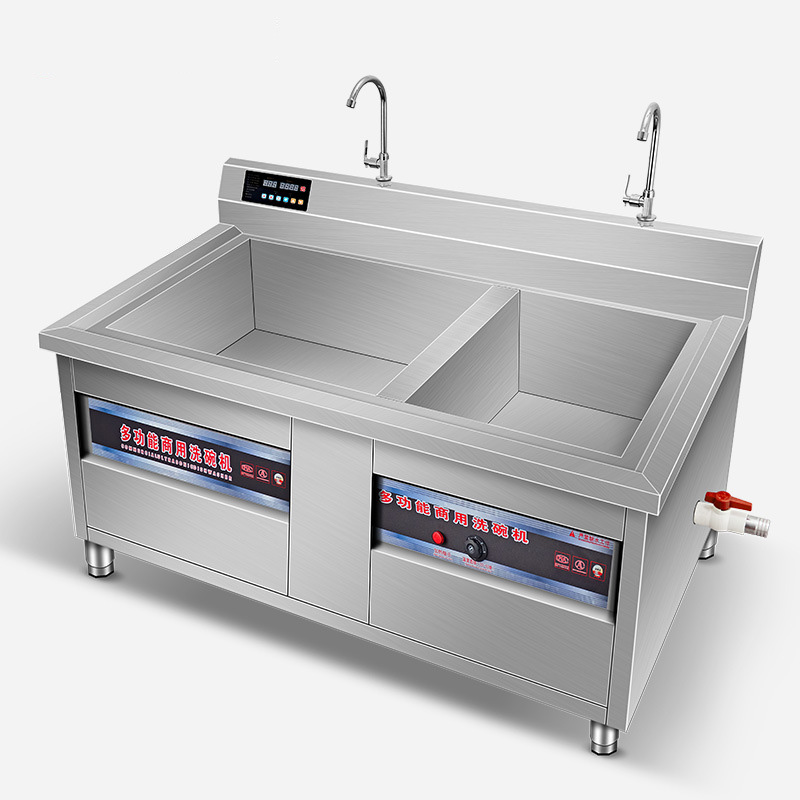
Kahit ang pinaka-mahusay komersyal na dishwasher will lose efficiency over time if not maintained properly. Mineral buildup (from hard water), clogged filters, and dirty spray arms force the machine to work harder—using more energy and water to get dishes clean. The USDA Food Safety and Inspection Service (FSIS) estimates that poor maintenance can reduce a komersyal na dishwasher’s efficiency by 10% to 20%.
မှာ AT Cooker, we include a detailed maintenance guide with every komersyal na dishwasher unit to help our customers preserve efficiency. Key maintenance tasks include:
- De-liming monthly: Hard water minerals build up on heating elements, reducing their ability to heat water. Use vinegar or a commercial de-liming solution to remove buildup—this alone can restore 5-10% of efficiency.
- Cleaning filters weekly: Clogged filters restrict water flow, forcing the pump to use more energy. Rinse filters under warm water and scrub gently with a brush to remove debris.
- Inspecting spray arms bi-weekly: Food particles can block spray nozzles, leading to uneven cleaning and longer cycle times. Soak spray arms in warm soapy water and clear nozzles with a toothpick if needed.
- Checking door seals quarterly: Worn seals allow heat to escape, so the machine uses more energy to maintain temperature. Replace seals if you notice cracks or leaks.
The cost of maintenance is minimal—$50 to $100 per year for de-liming solutions and replacement parts—but the savings are significant. A well-maintained komersyal na dishwasher uses 15% less energy than a neglected one, translating to $364.50 in annual savings (based on $2,430/year energy costs).
8. Insulated Tanks & Doors in Modern Dishwasher Commercial Units Retain Heat to Save Energy
Heat loss is a major contributor to inefficient komersyal na dishwasher energy use. Older models have thin, uninsulated tanks and doors that let heat escape during cycles—forcing the heating element to work overtime to maintain temperature. Modern models, like all AT Cooker komersyal na dishwasher units, use insulated tanks and doors to retain heat.
Our ZFGT series features 3-ply stainless steel insulation around the water tank and a double-layer insulated door. This design reduces heat loss by 40% compared to uninsulated models, according to our in-house testing. For a 9KW komersyal na dishwasher running 6 hours per day, this means:
- Uninsulated model: 54 kWh/day energy use
- Insulated AT Cooker model: 32.4 kWh/day energy use
- Daily energy savings: 21.6 kWh
- Annual energy savings: 7,884 kWh
- Annual cost savings: $1,182.60 (at $0.15/kWh)
Insulation also has a secondary benefit: it reduces the temperature in your dishroom, making it a more comfortable environment for staff. This can lower your kitchen’s overall cooling costs in warm months—another small but valuable savings.
9. Running Dishwasher Commercial Units During Off-Peak Hours Leverages Lower Electricity Rates
Many utility companies charge lower electricity rates during “off-peak” hours—typically overnight (10 PM to 6 AM) or on weekends—when overall demand is low. Running your komersyal na dishwasher during these hours can cut your energy costs by 30% to 50%.
Let’s compare peak and off-peak rates for a komersyal na dishwasher running 6 hours per day:
For 24-hour operations (like hotels or hospitals), this is easy to implement—simply schedule komersyal na dishwasher runs during night shifts. For restaurants with set hours, consider cleaning non-essential items (like backup glasses or pots) overnight. Many modern komersyal na dishwasher models, including our ZFGT series, have delay start features that let you program cycles to run during off-peak hours—no need for staff to be present.
10. Dishwasher Commercial Lifetime Costs: Energy & Water Outweigh Initial Purchase Price
Many kitchen owners focus too much on the initial purchase price of a komersyal na dishwasher and overlook lifetime costs. The truth is: the initial price is just a small fraction of what you’ll spend over the machine’s 7-12 year lifespan. Energy and water costs typically make up 60% to 70% of the total lifetime cost.
Let’s compare two komersyal na dishwasher options over a 10-year lifespan:
Even though the AT Cooker model costs $2,000 more upfront, it saves $12,230 over 10 years. This is why we always tell our customers: “Don’t buy based on price alone—buy based on lifetime value.” An efficient komersyal na dishwasher is an investment that pays for itself many times over.
11. Mga Advanced na Kontrol sa Mga Modelo ng Dishwasher ng Komersyal na I-optimize ang Mga Siklo upang Maiwasan ang Pagsasayang ng Enerhiya
Modern komersyal na dishwasher ang mga yunit ay may mga advanced na sistema ng kontrol na nag-o-optimize ng paggamit ng enerhiya sa pamamagitan ng pag-aayos ng haba ng siklo at paglalaan ng mapagkukunan batay sa kung gaano karumi ang mga pinggan. Halimbawa, ang aming AT Cooker ZFGT-A 4D nagtatampok ng 3-antas na mga setting ng oras ng paghuhugas (60/90/120 segundo) at mga sensor ng dumi na nakakadetect ng mga particle ng pagkain sa tubig.
Narito kung paano nakakatipid ng enerhiya ang mga kontrol na ito:
- Mga sensor ng dumi: Kung ang tubig ay bahagya lamang na marumi (hal., para sa malinis na baso), ang makina ay gumagamit ng mas maikling 60-segundong siklo at mas kaunting enerhiya. Para sa mabigat na maruming pinggan (hal., mga kaldero na may nakaluto na pagkain), awtomatiko itong lumilipat sa isang 120-segundong siklo—hindi na kailangang hulaan ng mga tauhan.
- Mga sensor ng karga: Ang ilang mga modelo (tulad ng aming paparating na ZFGT-A 120S) ay nakakadetect kung gaano karaming mga rack ang nakakarga at inaayos ang paggamit ng tubig/enerhiya nang naaayon. Ang kalahating karga ay gumagamit ng 50% na mas kaunting enerhiya kaysa sa isang buong karga.
- Auto-shutoff: Kung ang makina ay hindi ginagamit sa loob ng 15 minuto o higit pa, ito ay awtomatikong magsasara upang maiwasan ang pagsasayang ng enerhiya sa standby mode.
Tinatantiya ng DOE na ang mga advanced na kontrol ay maaaring mabawasan ang komersyal na dishwasher’paggamit ng enerhiya ng 10% taun-taon. Para sa karaniwang restawran, iyon ay $243 na matitipid bawat taon—sapat upang masakop ang gastos ng isang bagong hanay ng mga spray arm o filter.
12. Ang Pagtaas ng Mga Rate ng Utility ay Nagpapalala sa Mga Panganib sa Gastos sa Operasyon ng Mga Hindi Epektibong Modelo ng Dishwasher ng Komersyal
Ang mga rate ng utility ay tumataas—ang mga gastos sa kuryente ay tumaas ng 4.3% taun-taon sa nakalipas na dekada, ayon sa U.S. Energy Information Administration (EIA). Ang trend na ito ay nangangahulugan na ang agwat sa pagitan ng mahusay at hindi mahusay komersyal na dishwasher ang mga gastos sa operasyon ay lalong lalaki sa paglipas ng panahon.
I-project natin ang epekto ng 4.3% taunang pagtaas ng rate ng kuryente sa loob ng 5 taon:
Sa Taon 5, ang hindi epektibong modelo ay nagkakahalaga ng $1,407.33 na mas mahal bawat taon kaysa sa AT Cooker model—mula sa $1,182.60 sa Taon 1. Ito ay nagpapakita na ang pamumuhunan sa isang mahusay komersyal na dishwasher ay hindi lamang tungkol sa pagtitipid ng pera ngayon—ito ay tungkol sa pagprotekta sa iyong negosyo mula sa mga pagtaas ng gastos sa hinaharap.
13. Mga Rebate para sa Mga Modelo ng High-Efficiency Dishwasher ng Komersyal ay Nagbabawas sa Paunang Pamumuhunan
Maraming mga ahensya ng gobyerno at mga kumpanya ng utility ang nag-aalok ng mga rebate para sa pagbili ng mga high-efficiency komersyal na dishwasher mga yunit. Ang mga rebate na ito ay maaaring makabawi ng 10% hanggang 20% ng paunang presyo ng pagbili, na ginagawang mas abot-kaya ang mga mahusay na modelo.
Mga halimbawa ng mga programa ng rebate ay kinabibilangan ng:
- PG&E (California): Nag-aalok ng hanggang $1,000 sa mga rebate para sa Energy Star certified commercial dishwashers.
- Con Edison (New York): Provides $500 to $750 rebates for high-efficiency commercial dishwashers.
- Federal Energy Management Program (FEMP): Offers rebates for government and military facilities purchasing efficient commercial kitchen equipment.
AT Cooker Support: Our team can help you find rebate programs in your area and assist with the application process. For example, a customer in California who purchases our ZFGT-A 90S ($6,000) could receive a $1,000 PG&E rebate—lowering the net cost to $5,000. When combined with $1,182.60 in annual energy savings, the machine pays for itself in just 4.2 years.
To find rebates in your area, use the Energy Star Rebate Finder or contact your local utility company directly. Rebate amounts vary by location and model, but they’re almost always worth pursuing.
Conclusion: Choose Efficiency to Control Dishwasher Commercial Operating Costs
The energy consumption of a komersyal na dishwasher has a profound impact on your operating costs—from monthly utility bills to long-term lifetime expenses. By choosing an efficient model (like AT Cooker’s ZFGT series), prioritizing features like insulated tanks and on-demand heating, and following a regular maintenance schedule, you can cut energy and water costs by 20% to 50%. Over time, these savings will far exceed the initial purchase price of the machine.
မှာ AT Cooker, we’re committed to designing komersyal na dishwasher units that balance performance, efficiency, and affordability. Our models are built with 304# stainless steel bodies for durability, high-temperature sanitization for compliance, and energy-saving features to lower your costs. Whether you need an undercounter model for a small bar or a floor-standing unit for a large restaurant, we have a komersyal na dishwasher solution that fits your needs.
Contact us today to learn more about our energy-efficient komersyal na dishwasher models and how they can help you reduce operating costs. With our 20 years of experience in kagamitan sa kusina ng komersyal, we’re here to be your trusted partner in building a more profitable, sustainable kitchen.