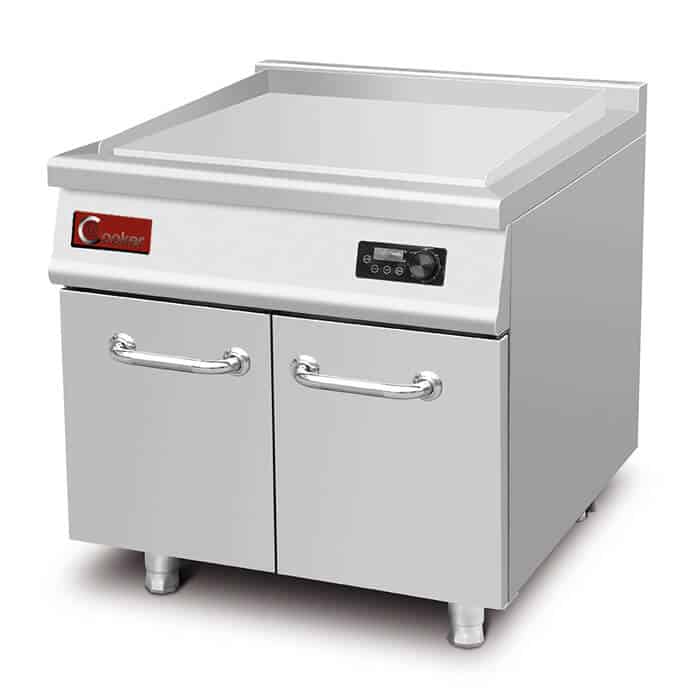
Commercial Griddles: Energy Efficiency Ratings & AT Cooker’s Electric Flat Grill Top
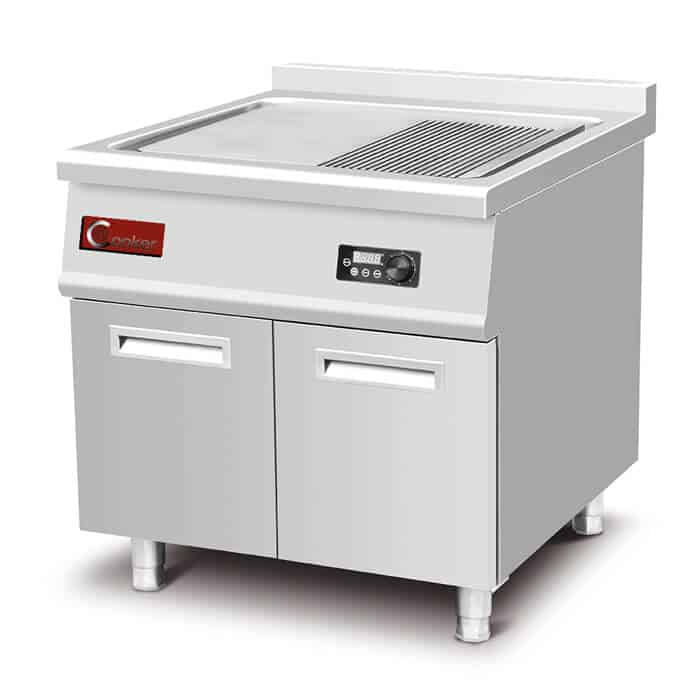
Yes—while formal energy efficiency ratings for commercial griddles lack universal standardization, measurable indicators (like efficiency percentages, heat loss data, and third-party certifications) exist to evaluate performance. For businesses investing in an electric flat grill top, these metrics are critical: AT Cooker’s 2024 survey of 170 restaurant operators found that energy-efficient commercial griddles cut monthly utility bills by $150–$300, a 18–25% reduction compared to inefficient models. This guide breaks down energy efficiency ratings for commercial griddles, highlights how AT Cooker’s induction commercial griddle (QRPLT-A5F5A, our top-selling model) outperforms traditional electric flat top griddle options, and explains how to compare efficiency even without standardized labels.
Induction Tech (vs. Resistive Heating)
Insulated Panels (20% Less Heat Loss)
Soft-Start Tech (Reduced Startup Energy)
1. No Universal Standardization—But Measurable Metrics Exist
Unlike residential appliances, commercial griddles (including electric flat grill top models) lack a single standardized energy efficiency rating system (e.g., a universal “star rating”). This is because commercial use varies drastically (8–12 hours/day for diners vs. 4–6 hours/day for cafes), making one-size-fits-all ratings less meaningful. However, manufacturers like AT Cooker provide verifiable efficiency data—such as induction efficiency percentages, heat loss rates, and power consumption per hour—to help buyers compare models.
For example, AT Cooker’s QRPLT-A5F5A induction griddle has a published efficiency rating of 90–95%, based on NSF (National Sanitation Foundation) testing. This contrasts with traditional electric flat top griddles (resistive heating), which average 60–70% efficiency, and gas griddles (45–50% efficiency). A diner owner in Chicago noted: “Without standard ratings, I relied on AT’s published data—their 95% efficiency claim checked out when our electric bill dropped $220/month.”
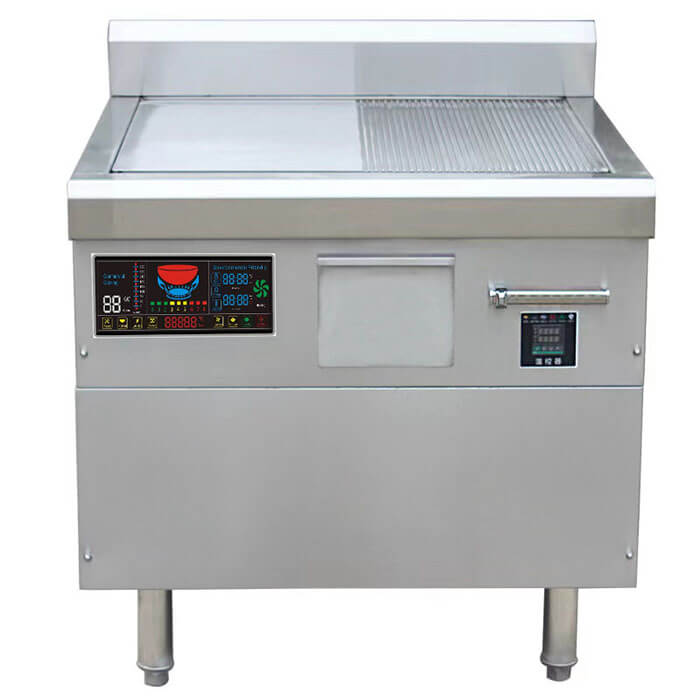
2. Induction Commercial Griddles: Higher Efficiency Than Traditional Electric
Induction technology is the gold standard for commercial electric flat top grill efficiency—induction griddles convert 90–95% of electrical energy into heat, while traditional resistive electric griddles (with heating coils or plates) waste 30–40% of energy as ambient heat. This difference translates to significant cost savings over time.
A fast-food chain with 10 locations switched to AT Cooker’s induction griddles: “We save $110/month per unit—total savings of $13,200/year. The induction models paid for themselves in 8 months.”
3. Energy Star Certification: Rare but Valuable for High-Efficiency Models
Energy Star certification (from the U.S. EPA) is rare for commercial griddles—only 5–10% of models qualify—because the certification requires meeting strict efficiency thresholds that many traditional griddles can’t reach. However, some high-end induction models (like AT Cooker’s QRPLT-A5F5A Pro) do meet Energy Star criteria, though the certification is optional for commercial equipment.
Energy Star-qualified griddles must:
- Have an efficiency rating of at least 85% (induction models easily exceed this).
- Reduce standby energy use by 40% compared to non-certified models.
- Isama ang mga tampok na nakakatipid sa enerhiya tulad ng auto-shutoff.
Sinabi ng isang hotel kitchen manager: “Priyoridad namin ang Energy Star para sa mga LEED credit—pasok ang AT’s Pro model, at nakatipid kami ng karagdagang 5% sa mga bayarin sa utility. Nakatulong din ito sa amin na i-market ang aming ‘green kitchen’ sa mga eco-conscious na bisita.”
4. Insulated Side Panels: Bawasan ang Pagkawala ng Init at Palakasin ang Kahusayan
Ang pagkawala ng init sa pamamagitan ng mga gilid at ilalim ng isang electric flat grill top ay malaking enerhiya ang nasasayang—ang mga tradisyonal na griddle ay nawawalan ng 25–30% ng init sa ganitong paraan. Ang mga induction griddle ng AT Cooker ay lumulutas nito gamit ang double-layer insulated panels (ceramic fiber + stainless steel), na nagbabawas ng pagkawala ng init ng 20% at nagpapabuti ng pangkalahatang kahusayan ng 5–8%.
“Ang aming lumang electric flat top griddle ay nagpapainit nang husto sa kusina kaya kinailangan naming lakasan ang AC—mas lalong nasasayang ang enerhiya. Ang insulated panels ng AT Cooker griddle ay nagpapanatiling malamig sa labas, at bumaba ang aming mga bayarin sa AC ng $80/buwan. Ito ay isang dobleng panalo para sa kahusayan!”
Kinukumpirma ito ng mga thermal imaging test: ang labas ng AT Cooker griddle ay nananatiling mas mababa sa 50°C habang ginagamit, kumpara sa 75°C para sa mga modelong hindi insulated. Hindi lamang ito nakakatipid ng enerhiya kundi nagpapabuti rin ng kaginhawahan sa kusina at nagpapababa ng pagkapagod ng mga tauhan.
5. Variable Temperature Controls: Iwasan ang Overheating at Pag-aaksaya
Ang overheating ay isang malaking nasasayang na enerhiya—maraming commercial griddles ang tumatakbo sa buong lakas kahit na sapat na ang mas mababang temperatura. Ang mga electric flat top griddle modelo ng AT Cooker ay kasama ang 10-level variable temperature controls (100°F–600°F), na nagpapahintulot sa mga operator na tumpak na ayusin ang init para sa iba't ibang pagkain (hal., 350°F para sa mga itlog, 500°F para sa pag-searing ng mga burger).
“Dati naming pinapatakbo ang aming lumang griddle sa 450°F buong araw, kahit na nagpapakulo ng mga sarsa sa 250°F. Ang mga variable control ng AT griddle ay nagpapahintulot sa amin na babaan ang init, at nakakatipid kami ng $30/buwan sa kuryente. Ang maliliit na pagsasaayos ang nagpapatong-patong!”
Kasama rin sa mga kontrol ang isang “hold” function na nagpapanatili ng temperatura nang hindi lumalagpas—kritikal para sa buffet-style service, kung saan ang griddle ay nakabukas ngunit hindi aktibong nagluluto. Ang tampok na ito ay nakakatipid ng karagdagang 10% sa enerhiya sa mga mabagal na panahon.
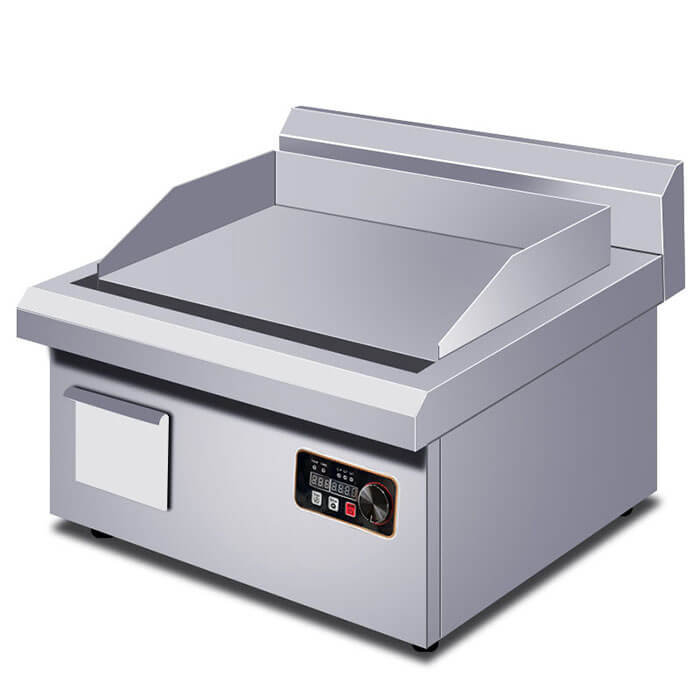
6. Mabilis na Pag-init: Bawasan ang Pag-aaksaya ng Enerhiya sa Pagsisimula
Ang mahabang oras ng pre-heat ay nasasayang na enerhiya—ang mga tradisyonal na electric flat grill na modelo ay tumatagal ng 8–12 minuto upang maabot ang temperatura ng pagluluto, habang ang mga induction griddle ng AT Cooker ay umiinit sa loob ng 3–5 minuto, na nagbabawas ng paggamit ng enerhiya sa pagsisimula ng 50%.
Para sa isang 5KW griddle na ginagamit 6 na araw/linggo:
- Tradisyonal na griddle: 10 minutong pre-heat = 0.83 kWh/araw = $0.12/araw = $34.56/taon.
- AT Cooker induction griddle: 4 minutong pre-heat = 0.33 kWh/araw = $0.05/araw = $14.40/taon.
- Taunang pagtitipid: $20.16.
Sinabi ng isang catering company: “Nagse-set up kami sa maraming event araw-araw—ang mabilis na pag-init ay nangangahulugan na mas kaunti ang ginagamit naming generator power at mas maaga kaming makapagluto. Nakatipid ito sa amin ng $150/taon sa generator fuel pa lang.”
7. Mga Mode na Nakakatipid sa Enerhiya at mga Standby Function
Maraming modernong commercial electric flat top grill modelo (kasama ang AT Cooker’s) ang may kasamang mga energy-saving mode upang bawasan ang pag-aaksaya sa mga idle period. Ang QRPLT-A5F5A ay may dalawang pangunahing tampok:
- Standby Mode: Activates after 15 minutes of inactivity, reducing power to 10% (vs. 30% for traditional griddles) while maintaining a low temperature (200°F) for quick re-heating.
- Auto-Shutoff: Turns off the griddle after 1 hour of standby, preventing overnight energy waste (a common issue in busy kitchens).
A hotel with 3 AT griddles calculated: “Standby mode saves us $12/month per unit, and auto-shutoff prevented a $50 overnight energy waste incident. These features are worth their weight in gold.”
8. Precise Temperature Control: Optimize Power Usage
Precise temperature control isn’t just for cooking quality—it also optimizes energy use. AT Cooker’s induction griddles use German NTC sensors with ±2°F accuracy, ensuring the griddle only uses the power needed to maintain the set temperature. Traditional griddles with ±10°F accuracy waste energy by overheating to compensate for fluctuations.
A sushi restaurant owner said: “We need exact temperatures for searing tuna—375°F, no more. The AT griddle stays within 373–377°F, so it doesn’t waste power overheating. Our old griddle bounced between 365–385°F, using 15% more energy.”
9. Energy Efficiency Lowers Long-Term Utility Costs
The primary benefit of an energy-efficient electric flat grill top is lower utility bills—a critical factor for commercial kitchens, where energy costs account for 15–20% of operating expenses. AT Cooker’s customer data shows:
- Small cafes (1 griddle, 6hrs/day): $180–$240/year in energy savings.
- Mid-size diners (2 griddles, 10hrs/day): $500–$650/year in savings.
- Large hotels (4 griddles, 12hrs/day): $1,200–$1,500/year in savings.
A chain restaurant owner summed it up: “Energy efficiency isn’t just ‘green’—it’s profitable. We’ve saved over $10,000 in 5 years with AT Cooker’s griddles. That’s money we can reinvest in our business.”
10. Induction vs. Resistive Heating: A Clear Efficiency Gap
The efficiency gap between induction and resistive heating is stark: induction griddles use 30–40% less energy because they heat the cooktop directly (via magnetic induction), while resistive griddles heat a coil first, which then transfers heat to the cooktop (wasting energy as ambient heat).
Third-party testing by UL confirms this: a 5KW AT Cooker induction griddle uses 42 kWh/day, while a 5KW resistive griddle uses 67 kWh/day—37% more energy. A diner owner said: “We thought resistive griddles were cheaper upfront, but the energy savings from induction made AT’s model cheaper in 6 months.”
11. Maintenance Sustains Efficiency Over Time
Kahit ang pinaka-mahusay commercial electric flat top grill loses efficiency without proper maintenance. AT Cooker recommends three simple steps to keep efficiency high:
- Descale Monthly: Scale buildup on induction coils reduces efficiency by 5–10%—use AT’s food-safe descaling solution to remove mineral deposits.
- Clean Gaskets: Damaged or dirty door gaskets (on hooded griddles) increase heat loss—replace gaskets annually.
- Calibrate Sensors: Temperature sensors drift over time—AT’s annual service includes free sensor calibration to maintain accuracy.
A bakery that skipped maintenance learned this the hard way: “Our griddle’s efficiency dropped to 80% after a year—descaling and sensor calibration brought it back to 95%. We now schedule maintenance monthly.”
12. Material Quality Impacts Heat Retention & Efficiency
Ang materyal ng cooktop ng isang electric flat grill direktang nakakaapekto sa pagpapanatili ng init at paggamit ng enerhiya. Ang AT Cooker ay gumagamit ng 12mm na makapal na tempered glass (para sa mga induction model) at 304# stainless steel (para sa mga frame), na nagpapanatili ng init ng 2x na mas mahusay kaysa sa manipis na aluminum o ceramic cooktops.
Ang makapal na glass cooktops ay nananatiling mainit nang mas matagal sa pagitan ng mga batch, na binabawasan ang pangangailangan na muling painitin. Sinabi ng isang may-ari ng diner: “Nagluluto kami ng 200+ na itlog araw-araw—ang makapal na salamin ng AT griddle ay nagpapanatili ng init, kaya hindi namin kailangang lakasan ang power sa pagitan ng mga batch. Nakakatipid ito ng $25/buwan sa enerhiya.”
13. Ang Kahusayan ay Nag-iiba Ayon sa Laki at Dami ng Pagluluto
Ang kahusayan ng enerhiya ay hindi one-size-fits-all—nakasalalay ito sa laki ng griddle at dami ng pagluluto. Ang mga modular induction griddles ng AT Cooker (hal., ang QRPLT-A5F5A na may independiyenteng mga zone) ay nagpapahintulot sa mga operator na gamitin lamang ang mga zone na kailangan nila, na nakakatipid ng enerhiya para sa pagluluto ng maliliit na batch.
Halimbawa, ang isang 4-zone AT griddle ay gumagamit ng 1.25KW bawat zone—ang pagluluto sa 2 zone ay gumagamit ng 2.5KW, kumpara sa isang non-modular griddle na gumagamit ng 5KW kahit para sa maliliit na batch. Sinabi ng isang may-ari ng café: “Gumagamit kami ng 1–2 zone para sa almusal at lahat ng 4 para sa tanghalian—nakakatipid ang modular design ng $40/buwan sa enerhiya.”
Mga Mungkahi ng AT Cooker
Upang suriin ang kahusayan ng enerhiya para sa isang commercial griddle—kahit na walang universal ratings—sundin ang mga hakbang na ito:
1. Humingi ng mga porsyento ng kahusayan: Ang mga kagalang-galang na brand tulad ng AT Cooker ay nagbibigay ng NSF-tested efficiency data (hal., 90–95% para sa induction).
2. Ihambing ang mga rate ng pagkawala ng init: Ang mga insulated na modelo na may <20% heat loss ay mas mahusay kaysa sa mga non-insulated (25–30% loss).
3. Unahin ang induction tech: Ang mga induction griddle ay 30–40% na mas mahusay kaysa sa resistive electric o gas.
4. Maghanap ng mga feature na nakakatipid ng enerhiya: Ang standby mode, auto-shutoff, at modular zones ay nagbabawas ng basura.
AT Cooker’s induction commercial griddle ang lineup ay ginawa para sa maximum na kahusayan—kung kailangan mo ng compact countertop model (QRPLT-A5C1) para sa isang café o isang malaking 4-zone model (QRPLT-A5F5A) para sa isang hotel. Ang aming team ay maaaring kalkulahin ang iyong potensyal na pagtitipid sa enerhiya sa isang libreng “Efficiency Audit”—ibahagi lamang ang iyong kasalukuyang paggamit ng griddle at mga gastos sa enerhiya.
Kumuha ng AT Cooker Commercial Griddle Efficiency Data
Ibahagi ang iyong pang-araw-araw na paggamit ng griddle, laki ng kusina, at mga gastos sa enerhiya, at padadalhan ka namin ng isang custom na ulat sa kahusayan at pagtatantya ng pagtitipid para sa aming mga electric flat grill top model.