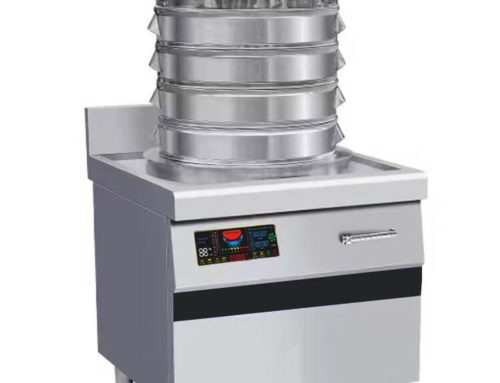
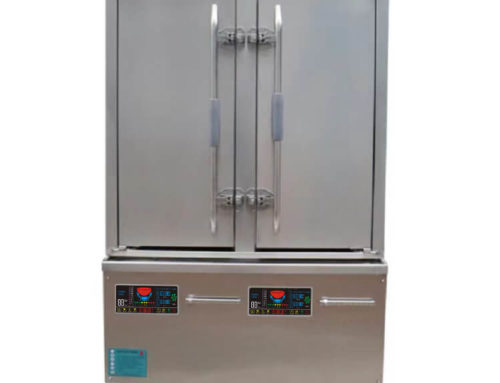
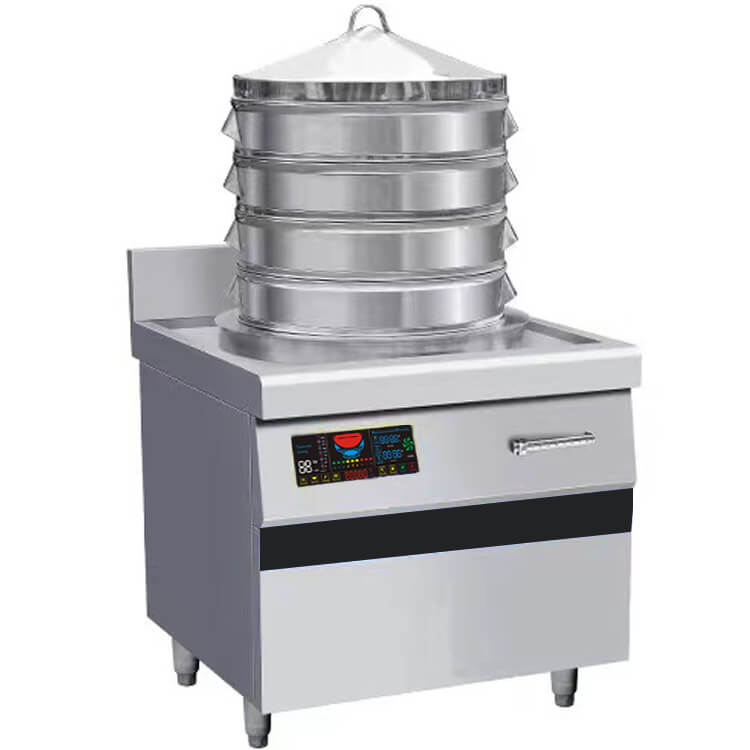
Surpassing Gas: How Commercial Induction Steamers Solve Uneven Heating Problems
5年保修 | 2年免费换货 | 1年免费退货
AT Cooker 执行洞察: The “Cold Corner” is the nemesis of bulk cooking. In a traditional 24-tray gas steamer, it is common to find the bottom trays burnt, the top trays dry, and the middle trays perfectly cooked—or vice versa. This uneven heating forces chefs to rotate trays manually, wasting labor and heat. The solution is physics, not magic. By switching to the AT 炊具商用电磁蒸饭机, you utilize a pressurized, sealed heating environment that distributes steam with 100% uniformity. This guide explores the induction vs gas commercial rice steamer debate, focusing on how we solved the heat distribution puzzle.
Uneven cooking is not just an annoyance; it is a food cost issue. If 20% of your rice or seafood is overcooked or undercooked, it goes in the trash. Gas steamers suffer from inherent thermodynamic flaws: they rely on passive convection and require venting for combustion gases, which creates drafts and temperature gradients.
Induction steamers are different. Because they don’t burn fuel, they can be hermetically sealed. Because they generate heat via magnetic friction, they create steam instantly and violently. This results in a “saturated steam environment” where temperature variance is less than 1°C from the top rack to the bottom. In this article, we analyze the engineering behind solving uneven cooking in large kitchens.
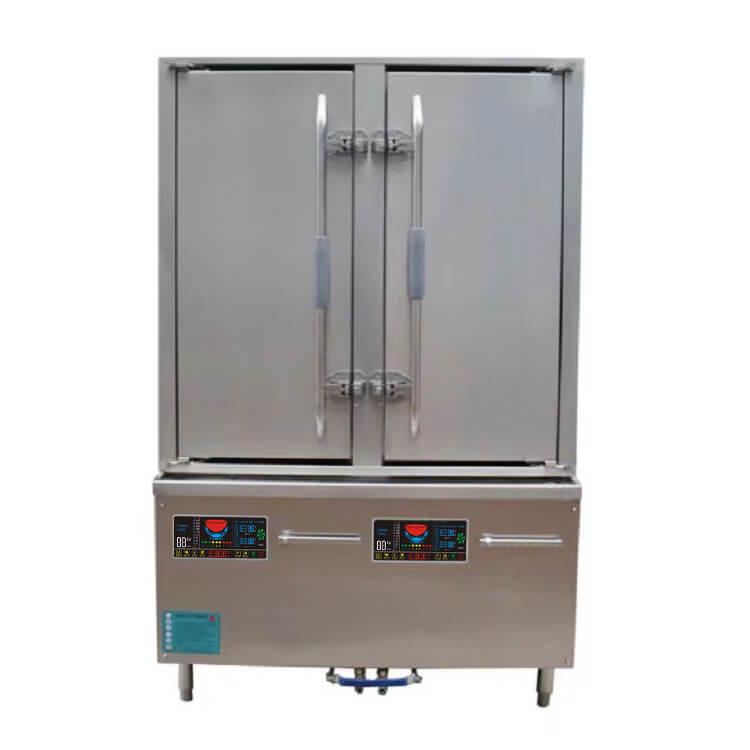
商用厨房设备 - 来自 AT Cooker
- 作为专业商用电磁炉设备的品牌制造商,AT Cooker 响应了餐厅和酒店的需求,并利用最新的电磁感应技术研究规范化的商用烹饪设备。.
- 这些无缝、真正的商用级商用烹饪设备使我们有机会将我们选择的设备整合到一个无缝的多功能烹饪设备中,从而创造一个高效、低成本、安全、绿色和可持续的商用厨房。我们有标准设备可以服务于许多商用厨房。.
- AT Cooker 始终提供专业服务。从材料、设计到生产,我们专注于质量、性能和可靠性,以确保为每一位客户提供最佳解决方案。您有商用厨房吗?我们将成为您最好的合作伙伴之一。.
工作电压
| 单相 | 三相 |
|---|---|
| 120V, 220V | 208V/ 240V, 380V, 480V |
全球现货 + 快速取货
| 美国 | 英国 | 德国 | 法国 |
|---|---|---|---|
| 意大利 | 西班牙 | 比利时 | 保加利亚 |
1. The Thermodynamics of Gas Combustion: Why Heat Concentrates at the Top
Gas steamers operate by burning fuel at the bottom to heat water. As hot air rises rapidly, it bypasses the middle trays and accumulates at the top of the cabinet. This creates a “chimney effect” where the top trays cook fastest, the middle trays lag, and the bottom trays near the water reservoir might even scorch.
This natural convection is uncontrollable in a standard cabinet. The result is uneven product: mushy rice at the top, raw rice in the middle. Why does gas steamer cook unevenly? Because heat follows the path of least resistance—up and out.
2. How Induction Technology Generates Saturation Steam from the Bottom Up
该 AT Cooker 感应蒸炉 works differently. It uses a high-power magnetic field to boil the water reservoir violently. This creates “Active Steam” with high kinetic energy.
This pressurized steam cloud doesn’t just drift up; it is forced up. It fills the cabinet from the bottom, pressurizing the entire chamber uniformly. This ensures that the bottom tray receives the same thermal energy as the top tray, solving the vertical temperature gradient problem.
3. Eliminating the “Cold Corner” Phenomenon in Large Capacity Cabinets
In wide 24-tray cabinets, corners are often dead zones where steam circulation is poor. This leads to rice that is undercooked on the edges.
Our induction units feature engineered steam baffles and a positive-pressure environment. The steam is directed to circulate horizontally as well as vertically, eliminating cold corners and ensuring even steam distribution commercial steamer performance across every square inch of every tray.
4. The Impact of Fluctuating Gas Pressure on Temperature Stability
Commercial kitchens share gas lines. When the fryers and ranges are all on during the dinner rush, gas pressure to the steamer drops. This lowers the flame, reduces steam production, and causes temperature fluctuations.
Induction is electrical. The 24KW power supply is regulated by an inverter. Regardless of what other equipment is running, the steamer receives constant power, generating a steady, unwavering supply of steam.
5. Comparing Thermal Recovery Rates: Why Induction Returns to Boil Faster
Opening the door to check food dumps heat instantly. A gas steamer takes minutes to recover its boiling point. During this lag, the rice cools and stops cooking.
Benefits of induction steam cabinet technology include instant torque. The moment the door closes, the induction coil ramps to full power in milliseconds, restoring the steam saturation almost immediately. This prevents the “stop-start” cooking that ruins texture.
5年保修 | 2年免费换货 | 1年免费退货
6. The Role of Airtight Seals and Insulation in Maintaining Uniform Internal Pressure
Gas steamers need air vents for combustion. These vents leak heat and pressure. Induction units are sealed systems.
该 AT Cooker cabinet uses heavy-duty magnetic gaskets to create an airtight seal. This allows pressure to build slightly (approx 0.02 bar), which forces heat into the core of the rice grains faster and more evenly than atmospheric pressure alone.
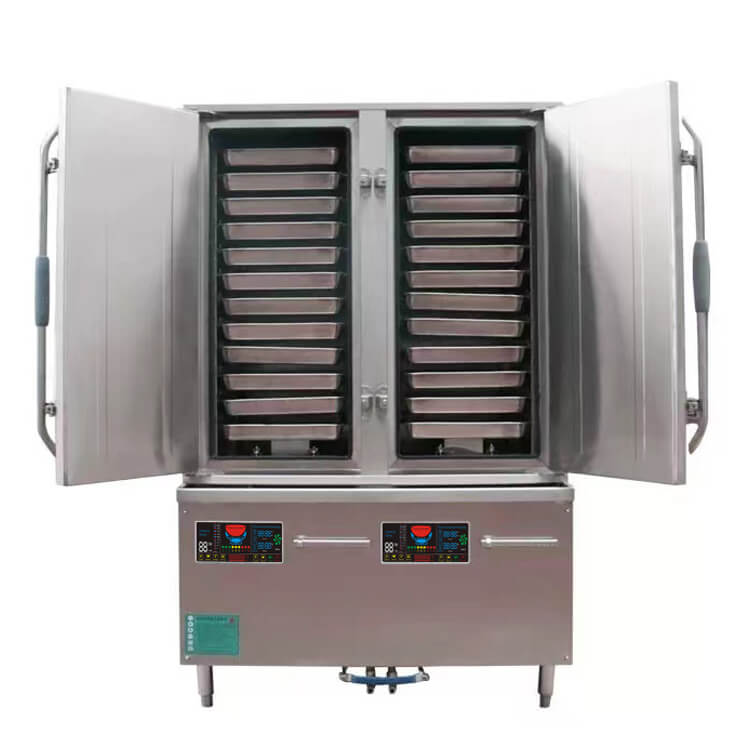
7. Eliminating the Need for Manual Tray Rotation During Cooking Cycles
With gas steamers, chefs often have to pause cooking, open the door, and swap top trays with bottom trays to ensure even cooking. This is labor-intensive and dangerous.
Because induction provides commercial kitchen heat distribution that is uniform, you load it, set it, and forget it. No rotation is required. The labor savings alone can pay for the machine over time.
8. The Long-Term Impact of Gas Nozzle Clogging on Heat Consistency
Gas burner nozzles clog with grease and carbon. As they clog, the flame becomes uneven, creating hot and cold spots in the water tank. This degrades performance over months.
Induction coils are sealed under the tank. They never clog. The performance on Day 1,000 is the same as Day 1, ensuring long-term consistency for your menu.
9. How Ambient Kitchen Airflow Disrupts Gas Flames but Not Induction Magnetic Fields
A kitchen fan or an open back door can blow a gas flame sideways, causing it to heat only one side of the water tank. This results in lopsided steam generation.
Magnetic fields are immune to wind. The AT Cooker unit heats the tank symmetrically regardless of the environment, making it ideal for drafty or outdoor kitchens.
10. PID Controller Precision: Reducing Temperature Variance to Less Than 1 Degree
Gas thermostats have a “swing” of +/- 5-10 degrees. Induction uses PID (Proportional-Integral-Derivative) controllers.
This digital brain monitors the temperature hundreds of times a second and adjusts the power instantly. It keeps the steam temperature locked within 1 degree of the set point, preventing the cycles of over-boiling and cooling that ruin delicate seafood or custards.
11. Assessing the “Chimney Effect” Heat Loss in Traditional Gas Steamer Designs
Gas steamers lose 40-50% of their energy up the flue (chimney). This waste heat not only costs money but also makes the kitchen uncomfortable.
Induction has no flue. 95% of the energy goes into the steam. This efficiency means you can cook faster with less power, significantly energy efficient industrial catering equipment.
12. Validating Cook Consistency Across All 24 Trays with Thermal Imaging
We test our units with thermal cameras. In a fully loaded cabinet:
- Top Tray Temp: 100.2°C
- Middle Tray Temp: 100.4°C
- Bottom Tray Temp: 100.5°C
This variance is negligible. It proves that induction technology has solved the vertical heat distribution problem.
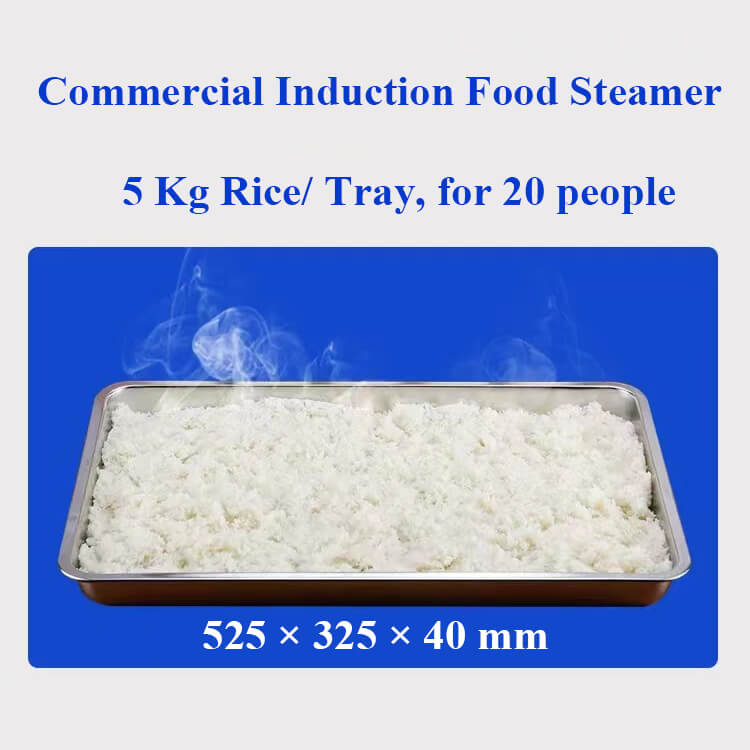
| 特征 | 燃气蒸炉 | AT 炒锅感应炉 |
|---|---|---|
| 热源 | Combustion (Uneven) | Magnetic (Uniform) |
| Pressure | Variable | Stable (Sealed) |
| 恢复 | 慢 | 即时 |
| Variance | High (Hot/Cold Spots) | Low (<1°C) |
5年保修 | 2年免费换货 | 1年免费退货
AT 烹饪锅的最终想法
Uneven heating is a solvable engineering problem. By replacing combustion with magnetic induction, the AT Cooker Commercial Rice Steamer delivers perfect, consistent results from the first tray to the last.
备货充足,可快速交付 美国、德国、法国、英国、比利时、意大利、西班牙和保加利亚, we can help you standardize your large-scale cooking. Visit our 关于我们 页面了解更多。.