选择合适的 商用煎炒锅 means matching the heating technology to your kitchen’s infrastructure, cooking needs, and efficiency goals. Electric, gas, and induction-powered models each have unique strengths. At AT Cooker, we’ve helped hundreds of clients select the right technology. Here’s a breakdown of the critical differences.
核心区别:电动 vs. 燃气 vs. 电磁感应商用煎炒锅
| 特征 | 电动 | 燃气 | 电磁炉 |
|---|---|---|---|
| 加热原理 | Resistive heating elements | Open flame (gas combustion) | Electromagnetic fields |
| 温度控制 | Precise (±5°F), programmable | Moderate (±15°F), manual | Very precise (±2°F), instant |
| 能源效率 | 70-85% | 45-55% | 90-95% |
| 加热速度 | Moderate (10-15 min to 350°F) | Fast (5-8 min) | Very fast (3-5 min) |
| 安装 | 3-phase power, no ventilation | Gas line + ventilation hood | 3-phase power, flat surface |
| 环境热量 | 低 | 高 | Very low |
| 维护 | 低 | High ($800-$1,200/yr) | 低 |
| 前期成本 | $12,000-$45,000 | $8,000-$30,000 | $15,000-$50,000 |
电动商用炒锅:精准与可编程性
电动 商用煎炒锅 rely on resistive heating elements, offering unmatched temperature control and consistency. Ideal for delicate cooking—braising meats, simmering sauces, blanching vegetables—where even slight fluctuations can ruin batches.
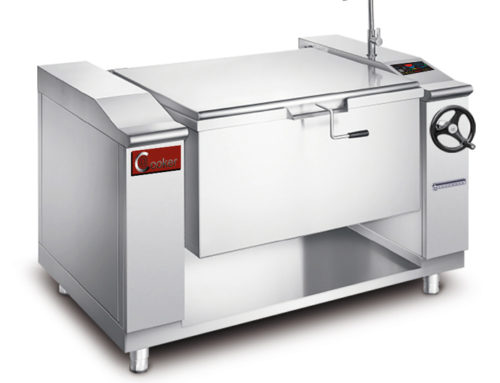
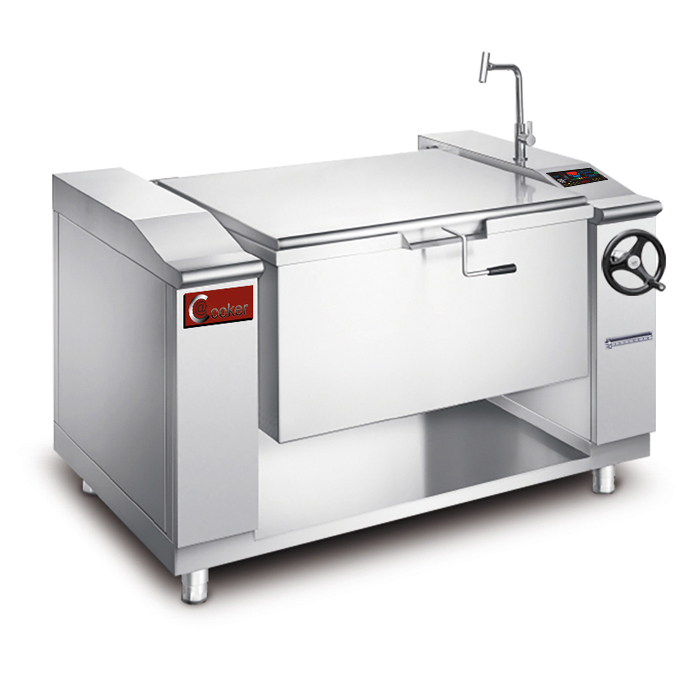
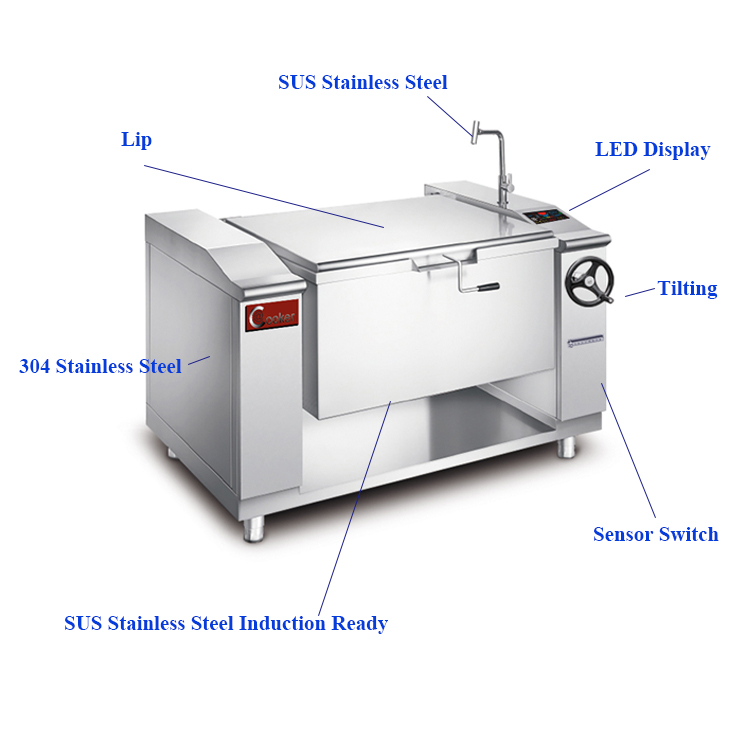
AT Cooker ATT-ABT-BP 300 Features: Precise temp control (194°F-572°F via sensors, LED display), motorized tilting (no manual strain), 10-hour programmable countdown with auto-fault detection, 304# stainless steel body with 5-year warranty. For a 150-seat restaurant, cuts cooking time by 20% vs. gas.
Key Advantage: Electric models need no ventilation hood, reducing installation costs by $3,000-$5,000 vs. gas. They also work in kitchens without gas lines (urban cafes, temporary catering sites).
燃气商用炒锅:速度与高温
燃气 商用煎炒锅 use open flames for rapid heat-up and high output. Traditional choice for high-volume operations needing quick large batches. Lower upfront costs appeal to budget-conscious startups.
Trade-Offs: Installation adds $5,000-$10,000 (gas line + ventilation hood). Temperature inconsistency (±15°F) causes hot spots. High maintenance: burners clog, gas lines need leak checks, hoods need monthly cleaning ($800-$1,200/yr). Open flames emit heat into the kitchen, increasing AC costs.
AT Cooker’s Perspective: We focus on electric and induction 商用煎炒锅 for long-term efficiency. However, our electric models now match gas heat output (up to 30KW) with better control—making gas less practical for most modern kitchens.
感应式商用炒锅:效率与速度
电磁炉 商用煎炒锅 use electromagnetic fields to heat the pan directly—the most energy-efficient and fastest-heating option. They generate almost no ambient heat, ideal for high-end restaurants and busy catering operations.
AT Cooker Induction Features: 95% energy efficiency (saves $1,500-$2,000/yr vs. gas), instant temperature adjustments (seconds vs. 1-2 min), safe design (no open flames or hot elements), flat cooking surface easy to clean.
Key Limitation: Induction models have the highest upfront cost ($15,000-$50,000) and require 3-phase power. However, long-term energy savings often offset the investment within 2-3 years.
如何选择:电磁炉 vs. 燃气炉 vs. 感应炉
合适的 商用煎炒锅 depend on infrastructure, energy costs, and cooking style:
- 选择电磁炉(Electric) 如果: You need precise control, have 3-phase power, want low maintenance. Ideal for restaurants, hotels, catering. AT Cooker’s ATT-ABT-BP 300 with motorized tilting and 5-year warranty.
- 选择燃气炉(Gas) 如果: You have existing gas lines and ventilation, need rapid high heat, prioritize low upfront costs. Factor in $5,000-$10,000 extra for installation.
- 选择感应炉(Induction) 如果: You want maximum efficiency, prioritize kitchen comfort. Ideal for high-end restaurants willing to invest upfront for long-term savings.
Contact AT Cooker to discuss your specific cooking needs and infrastructure for a tailored recommendation.
结论:适合大多数现代厨房的商用电热炒锅
For most kitchens, electric 商用煎炒锅 strike the best balance of precision, low maintenance, and long-term value. Gas offers speed but requires costly infrastructure; induction excels in efficiency but has high upfront costs. AT Cooker’s electric models deliver precise control, motorized tilting, and durable 304# steel construction lasting 7-10 years.
Ready to select? Contact AT Cooker for a custom quote. With 20 years of experience and a 5-year warranty, we’re your trusted partner. Commercial bratt pans from AT Cooker deliver efficient, durable cooking solutions.
常见问题
What is the main difference between electric, gas, and induction bratt pans?
Electric uses resistive heating elements for precise control (70-85% efficiency). Gas uses open flames for fast heating but lower efficiency (45-55%). Induction uses electromagnetic fields for the fastest heating and highest efficiency (90-95%), but has the highest upfront cost.
Which type of bratt pan is most energy-efficient?
Induction bratt pans are the most energy-efficient at 90-95%, followed by electric at 70-85%, and gas at 45-55%. For a kitchen using the pan 6 hours daily, induction saves $1,500-$2,000 annually compared to gas.
Do gas bratt pans require special installation?
Yes. Gas bratt pans need a dedicated gas line and commercial ventilation hood, adding $5,000-$10,000 to upfront costs. They also require monthly hood cleaning and annual gas line checks, adding $800-$1,200 in maintenance costs per year.
Can electric bratt pans match the heat output of gas models?
Yes. AT Cooker’s electric models now deliver up to 30KW of power, matching gas heat output while offering better temperature control (±5°F vs. ±15°F for gas) and no ventilation hood requirement.
What bratt pan does AT Cooker recommend for most restaurants?
AT Cooker recommends electric tilting bratt pans like the ATT-ABT-BP 300 for most restaurants. They offer precise temperature control, motorized tilting, programmable cooking cycles, 304# stainless steel construction, and a 5-year warranty—all without requiring a ventilation hood.