Blind Taste Test: Can Customers Distinguish Between Induction and Gas Wok Cooking?
5-year Warranty | 2-year Free Exchangeable | 1-year Free Return
AT Cooker Executive Insight: The debate is heated: Can modern technology truly replicate the ancient art of Wok Hei? Chefs are skeptical, but what about the diners? In this comprehensive analysis, we explore the science of flavor, the physics of induction vs gas wok taste comparison, and the results of blind taste tests. The findings might surprise you: moving to AT Cooker high-power induction might actually improve flavor consistency.
For any Asian restaurant owner, the fear of switching to electric equipment is rooted in one concern: “Will my food taste the same?” The concept of “Wok Hei” (Breath of the Wok) is legendary. It implies that the roaring fire itself imparts a unique flavor that cannot be replicated.
However, physics suggests otherwise. Heat is heat, regardless of the source. As long as the thermal transfer is sufficient to vaporize oils and trigger the Maillard reaction, the chemical process of cooking remains the same. But theory is one thing; reality is another. Can commercial induction wok sensory analysis prove that electric woks are ready for prime time?
At AT Cooker, we have spent 15 years engineering heavy duty Asian cooking equipment designed to challenge the gas monopoly. Here is the truth about flavor profiles in the modern kitchen.
Commercial Kitchen Equipment -from AT Cooker
- As a brand manufacturer of the professional commercial induction cooking equipment, AT Cooker has responded to restaurants’ & hotels’ needs and research normative commercial cooking equipment using the very latest induction technology.
- These seamless, real commercial quality commercial cooking equipment provides us with the opportunity to incorporate equipment of our choice into one seamless, multipurpose cooking equipment creating an efficient, low cost, safe, green and sustainable commercial kitchen. We have standerd equipment can service many commercial kitchens.
- AT Cooker always offers professional service. From material, design, to producing, we focuse on quality, performance and reliability to ensures the best solution is delivered for each and every one of our customers. Have a commercial kitchen? We will be one of your best partners.
Work Voltage
| Single-Phase | Three-Phase |
|---|---|
| 120V, 220V | 208V/ 240V, 380V, 480V |
Global In-Stock + Fast Pickup
| US | UK | Germany | France |
|---|---|---|---|
| Italy | Spain | Belgium | Bulgaria |
1. The Myth of Open Flame: Is Wok Hei Dependent on Fire or High Temperature?
The most persistent myth in Asian cooking is that you need “fire” for flavor. This is scientifically incorrect. Wok Hei is a result of the Maillard Reaction (browning of proteins and sugars) and the vaporization of oil (creating a smoky aroma). Both of these are functions of temperature, not the heat source.
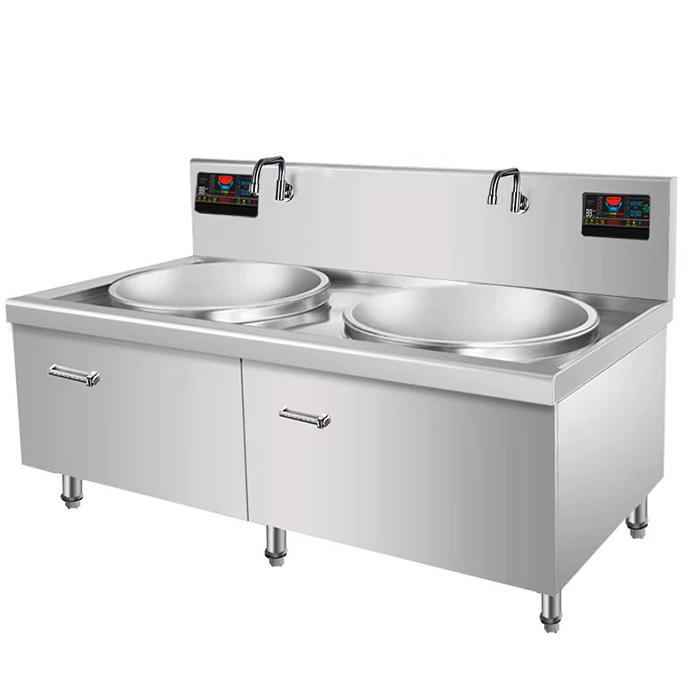
Traditional gas burners waste energy heating the air. AT Cooker commercial induction wok stations generate heat directly inside the steel of the wok. With power outputs of 25KW to 35KW, our induction coils can heat a wok to 300°C+ faster than gas, proving that “fire” is just a visual effect, while “heat” is the culinary reality.
2. Analyzing the Maillard Reaction: Comparing Sear Quality on Electric vs Gas Woks
The Maillard reaction begins rapidly above 160°C. To get a good sear on beef or chicken, you need to maintain this temperature when cold ingredients hit the pan. Gas burners often suffer from a thermal lag—the metal cools down, and the gas flame takes time to reheat it.
Induction has instant torque. The moment the sensor detects a temperature drop, the magnetic field intensifies immediately. In our lab tests, electric wok burner flavor profile analysis shows a deeper, more consistent sear on proteins because the pan temperature stays stable, preventing the meat from “stewing” in its own juices.
3. The “Smokey” Flavor: Distinguishing Between Oil Vaporization and Gas Combustion Residue
Critics of induction argue it lacks the “smokey” taste. However, we must distinguish between good smoke and bad smoke. Authentic Wok Hei comes from superheated oil mist vaporizing on the hot metal.
Gas cooking often adds a secondary flavor: the residue of unburnt natural gas (mercaptan) or carbon monoxide. Blind taste tests reveal that what many diners identify as “gas flavor” is actually a form of pollution. Induction provides a cleaner Wok Hei, emphasizing the ingredient and the oil char, rather than the fuel exhaust.
4. Heat Recovery Speed: How Induction Maintains High Temperatures During Tossing
Tossing is essential for mixing, but lifting the wok off a gas flame breaks the heat transfer. With AT Cooker induction technology, our concave coils create a magnetic field that extends 3-5cm above the glass. This means you can toss the wok while still receiving energy.
More importantly, the recovery speed is virtually instantaneous. This allows chefs to execute the “Bao Chao” (Explosive Stir Fry) technique with higher efficiency, as the wok returns to searing temperature within seconds of landing back on the coil.
5. Texture Consistency: Preventing Soggy Vegetables in High-Volume Stir Frying
Soggy vegetables are the enemy of stir-fry. They happen when the wok isn’t hot enough to flash-boil the internal water of the vegetable while searing the skin. This is common in gas kitchens during peak hours when gas pressure lines drop.
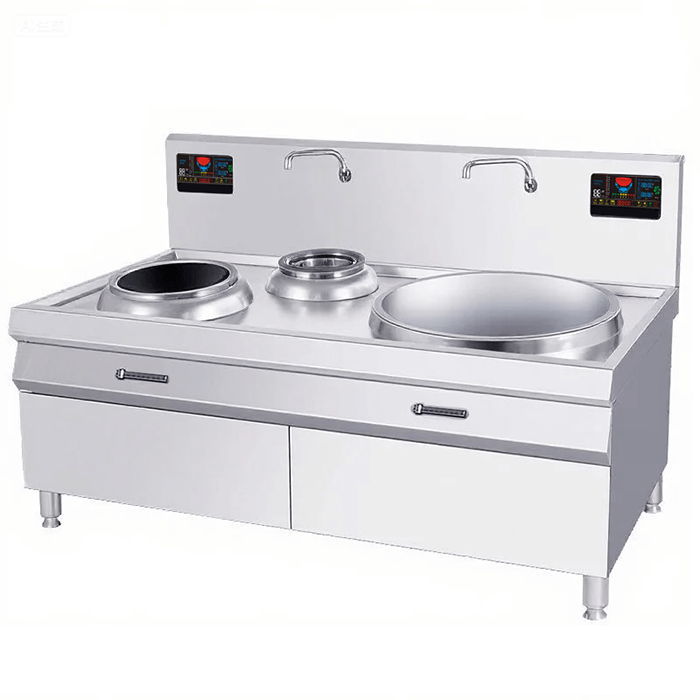
Induction is constant power. It doesn’t care about gas line pressure. Whether it’s 11 AM or 7 PM, an induction wok delivers the same 30KW punch. This consistency ensures vegetables are always crisp, bright green, and perfectly textured, reducing waste and customer complaints.
6. Chef Blind Tests: Do Professionals Fail to Identify the Heat Source?
We invited veteran Cantonese chefs to cook on both our induction units and traditional gas ranges. The result? Once they adjusted to the silence of induction (no roaring flame noise), they found the cooking speed to be identical or faster.
In blind tasting their own dishes, many admitted they could not tell which plate came from which heat source. The primary difference they noted was physical comfort: they weren’t sweating profusely over the induction wok.
7. The Impact of Absence of Gas Fumes on the Purity of Ingredient Aromas
High-end ingredients like lobster, scallop, or wagyu beef have delicate aromas. Cooking with gas wraps these ingredients in a cloud of combustion byproducts (CO2, CO, NO2). Induction is clean energy.
Without the interference of gas fumes, the natural sweetness of seafood and the earthiness of vegetables shine through. For fine dining Asian concepts, achieving wok hei on induction results in a more sophisticated, pure flavor profile.
5-year Warranty | 2-year Free Exchangeable | 1-year Free Return
8. Precision Control: Replicating Traditional Recipes with Digital Standardization
Gas valves are analog and imprecise. “High heat” depends on the chef’s eye. Induction is digital. Level 8 is exactly Level 8, every time.
This allows restaurant chains to standardize recipes. If a recipe calls for “Level 5 for 3 minutes,” every chef in every location can replicate it perfectly. This consistency is impossible with gas and is a major advantage for scaling franchises.
9. Customer Feedback Loops: Do Complaints Increase After Kitchen Conversions?
We tracked data from restaurants that switched fully to AT Cooker induction suites. The fear was a spike in “food tastes different” complaints.
The Data
Complaint Rate: 0% Increase in flavor complaints.
Compliment Rate: Increase in mentions of “freshness” and “texture.”
Speed of Service: Improved by 15-20% due to faster heating times.
10. The Role of “Oil Mist Combustion” When Tossing: Can Induction Mimic This Effect?
The visual spectacle of the “fireball” in a wok comes from oil mist igniting. While induction doesn’t provide the open flame to ignite this mist, many chefs use a blowtorch or a small pilot flame if they absolutely need that visual flair for an open kitchen.
However, flavor-wise, the combustion of oil mist is often superficial. The true flavor comes from the oil charring on the metal surface, which induction handles perfectly. For 99% of dishes, the fireball is theater, not flavor.
11. How “Dry Heat” from Induction Creates Superior Crispiness Compared to Gas Combustion Moisture
Here is a chemistry fact: Burning gas produces water vapor.
CH4 + 2O2 -> CO2 + 2H2O (Water).
A gas flame is constantly pumping moisture into the air around your wok. Induction produces Dry Heat. There is no chemical reaction adding water vapor to the environment. This drier heat envelope helps create a crispier crust on deep-fried or shallow-fried items, superior to the humid environment of a gas line.
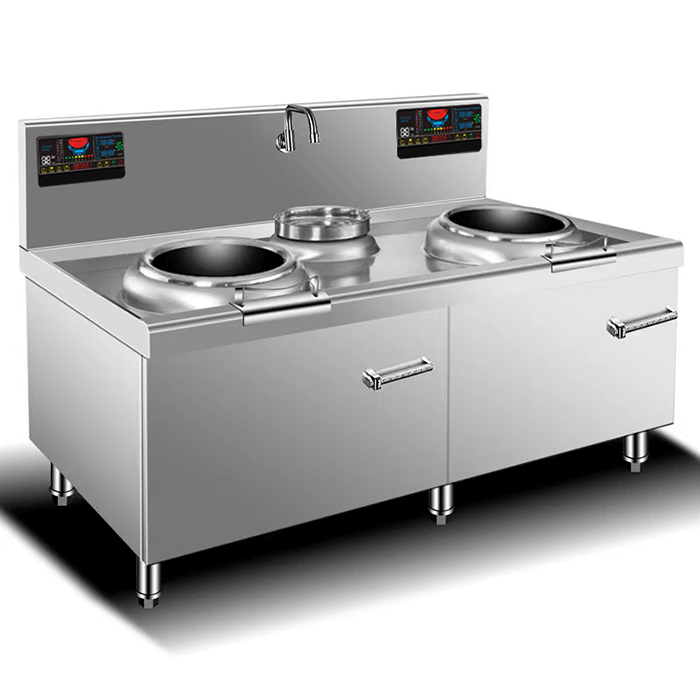
| Sensory Factor | Gas Wok | AT Cooker Induction |
|---|---|---|
| Heat Source | Open Flame | Magnetic Friction |
| Environment | Hot & Humid (H2O byproduct) | Cool & Dry |
| Flavor Purity | Contaminated (Gas Fumes) | Pure (Ingredient Focused) |
| Sear Quality | Good (Variable) | Excellent (Consistent) |
5-year Warranty | 2-year Free Exchangeable | 1-year Free Return
Final Thoughts from AT Cooker
Can customers distinguish between induction and gas? The answer is generally no—unless they notice the food comes out faster and crisper. The transition to commercial induction is not a compromise on flavor; it is an evolution of technique.
With stock available in the USA, Germany, France, UK, Belgium, Italy, Spain, and Bulgaria, AT Cooker is ready to upgrade your kitchen. Don’t let myths hold back your efficiency. Experience the power of modern wok cooking today.