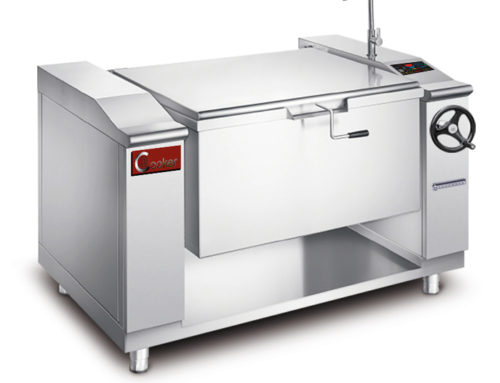
Zero Bacteria Traps: The Critical Role of R20 Rounded Corners in Commercial Induction Bratt Pan Hygiene
5-year Warranty | 2-year Free Exchangeable | 1-year Free Return
AT Cooker Executive Insight: In hospital kitchens and large-scale catering facilities, hygiene is not just about cleanliness; it is about patient safety. A single bacterium trapped in a hard-to-reach corner can lead to an outbreak. While many focus on cooking power, the structural design of the pan is equally vital. At AT Cooker, we engineer our Commercial Induction Bratt Pans with R20 rounded corners. This specific geometric standard eliminates dead angles, ensuring a commercial bratt pan hygiene design that meets the strictest HACCP protocols.
The “Dead Angle” is the enemy of sanitation. In traditional metal fabrication, welding two sheets of steel at a sharp 90-degree angle creates a microscopic crevice. Even with grinding, this corner remains a harbor for grease, protein residue, and ultimately, biofilm bacteria. In a deep vessel like a tilting skillet, cleaning these sharp corners requires intense manual scrubbing, which is often rushed during a busy shift.
Modern hygiene engineering solves this with the “R20 Standard”—a curved internal corner with a radius of 20mm. This curve matches the sweep of a cleaning cloth or sponge, allowing for a continuous, fluid wiping motion that removes 100% of debris. Hospital kitchen sanitation standards demand this level of detail.
In this design analysis, we will explore why the shape of your Bratt Pan matters as much as the heat it generates.
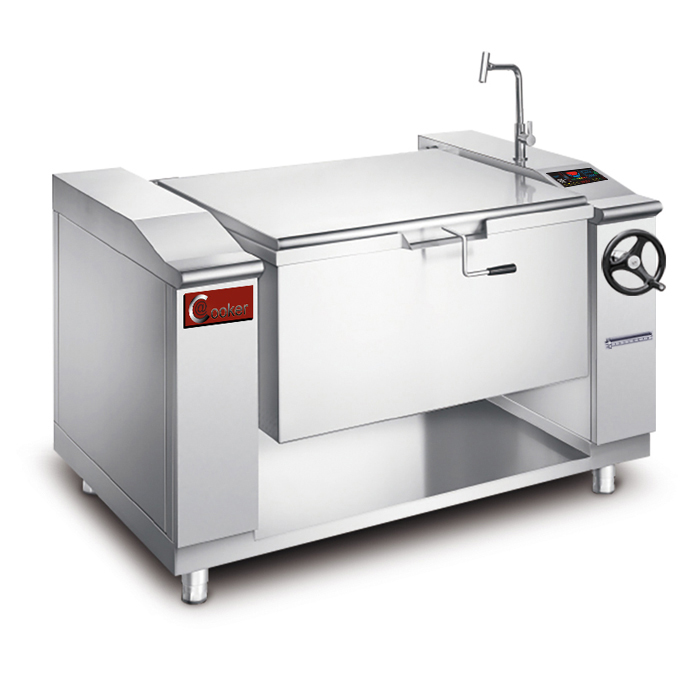
Commercial Kitchen Equipment -from AT Cooker
- As a brand manufacturer of the professional commercial induction cooking equipment, AT Cooker has responded to restaurants’ & hotels’ needs and research normative commercial cooking equipment using the very latest induction technology.
- These seamless, real commercial quality commercial cooking equipment provides us with the opportunity to incorporate equipment of our choice into one seamless, multipurpose cooking equipment creating an efficient, low cost, safe, green and sustainable commercial kitchen. We have standerd equipment can service many commercial kitchens.
- AT Cooker always offers professional service. From material, design, to producing, we focuse on quality, performance and reliability to ensures the best solution is delivered for each and every one of our customers. Have a commercial kitchen? We will be one of your best partners.
Work Voltage
| Single-Phase | Three-Phase |
|---|---|
| 120V, 220V | 208V/ 240V, 380V, 480V |
Global In-Stock + Fast Pickup
| US | UK | Germany | France |
|---|---|---|---|
| Italy | Spain | Belgium | Bulgaria |
1. The HACCP Imperative: Why Sharp 90-Degree Corners Are a Compliance Nightmare
In food safety, geometry matters. A sharp 90-degree corner in a cooking vessel is a “hard-to-clean” zone. Debris accumulates in the vertex where cleaning cloths cannot reach effectively. Over time, this buildup calcifies into a haven for bacteria.
HACCP (Hazard Analysis Critical Control Point) auditors flag these corners as risk zones. Our HACCP compliant cooking equipment uses R20 radiused corners to eliminate this risk entirely, ensuring that your inspection scores remain high.
2. Understanding R20 Radius: The Geometric Standard for Bacteria-Free Zones in Catering
What is R20? It means the corner has a curvature radius of 20mm. This size is specific: it matches the curvature of a human finger or a standard cleaning sponge.
This “Finger-Fit” geometry allows a cleaner to wipe the corner in one continuous motion without digging or scraping. This is the R20 rounded corner benefits secret—making the physical act of cleaning seamless.
3. Labor Efficiency Analysis: How Rounded Corners Cut Cleaning Time by 30% Per Shift
Cleaning a square tank requires scrubbing three faces: the bottom, the side, and the corner joint. Cleaning an R20 tank requires one swipe.
In a large institutional kitchen, this time savings adds up. If you save 15 minutes of cleaning per shift, that’s over 90 hours of paid labor saved per year on a single machine. The AT Cooker design pays for itself in labor efficiency alone.
4. Biofilm Mechanics: Why Microbes Thrive in Square Welds vs Curved Transitions
Biofilms are sticky layers of bacteria that protect themselves with a slime matrix. They love rough welds and sharp corners where turbulence is low.
Curved R20 corners promote better fluid dynamics during cooking and cleaning. Water flushes through the curve rather than getting stuck in the corner, preventing biofilm attachment in the first place.
5. Cross-Contamination Control: Protecting Vulnerable Hospital Patients from Pathogens
In a hospital, a Bratt Pan might cook oatmeal in the morning and beef stew in the evening. If allergen residue (like gluten or dairy) hides in a sharp corner, it can cross-contaminate the next meal.
The hygienic design of the industrial tilting skillet cleaning process ensures that when you rinse the pan, 100% of the previous meal is removed, protecting immune-compromised patients from hidden allergens and pathogens.
5-year Warranty | 2-year Free Exchangeable | 1-year Free Return
6. Visual Inspection Protocols: Making it Easier for Sanitation Supervisors to Spot Residue
You cannot clean what you cannot see. Sharp corners create shadows. Rounded corners reflect light evenly.
This allows kitchen supervisors to inspect the unit instantly. If it’s shiny, it’s clean. There are no dark recesses for grime to hide. This visual clarity is a key component of our commercial bratt pan hygiene design philosophy.
7. The Physics of Wiping: Enabling Continuous Motion Scrubbing Without Changing Tools
Cleaning shouldn’t require a toolkit. With square corners, staff often need brushes or scrapers to dig out debris. With rounded corners, a standard cloth is sufficient.
This simplification means staff are more likely to clean thoroughly because it isn’t difficult. “Easy to clean” translates directly to “Clean.”
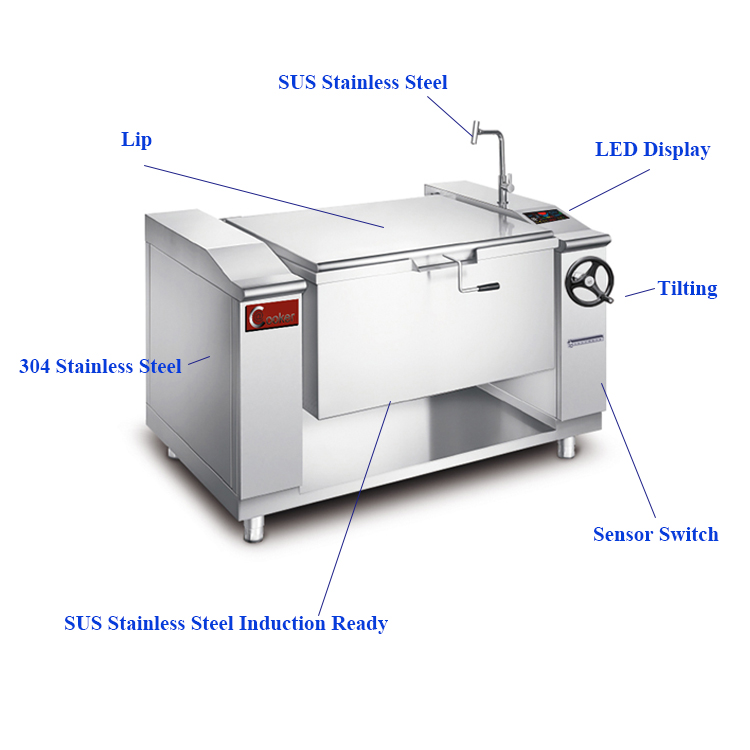
8. Material Synergy: How 304 Stainless Steel Polishing Enhances the R20 Design Efficiency
The geometry works because the material supports it. We use high-grade 304 stainless steel, polished to a low roughness average (Ra).
This mirror-like finish creates a hydrophobic surface. Food slides off the R20 curve rather than sticking, making the entire pan surface “Non-Stick” without the need for chemical coatings that can chip.
9. Preventing “Protein Bake-On”: Why Curved Edges Release Seared Food Residue Faster
During searing, protein binds to hot metal. In a corner, this “fond” gets baked twice as hard because the heat gets trapped.
The curved transition of the R20 design dissipates heat more evenly than a sharp corner, preventing the “hot corner” effect that burns food onto the steel. This makes deglazing effortless.
10. The Hidden Cost of “Dead Angles”: Calculating Excess Chemical Usage for Deep Cleaning
Dirty corners require harsh chemicals—degreasers, decarbonizers, and caustic soda—to dissolve buildup. These chemicals are expensive and dangerous.
By eliminating the trap, you can clean with mild detergent and water. Reducing chemical usage cuts operational costs and lowers the environmental impact of your kitchen wastewater.
11. Seamless Welding Technology: Ensuring the Radius Transition Has No Micro-Pits or Gaps
An R20 corner is only hygienic if it is seamless. Cheap manufacturing presses the curve but leaves a seam.
AT Cooker uses robotic TIG welding and automated polishing to ensure the transition from the floor to the wall of the pan is a single, continuous surface. There are no microscopic pits for bacteria to colonize.
12. Comparison with Traditional Cast Iron Skillets: Why Rough Surfaces and Corners Harbor Risks
Old-school cast iron skillets have a porous surface and sharp corners. While durable, they are hygiene nightmares, trapping old oil and carbon.
Our polished stainless steel R20 design is the antithesis of cast iron. It is non-porous, smooth, and geometrically optimized for sterile environments, making it the only choice for modern institutional catering.
| Feature | Standard Square Pan | AT Cooker R20 Pan |
|---|---|---|
| Corner Design | 90° Sharp | 20mm Radius Curve |
| Cleaning Effort | High (Scrubbing) | Low (Wiping) |
| Bacteria Risk | High (Dead Angles) | Zero Traps |
| Compliance | Basic | Hospital Grade |
5-year Warranty | 2-year Free Exchangeable | 1-year Free Return
Final Thoughts from AT Cooker
Hygiene is engineered, not accidental. The R20 rounded corner is a small detail with a massive impact on food safety and labor cost. The AT Cooker Induction Bratt Pan is designed to keep your kitchen clean and your patients safe.
With stock ready for immediate delivery in the USA, Germany, France, UK, Belgium, Italy, Spain, and Bulgaria, we can upgrade your sanitation standards today. Visit our About Us page to learn more about our hygienic design philosophy.