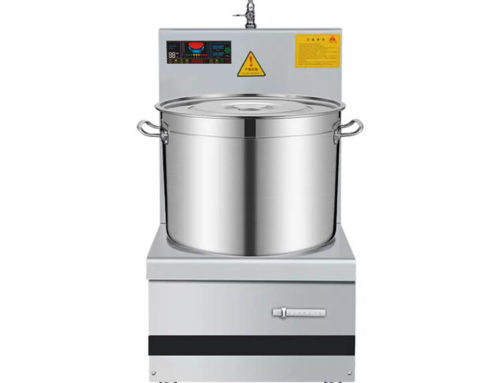
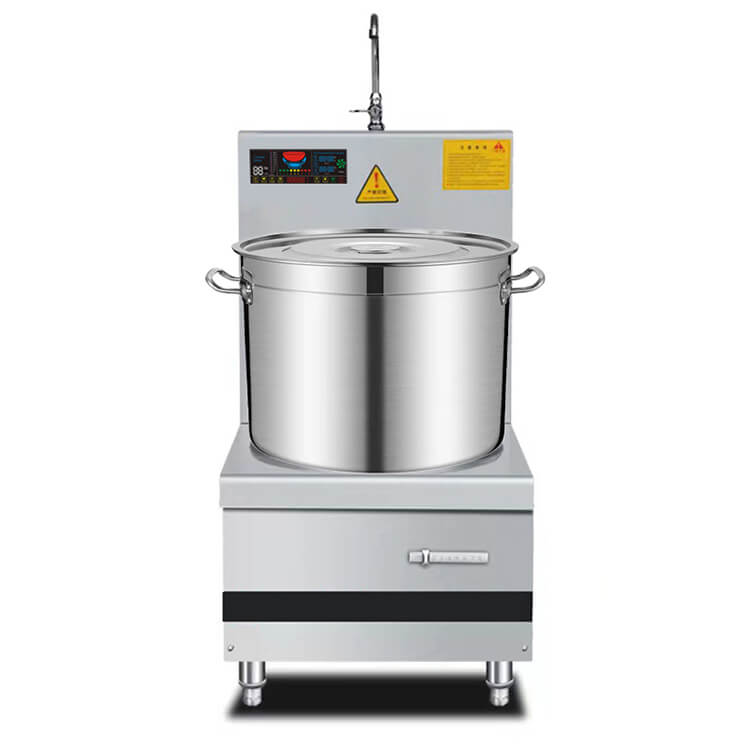
Preventing Overheating Shutdowns: Industrial Induction Soup Cooker Operation
5-year Warranty | 2-year Free Exchangeable | 1-year Free Return
In a bustling commercial kitchen, an equipment shutdown isn’t just an inconvenience; it’s a critical failure. One of the most common reasons for induction unit failure is overheating. When a high-power 15KW soup cooker pushes hard to boil 98L of stock, it generates significant internal heat. If this heat isn’t managed, the system triggers a self-protective shutdown (often Error Code E4 or E6), halting production.
Ensuring commercial induction overheating protection requires more than just a fan; it requires a comprehensive thermal management strategy. At AT Cooker, our ATT-ABT S series is engineered with industrial-grade cooling architectures designed to survive in 40°C+ kitchens. In this guide, we reveal the engineering secrets to keeping your soup station running cool, even when the pressure is hot.
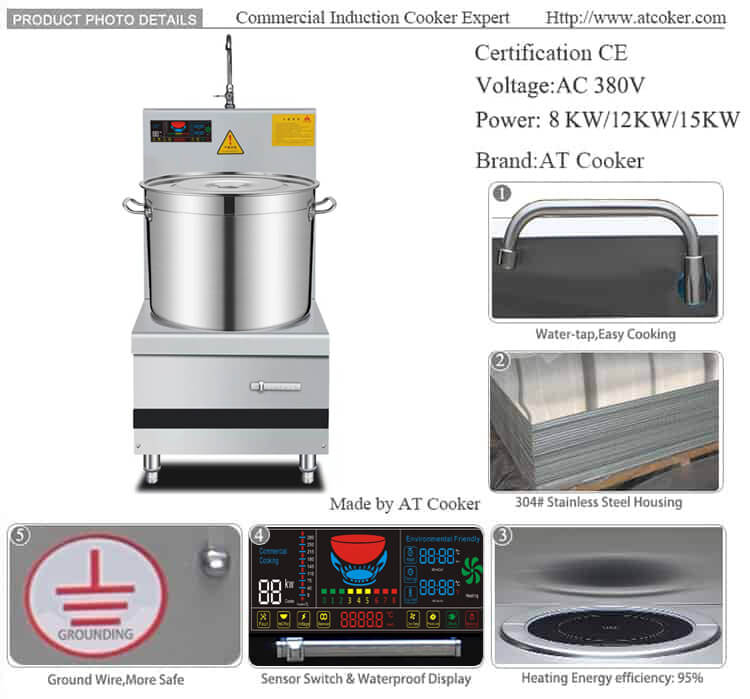
Commercial Kitchen Equipment -from AT Cooker
- As a brand manufacturer of the professional commercial induction cooking equipment, AT Cooker has responded to restaurants’ & hotels’ needs and research normative commercial cooking equipment using the very latest induction technology.
- These seamless, real commercial quality commercial cooking equipment provides us with the opportunity to incorporate equipment of our choice into one seamless, multipurpose cooking equipment creating an efficient, low cost, safe, green and sustainable commercial kitchen. We have standerd equipment can service many commercial kitchens.
- AT Cooker always offers professional service. From material, design, to producing, we focuse on quality, performance and reliability to ensures the best solution is delivered for each and every one of our customers. Have a commercial kitchen? We will be one of your best partners.
Work Voltage
| Single-Phase | Three-Phase |
|---|---|
| 120V, 220V | 208V/ 240V, 380V, 480V |
Global In-Stock + Fast Pickup
| US | UK | Germany | France |
|---|---|---|---|
| Italy | Spain | Belgium | Bulgaria |
1. The Role of Independent Dual-Channel Airflow in Cooling 15KW Components
A single fan isn’t enough for 15KW of power. We use an independent dual-channel airflow system. Channel A draws cool air directly over the induction coil, while Channel B targets the heatsink and IGBTs.
This separation prevents hot air from the coil (which can reach 200°C) from pre-heating the sensitive electronics. By isolating the cooling paths, we ensure that the brain of the machine stays cool even when the muscle is working overtime, critical for industrial soup cooker continuous duty.
2. Cleaning Intake Filters: The #1 Prevention Method for Thermal Cutoffs
The biggest killer of induction units isn’t age; it’s dust and grease. A clogged filter chokes the airflow, causing internal temperatures to skyrocket.
3. Managing Ambient Limits: Operating High-Power Units in Kitchens Above 40°C
Most electronics are rated for 25°C. Commercial kitchens often hit 40°C+ during summer. Standard equipment derates (slows down) or shuts off in this heat.
The ATT-ABT S is rated for -5℃ to +40℃ ambient operation, with safety margins tested up to 50°C. We achieve this by using oversized heatsinks and high-velocity fans that can force cooling even with warm intake air, ensuring stability when you need it most.
4. IGBT Module Quality: Why Premium Chips Handle Heat Stress Better
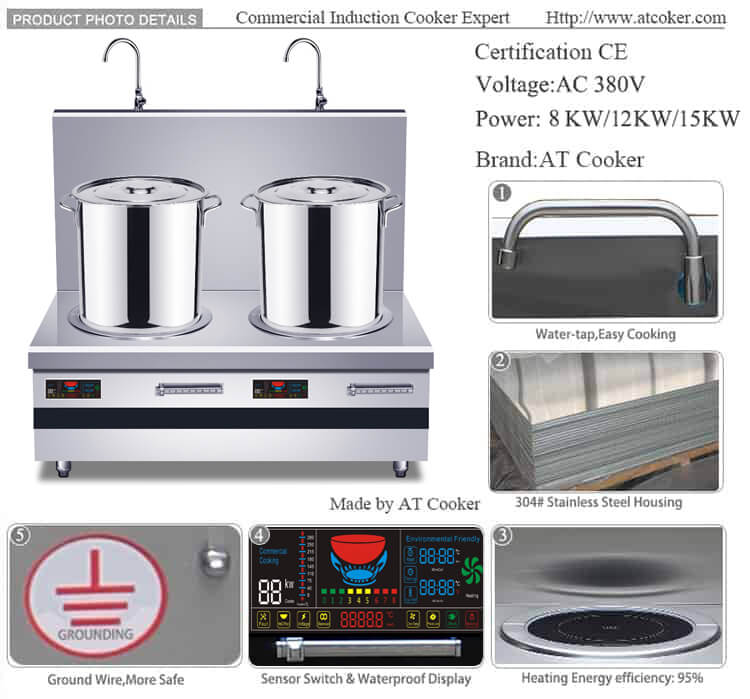
Not all chips are created equal. Cheap IGBTs have a low thermal ceiling. We use premium Infineon (German) modules with a high junction temperature rating.
These chips can tolerate higher internal heat without degrading or failing. This “thermal headroom” means the unit can run at full 15KW power for hours without triggering safety limits, a necessity for heavy duty induction reliability.
5. Grease Accumulation on Fan Blades: The Silent Cooling Efficiency Killer
Kitchen air is greasy. Over time, grease coats fan blades, changing their aerodynamics and slowing them down. A slow fan moves less air.
Our cooling fans use sealed ball bearings and high-torque motors designed to power through grease buildup. We also position the fans deep within the chassis, away from direct splash zones, to minimize accumulation and maintain peak airflow velocity.
6. Voltage Instability: How Grid Fluctuations Increase Internal Component Heat
When voltage drops (brownout), the amperage must increase to maintain power. Higher amperage means more heat in the wires and components.
Our Smart Power Control monitors input voltage. If the grid sags, the unit automatically adjusts to a safe power level rather than forcing high amps through the system. This intelligent derating prevents the catastrophic overheating that kills capacitors during grid fluctuations.
7. The Importance of Heat Sink Mass and Surface Area in Industrial Units
You can’t cheat physics. To dissipate 15KW of heat, you need aluminum mass.
We use massive, finned aluminum heatsinks with huge surface areas. This thermal mass acts as a buffer, absorbing heat spikes and dissipating them steadily. It’s the difference between a unit that overheats in 20 minutes and one that runs for 24 hours.
5-year Warranty | 2-year Free Exchangeable | 1-year Free Return
8. Automatic Derating Logic: How Smart Chips Lower Power Instead of Shutting Down
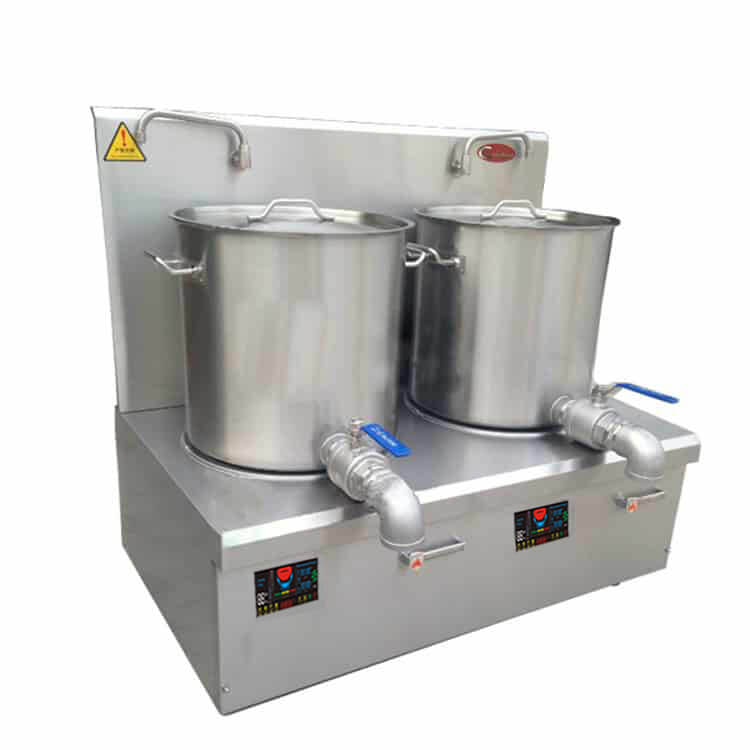
A “hard shutdown” ruins the soup. Our Automatic Derating Logic is smarter. If the sensor detects the temperature creeping near the limit, it doesn’t shut off.
Instead, it subtly lowers the power (e.g., from Level 8 to Level 7). This reduces heat generation while keeping the pot boiling. The chef likely won’t even notice, but the machine has saved itself from an error code shutdown.
9. Placement Strategy: Preventing “Thermal Short Circuits” Against Walls
Induction units need to breathe. Pushing a unit flush against a wall blocks the exhaust vents. Hot air recirculates back into the intake—a “thermal short circuit.”
We advise a minimum 10cm gap. Furthermore, our units are designed with rear and side venting options to ensure hot air has an escape path, preventing the localized heat pockets that lead to component failure.
10. Thermal Paste Degradation: Service Intervals for Re-Applying Heat Transfer Compound
Between the IGBT and the heatsink lies a thin layer of thermal paste. Over years of high heat, this paste dries out and cracks.
As part of our preventing kitchen equipment shutdown maintenance protocol, we design our IGBT modules to be accessible. A technician can easily refresh the thermal paste every 2-3 years, restoring factory-level cooling efficiency and extending the unit’s life by decades.
11. The “Isolated Air Duct” Design: Protecting Electronics from Hot Oil Vapor Ingress
Oil vapor conducts electricity and traps heat. If it coats the circuit board, failure is inevitable.
The ATT-ABT S features an Isolated Air Duct design. The cooling air passes through a sealed tunnel over the heatsinks, never touching the sensitive PCB components. This segregation ensures that the electronics stay clean and dry, even in the greasy environment of a commercial kitchen.
12. Power Redundancy Strategy: Using Higher-Rated Modules to Reduce Operating Temperature Stress
Running a car at redline engine speed eventually blows the engine. The same applies to electronics.
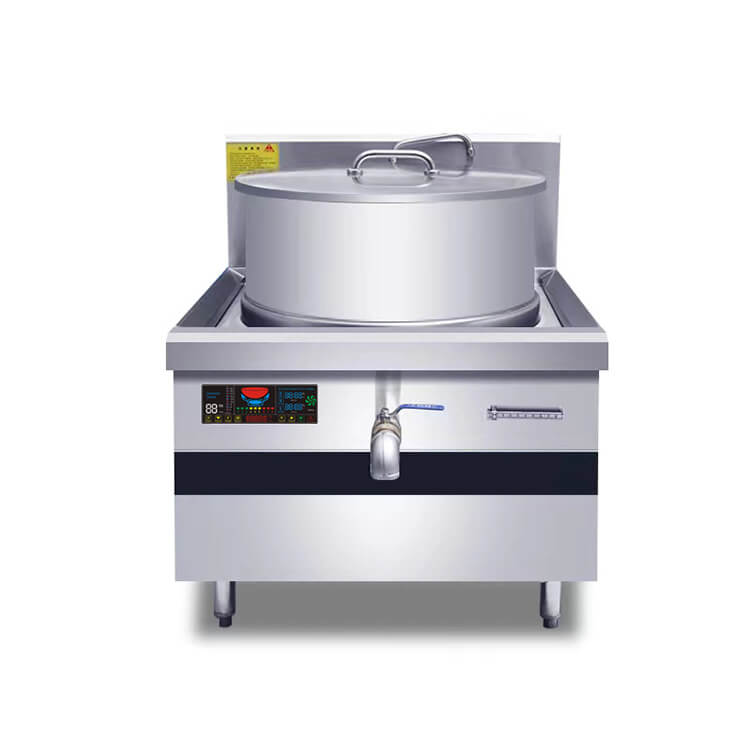
We over-spec our components. For a 15KW unit, we might use modules rated for 20KW or higher. This means at “full power,” the components are actually cruising at 75% capacity. This redundancy keeps operating temperatures low and reliability high.
5-year Warranty | 2-year Free Exchangeable | 1-year Free Return
Final Thoughts: Cool Runs Long
Heat is the enemy. By mastering airflow, component quality, and intelligent control logic, AT Cooker defeats overheating. Choose the ATT-ABT S for a soup station that stays cool under pressure and keeps your kitchen running non-stop.
Upgrade to Continuous Duty Reliability
Stop suffering from shutdown errors. Contact us to learn more about our industrial cooling technologies.