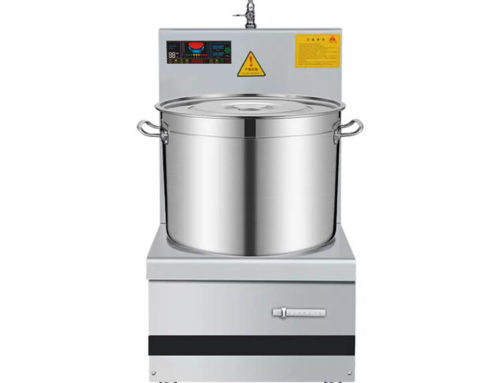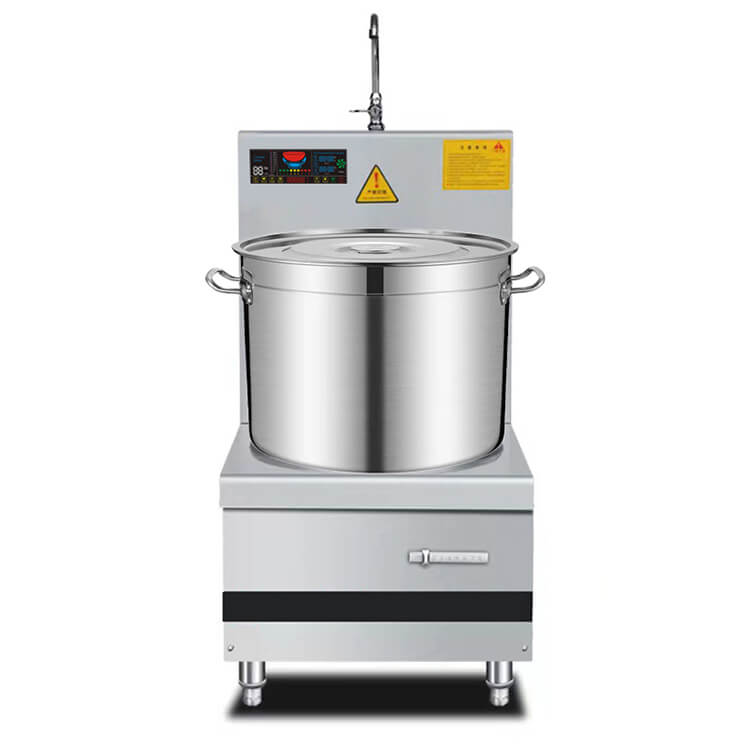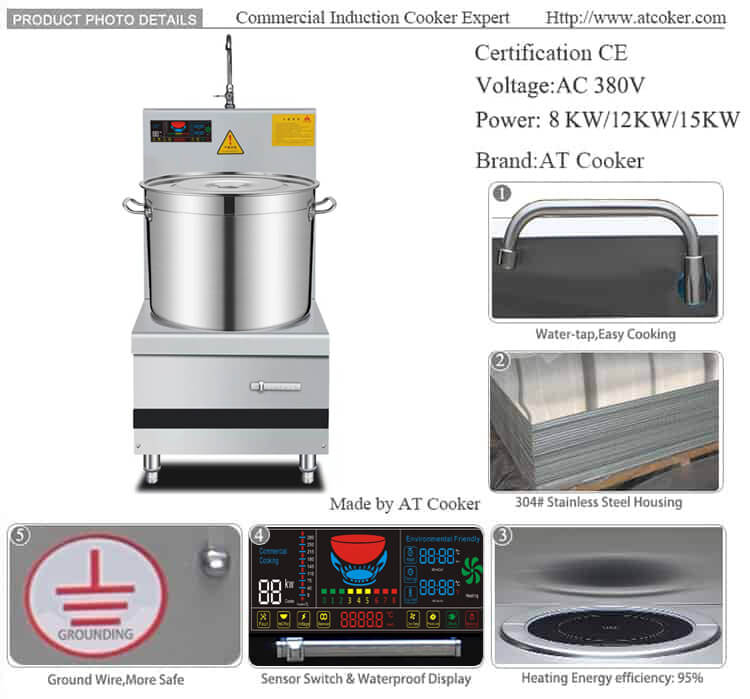
In the world of heavy-duty food processing, a soup cooker is only as good as its weakest component. While stainless steel bodies and ceramic glass plates are visible signs of quality, the true determinant of reliability lies hidden deep inside the chassis: the IGBT (Insulated Gate Bipolar Transistor). This small module is the electronic heart of the inverter, switching power on and off thousands of times per second. Cheap inverters use generic chips that overheat and fail under pressure. At AT Cooker , we refuse to compromise. We equip our ATT-ABT S series with genuine Infineon IGBT commercial induction modules from Germany. This choice isn’t just about brand prestige; it’s about the physics of reliability. In this article, we explain why German engineering is the secret to 24/7 stability in your kitchen.
Work Voltage
Global In-Stock + Fast Pickup
1. The Role of IGBT Modules as the “Heart” of Commercial Induction Inverters
To understand reliability, you must understand the inverter. The IGBT (Insulated Gate Bipolar Transistor) acts as a high-speed switch. It converts the 50/60Hz grid electricity into the 20-30kHz high-frequency current needed for induction.
This chip handles massive amounts of power. In a 15KW soup cooker, the IGBT is switching currents of up to 40 amps thousands of times per second. If this “heart” skips a beat or overheats, the entire machine stops. It is the single most critical component in the system.
2. Comparing German Infineon vs. Standard Generic Chips for Industrial Durability
Generic chips are designed for cost; Infineon chips are designed for survival. German manufacturing standards for semiconductors are legendary for their rigorous quality control.
The Difference: Generic chips often have microscopic impurities in the silicon wafer, leading to “hot spots” that fail under load. Infineon modules feature superior silicon purity and bonding technology, allowing them to handle the thermal stress of industrial induction cooker reliability requirements without degradation.
3. How Superior Thermal Tolerance Prevents Overheating During 24/7 Operation
Electronics hate heat. As the IGBT switches, it generates internal heat. If this heat isn’t dissipated, the chip reaches its “Junction Temperature” limit (usually 150°C-175°C) and burns out.
Infineon modules have a higher thermal ceiling and better thermal conductivity. They transfer heat efficiently to the heatsink, staying cooler under the same load compared to cheaper alternatives. This thermal headroom is what allows our ATT-ABT S units to run 24/7 without tripping overheat sensors.
4. Switching Speed Efficiency: The Link Between Infineon Technology and 95% Energy Ratings
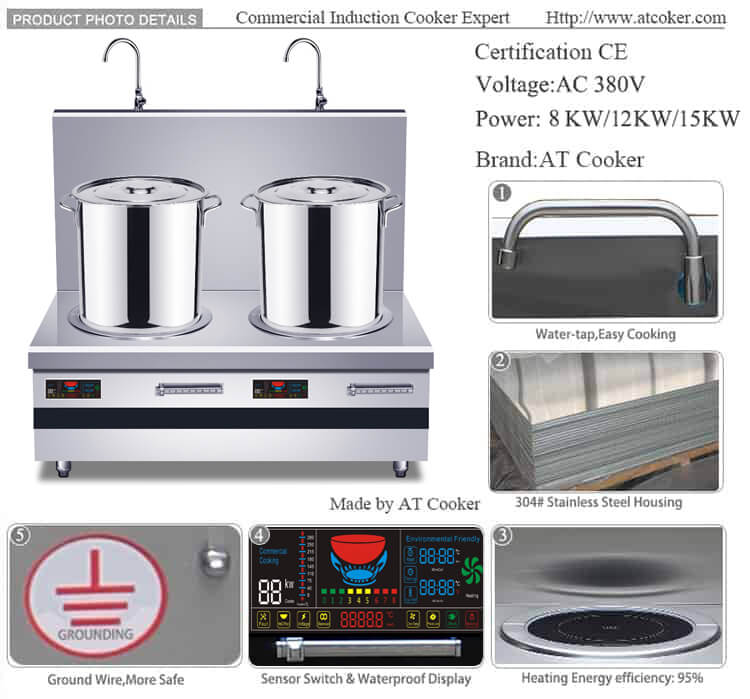
Efficiency comes from speed. The faster the IGBT switches on and off, the less energy is wasted as heat (Switching Loss).
Infineon’s advanced trench-gate technology allows for lightning-fast switching speeds with minimal resistance. This is a key factor in how AT Cooker achieves 90% – 95% energy efficiency . Less waste heat means lower electricity bills and a cooler kitchen environment.
5. Voltage Spike Resistance: Protecting Equipment from Unstable Industrial Grids
Industrial factories often have “dirty power”—voltage spikes caused by heavy machinery turning on and off. A voltage spike can punch through a weak IGBT, causing an instant short circuit.
Infineon modules are built with robust “Avalanche Ratings,” meaning they can absorb significant voltage transients without failing. This ruggedness protects your investment from the unpredictable nature of the industrial power grid.
6. Longevity Analysis: Extending Mean Time Between Failures (MTBF) in Heavy-Duty Units
MTBF (Mean Time Between Failures) is the gold standard metric for industrial equipment. Standard induction cookers might have an MTBF of 5,000 hours.
By utilizing premium German semiconductors and over-engineering the cooling system, AT Cooker targets an MTBF of 30,000+ hours. For a soup factory running non-stop, this difference translates to years of extra service life before a component swap is needed.
7. The Economics of Component Quality: Upfront Cost vs. Production Downtime Risks
An Infineon module costs more than a generic one. But what is the cost of downtime? If your soup line stops for 4 hours, you lose thousands in product and labor.
Investing in heavy duty kitchen equipment components is an insurance policy. The slight premium you pay for German engineering pays for itself the first time the machine doesn’t fail during a peak production run.
8. Why 15KW High-Power Loads Demand Specifically Rated German Modules
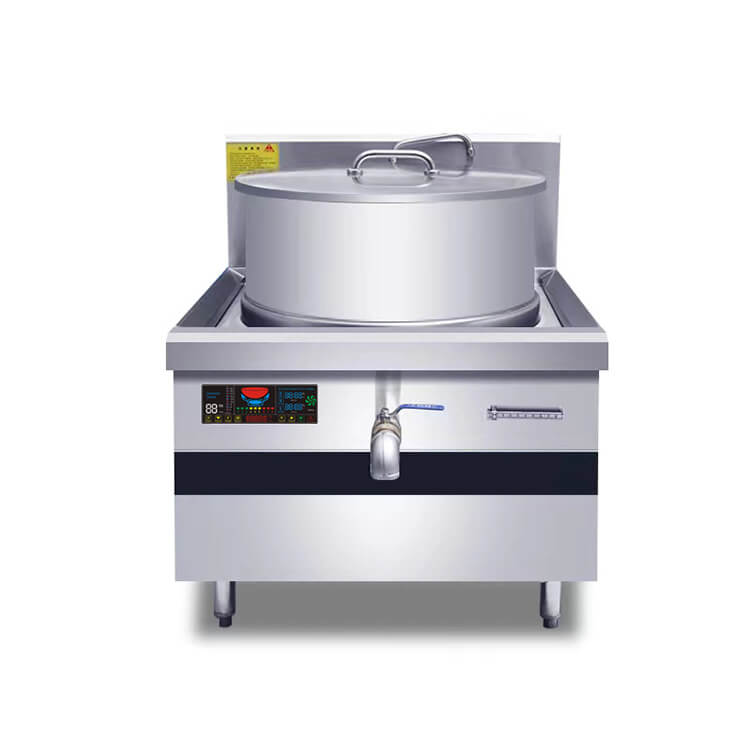
15KW is a massive amount of power. It’s equivalent to 20 horsepower. Handling this load requires modules rated for much higher currents (often 100A or more) to provide a safety margin.
We use Infineon modules that are rated well above the operational peak. This “Derating Strategy” ensures the chip is never stressed to its limit, keeping it cool and stable even when the dial is set to Level 8.
9. The Synergy Between Copper Coil Design and IGBT Switching Performance
The IGBT works in tandem with the copper coil. If the coil impedance is mismatched, it causes “Ring-Back” voltage that can damage the chip.
Our engineers fine-tune the inductance of our copper coils to perfectly match the switching characteristics of the Infineon modules. This resonance optimization minimizes electrical stress, ensuring smooth, quiet, and powerful operation.
10. Reducing Maintenance Frequency by Eliminating Electronic Component Drift
Cheap components “drift” over time—their resistance and capacitance change with heat and age. This causes the machine to lose power or become unstable.
Infineon’s manufacturing stability means their specs stay rock-solid over years of use. This eliminates the need for frequent re-calibration or board swaps, significantly reducing maintenance frequency and technician call-outs.
11. The “Full-Bridge” Circuit Advantage: How Infineon Modules Enhance Power Stability
We utilize a Full-Bridge circuit topology, which uses four IGBTs instead of one or two. This distributes the load across multiple chips.
Combined with the robustness of Infineon silicon, this design ensures that no single point of failure exists under normal load. It provides smoother power delivery to the coil, resulting in a steady boil that doesn’t pulse or flicker.
12. Preventing “Zha Ji” (Module Explosion): Why Cheap Inverters Fail Under High Load Constraints

“Zha Ji” is the industry term for a catastrophic IGBT failure—an explosion that blackens the circuit board. It usually happens when a cheap chip encounters a load it can’t handle.
By using Infineon modules with superior short-circuit protection and thermal bonding, we virtually eliminate the risk of Zha Ji. We test every unit at full load before it leaves our factory to guarantee it can handle the reality of your kitchen.
Final Thoughts: Invest in German Reliability
When you buy an AT Cooker soup boiler, you aren’t just buying steel; you are buying the peace of mind that comes with German Infineon technology. Don’t let a $50 generic chip cost you thousands in downtime. Choose the stability of Infineon IGBT commercial induction power.
5-year Warranty | 2-year Free Exchangeable | 1-year Free Return
What 1. The Role of IGBT Modules as the “Heart” of Commercial Induction Inverters?
To understand reliability, you must understand the inverter. The IGBT (Insulated Gate Bipolar Transistor) acts as a high-speed switch. It converts the 50/60Hz grid electricity into the 20-30kHz high-frequency current needed for induction.
This chip handles massive amounts of power. In a 15KW soup
What 2. Comparing German Infineon vs. Standard Generic Chips for Industrial Durability?
Generic chips are designed for cost; Infineon chips are designed for survival. German manufacturing standards for semiconductors are legendary for their rigorous quality control.
The Difference: Generic chips often have microscopic impurities in the silicon wafer, leading to “hot spots” that fail
What 3. How Superior Thermal Tolerance Prevents Overheating During 24/7 Operation?
Electronics hate heat. As the IGBT switches, it generates internal heat. If this heat isn’t dissipated, the chip reaches its “Junction Temperature” limit (usually 150°C-175°C) and burns out.
Infineon modules have a higher thermal ceiling and better thermal conductivity. They transfer heat efficien
What 4. Switching Speed Efficiency: The Link Between Infineon Technology and 95% Energy Ratings?
Efficiency comes from speed. The faster the IGBT switches on and off, the less energy is wasted as heat (Switching Loss).
Infineon’s advanced trench-gate technology allows for lightning-fast switching speeds with minimal resistance. This is a key factor in how AT Cooker achieves 90% – 95% energy e
What 5. Voltage Spike Resistance: Protecting Equipment from Unstable Industrial Grids?
Industrial factories often have “dirty power”—voltage spikes caused by heavy machinery turning on and off. A voltage spike can punch through a weak IGBT, causing an instant short circuit.
Infineon modules are built with robust “Avalanche Ratings,” meaning they can absorb significant voltage transi
Equip Your Kitchen with Durability
Contact us for a quote on our commercial-grade equipment.