Induction vs. Gas: Keeping Small Noodle Bars Cooler and Profitable
5-year Warranty | 2-year Free Exchangeable | 1-year Free Return
For a small noodle bar with limited square footage, the choice between gas and induction is not just about cooking; it’s about survival. Gas burners are powerful, but they act like uncontrolled radiators, pumping massive amounts of waste heat into your tiny dining room. This forces you to spend a fortune on air conditioning just to keep customers from leaving.
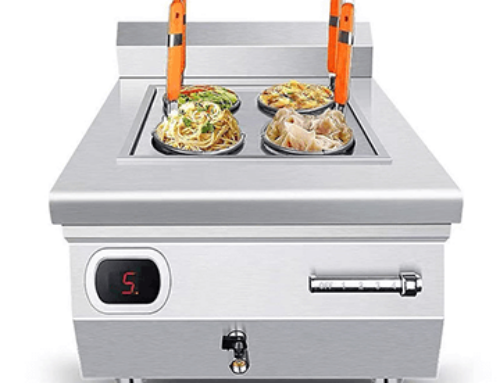
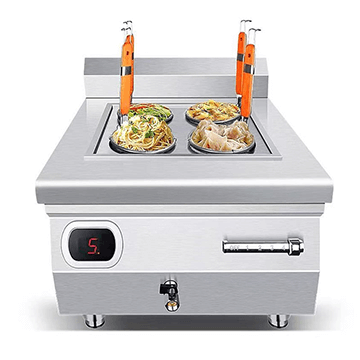
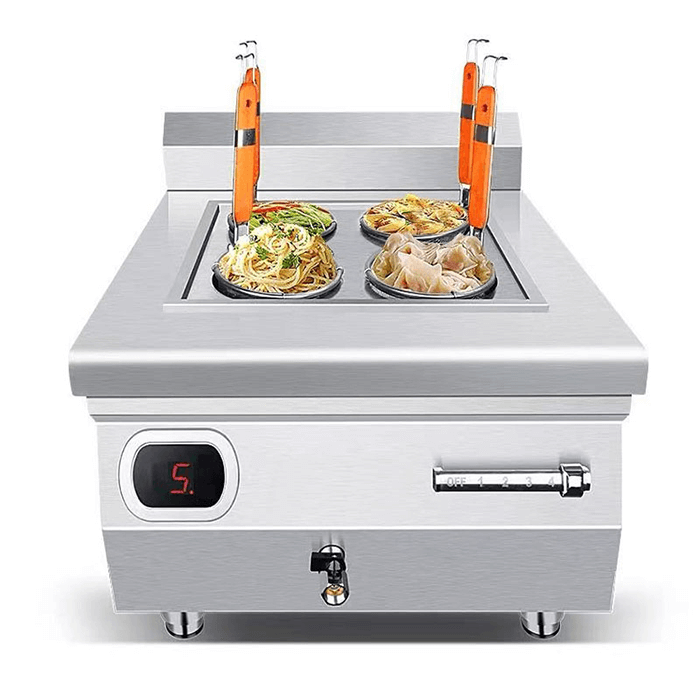
This commercial induction vs gas noodle cooker comparison reveals a clear winner. By switching to the ATT-APST C5 Tabletop Induction Noodle Cooker, you eliminate the heat source, not just the symptom. Let’s analyze how this technology keeps your kitchen cool, your bills low, and your profits high.
Commercial Kitchen Equipment -from AT Cooker
- As a brand manufacturer of the professional commercial induction cooking equipment, AT Cooker has responded to restaurants’ & hotels’ needs and research normative commercial cooking equipment using the very latest induction technology.
- These seamless, real commercial quality commercial cooking equipment provides us with the opportunity to incorporate equipment of our choice into one seamless, multipurpose cooking equipment creating an efficient, low cost, safe, green and sustainable commercial kitchen. We have standerd equipment can service many commercial kitchens.
- AT Cooker always offers professional service. From material, design, to producing, we focuse on quality, performance and reliability to ensures the best solution is delivered for each and every one of our customers. Have a commercial kitchen? We will be one of your best partners.
Work Voltage
| Single-Phase | Three-Phase |
|---|---|
| 120V, 220V | 208V/ 240V, 380V, 480V |
Global In-Stock + Fast Pickup
| US | UK | Germany | France |
|---|---|---|---|
| Italy | Spain | Belgium | Bulgaria |
1. The Thermodynamics of Waste Heat: Why Gas Dumps 60% of Energy into Your Dining Room
A gas burner operates on an open flame principle. Physics dictates that much of this heat escapes around the sides of the pot. In fact, up to 60% of the energy you pay for is wasted, heating the air instead of the water.
This fugitive heat doesn’t just disappear; it drifts into your dining area. For a small noodle bar, this means the ambient temperature rises rapidly, forcing your air conditioning to work overtime to fight a battle it was never designed to win.
2. Comparing Ambient Temperature Rise: Testing Gas vs Induction in a 20sqm Space
In a controlled test within a 20sqm enclosed kitchen, running a gas pasta cooker for one hour raised the ambient temperature by 8°C. Running the ATT-APST C5 induction cooker raised it by less than 2°C.
3. The “Double Cost” Trap: Paying for Gas Heat and Electricity to Remove It
Using gas creates a financial paradox: you pay the gas company to generate heat, and then you pay the electric company to remove that same heat via AC.
By switching to tabletop pasta boiler efficiency, you break this cycle. You pay only for the energy that cooks the noodles. The reduction in AC load is an immediate, tangible saving on your monthly P&L statement.
4. Customer Comfort Analysis: Preventing Heat Fatigue at Counter Seating Zones
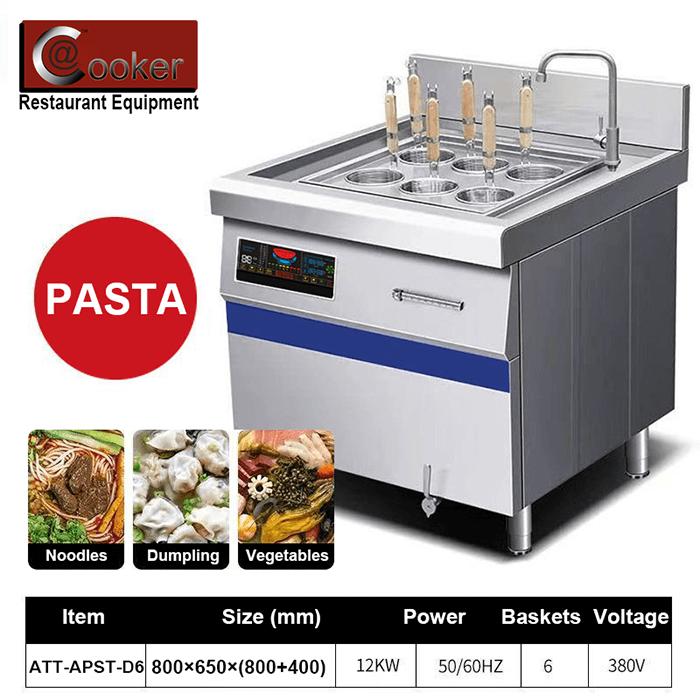
In a noodle bar, the best seats are often at the counter, right in front of the kitchen. If you use gas, these seats are hot and uncomfortable.
Induction technology ensures that customers sitting inches away from the boiling station feel no radiant heat. This reducing restaurant ambient heat capability transforms the counter into a premium seating area rather than a sweat zone.
5. Reducing HVAC Tonnage: Lowering Ventilation Capital Costs for Small Footprints
Opening a new restaurant? Gas equipment requires heavy-duty Type I hoods with fire suppression and massive exhaust fans to remove combustion gases.
The ATT-APST C5 produces no combustion fumes. In many jurisdictions, this allows for simpler Type II hoods (steam vents), which are significantly cheaper to install and operate. This lowers your initial capital expenditure (CAPEX) for ventilation.
6. The Safety Radius: Eliminating Open Flame Risks in Tight Noodle Bar Layouts
In a tight 480×570mm footprint, safety is paramount. An open gas flame is a constant hazard for staff bumping into each other or customers leaning over the counter.
Induction is flameless. The “Safety Radius” is effectively zero. You can place prep ingredients, plastic squeeze bottles, or even the POS system closer to the cooker without risk of melting or ignition.
7. Protecting Ingredient Freshness: How Ambient Heat Degrades Prep Table Quality
Noodle toppings like sliced pork, green onions, and soft-boiled eggs sit in prep fridges nearby. High ambient heat from gas burners forces these fridges to work harder and can spoil delicate ingredients.
The cool operation of the ATT-APST C5 preserves the “Cold Chain” integrity of your mise en place, ensuring every bowl served is fresh and safe.
5-year Warranty | 2-year Free Exchangeable | 1-year Free Return
8. Acoustic Impact: Replacing the Roar of Gas Burners with Silent Magnetic Operation
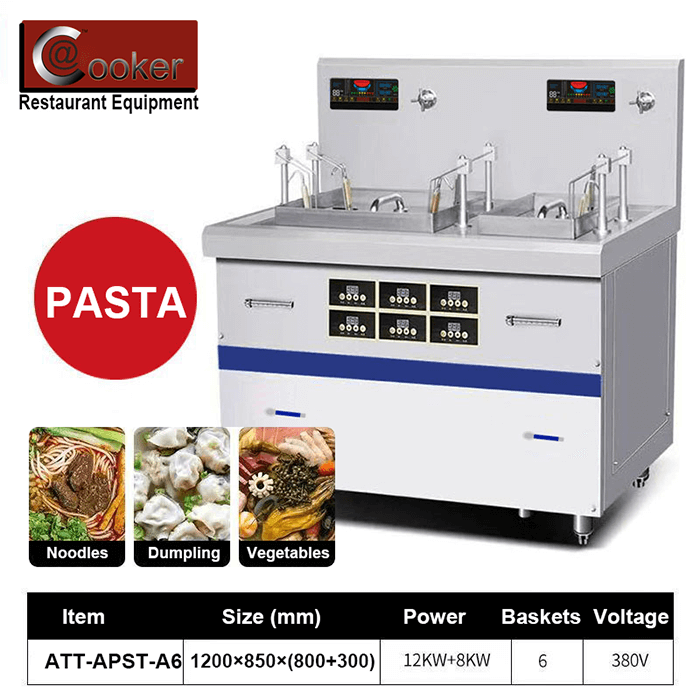
Gas jet burners are loud. The constant roar creates noise pollution that forces customers to shout.
Induction is silent. The only sound is the gentle bubbling of water. This creates a calm, sophisticated acoustic environment where background music and conversation can be enjoyed, elevating the perceived value of your establishment.
9. Steam vs. Combustion: Why Induction Requires Less Aggressive Air Extraction
Gas produces carbon monoxide and nitrogen oxides that must be vented. Induction produces only steam.
Steam is easier to manage. You don’t need aggressive make-up air systems that suck expensive conditioned air out of the building. A simple overhead extractor is often sufficient, further restaurant HVAC savings.
10. The “Ming Dang” Standard: Enhancing Visual Hygiene by Eliminating Soot and Grease
In an open kitchen (“Ming Dang”), visual hygiene is marketing. Gas burners create soot that blackens pots and walls.
The stainless steel body of the ATT-APST C5 wipes clean easily. There are no grates to scrub or carbon deposits to scrape. The equipment always looks sparkling clean, reassuring customers of your hygiene standards.
11. Maximizing “Ping Xiao”: How Reduced Ductwork Requirements Increase Seating Capacity
“Ping Xiao” (Efficiency per square meter) is critical. Massive gas hoods require vertical space and duct chases that eat into usable area.
By using compact induction units with smaller ventilation requirements, you can reclaim vertical space and potentially fit more seats into your floor plan. More seats equal higher potential revenue.
5-year Warranty | 2-year Free Exchangeable | 1-year Free Return
Final Thoughts: The Cool Choice is the Profitable Choice
When you do the math—considering energy bills, AC loads, ventilation costs, and customer comfort—induction is the clear winner for small spaces. The ATT-APST C5 isn’t just a cooker; it’s a profitability engine for your noodle bar.
Start Saving on Your Utility Bills
Switch to the cool efficiency of induction. Contact AT Cooker for a quote on the ATT-APST C5 today.