1. The Math of Waste: The $240 Single Pilot Reality
Let’s break down the physics of a standing pilot light. To keep a thermocouple hot enough to keep the gas valve open, a pilot must burn a continuous stream of gas. Industry data indicates that a single standing pilot light consumes approximately 450 to 500 BTUs per hour.
While this seems small, the key variable is time. It burns 24 hours a day, 365 days a year. This accumulates to roughly $15 to $20 of gas monthly per pilot, depending on local utility rates. That is up to $240 per year for a tiny flame that cooks nothing. Reports from the Energy Star Guide confirm these efficiency losses in standard gas equipment.
Annual Idle Cost (3ft Griddle)
Gas Griddle $720 / Year Waste
AT Induction $0
Cost based on 3 pilots running 24/7/365.
2. The Multiplier Effect: Standard 3-Foot Griddles
The problem scales with the size of your equipment. A standard 36-inch (3-foot) commercial gas griddle typically requires one pilot light for every 12 inches of plate width. That means a standard unit has three separate pilot lights.
Do the math: $240 x 3 = $720 annually. This is the “Phantom Penalty” you pay just for the privilege of having the machine plugged into the gas line. For a large chain with 500 locations, this phantom load represents a staggering $360,000 annual loss across the enterprise.
Frequently Asked Questions
How much does a pilot light cost per year on a gas griddle?
A single pilot light costs approximately $240 per year in gas. A standard 3-foot griddle has 3 pilots, totaling $720 annually. This is money spent on a flame that never cooks any food.
Does induction have a pilot light?
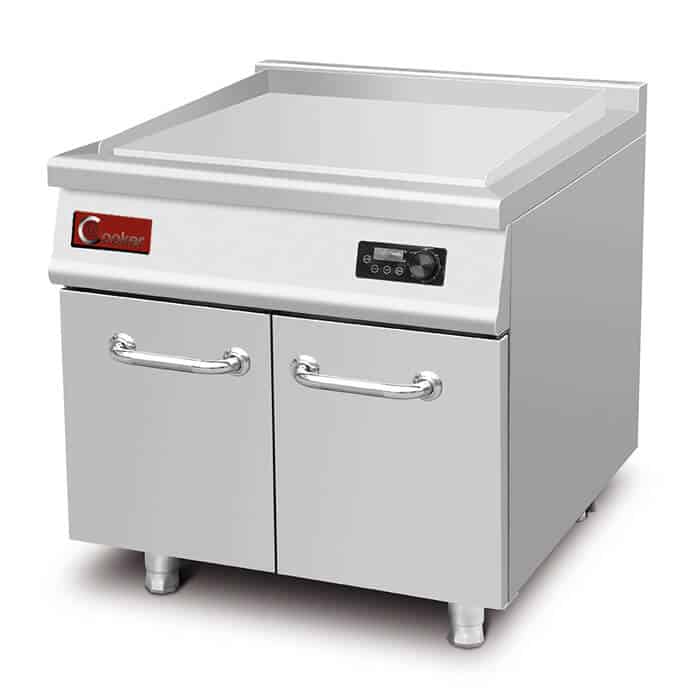
No. AT Cooker induction griddles have zero pilot lights and zero idle consumption. With pan detection technology, energy is only used when cookware is present. When the pan is removed, power drops to near zero instantly.
What is the HVAC penalty of gas pilot lights?
Pilot lights radiate heat 24/7, raising kitchen ambient temperature. You pay $720/year in gas to heat your kitchen, then an additional $150-$200/year in electricity for HVAC to cool it down. This “double tax” does not appear on equipment spec sheets.
Is electronic ignition better than standing pilot?
Electronic ignition eliminates the standing pilot, but in grease-heavy kitchens, spark electrodes fail frequently due to grease buildup. This is why 90% of the market still uses standing pilots. Induction offers reliability without waste—no pilots, no igniters, no failure points.
How fast is the ROI on switching from gas to induction?
With $720/year in pilot light savings plus $150-$200/year in HVAC savings, a single griddle saves $870-$920 annually. For a 3-foot unit, payback is typically under 2 years. Multi-unit operations see even faster returns.
3. The 24/7/365 Burn
Unlike your chefs, pilot lights don’t clock out. They burn when the restaurant is closed. They burn during holidays. They burn while you are sleeping. In a typical restaurant operating 12 hours a day, the pilot lights are wasting fuel for the 12 hours the store is open (while the main burners are off) and the 12 hours the store is closed.
This wasted gas energy is a relic of 20th-century technology. In an era of smart kitchens and IoT connectivity, relying on a continuously burning fire just to be “ready” is an obsolescent strategy.
Commercial Kitchen Equipment -from AT Cooker
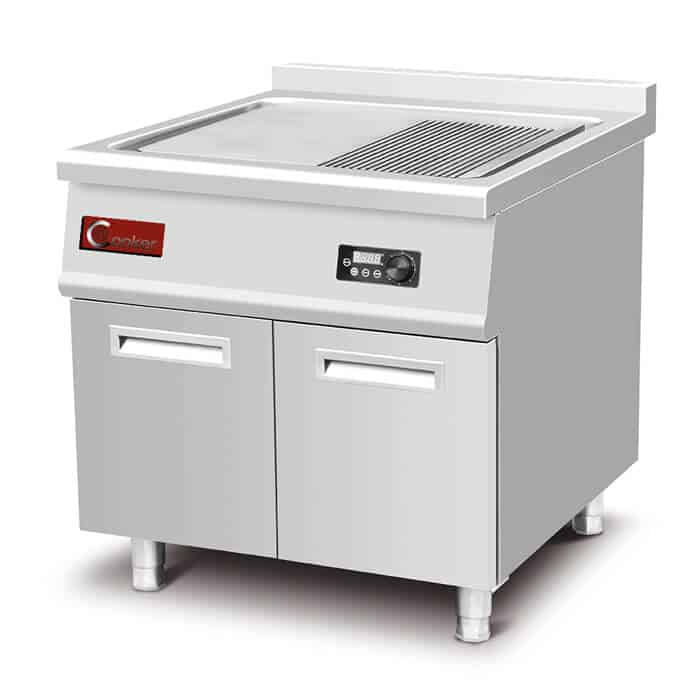
- As a brand manufacturer of the professional commercial induction cooking equipment, AT Cooker has responded to restaurants’ & hotels’ needs and research normative commercial cooking equipment using the very latest induction technology.
- These seamless, real commercial quality commercial cooking equipment provides us with the opportunity to incorporate equipment of our choice into one seamless, multipurpose cooking equipment creating an efficient, low cost, safe, green and sustainable commercial kitchen. We have standerd equipment can service many commercial kitchens.
- AT Cooker always offers professional service. From material, design, to producing, we focuse on quality, performance and reliability to ensures the best solution is delivered for each and every one of our customers. Have a commercial kitchen? We will be one of your best partners.
Work Voltage
| Single-Phase | Three-Phase |
|---|---|
| 120V, 220V | 208V/ 240V, 380V, 480V |
Global In-Stock + Fast Pickup
| US | UK | Germany | France |
|---|---|---|---|
| Italy | Spain | Belgium | Bulgaria |
4. The Hidden HVAC Load
We often talk about the “double tax.” The gas you burn for the pilot light generates heat. This heat doesn’t just disappear; it radiates into your kitchen, raising the ambient temperature. Your HVAC system must then work to remove this waste heat.
So, you are paying the gas company $720/year to heat your kitchen, and then paying the electric company an estimated $150-$200/year to cool it back down. This phantom load is a double hit to your bottom line that does not appear on any standard equipment spec sheet.
AT Cooker’s Engineering Fact:
“Induction removes the fuel source entirely. No gas line means no combustion, no pilots, and no waste heat. It is the only true ‘Zero Idle’ technology.”
5. Zero Idle Consumption with Pan Detection
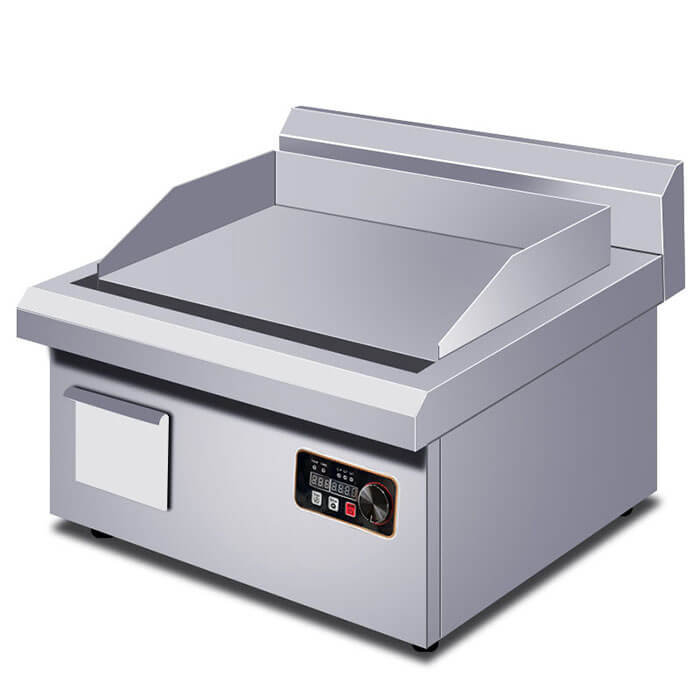
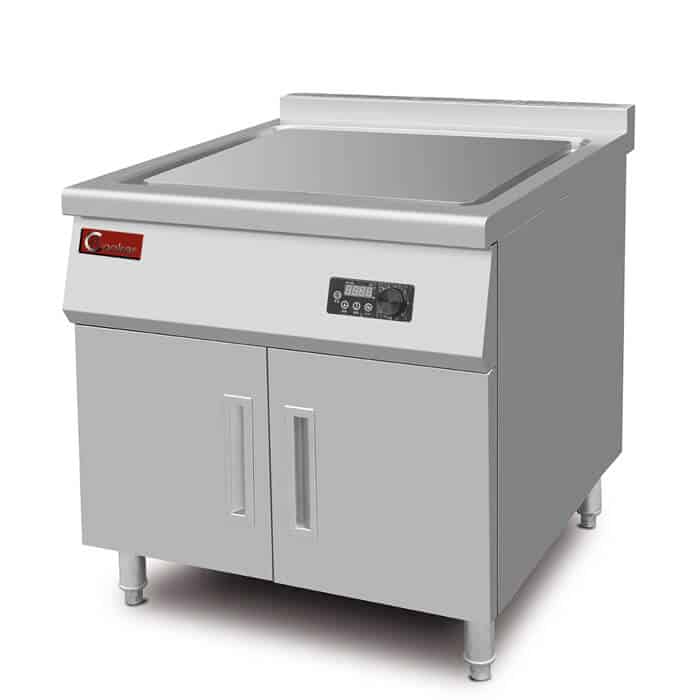
AT Cooker induction griddles feature advanced “Pan Detection” sensors. When you remove a pan or when the griddle surface reaches the set temperature, the magnetic field cuts off instantly. Energy consumption drops to near zero (typically just a few watts for the control panel LED). There is no “standby mode” that burns fuel. You only pay for energy when you are actually cooking.
6. Air Quality and Combustion Byproducts
Standing pilots are small, but they are dirty. They continuously release combustion byproducts like Carbon Dioxide (CO2), Carbon Monoxide (CO), and trace amounts of unburned methane into the kitchen environment. In a tightly sealed modern kitchen, this contributes to poor air quality and “sick building syndrome” for your staff.
7. The “Lazy Burner” Phenomenon
We have all seen it: a chef arrives in the morning, lights the pilots, and then turns the main burners to “low” for the entire day, even during slow periods. Why? because relighting a finicky pilot is a hassle. This behavior amplifies the waste significantly. With induction, startup is instant (push-button), eliminating the psychological barrier to turning equipment off.
8. Thermocouple Failures: The #1 Service Call
Ask any service technician what the most common repair is for gas equipment. It is almost always the pilot light assembly or the thermocouple. Soot buildup clogs the pilot nozzle, the flame weakens, the thermocouple gets cold, and the gas valve shuts off safety.
This leads to the dreaded “kitchen down” scenario during a rush. By eliminating the pilot system, AT Cooker’s induction units remove the single most common failure point in the commercial kitchen.
5-year Warranty | 2-year Free Exchangeable | 1-year Free Return
9. Why Electronic Ignition Isn’t the Answer
Some manufacturers offer “spark ignition” for gas griddles to eliminate standing pilots. However, in a grease-heavy commercial environment, these electronic igniters have extremely high failure rates. Grease coats the spark electrode, preventing ignition. This is why 90% of the market still uses the reliable-but-wasteful standing pilot. Induction is the only technology that offers reliability without the waste.
10. The Underground Mall Mandate
In densely populated Asian cities, “Underground Mall” fire codes are becoming incredibly strict. Regulators are increasingly banning standing pilot lights and open flames entirely in subterranean levels due to oxygen depletion risks and fire hazards. This has led to a massive shift towards induction. AT Cooker is at the forefront of this compliance revolution, offering high-power induction solutions that meet these zero-flame safety mandates, aligning with updated standards from the China Household Electrical Appliances Association.
11. The Hidden Cleaning Cost
Asian maintenance data reveals that cleaning clogged pilot nozzles is the #3 repair cost for gas equipment over its lifecycle. It requires a technician to disassemble the front panel, clear the orifice with a specialized tool, and recalibrate the gas/air mix. This is a recurring maintenance cost that induction owners simply do not have.
| Feature | Gas Griddle (Pilot) | AT Cooker Induction |
|---|---|---|
| Idle Cost | $720/year (3 pilots) | $0 (Auto-off) |
| Heat Emission | Continuous (24/7) | None when idle |
| Maintenance | Frequent (Clogs/Thermocouples) | Low (Sealed Glass/Ceramic) |
5-year Warranty | 2-year Free Exchangeable | 1-year Free Return
AT Cooker’s Final Verdict:
“The $720 penalty is voluntary. You don’t have to pay it. By switching to induction, you are not just buying a griddle; you are closing a hole in your bank account. Stop paying for fire you aren’t using. Choose efficiency. Choose AT Cooker.”