1. The Physics of the 50°F Drop
When a -4°F (-20°C) frozen patty hits a 400°F (200°C) steel plate, thermodynamics takes over. The cold meat sucks the heat out of the metal instantly. On a gas griddle, the heat source (the burner) is inches away from the plate, heating air, which then heats the steel. This disconnect causes a massive thermal delay.
Gas Griddle Reality: Our tests show a typical gas griddle drops 50°F or more immediately upon loading a full batch. The thermostat, often located far from the impact zone, doesn’t even “realize” the plate is cold for 30-60 seconds.
Surface Temp Drop (Full Frozen Load)
Gas Griddle
-50°F Drop (Thermal Shock)
AT Induction
-5°F
Data based on loading 12 frozen patties at 0°F.
2. Induction Sensors: The “Instant Surge”
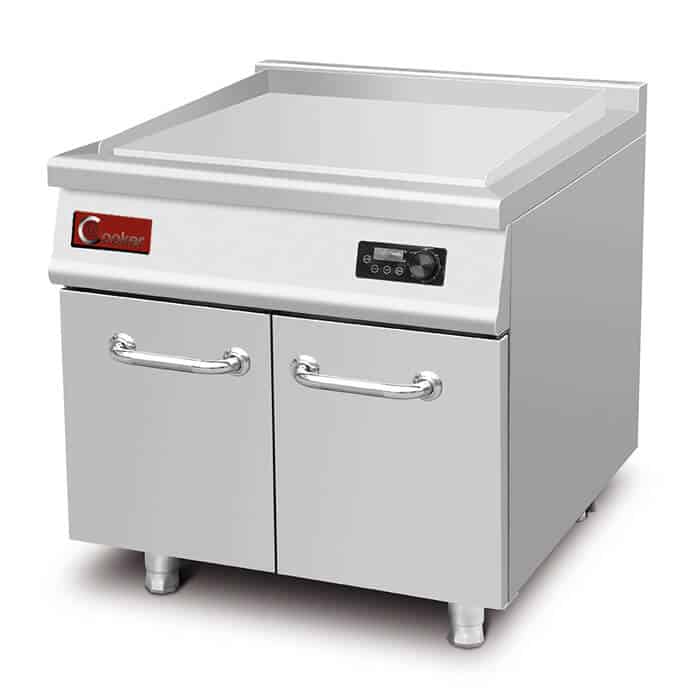
In contrast, AT Cooker induction griddles act like a nervous system. Sensors embedded directly under the glass-ceramic or composite plate detect the thermal load instantly. Before the temperature has a chance to plummet, the system triggers a power surge.
This near-zero recovery time is possible because there is no thermal inertia. We aren’t waiting for a burner to heat air; we are magnetically exciting the molecules of the griddle plate itself. The response is immediate.
Frequently Asked Questions
Why does a gas griddle lose temperature when frozen burgers are loaded?
Gas burners heat the air beneath the plate, which then heats the steel. When frozen patties hit the surface, the heat transfer path (burner → air → steel → food) creates a 30-60 second delay before the thermostat responds. AT Cooker induction griddles heat the plate directly via electromagnetic energy, recovering within 2-3 seconds.
How much faster is induction recovery compared to gas?
AT Cooker induction griddles recover to target temperature in 2-3 seconds after loading frozen product, compared to 30-60 seconds for gas. During a lunch rush with 10+ batches, this adds up to 5-10 minutes of saved cook time per hour.
Can I cook directly from frozen without thawing?
Yes. AT Cooker induction griddles are designed for zero-thermal-lag cooking from frozen. The instant heat recovery ensures frozen patties sear properly instead of steaming, producing a brown crust and juicy interior without pre-thawing.
Does cooking from frozen affect food safety?
No. USDA guidelines allow cooking from frozen as long as the internal temperature reaches 160 degrees F (71 degrees C). AT Cooker induction griddles maintain consistent surface heat that drives the internal temperature to safe levels faster than gas, reducing the time food spends in the danger zone.
What is the energy savings of induction vs gas for frozen cooking?
AT Cooker induction griddles operate at 90-95% energy efficiency compared to 40-50% for gas. When cooking from frozen, the faster recovery time means less total energy is wasted maintaining idle heat. Restaurants report 30-50% lower energy costs after switching.
3. The 3-Minute Penalty vs. Zero Lag
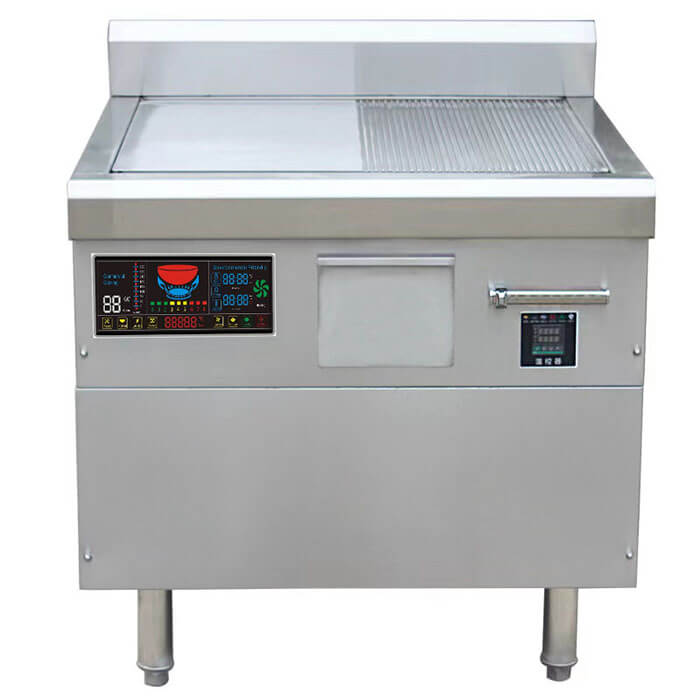
Gas griddles typically require 2-3 minutes to recover searing temperature after a full frozen load. During this time, the meat is steaming, not searing. With induction, the recovery is effectively instant. The plate maintains its set temperature within a tight variance, meaning every burger gets the same heat, whether it is the first or the fiftieth.
Commercial Kitchen Equipment -from AT Cooker
- As a brand manufacturer of the professional commercial induction cooking equipment, AT Cooker has responded to restaurants’ & hotels’ needs and research normative commercial cooking equipment using the very latest induction technology.
- These seamless, real commercial quality commercial cooking equipment provides us with the opportunity to incorporate equipment of our choice into one seamless, multipurpose cooking equipment creating an efficient, low cost, safe, green and sustainable commercial kitchen. We have standerd equipment can service many commercial kitchens.
- AT Cooker always offers professional service. From material, design, to producing, we focuse on quality, performance and reliability to ensures the best solution is delivered for each and every one of our customers. Have a commercial kitchen? We will be one of your best partners.
Work Voltage
| Single-Phase | Three-Phase |
|---|---|
| 120V, 220V | 208V/ 240V, 380V, 480V |
Global In-Stock + Fast Pickup
| US | UK | Germany | France |
|---|---|---|---|
| Italy | Spain | Belgium | Bulgaria |
4. The “Gray Burger” vs. The Maillard Reaction
Thermal lag has a direct impact on food quality. When the plate temp drops below 300°F (150°C), the Maillard reaction (browning) stops. Instead of searing, the meat boils in its own escaping moisture. This results in a gray, rubbery patty.
By maintaining a consistent 375°F (190°C) even under load, induction ensures a perfect caramelized crust every time. This isn’t just about looks; it seals in flavor and texture.
AT Cooker’s Chef Feedback:
“Induction’s direct energy transfer allows for ‘micro-recovery’ between flips. We see a 20% increase in burger throughput during peak lunch hours.”
5. “Micro-Recovery” Between Flips
Induction’s direct energy transfer allows for “micro-recovery.” In the few seconds it takes a chef to flip a row of burgers, the induction coil has already pulsed enough energy to restore the surface temperature for the uncooked side. This level of responsiveness is physically impossible with gas manifolds.
5-year Warranty | 2-year Free Exchangeable | 1-year Free Return
6. Boosting Throughput by 30%
Eliminating recovery time means you can cook more batches per hour. Field studies show that induction kitchens can increase burger throughput by 20-30% during peak lunch hours. You are no longer waiting for the grill; the grill is waiting for you.
7. Composite Clad Plates: The Secret Weapon
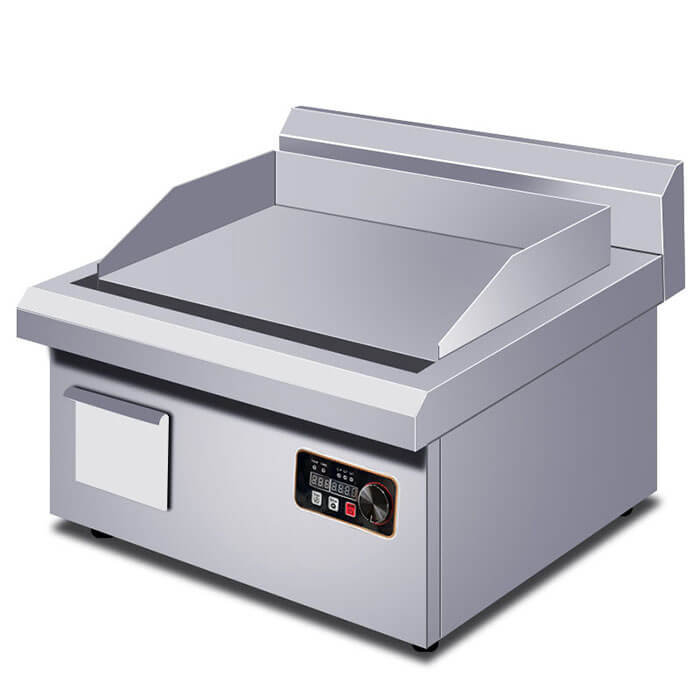
Premium induction units often use composite clad plates (stainless steel bonded to aluminum or copper cores). These materials distribute heat laterally much faster than the solid mild steel plates found on gas units, eliminating hot and cold spots.
8. Sensor Placement Matters
Gas thermostats are often inches away from the cooking surface, buried in the chassis. This causes a delayed response to cold meat. AT Cooker places sensors directly beneath the cooking zone, ensuring real-time feedback to the generator.
9. Less Greasy, Juicier Product
Induction’s “Instant Recovery” prevents grease absorption. When meat hits a hot surface, it sears. When it hits a cooling surface, it acts like a sponge. A consistently hot plate means less grease in the burger and more juice in the bite.
10. The “Continuous Load” Stress Test
Chinese engineers use rigorous “continuous load testing” to ensure induction drivers don’t overheat during rapid-fire frozen batches. This ensures that the electronics can handle the “heavy lifting” of constant power surges required for frozen food.
11. 15kW+ Modules for Factory-Level Output
High-power Asian induction modules (15kW+) are specifically tuned to defeat the “frozen block effect.” These are not residential toys; they are industrial engines designed for the high-volume demands of modern factory kitchens and QSRs. Standards from the China Household Electrical Appliances Association reflect these high-performance requirements.
| Feature | Gas Griddle | AT Cooker Induction |
|---|---|---|
| Temp Drop (Frozen Load) | -50°F (28°C) | < -10°F (5°C) |
| Recovery Time | 2-3 Minutes | Instant / Near Zero |
| Product Quality | Risk of “Gray/Boiled” | Consistent Maillard Sear |
5-year Warranty | 2-year Free Exchangeable | 1-year Free Return
AT Cooker’s Final Verdict:
“Thermal lag is a choice, not a necessity. By switching to induction, you gain the power to cook frozen foods as if they were fresh. Increase your throughput, improve your food quality, and stop waiting for your equipment to catch up. The future is instant.”