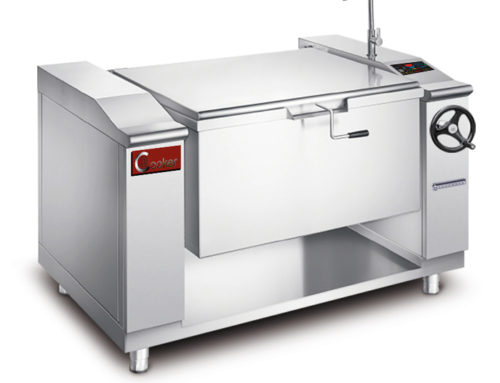
Energy Audit Showdown: Running One Commercial Induction Bratt Pan vs. Three Traditional Gas Units
5-year Warranty | 2-year Free Exchangeable | 1-year Free Return
AT Cooker Executive Insight: In the modern institutional kitchen, energy is the second highest operating cost after labor. Running separate gas appliances—a griddle, a boiling kettle, and a fryer—creates a “Triple Threat” of energy waste. By consolidating these functions into a single AT Cooker Commercial Induction Bratt Pan, facilities can slash their utility bills. We conducted an institutional catering energy audit to prove it. Here is the data behind the commercial induction bratt pan energy efficiency advantage.
Every gas burner in your kitchen is a hole in your budget. Traditional gas equipment operates at roughly 45% thermal efficiency, meaning more than half of the fuel you buy is used to heat the kitchen air, not the food. When you multiply this waste across three separate machines (a range, a griddle, and a kettle), the financial loss is staggering.
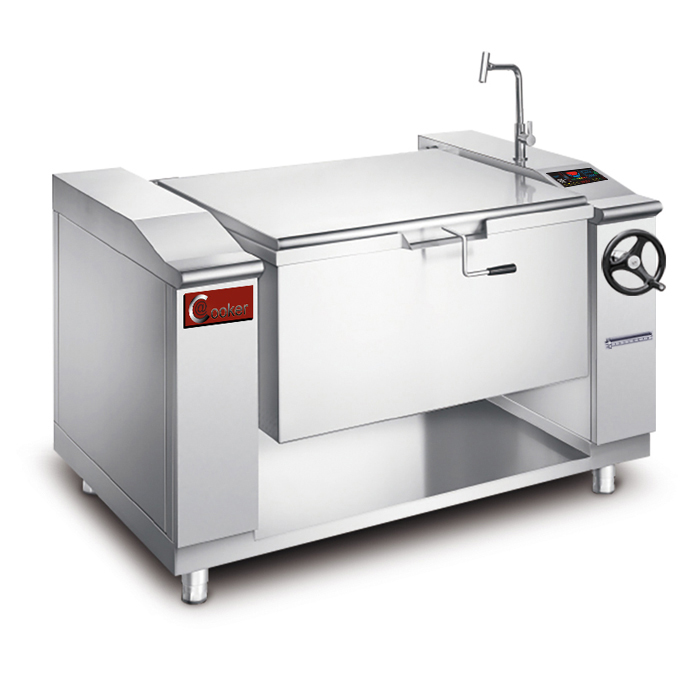
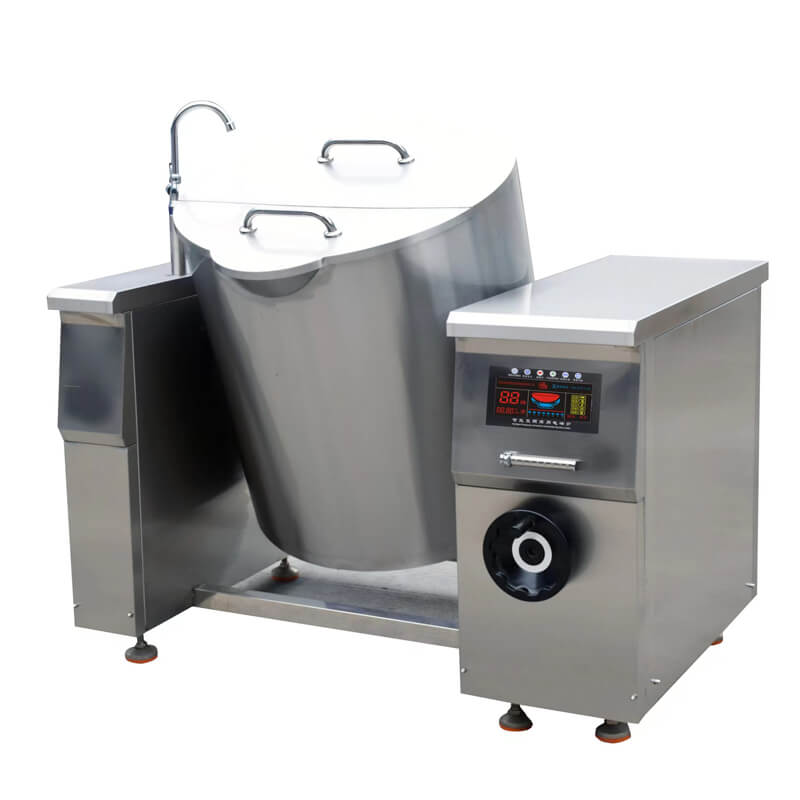
The Induction Tilting Skillet (Bratt Pan) reverses this equation. With 95% energy transfer efficiency and zero idle consumption, it is the cornerstone of sustainable commercial cooking equipment strategies. In this showdown, we pit one induction unit against three gas workhorses to see who wins the utility war.
Work Voltage
| Single-Phase | Three-Phase |
|---|---|
| 120V, 220V | 208V/ 240V, 380V, 480V |
Global In-Stock + Fast Pickup
| US | UK | Germany | France |
|---|---|---|---|
| Italy | Spain | Belgium | Bulgaria |
1. The Efficiency Gap: 95% Energy Transfer in Induction vs 45% in Traditional Gas Burners
The math is simple but brutal. Gas burners rely on thermal conduction from a flame through the air to the metal pot. Physics dictates that over 50% of this heat escapes around the sides of the cookware. This is heat you paid for but never used.
The AT Cooker Induction Bratt Pan generates heat directly within the pan’s molecular structure via magnetic friction. This induction vs gas operating costs advantage means that 95 cents of every dollar spent on electricity goes directly into cooking your food.
2. Eliminating “Phantom Load”: The Hidden Annual Cost of Three Gas Pilot Lights Burning 24/7
If you replace a gas range, a gas griddle, and a gas kettle with one Bratt Pan, you eliminate three pilot lights. A single pilot light can consume up to $15-$20 of gas per month.
Phantom Cost Calculation
3 Pilots × $20/month × 12 months = $720/year wasted on equipment that isn’t even cooking. Induction has zero phantom load.
3. HVAC Savings: Drastically Reducing Cooling Loads by Removing Three Heat-Generating Gas Units
Gas appliances are essentially space heaters. A kitchen with three gas units running is a furnace. Your AC system has to work overtime to remove this waste heat.
By switching to a single, high-efficiency induction unit, you remove thousands of BTUs of waste heat from the environment. This lowers your air conditioning electricity bill by an estimated 30%, a critical factor in reducing hospital kitchen energy bills.
4. Peak Demand Management: Managing One High-Amp Device vs Three Continuous Gas Consumers
Managing utility costs isn’t just about consumption; it’s about peak demand charges. Running three machines simultaneously spikes your usage.
With a multi-functional Bratt Pan, you perform sequential cooking (boil, then braise, then fry). This naturally flattens your energy demand curve, potentially keeping you in a lower tariff bracket with your utility provider.
5. Water Heating Speed: Comparing the Cost-Per-Liter to Boil 100L on Induction vs Gas
Time is money (and energy). A gas kettle might take 60 minutes to boil 100L of water. A 25KW induction Bratt Pan can do it in 30 minutes.
By cutting the run time in half, you cut the energy consumption in half. The faster speed-to-boil is the most direct evidence of tilting skillet utility savings.
5-year Warranty | 2-year Free Exchangeable | 1-year Free Return
6. The “Idle State” Consumption: How Induction Consumes Near-Zero Energy When Not Actively Cooking
In a gas kitchen, burners are often left on “low” because re-igniting them is a hassle. This idling burns fuel for zero output.
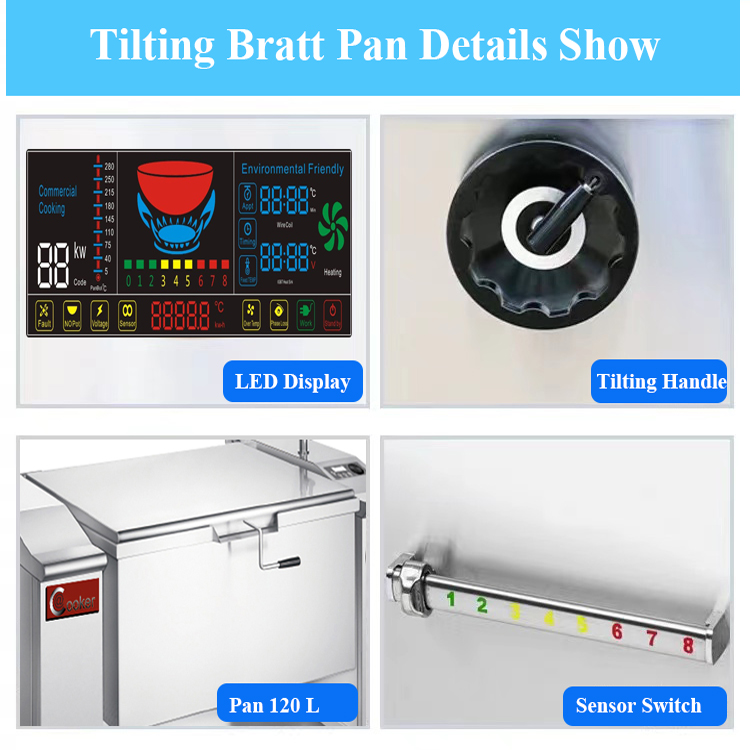
Induction is instant on/off. When the Bratt Pan is not cooking, it draws only negligible power for the display and fan. The “Idle Cost” is effectively zero, making it the most sustainable commercial cooking equipment choice.
7. Zone Heating Strategy: Using Only 30% Power for Small Batches vs Heating an Entire Gas Griddle
If you need to grill 10 steaks on a large gas griddle, you have to heat the whole plate. Gas distributes heat via conduction across the entire surface.
While a Bratt Pan is one zone, induction’s precise power modulation means you only input the energy required to maintain the target temperature. The inverter scales down the power draw automatically for smaller loads, unlike a gas valve that just dumps fuel.
8. Carbon Footprint Analysis: Meeting Institutional Sustainability Goals by Electrifying the Kitchen
Hospitals and universities have strict carbon reduction mandates. Burning fossil fuels on-site (gas) increases your carbon footprint.
Electrifying your kitchen with AT Cooker equipment allows you to power your facility with renewable energy (solar/wind) from the grid. This is the fastest way to meet carbon footprint institutional catering targets.
9. Thermal Insulation: Why the Bratt Pan’s Multi-Layer Body Retains Heat Better Than Open Gas Pots
Gas pots are exposed to the air, losing heat through their walls. The AT Cooker Bratt Pan features a multi-layer insulated chassis.
Once the food reaches temperature, the insulation keeps it hot with minimal energy input. This “Thermos Effect” significantly reduces the energy needed for long braising or simmering cycles.
10. The Cost of Ventilation: Reducing Extraction Fan Speeds and Make-Up Air Requirements for a Single Unit
Ventilation systems are massive energy consumers. They suck expensive conditioned air out of your building. Gas equipment requires high fan speeds to remove combustion byproducts.
Replacing three gas units with one induction Bratt Pan allows you to install a smaller hood or run your Demand Control Kitchen Ventilation (DCKV) system at a much lower speed, saving electricity on the fan motors and heating/cooling costs for makeup air.
11. The “Fireless Kitchen” Impact: Reducing Ambient Room Temperature by 5-8°C to Slash AC Costs
An induction kitchen is a cool kitchen. By removing open flames, you can lower the baseline temperature of the workspace by 5-8°C.
This massive reduction means your HVAC system runs less often and for shorter durations. This indirect energy saving is often enough to cover the electrical cost of the cooking equipment itself.
12. The “Energy Density” Metric: Achieving Higher Production Output Per Kilowatt with Integrated Designs
Efficiency is output divided by input. By consolidating boiling, frying, and grilling into one unit, you maximize the production value of every kilowatt used.
Instead of powering three idle machines, you power one active machine at 100% utilization. This maximization of “Energy Density” is the ultimate multi-functional kitchen equipment ROI.
| Energy Factor | 3 Gas Units | 1 Induction Bratt Pan |
|---|---|---|
| Thermal Efficiency | 45% | 95% |
| Idle Cost | High (Pilots) | Zero |
| HVAC Load | High (Waste Heat) | Low |
| Total Footprint | Large | Compact |
5-year Warranty | 2-year Free Exchangeable | 1-year Free Return
Final Thoughts from AT Cooker
The energy audit results are clear: One AT Cooker Commercial Induction Bratt Pan outperforms three gas units in efficiency, cost, and sustainability. It is the logical choice for the modern, budget-conscious kitchen.
With stock ready for immediate delivery in the USA, Germany, France, UK, Belgium, Italy, Spain, and Bulgaria, we can help you cut your utility bills now. Visit our About Us page to start your energy revolution.