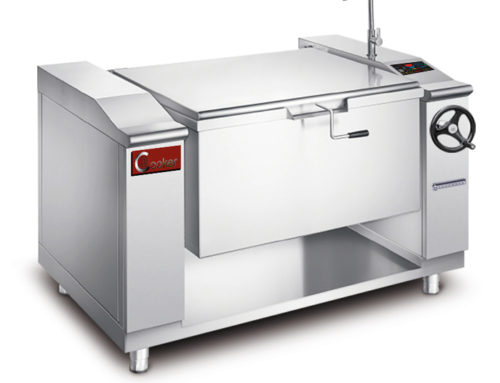
Ease of Use: Switching Cooking Modes Instantly During Service with Commercial Induction Bratt Pans
5-year Warranty | 2-year Free Exchangeable | 1-year Free Return
AT Cooker Executive Insight: Agility is the superpower of a modern kitchen. In institutional catering, you might need to grill 200 steaks at 10:00 AM, boil 100L of pasta at 11:00 AM, and braise a stew at 1:00 PM. Traditional kitchens require three separate stations for this. The multifunctional commercial induction bratt pan combines them all. But does it slow you down? At AT Cooker, we engineer our tilting skillets for rapid mode switching. This guide explores how switching cooking modes commercial kitchen technology helps you do more with less.
The concept of “Multi-Functional” equipment is often met with skepticism by chefs who fear complex menus and slow transition times. A gas skillet takes 20 minutes to heat up and 40 minutes to cool down, creating a bottleneck if you need to switch from searing to simmering. This kills institutional catering workflow efficiency.
Induction technology changes the physics of transition. Because the energy source (magnetism) is instant and the thermal mass is controlled, the AT Cooker Induction Bratt Pan allows for rapid temperature agility. You can go from a 230°C sear to a 90°C simmer in minutes, not hours. This operational speed makes it the ultimate tool for high-volume adaptability.
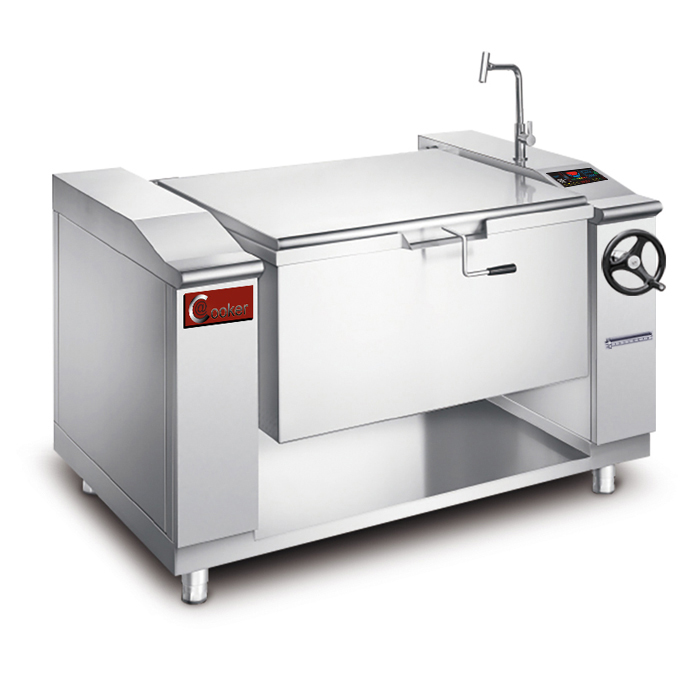
Work Voltage
| Single-Phase | Three-Phase |
|---|---|
| 120V, 220V | 208V/ 240V, 380V, 480V |
Global In-Stock + Fast Pickup
| US | UK | Germany | France |
|---|---|---|---|
| Italy | Spain | Belgium | Bulgaria |
1. The Workflow Reality: Transitioning from High-Heat Searing to Gentle Simmering in Minutes
Institutional menus are diverse. You might need to sear 30kg of beef cubes for a stew, then immediately add stock and vegetables for a long simmer. In a gas skillet, the heavy cast iron retains heat for 30 minutes, making it impossible to drop the temperature quickly. This leads to over-boiling and tough meat.
The commercial tilting skillet versatility of the AT Cooker unit allows you to go from 200°C (searing) to 90°C (simmering) in under 5 minutes. The induction coil reacts instantly to the new setting, and the efficient pan construction dissipates excess heat rapidly, giving you total control over the cooking process.
2. Digital Interface Design: How One-Touch Presets Eliminate Manual Calibration Errors
Guessing is dangerous. Traditional knobs have “Low, Medium, High.” This is vague. Our digital interface allows for exact power levels (1-8) or temperature settings.
This precision allows you to standardize recipes. “Simmer at Level 3” is a repeatable instruction. This reduces training time for temporary staff and ensures consistent results across different shifts.
3. The Physics of Cool-Down: Why Induction Adjusts Downward Faster Than Cast Iron Gas Skillets
Thermal inertia is a double-edged sword. While you want heat retention, you also need agility. Cast iron gas skillets act like freight trains—slow to start, slow to stop.
The composite stainless steel bottom of the AT Cooker unit is engineered for responsiveness. When you cut the power, the heat generation stops instantly. The pan cools down fast enough to prevent delicate sauces (like Bechamel) from scorching after the heat is reduced.
4. Cleaning Velocity: Using the Motorized Tilt to Dump Waste Liquids Instantly Between Batches
Switching modes means cleaning the pan. If you fried fish for lunch, you need to clean the oil before boiling pasta for dinner.
The motorized tilt mechanism allows you to dump oil or dirty water into a disposal cart in 60 seconds. The smooth stainless steel interior wipes clean without the need for heavy scrubbing, allowing for a 10-minute turnaround between completely different menu items.
5. Deglazing Efficiency: Transforming Searing Residue into Sauce Bases Without Changing Pans
Flavor lives in the “fond” (the brown bits stuck to the pan). In a gas unit, the corners often burn while the center is perfect. Deglazing is uneven.
The uniform heating of the induction coil ensures the fond is evenly distributed. You can add wine or stock, scrape the bottom, and create a rich sauce base immediately after searing, utilizing the same pan for the entire recipe lifecycle.
5-year Warranty | 2-year Free Exchangeable | 1-year Free Return
6. Managing Residual Heat: Safety Protocols for Switching from Deep Frying to Water Boiling
Switching from 180°C oil to water is dangerous if the pan is still hot. Water hitting hot steel creates steam explosions.
The digital display of the AT Cooker unit shows the real-time temperature. You know exactly when the pan has cooled to a safe level (below 100°C) to add water for cleaning or boiling, enhancing hospital kitchen equipment operation safety.
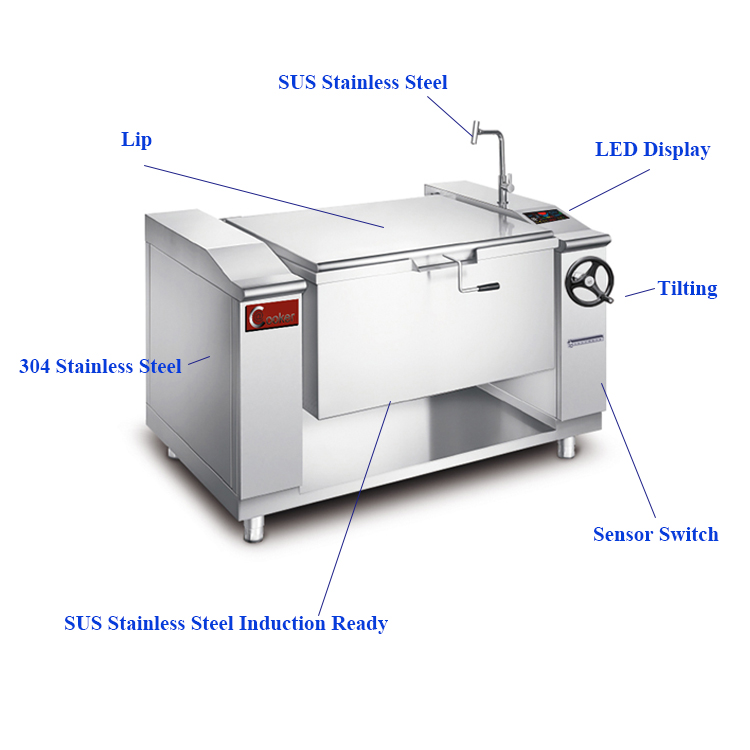
7. Staff Training Curve: Do Icons and Touchscreens Simplify Operation for Temporary Staff?
Complex gas valves require “feel.” Digital controls require reading. It is much easier to train a temp worker to “Press Button 3” than to “Adjust the flame until it looks right.”
The intuitive interface of the AT Cooker unit reduces the learning curve, allowing even junior staff to operate the heavy duty multi-cooker benefits with confidence.
8. The “Wipe-Down” Advantage: How Polished Stainless Steel Prevents Flavor Absorption Between Menus
Cast iron is porous; it holds flavors. You don’t want your vanilla custard tasting like yesterday’s curry.
The 304 stainless steel pan of the AT Cooker unit is non-porous. A simple wash and rinse removes all flavor traces. This neutrality is essential for kitchens that produce a wide variety of sweet and savory dishes.
9. Handling Flavor Transfer: Ensuring Spicy Braises Don’t Contaminate Delicate Dessert Custards
Building on the wipe-down advantage, the seamless R20 corners ensure no spicy oil is trapped in crevices. This guarantees that allergen or flavor cross-contamination is eliminated during the cleaning phase between modes.
10. Automated Safety Interlocks: Preventing Accidental Heating During the Tilting/Draining Phase
What if you accidentally leave the heat on while tilting the pan? In a gas unit, flames might flare up.
The AT Cooker unit has safety interlocks. As soon as the tilt mechanism is engaged, the induction power is cut automatically. This prevents dry burning of the exposed coil area and ensures operator safety.
11. The “Yi Guo Du Zhu” Strategy: Executing Multi-Stage Recipes (Sear-Braise-Steam) Without Emptying the Pan
“Yi Guo Du Zhu” means “One Pot Does It All.” You can sear meat, add vegetables, deglaze, add stock, and simmer—all without moving the food.
This continuous workflow reduces the number of pots and pans used, slashing the workload for the dishwashing team and keeping the kitchen organized.
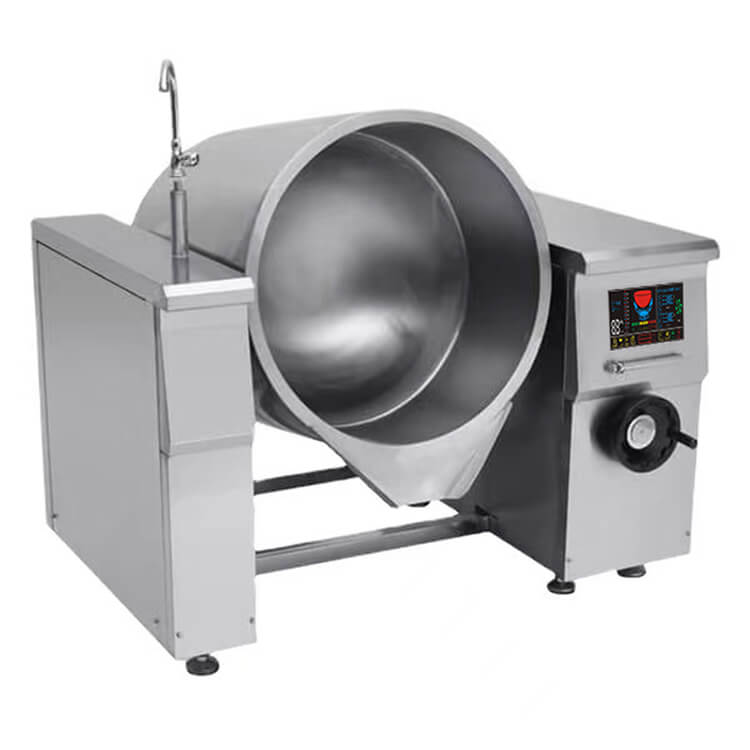
12. Rapid “Xi Guo” Efficiency: Utilizing Residual Heat and Spray Guns for 60-Second Turnarounds
Using the residual heat of the pan (around 60-80°C) aids cleaning. You can spray water into the warm pan, scrub lightly, and tilt to drain.
This process, known as “Xi Guo” (Washing the Wok), takes less than a minute. It allows the chef to reset the station instantly, maintaining high throughput during peak hours.
| Workflow Factor | Gas Bratt Pan | AT Cooker Induction |
|---|---|---|
| Heat Up Time | 20+ Minutes | 5-8 Minutes |
| Cool Down | Slow (Cast Iron) | Fast (Composite) |
| Cleaning | Manual Tilt (Heavy) | Motorized (Easy) |
| Safety | Open Flame | Auto-Cutoff |
5-year Warranty | 2-year Free Exchangeable | 1-year Free Return
Final Thoughts from AT Cooker
Ease of use is about speed, safety, and simplicity. The AT Cooker Commercial Induction Bratt Pan is designed to move as fast as your kitchen does. Switching modes is seamless, allowing you to adapt to any menu requirement instantly.
With stock ready for immediate delivery in the USA, Germany, France, UK, Belgium, Italy, Spain, and Bulgaria, we can help you streamline your operations today. Visit our About Us page to see how induction can transform your workflow.