Will Aggressive Pan Shaking Scratch Your Commercial Induction Cooktop? The Truth About Glass Durability
5-year Warranty | 2-year Free Exchangeable | 1-year Free Return
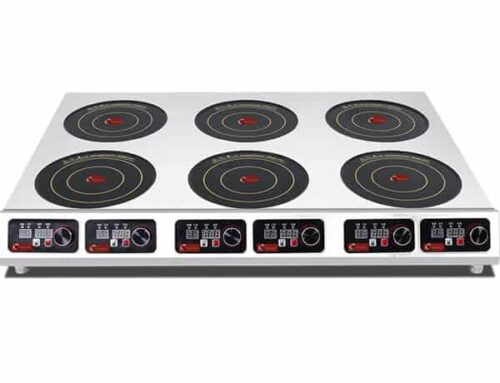
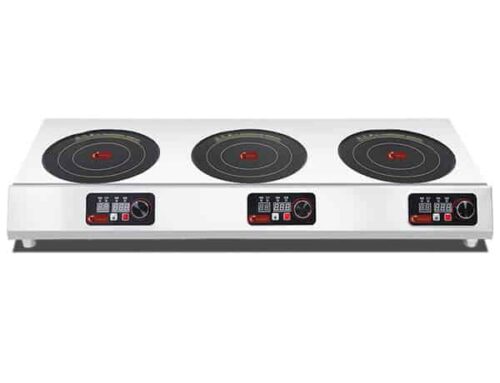
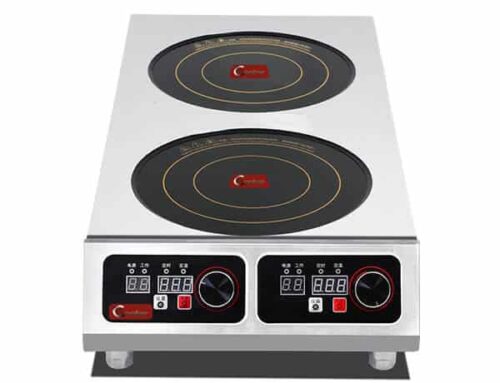
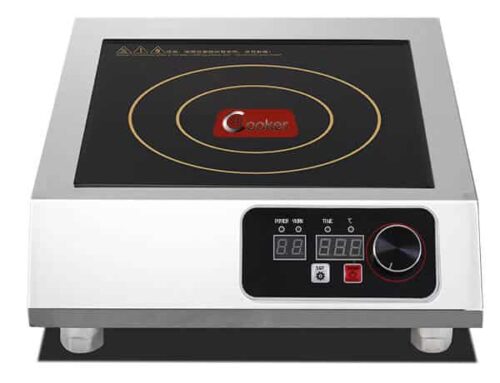
AT Cooker Executive Insight: Sautéing is a violent act. Chefs shake pans aggressively to mix ingredients and emulsify sauces. For those switching from gas to electric, the sleek glass surface of an induction cooker looks fragile. Will a day of heavy service leave it ruined? At AT Cooker, we understand commercial induction glass scratch resistance. Our units use premium high-temperature glass-ceramic designed to be harder than the steel pans you cook with. Here is the truth about durability, scratches, and how to protect your investment.
There is a persistent myth that commercial induction cooktops must be treated with kid gloves. Chefs worry that sliding a heavy stainless steel pan back and forth will turn the glass surface into a scratched mess within a week. This fear often stems from experiences with cheap, residential-grade units.
Professional equipment is different. The “Black Crystal” panels used on AT Cooker Commercial Induction Cooktops are engineered for Schott Ceran durability standards. While no material is indestructible, understanding the physics of hardness reveals that the pan itself is rarely the culprit. The real enemy is usually invisible grit.
In this maintenance guide, we will analyze what actually causes scratches, how to distinguish cosmetic marks from structural damage, and how to keep your cooktop looking new.
Commercial Kitchen Equipment -from AT Cooker
- As a brand manufacturer of the professional commercial induction cooking equipment, AT Cooker has responded to restaurants’ & hotels’ needs and research normative commercial cooking equipment using the very latest induction technology.
- These seamless, real commercial quality commercial cooking equipment provides us with the opportunity to incorporate equipment of our choice into one seamless, multipurpose cooking equipment creating an efficient, low cost, safe, green and sustainable commercial kitchen. We have standerd equipment can service many commercial kitchens.
- AT Cooker always offers professional service. From material, design, to producing, we focuse on quality, performance and reliability to ensures the best solution is delivered for each and every one of our customers. Have a commercial kitchen? We will be one of your best partners.
Work Voltage
| Single-Phase | Three-Phase |
|---|---|
| 120V, 220V | 208V/ 240V, 380V, 480V |
Global In-Stock + Fast Pickup
| US | UK | Germany | France |
|---|---|---|---|
| Italy | Spain | Belgium | Bulgaria |
1. The Physics of Glass-Ceramic: Why It Is Harder Than Stainless Steel Cookware
Scratch resistance is determined by hardness. The Mohs scale ranks materials from 1 (Talc) to 10 (Diamond). Stainless steel, the material of most pots, has a Mohs hardness of about 5.5 to 6.0.
The microcrystalline glass-ceramic used on AT Cooker units is rated at Mohs 7.0 to 8.0. In physics, a softer material cannot scratch a harder one. Therefore, smooth stainless steel simply cannot scratch clean glass-ceramic. So, why do scratches appear? The answer lies in contamination.
2. The Real Culprit: How Salt and Sugar Granules Act like Sandpaper Under Pans
The enemy isn’t the pan; it’s what is under the pan. Salt crystals (Mohs 2.5) are soft, but silica sand or crystallized sugar can be harder. If you spill salt or sugar on the cooktop and then slide a heavy pan over it, those granules act like diamond sandpaper.
This grinding action is what causes micro-abrasions. The key to protecting commercial induction glass is not stopping the shaking, but keeping the surface debris-free.
3. Distinguishing Between Metal Transfer Residue and Actual Deep Scratches
90% of “scratches” reported by chefs are not scratches at all. They are “Metal Transfer.” Because the glass is harder than the steel pan, aggressive sliding can actually rub microscopic layers of metal off the pan onto the glass.
This looks like silver or grey streaks that resemble scratches. The good news? This residue can be polished off with a specialized glass cooktop cleaner, restoring the surface to pristine condition.
4. Cookware Audit: Why Warped or Burred Pan Bottoms Cause Instant Damage
While smooth steel won’t scratch, a burr will. If a pan has been dropped, it may develop a sharp metal spur on the bottom. This concentrated point can exert enough pressure to cut into the glass.
The Hand Test
Run your hand across the bottom of every pan in your station. If you feel a snag or a sharp edge, that pan must be filed smooth or discarded immediately. A cookware audit is cheaper than a glass replacement.
5. Technique Adjustment: The Art of Sliding Smoothly vs. Grinding Force
Sautéing on induction cooktop units requires a slight adjustment. On gas, chefs often bang the pan down hard on the iron grates. On glass, this impact should be minimized.
Teach your team to slide smoothly. The flat surface of the glass actually makes sliding easier than on grates. Use the glide to your advantage rather than using downward grinding force.
5-year Warranty | 2-year Free Exchangeable | 1-year Free Return
6. Cleaning Protocols: Avoiding Steel Wool and Abrasive Scouring Pads
Irony: Chefs often scratch their cooktops while trying to clean them. Green scouring pads and steel wool are abrasive. They will leave a haze of micro-scratches that dulls the “Black Crystal” finish.
Cleaning burnt induction glass should be done with a scraper blade (held flat) and a non-abrasive cream cleanser. Never use grit-based powders.
7. The Impact of Carbonized Grease Layers Creating Drag and Friction Points
Burnt-on grease creates a rough surface. When you slide a pan over carbonized food, you are grinding that carbon into the glass. This increases friction and drag.
Keeping the cooktop clean isn’t just hygiene; it’s preservation. A smooth glass surface allows pans to glide effortlessly, reducing the physical force needed to sauté.
8. Aesthetic vs. Functional: Do Surface Scratches Impact Magnetic Performance?
This is the most important fact: Scratches are cosmetic. A scratch on the glass surface does not affect the magnetic field underneath. The induction coil sits safely below.
Unless the glass is cracked all the way through (compromising the waterproof seal), a scratched unit cooks exactly the same as a brand new one. Don’t retire a unit just because it looks well-used.
9. Using Silicone Protection Mats: A Viable Solution for High-Traffic Stations?
For high-traffic sauté stations, consider using a fiberglass-reinforced silicone induction mat. These thin mats sit between the glass and the pan.
They provide a buffer against scratches, spills, and impact while allowing the magnetic field to pass through freely. They are cheap, replaceable, and can extend the heavy duty induction cooktop lifespan significantly.
10. Cost Analysis: Glass Replacement vs. Equipment Durability in the Long Run
Even with abuse, commercial glass-ceramic usually lasts for years. However, accidents happen. The AT Cooker design is modular.
Replacing a glass top is a fraction of the cost of a new unit. We stock replacement glass panels for all our models, ensuring that a cosmetic accident doesn’t become a capital expenditure crisis.
11. Understanding the Mohs Hardness Rating of Premium “Black Crystal” Panels
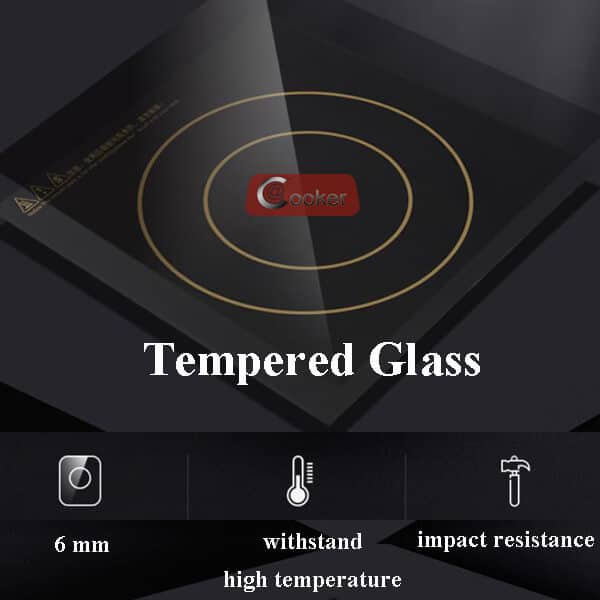
Cheap induction units use tempered glass (Mohs 5.5). Premium commercial units use crystallized glass-ceramic (Mohs 7+).
This difference is night and day. Premium glass resists thermal shock up to 700°C and is harder than most metals. When buying, always ask if the panel is “Black Crystal” or standard glass.
12. Differentiating “Grade A” Heat-Resistant Panels from Standard Decorative Glass
Not all black glass is the same. “Grade A” panels are uniform in structure, maximizing magnetic permeability and strength. Lower grades may have microscopic imperfections that become stress points.
AT Cooker uses only Grade A panels, ensuring that the surface can handle the aggressive, high-heat demands of a commercial wok or sauté line.
| Scratch Cause | Prevention Strategy |
|---|---|
| Salt/Sugar Grit | Wipe surface before placing pan |
| Burred Pan | Check & File pan bottoms |
| Metal Transfer | Clean with ceramic cleaner (Not abrasive) |
| Impact | Use Silicone Mats |
5-year Warranty | 2-year Free Exchangeable | 1-year Free Return
Final Thoughts from AT Cooker
Aggressive pan shaking is part of cooking. Your equipment should handle it. With the correct glass quality and basic maintenance, an AT Cooker Commercial Induction Cooktop will remain a workhorse for years.
With stock ready for fast delivery in the USA, Germany, France, UK, Belgium, Italy, Spain, and Bulgaria, you can trust our durability. Don’t baby your equipment; upgrade to equipment that doesn’t need babying. Visit our About Us page to learn more.