Hood Code Reality: 11 Commercial Griddle Insights on Type I vs Type II
5-year Warranty | 2-year Free Exchangeable | 1-year Free Return
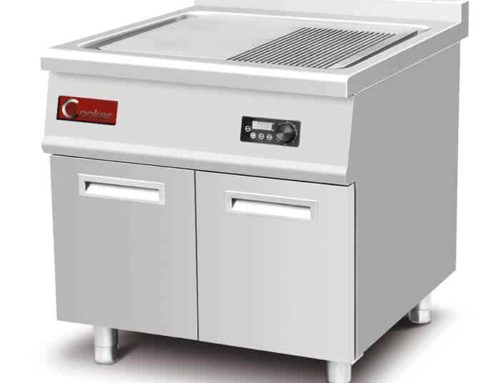
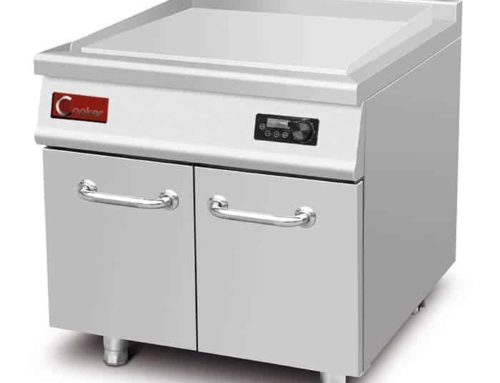
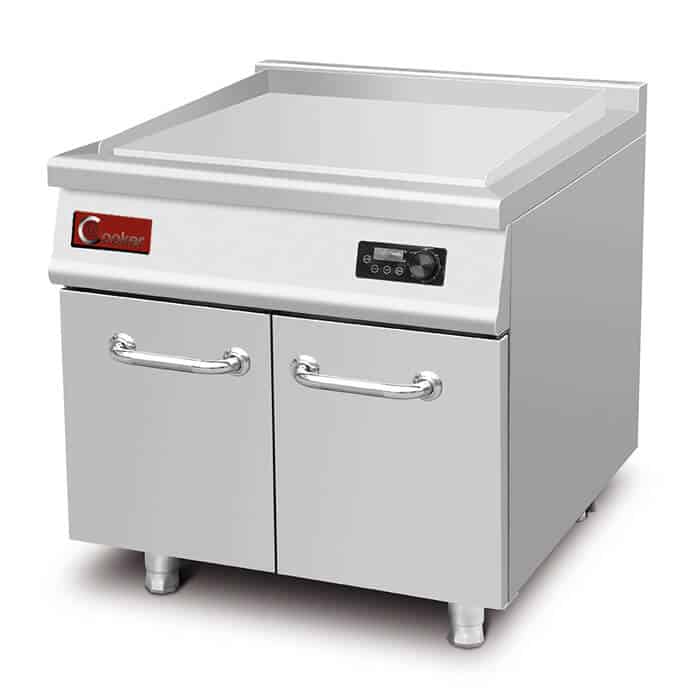
AT Cooker Executive Insight: Ventilation is the most expensive and misunderstood part of a restaurant build-out. There is a dangerous myth that switching from gas to electric induction means you don’t need a hood. This is false. However, the reality is nuanced. While you cannot evade commercial kitchen ventilation codes, you can significantly reduce your construction and operating costs. AT Cooker Commercial Induction Griddles produce no combustion plumes, allowing for 30-50% lower exhaust rates. This guide demystifies the Type I vs Type II hood debate to save you from inspection failures and budget blowouts.
Every restaurant owner fears the Health Department and Fire Marshal. One of the most common reasons for a failed opening inspection is improper ventilation. The rules are strict: grease hood requirements dictate that if you produce grease-laden vapors, you need a Type I hood with fire suppression.
But does an induction griddle produce grease? Yes. Does it produce combustion fumes? No. This distinction is where the savings lie. By understanding the interaction between NFPA 96 electric griddle standards and modern induction technology, you can spec a ventilation system that is smaller, quieter, and cheaper, while still being fully compliant.
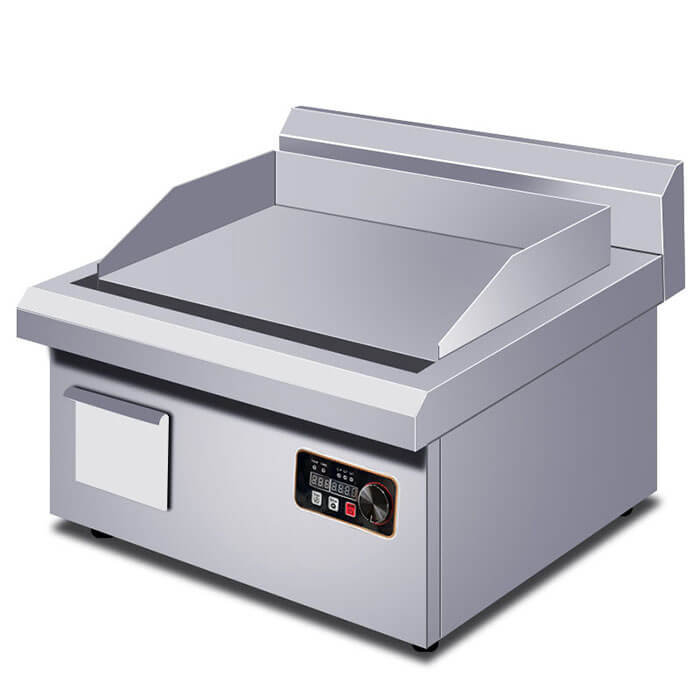
Commercial Kitchen Equipment -from AT Cooker
- As a brand manufacturer of the professional commercial induction cooking equipment, AT Cooker has responded to restaurants’ & hotels’ needs and research normative commercial cooking equipment using the very latest induction technology.
- These seamless, real commercial quality commercial cooking equipment provides us with the opportunity to incorporate equipment of our choice into one seamless, multipurpose cooking equipment creating an efficient, low cost, safe, green and sustainable commercial kitchen. We have standerd equipment can service many commercial kitchens.
- AT Cooker always offers professional service. From material, design, to producing, we focuse on quality, performance and reliability to ensures the best solution is delivered for each and every one of our customers. Have a commercial kitchen? We will be one of your best partners.
Work Voltage
| Single-Phase | Three-Phase |
|---|---|
| 120V, 220V | 208V/ 240V, 380V, 480V |
Global In-Stock + Fast Pickup
| US | UK | Germany | France |
|---|---|---|---|
| Italy | Spain | Belgium | Bulgaria |
1. NFPA 96 mandates Type I hoods for any griddle producing grease-laden vapors.
The “Electric Loophole” is a dangerous myth. NFPA 96 (Standard for Ventilation Control and Fire Protection) does not care about your fuel source; it cares about what you are cooking. If you are grilling burgers, searing steaks, or frying bacon, you are creating grease-laden vapors.
Regardless of whether the heat comes from gas or induction, these vapors require a Type I hood with a fire suppression system. Installing a Type II hood (designed for heat/steam only) over a grease-producing appliance is a code violation that will shut you down.
2. Type II hoods are strictly for heat/steam (condensate); cooking burgers on them violates fire codes.
Type II hoods lack the grease filters and fire suppression required to handle flammable particulates. They are designed for dishwashers, steam tables, and light baking ovens.
Using an induction griddle for anything other than boiling water or toasting dry bread under a Type II hood is illegal. Health department codes are clear: grease requires Type I. Don’t let a contractor tell you otherwise to save money.
3. Induction griddles typically qualify for 30-50% lower CFM exhaust rates.
While you still need a Type I hood, it can be smaller and weaker. Gas griddles create a massive thermal plume of hot combustion gases that must be exhausted. Induction creates no combustion plume.
This allows mechanical engineers to calculate the exhaust rate based on the “cooking duty” alone, not the fuel combustion. This often results in a 30-50% reduction in required CFM (Cubic Feet per Minute), lowering the cost of the fan, ductwork, and makeup air unit.
4. Ventless (UL 710B) systems are viable with induction but physically impossible for gas.
For historic buildings or skyscrapers where ductwork is impossible, “Ventless” hoods are the only option. These recirculating systems use filters to clean the air.
Because gas appliances produce Carbon Monoxide (CO), they cannot be used with ventless hoods. Induction produces zero CO, making it the perfect partner for UL 710B certified ventless systems, opening up locations that were previously impossible for a restaurant.
5. Using Type II hoods for induction griddles is the #1 cause of failed health inspections in eco-kitchens.
We see it constantly: a “Green Kitchen” installs induction to save energy, tries to cut corners with a Type II hood, and fails inspection on opening day.
Inspectors know that searing meat creates grease. If they see a griddle under a steam hood, it’s an automatic fail. Ensure your commercial kitchen ventilation codes compliance by spec’ing Type I from day one.
5-year Warranty | 2-year Free Exchangeable | 1-year Free Return
6. Induction’s lack of thermal updraft allows for “proximity hoods” that sit closer to the food source.
Gas appliances need a high clearance hood to capture the expanding cloud of hot combustion gas. Induction plumes are cooler and more contained.
This allows for “Proximity Hoods” or “Eyebrow Hoods” that sit closer to the griddle surface. These capture grease more efficiently at the source with lower air volumes, improving energy efficiency.
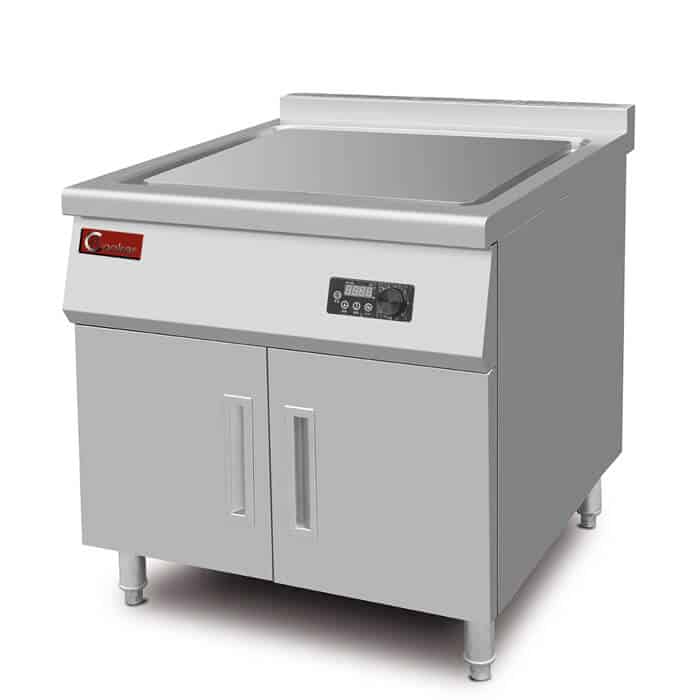
7. Makeup Air (MUA) units can be downsized significantly because induction doesn’t consume oxygen.
Gas burns oxygen. For every cubic foot of gas burned, you need to supply fresh air. This requires massive Makeup Air (MUA) units to balance building pressure.
Induction consumes zero oxygen. You only need to replace the air you exhaust. This allows you to downsize your MUA unit, saving thousands in HVAC equipment and tempering costs (heating/cooling incoming air).
8. Gas pilots require 24/7 ventilation; induction allows demand-controlled hoods to shut off.
If you have a pilot light, you must run your hood fan 24/7 (or at least while staff are present) to vent the CO. Induction allows for true “Demand Control Ventilation” (DCV).
When the induction griddle is off, the hood can be off. Optical or heat sensors in the hood can ramp the fan down to zero during lulls, saving massive amounts of electricity.
9. Cooler induction plumes prevent grease from baking onto baffle filters.
Gas exhaust is hot (400°F+). This bakes grease onto the hood filters, making them hard to clean. Induction exhaust is cooler (mostly steam and grease vapor).
The grease condenses more easily on the baffles and runs down into the cup rather than carbonizing. This keeps ductwork cleaner and reduces the frequency of professional duct cleaning services.
10. Chinese “Blue Sky” policies promote induction because it eliminates NO2 emissions.
In Asia, environmental regulations are targeting Nitrogen Dioxide (NO2) emissions from commercial kitchens. Gas combustion is a primary source of NO2.
Induction is zero-emission at the point of use. Switching to induction simplifies environmental permitting in strict urban zones and future-proofs your kitchen against upcoming “Decarbonization” laws in Western cities.
11. Asian integrated “Purifier-Griddles” use electrostatic precipitators to bypass external ductwork.
A trend emerging from Asia is the integrated induction griddle with a built-in hood containing an Electrostatic Precipitator (ESP).
These units scrub grease and smoke internally and vent clean air back into the room. While Western codes are catching up, this technology offers a glimpse into the future of ductless commercial cooking, only possible with the cool operation of induction.
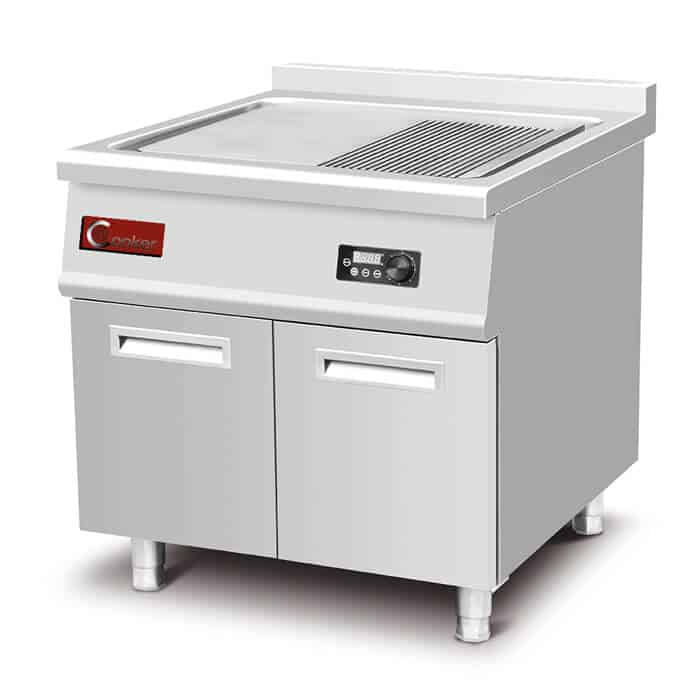
| Regulation | Gas Griddle | AT Cooker Induction |
|---|---|---|
| Hood Type | Type I (Mandatory) | Type I (Mandatory) |
| CFM Rate | High (Combustion load) | Low (Cooking load only) |
| Ventless (UL710B) | Impossible (CO gas) | Compatible |
| Makeup Air | High Requirement | Low Requirement |
5-year Warranty | 2-year Free Exchangeable | 1-year Free Return
Final Thoughts from AT Cooker
Don’t try to cheat the code; optimize it. With AT Cooker Commercial Induction Griddles, you still need a Type I hood, but it will be smaller, quieter, and cheaper to run than any gas setup.
With stock ready for fast delivery in the USA, Germany, France, UK, Belgium, Italy, Spain, and Bulgaria, we can help you design a compliant, high-efficiency kitchen. Visit our About Us page to consult with our ventilation experts.