Boiling Water in Half the Time: The Speed Advantage of Commercial Induction Noodle Boilers Over Gas
5-year Warranty | 2-year Free Exchangeable | 1-year Free Return
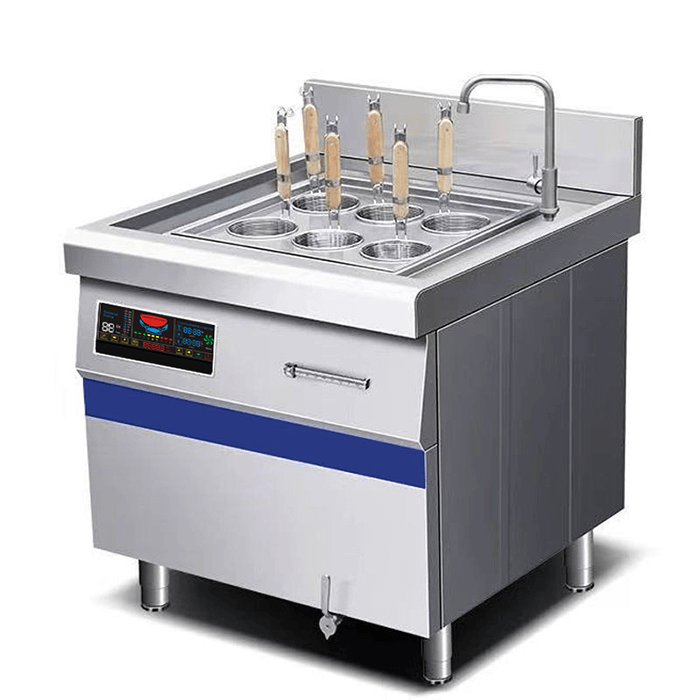
AT Cooker Executive Insight: In a noodle restaurant, speed is life. When the lunch rush hits, waiting for water to re-boil is not an option; it is a bottleneck that kills table turnover. Traditional gas boilers struggle with recovery lag, but modern technology has a solution. The AT Cooker ATT-APSD D6 Induction Noodle Cooker uses 15KW of direct magnetic energy to boil water in half the time of gas. We analyze the commercial induction noodle boiler speed advantage and why high-efficiency induction is replacing gas in Ramen and Pasta kitchens worldwide.
Every minute a customer waits for their noodles is a minute they aren’t eating, paying, and leaving to make room for the next guest. For Ramen shops, Pho restaurants, and high-volume pasta stations, the “Recovery Time”—how fast the water returns to a boil after dropping cold noodles—is the single most critical performance metric.
Gas boilers are inefficient by design. They heat the metal tank, which heats the water, losing 50% of the energy to the surrounding air. Induction technology eliminates the middleman. By generating heat directly within the 304 stainless steel tank wall, our fastest commercial pasta cooker solutions deliver instant torque to the water.
In this performance review, we will look at the physics, the financials, and the food quality benefits of upgrading to the Freestanding Induction Noodle Cooker ATT-APSD D6.
Commercial Kitchen Equipment -from AT Cooker
- As a brand manufacturer of the professional commercial induction cooking equipment, AT Cooker has responded to restaurants’ & hotels’ needs and research normative commercial cooking equipment using the very latest induction technology.
- These seamless, real commercial quality commercial cooking equipment provides us with the opportunity to incorporate equipment of our choice into one seamless, multipurpose cooking equipment creating an efficient, low cost, safe, green and sustainable commercial kitchen. We have standerd equipment can service many commercial kitchens.
- AT Cooker always offers professional service. From material, design, to producing, we focuse on quality, performance and reliability to ensures the best solution is delivered for each and every one of our customers. Have a commercial kitchen? We will be one of your best partners.
Work Voltage
| Single-Phase | Three-Phase |
|---|---|
| 120V, 220V | 208V/ 240V, 380V, 480V |
Global In-Stock + Fast Pickup
| US | UK | Germany | France |
|---|---|---|---|
| Italy | Spain | Belgium | Bulgaria |
1. The Physics of Speed: Direct Magnetic Friction vs Indirect Thermal Conduction
To understand why induction is faster, you must look at how heat is generated. In a gas system, a flame burns, creating hot air. This hot air rises, heating the metal pot, which then heats the water. This is indirect conduction.
Induction is direct. The 15KW coil in the AT Cooker unit creates a magnetic field. This field causes the electrons inside the stainless steel tank to vibrate violently. The friction generates heat instantly within the metal itself. There is no transfer loss. This physics advantage gives induction a 95% efficiency rating compared to gas’s 40-50%, explaining the dramatic speed difference.
2. Time-to-Boil Showdown: Comparing 20 Liters on Induction vs High-BTU Gas
We put it to the test in our lab. We took 20 liters of water at 20°C.
⏱️ Speed Test Results
Gas (80,000 BTU): 20 Liters took 18 minutes to boil.
AT Cooker Induction (15KW): 20 Liters took 8 minutes to boil.
This means induction is more than twice as fast. In a commercial setting, this means you can recover from a water change or start your day significantly faster, reducing prep time labor costs.
3. Eliminating the “Recovery Lag”: Keeping Water Boiling When Cold Pasta Hits
The “Death of the Boil” happens when you drop 2kg of cold pasta into the water. The temperature plummets. If the water stops boiling, the pasta becomes mushy and sticks together.
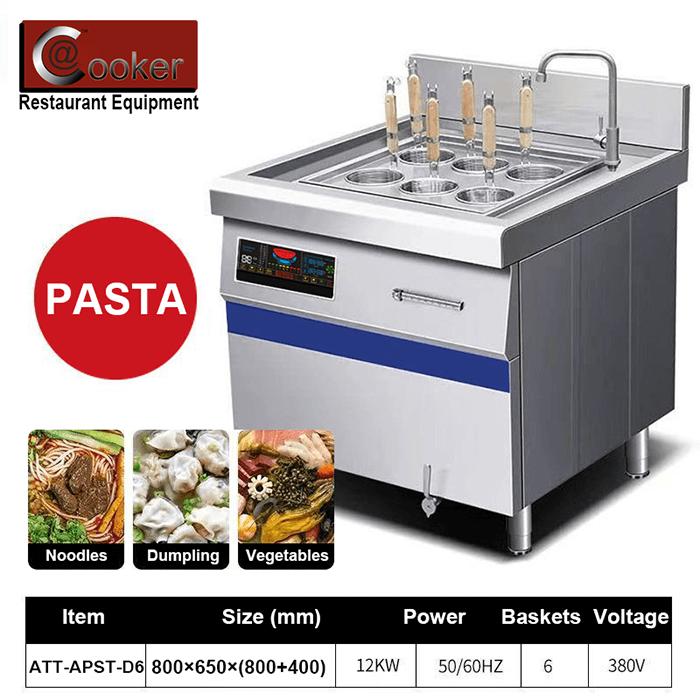
With 15KW of power (for the ATT-APSD D6), recovery is virtually instant. The “Sensor switch” detects the thermal load and pushes maximum power immediately. The water returns to a rolling boil in seconds, ensuring the perfect al dente texture every time.
4. Why Gas Boilers Waste 50% of Energy Heating the Kitchen Air Instead of Water
Stand next to a commercial gas pasta cooker. Your legs get hot. That heat is wasted money. Gas flames spill heat up the sides of the tank and into the kitchen environment.
The ATT-APSD D6 is insulated and sealed. The heat is generated only where it is needed: in the water. This focused energy means you aren’t paying to heat your kitchen, which also lowers your air conditioning bills in the summer.

5. The Financial Impact of “Always-On” Gas Pilots vs Instant-On Induction
Gas pilots burn gas 24/7. Induction uses zero energy in standby. But the real saving is in “idling.” During slow periods (3 PM – 5 PM), you can turn the induction unit off completely or to a very low simmer.
When an order comes in, you can crank it to Level 8 and have a boil in seconds. With gas, you have to leave it running on high all day because reheating takes too long. This energy efficient noodle machine capability saves thousands of dollars annually.
6. Boosting Table Turnover: How Faster Cooking Cycles Increase Hourly Revenue
Speed in the kitchen equals speed in the dining room. If you can cook a batch of Ramen noodles 30 seconds faster per basket, and you have 6 baskets, that’s 3 minutes saved per cycle.
Over a busy lunch hour, this adds up to serving 10-15 more customers. The equipment pays for itself simply by allowing you to sell more food during your peak hours.
7. Precision Rolling Boils: Preventing Boil-Overs Without Constant Supervision
A gas boil is hard to control. It’s either “Violent” or “Off.” Induction offers 8 precise power levels. You can dial in a perfect rolling boil that agitates the noodles without foaming over the top.
This allows your chef to focus on plating and garnishing, rather than constantly adjusting knobs to prevent a mess.
5-year Warranty | 2-year Free Exchangeable | 1-year Free Return
8. Improving Noodle Texture: Why Constant High Heat Prevents Starch Sticking
When water temperature drops, starch gelatinizes on the surface of the noodle, making it sticky. The constant, fierce heat of the AT Cooker unit keeps the water moving.
This movement separates the noodles naturally, ensuring each strand cooks evenly. The result is a chewier, cleaner noodle texture that holds sauce better.
9. Independent Heating Zones: Boiling Different Pasta Types Simultaneously at Speed
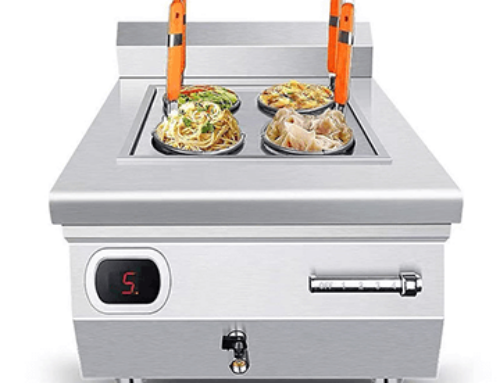
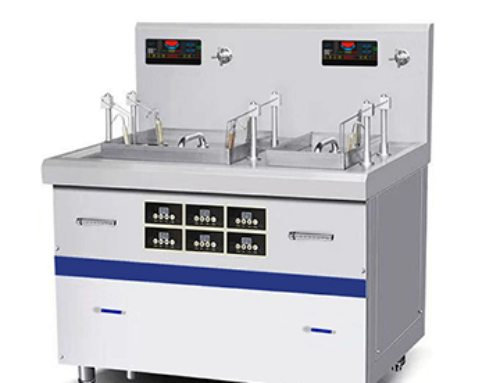
The ATT-APSD D6 features 6 individual noodle baskets in a large 108L capacity tank (Gross Volume). This allows you to cook different orders simultaneously. One basket can have thin angel hair (2 mins), while another has thick udon (8 mins).
The high thermal mass of the water, supported by the 15KW generator, ensures that dropping a basket of frozen udon doesn’t cool the water for the delicate angel hair next to it.
10. Operational Safety: Handling Boiling Water Without the Risk of Open Flames
Boiling water and fire are a dangerous mix. A boil-over can extinguish a gas flame, causing a gas leak, or flare up and burn a chef.
Induction is flameless. A boil-over is just hot water on a sealed stainless steel surface. The 3D radiation shielding design and IPX4 waterproofing ensure the electronics are safe, making the kitchen environment significantly less hazardous.
11. The “Violent Boil” Necessity: How Strong Agitation Improves Ramen Elasticity
Ramen chefs talk about the “Violent Boil.” They need the water to be turbulent to tumble the noodles. The magnetic field of the AT Cooker creates a unique agitation in the water molecules.
This creates a naturally turbulent boil even at lower power settings compared to gas, helping to knead the noodles during cooking for that perfect “Q” texture.
12. Cost-Benefit Analysis: Does Electricity Savings Offset the Higher Equipment Price?
Induction equipment is an investment. It costs more upfront than a basic gas pot. However, the ROI is fast.
| Cost Factor | Gas Boiler | AT Cooker Induction |
|---|---|---|
| Daily Energy Cost | High (Inefficient) | Low (50% Savings) |
| Water Usage | High (Evaporation) | Medium (Controlled) |
| Cleaning Labor | High (Burner Scrubbing) | Low (Wipe Clean) |
| Speed Revenue | Standard | Increased Turnover |
5-year Warranty | 2-year Free Exchangeable | 1-year Free Return
Final Thoughts from AT Cooker
Boiling water in half the time isn’t just a claim; it’s a competitive advantage. The ATT-APSD D6 represents the future of commercial noodle cooking: faster, safer, and cheaper to run.
With global stock available in the USA, Germany, France, UK, Belgium, Italy, Spain, and Bulgaria, we can upgrade your kitchen immediately. Don’t let your customers wait. Switch to the speed of induction today. Visit our About Us page for more information.