Slashing AC Bills: Commercial Induction Pasta Cooker Heat Emission Solutions
5-year Warranty | 2-year Free Exchangeable | 1-year Free Return
For restaurant owners, the utility bill is a monthly shock. While the cost of gas for cooking is obvious, there is a hidden, larger cost lurking in the shadows: the electricity required to remove that heat. Gas burners are notoriously inefficient, acting as uncontrolled space heaters that fight your air conditioning system every second they are on.
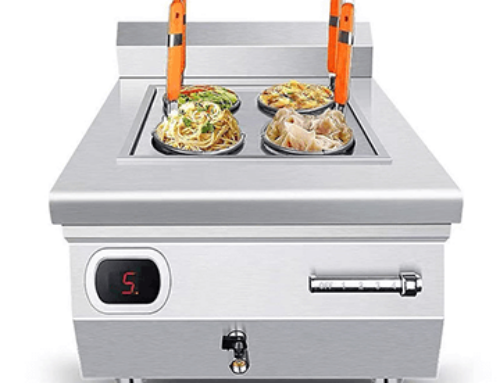
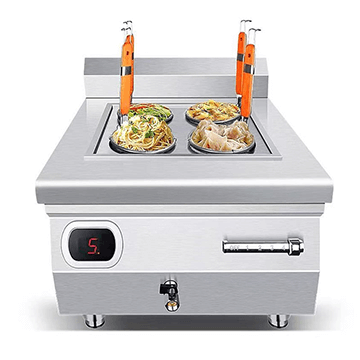
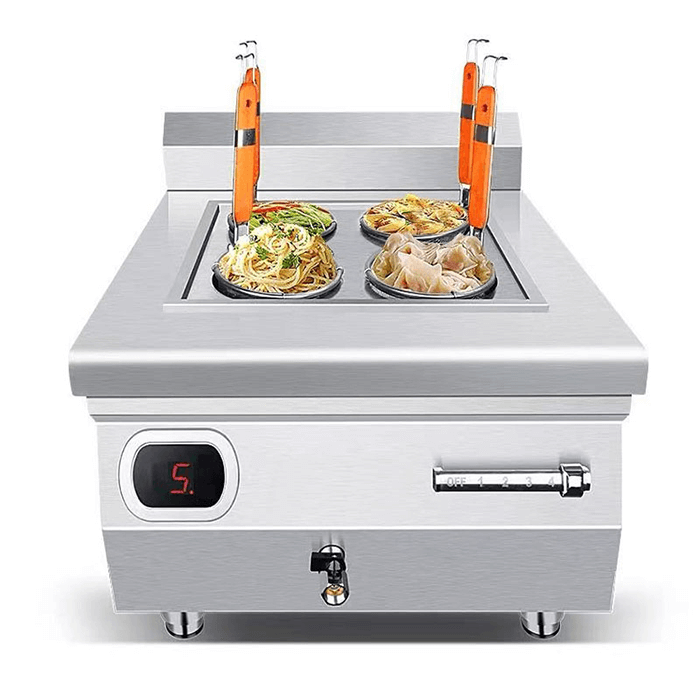
This battle between your stove and your AC unit is draining your profits. The solution? Commercial induction pasta cooker heat emission reduction. By switching to the ATT-APST C5 Tabletop Induction Noodle Cooker, you eliminate the waste heat at the source. This article explores how adopting induction technology can slash your cooling bills and transform your kitchen’s thermal efficiency.
Commercial Kitchen Equipment -from AT Cooker
- As a brand manufacturer of the professional commercial induction cooking equipment, AT Cooker has responded to restaurants’ & hotels’ needs and research normative commercial cooking equipment using the very latest induction technology.
- These seamless, real commercial quality commercial cooking equipment provides us with the opportunity to incorporate equipment of our choice into one seamless, multipurpose cooking equipment creating an efficient, low cost, safe, green and sustainable commercial kitchen. We have standerd equipment can service many commercial kitchens.
- AT Cooker always offers professional service. From material, design, to producing, we focuse on quality, performance and reliability to ensures the best solution is delivered for each and every one of our customers. Have a commercial kitchen? We will be one of your best partners.
Work Voltage
| Single-Phase | Three-Phase |
|---|---|
| 120V, 220V | 208V/ 240V, 380V, 480V |
Global In-Stock + Fast Pickup
| US | UK | Germany | France |
|---|---|---|---|
| Italy | Spain | Belgium | Bulgaria |
1. Quantifying the Thermal Load: Gas Burners Release 60% of Heat into the Air
Physics is unforgiving. An atmospheric gas burner typically operates at 40% efficiency. Where does the other 60% go? It radiates into your kitchen.
If you run a 10KW gas pasta cooker, 6KW of that heat is literally heating your walls, your staff, and your air. This “fugitive heat” transforms a compact noodle bar into an oven, making it impossible to keep cool without industrial-grade air conditioning.
2. The “Double Energy Cost”: Paying for Gas to Heat and Electricity to Cool
Using gas creates a “Double Energy Cost.” First, you pay the gas company to generate the heat. Then, you pay the electric company to remove that same heat via your AC system.
It’s a financial black hole. By switching to the ATT-APST C5, you break this cycle. You only pay for the energy that cooks the noodles, eliminating the secondary cost of cooling the waste heat.
3. How Induction Technology Transfers 95% of Energy Directly into the Water
Induction doesn’t heat the air; it heats the metal tank directly through magnetic friction. The ATT-APST C5 boasts 90% – 95% energy efficiency.
This means almost every watt of electricity you buy goes into boiling the water. There is negligible radiant heat loss. You can stand next to a boiling induction cooker and feel no heat radiating from the sides, drastically reducing restaurant AC costs.
4. Downsizing HVAC Requirements: Saving Capital on Ventilation for Small Noodle Bars
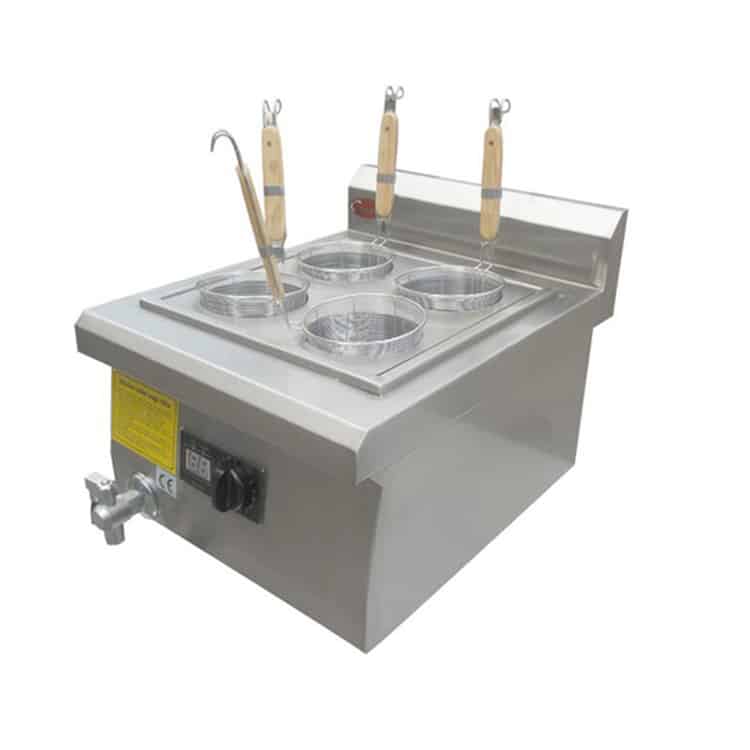
Building a new restaurant? Gas requires massive extraction hoods to remove combustion fumes and excess heat. This ductwork is expensive.
With tabletop noodle cooker efficiency, you often qualify for lighter-duty ventilation systems (Type II hoods for steam only), as there are no grease-laden combustion byproducts. This can save thousands in initial construction capital.
5. The Direct Correlation Between Kitchen Ambient Temperature and AC Electricity Usage
For every 1°C increase in ambient temperature, your AC works 3-5% harder. In a gas kitchen, temperatures can easily soar 10°C above the dining room.
Induction keeps the kitchen ambient temperature close to room temperature. This reduces the “Delta T” (temperature difference) your AC must fight, allowing the compressor to cycle off more frequently and extending its lifespan.
6. Preventing “Thermal Runaway” in Tight Countertop Cooking Stations
Small kitchens suffer from “Thermal Runaway”—heat builds up faster than it can escape. Equipment overheats, fridges fail, and staff suffer.
The compact 480×570mm footprint of the ATT-APST C5, combined with its cool-touch operation, prevents this buildup. It allows for high-output cooking in tight spaces without turning the room into a sauna.
7. Seasonal Savings: Maximizing Profitability During High-Cost Summer Cooling Months
In summer, electricity rates often peak. This is exactly when gas kitchens are hottest and AC usage is highest. The bills can be crippling.
Using induction vs gas ambient heat data, restaurants switching to induction see their biggest ROI in July and August. The cooler kitchen means the AC isn’t fighting a losing battle against the sun and the stove.
5-year Warranty | 2-year Free Exchangeable | 1-year Free Return
8. Reducing Condensate Hood Loads: Managing Steam Without Excess Heat Exhaust
Pasta cookers generate steam. In a gas kitchen, this steam mixes with hot combustion gases, requiring high-CFM extraction.
With induction, the exhaust is pure steam, which is cooler and easier to manage. You can often use lower-velocity fans to capture the steam plume, further reducing the electricity consumed by the ventilation system itself.
9. Protecting Refrigeration Equipment: Lowering Ambient Heat Near Prep Table Fridges
Placing a gas boiler next to a sandwich prep fridge is a disaster. The heat forces the fridge compressor to run 24/7 to stay cold.
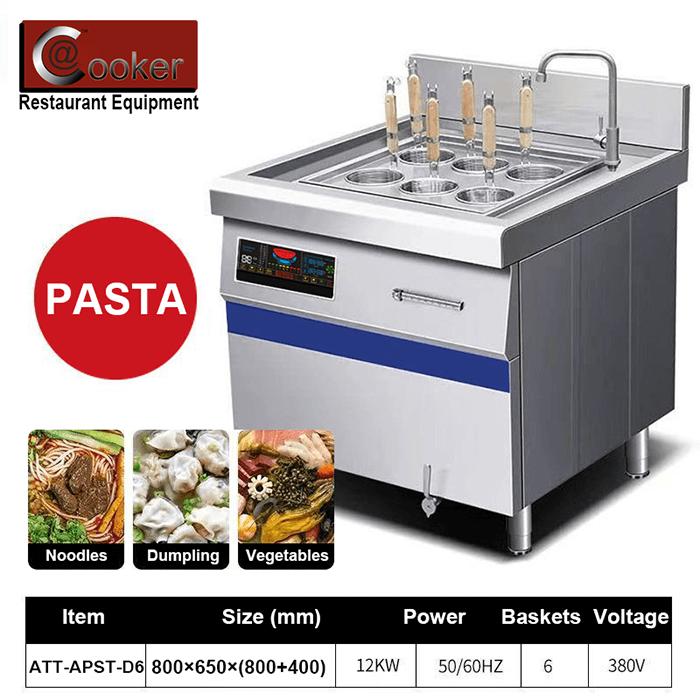
The ATT-APST C5 radiates so little heat that it can safely sit adjacent to refrigeration units. This “Cool Zone” compatibility protects your expensive compressors from burnout and ensures food safety standards are met.
10. The Financial Impact of Improving Chef Comfort and Reducing Heat Fatigue Breaks
Heat fatigue is real. It slows chefs down, leads to mistakes, and requires frequent breaks.
A cooler kitchen means a more productive team. By improving thermal comfort, you get more output per labor hour. While hard to quantify on an electric bill, this efficiency gain is a direct contributor to the restaurant’s bottom line.
11. Leng Chu Fang (Cold Kitchen): The Trend of Flameless Cooking for Compact Asian Eateries
In Asia, the concept of “Leng Chu Fang” (Cold Kitchen) is taking over. It means a kitchen without open flames, often visible to customers.
The ATT-APST C5 is the cornerstone of this trend. Its flameless, low-heat operation allows it to be installed in shopping malls or historic buildings where gas piping and heavy exhaust systems are prohibited or too costly.
12. Preventing “Secondary Radiation”: How Induction Bodies Stay Cool Compared to Hot Cast Iron
Even after you turn off a gas stove, the heavy cast iron grates radiate heat for an hour (“Secondary Radiation”).
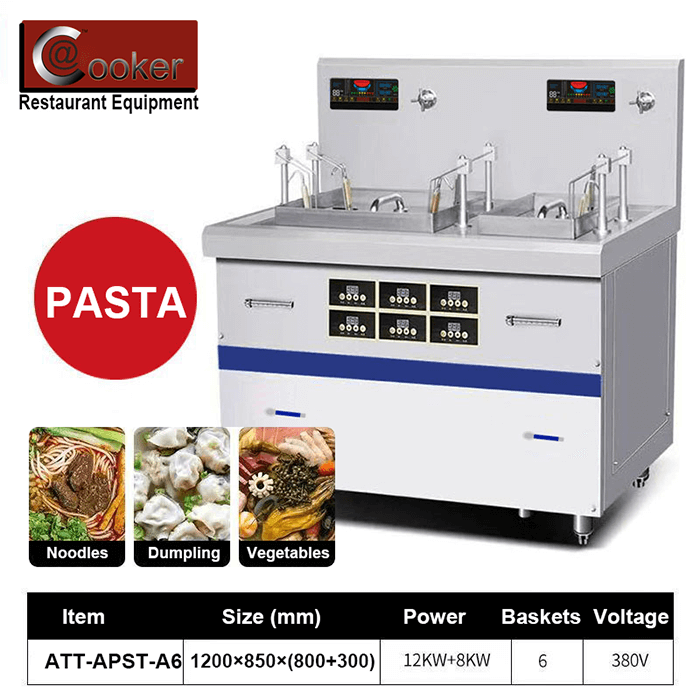
The 304# stainless steel body of our induction unit holds very little heat. Once the machine is off, the heat source is gone. This allows the kitchen to cool down instantly at closing time, reducing the load on the AC during the cleanup shift.
5-year Warranty | 2-year Free Exchangeable | 1-year Free Return
Final Thoughts: Stop Burning Money
Every dollar you spend cooling down your kitchen is a dollar lost. Switch to AT Cooker tabletop induction pasta cookers to stop the waste. It’s an investment that pays you back in lower bills, happier staff, and a greener footprint.
Slash Your Utility Bills Today
Calculate your potential savings with our induction technology. Contact us for a free energy consultation.