Extreme Durability Test: Can Commercial Induction Sensors Survive 200 Flips Per Hour?
5-year Warranty | 2-year Free Exchangeable | 1-year Free Return
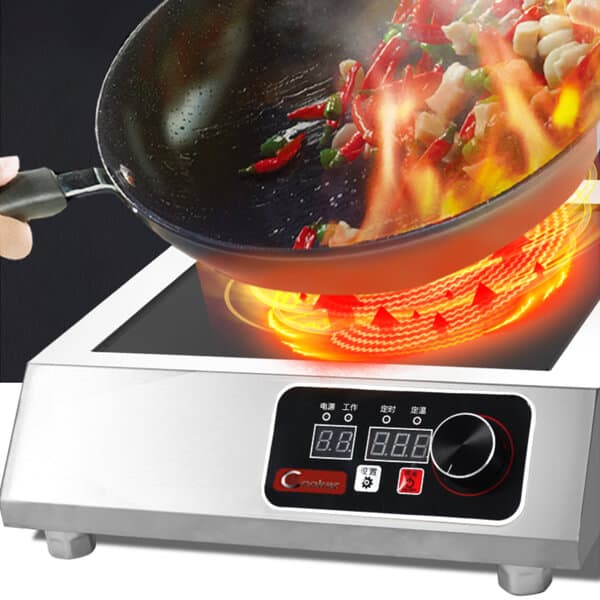
AT Cooker Executive Insight: Sautéing is the heartbeat of a commercial kitchen. On a busy Friday night, a single station chef might lift and toss a pan over 200 times an hour. This repetitive action is a torture test for electronics. Can a sensor designed to detect metal withstand this frequency without burning out or glitching? The answer defines commercial induction sensor durability. At AT Cooker, we engineer our sensors to handle millions of cycles, ensuring that your equipment keeps up with your busiest chefs.
In a home kitchen, a “Pan Detection Sensor” is a convenience. In a commercial kitchen, it is a mission-critical component. Every time a chef lifts a pan to flip vegetables, the induction circuit breaks. Every time the pan lands, the circuit must reconnect instantly. This “On-Off-On” cycle sends rapid electrical pulses through the system.
If the sensor logic or the IGBTs (Insulated Gate Bipolar Transistors) are weak, this high-frequency switching causes thermal fatigue and eventual failure. This is why high frequency sautéing induction requires specific engineering protocols. The AT Cooker Commercial Series is built to survive the brutal rhythm of professional service.
In this engineering deep dive, we will analyze how professional induction sensors are built to withstand the extreme stress of the sauté station.
Commercial Kitchen Equipment -from AT Cooker
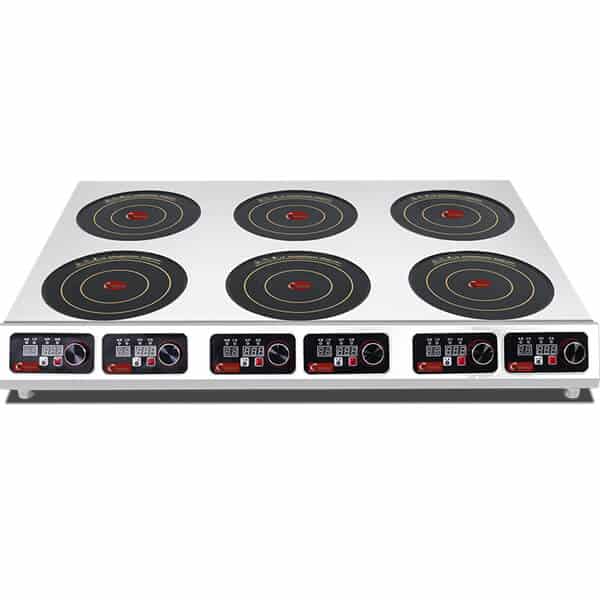
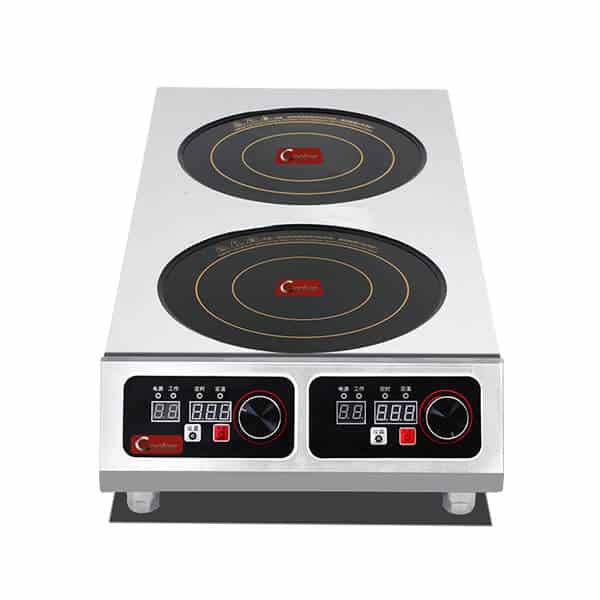
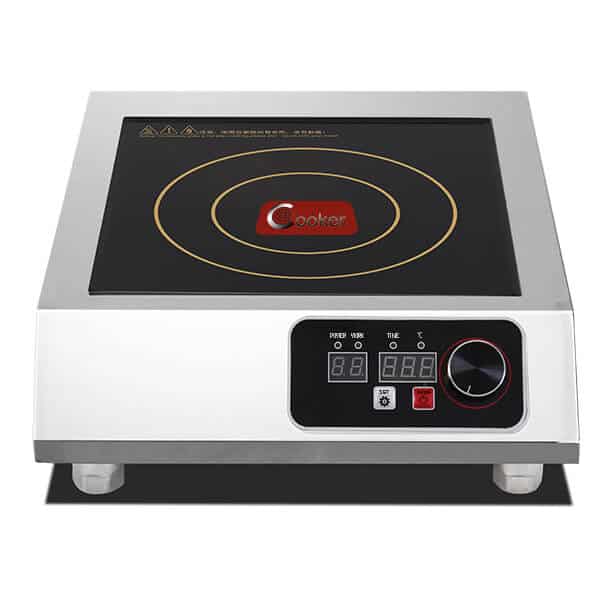
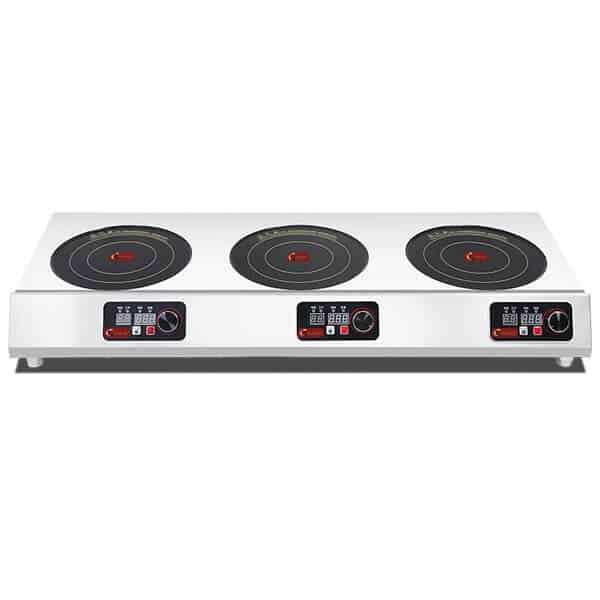
- As a brand manufacturer of the professional commercial induction cooking equipment, AT Cooker has responded to restaurants’ & hotels’ needs and research normative commercial cooking equipment using the very latest induction technology.
- These seamless, real commercial quality commercial cooking equipment provides us with the opportunity to incorporate equipment of our choice into one seamless, multipurpose cooking equipment creating an efficient, low cost, safe, green and sustainable commercial kitchen. We have standerd equipment can service many commercial kitchens.
- AT Cooker always offers professional service. From material, design, to producing, we focuse on quality, performance and reliability to ensures the best solution is delivered for each and every one of our customers. Have a commercial kitchen? We will be one of your best partners.
Work Voltage
| Single-Phase | Three-Phase |
|---|---|
| 120V, 220V | 208V/ 240V, 380V, 480V |
Global In-Stock + Fast Pickup
| US | UK | Germany | France |
|---|---|---|---|
| Italy | Spain | Belgium | Bulgaria |
1. The Mechanics of Pan Sensors: How They Handle Rapid Connect-Disconnect Cycles
Induction cooking is a binary state: connected or disconnected. When a pan is on the glass, the magnetic circuit is closed, and energy flows. When lifted, the circuit opens.
In a sauté scenario, this happens dozens of times a minute. The sensor must detect the break, pause the IGBTs (to prevent voltage spikes), and then re-engage the moment the pan returns. This rapid-fire switching is the hardest task for an induction controller. Cheap units lag; professional units like AT Cooker anticipate.
2. Domestic vs. Commercial: Why Home Units Fail Under Restaurant Sauté Frequency
A home cook might flip a pancake 10 times. A line chef might flip a stir-fry 500 times a night. Home units are not built for this duty cycle. Their relays and sensors overheat and fail under rapid switching.
Commercial induction sensor durability is defined by the ability to handle millions of cycles without degradation. Our units use industrial-grade components designed for continuous, abusive workflows.
3. The Stress on IGBTs: Managing Current Spikes During Constant Flipping
Every time the pan reconnects, there is an “Inrush Current.” If not managed, this spike heats up the IGBTs (Insulated Gate Bipolar Transistors). Repeated spikes lead to thermal failure.
We use advanced Snubber Circuits and soft-switching logic to smooth out these spikes. This protects the heart of the machine, ensuring that high frequency sautéing induction doesn’t shorten the lifespan of the electronics.
4. Latent Heat Issues: Does Sensor Accuracy Drift When Glass is Superheated?
After an hour of sautéing, the glass surface gets hot from contact with the pan. Some sensors drift or fail when overheated.
Our sensors are thermally insulated and calibrated to ignore the ambient heat of the glass, focusing only on the magnetic feedback of the pan. This ensures consistent pan detection reliability even during the hottest service.
5. Physical Durability: Vibration Impact on Internal Soldering and Components
Sautéing creates vibration. Slamming pans down sends shockwaves through the chassis. In cheap units, this cracks solder joints on the PCB.
️ Vibration Proofing
AT Cooker units feature potted electronics and shock-mounted coil assemblies. We glue and brace heavy components so that the physical violence of cooking doesn’t rattle the brains of the machine loose.
5-year Warranty | 2-year Free Exchangeable | 1-year Free Return
6. The “Soft-Start” Logic: Protecting Circuits While Maintaining Sauté Speed
To protect the grid and the unit, we use a “Soft-Start” when the pan returns. However, it must be fast enough to not feel like lag.
Our algorithms ramp power from 0 to 100% in milliseconds—fast enough to catch the heat of the toss, but controlled enough to prevent electrical arcing. This balance is the secret to heavy duty induction cooker lifespan.
7. Error Code Fatigue: Differentiating Between Nuisance Beeps and True Sensor Failure
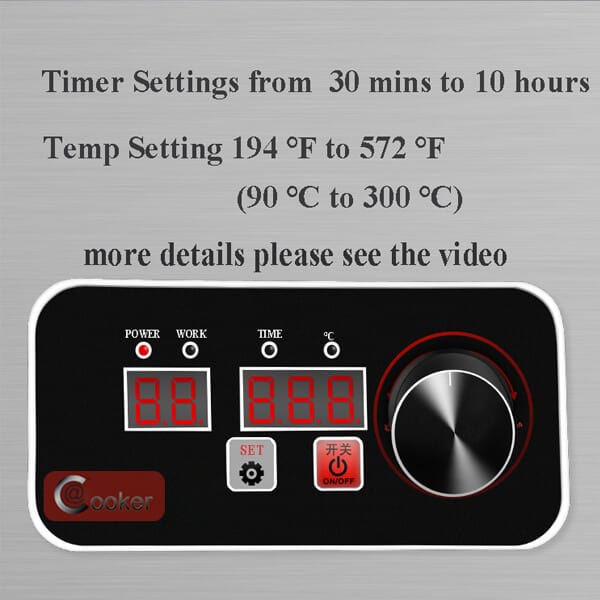
If a sensor fails, the unit stops. But often, “failure” is just a dirty sensor or a bad pan. We program our diagnostics to be smart.
The unit differentiates between “Pan Lifted” (Standby) and “Sensor Broken” (Error). This prevents false alarms and keeps the chef cooking without constant error code interruptions.
8. Glass Surface Wear: How Scratches Over Time Affect Sensor Distance and Sensitivity
Over years, glass gets scratched. Does this affect the sensor? No.
The sensor reads magnetic field disruption, which passes through glass, air, and scratches equally. As long as the glass thickness remains structural, the induction cooker sensor sensitivity remains razor-sharp, regardless of cosmetic wear.
9. The “Miao Hui” Standard: Millisecond Re-Coupling Technology in Professional Units
“Miao Hui” (Instant Return) is our benchmark. It means the recovery is faster than human perception.
By keeping the control loop active even when the load is lost, the system is primed to fire the moment the load returns. This technology is what makes our units feel like gas.
10. Pulse-Width Modulation: How Smart Chips “Poll” for Pan Presence Without Overloading
When the pan is gone, the unit sends out tiny magnetic pulses (polling). “Are you there? Are you there?”
This uses minimal energy. When the pulse hits metal, the system wakes up fully. This PWM technique saves energy while maintaining readiness, a key factor in restaurant kitchen equipment stress test performance.
11. Thermal Management: Cooling the Electronics Zone During Intense Sauté Service
Electronics hate heat, and a sauté station is hot. We use a dual-zone cooling design.
The coil air intake is separate from the electronics air intake. This ensures that the sensitive chips are cooled by fresh, ambient air, not the hot air radiating from the cooking zone.
12. Longevity Analysis: Industry Testing Protocols for Millions of On/Off Cycles
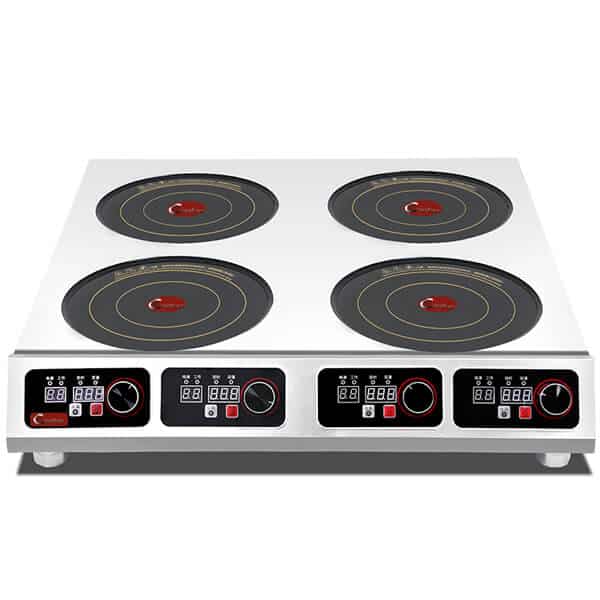
Before we ship, we test. Our “Torture Test” involves a robotic arm lifting and placing a pan on a running unit 24 hours a day.
We verify that the sensor and IGBTs can survive millions of cycles. This is why we confidently offer a 5-year warranty. We know exactly when our equipment fails, and it’s far beyond the usage of a typical kitchen.
| Durability Factor | Home Unit | AT Cooker Commercial |
|---|---|---|
| Cycle Rating | Low | High (Millions) |
| Reconnect Speed | Laggy | Instant |
| Vibration Proof | No | Yes |
| Cooling | Standard | Dual-Zone |
5-year Warranty | 2-year Free Exchangeable | 1-year Free Return
Final Thoughts from AT Cooker
Can our sensors survive 200 flips per hour? Yes, and they can do it all day, every day. The AT Cooker Commercial Induction Series is built for the reality of the line, not the showroom.
With stock ready in the USA, Germany, France, UK, Belgium, Italy, Spain, and Bulgaria, we are ready to support your kitchen’s intensity. Visit our About Us page to learn more about our engineering standards.