Protecting Your Investment: Are Silicone Mats Essential for Heavy Sautéing on Commercial Induction Cooktops?
5-year Warranty | 2-year Free Exchangeable | 1-year Free Return
AT Cooker Executive Insight: When you invest in a high-performance induction station, you want it to last. Chefs often ask: “Should I use a mat?” Silicone protection mats are popular in home kitchens, but in a commercial environment involving heavy duty induction sautéing, they can be a double-edged sword. While they offer scratch protection, they can also trap heat and damage internal sensors if used incorrectly. At AT Cooker, we build our glass tops tough, but we also believe in smart maintenance. This guide analyzes the pros and cons of commercial induction protection mats.
The glass-ceramic surface of a commercial induction cooktop is an engineering marvel. It withstands thermal shocks of 700°C and supports heavy pots. However, it is not diamond. Over time, the aggressive “shake and slide” action of a sauté station will create micro-scratches. To combat this, many kitchens turn to silicone mats.
But are they safe? Do they block the magnetic field? Do they cause the unit to overheat? The answer depends on the quality of the mat and the intensity of your cooking. In this detailed analysis, we explore whether these accessories are a necessity or a liability for preventing scratches on induction glass.
Commercial Kitchen Equipment -from AT Cooker
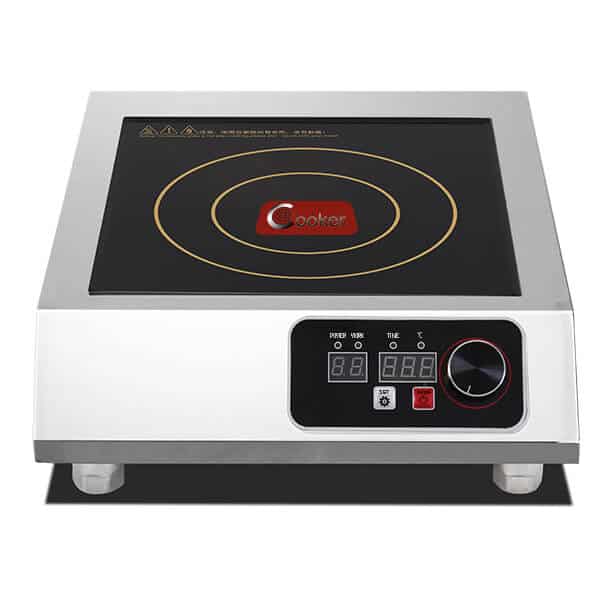
- As a brand manufacturer of the professional commercial induction cooking equipment, AT Cooker has responded to restaurants’ & hotels’ needs and research normative commercial cooking equipment using the very latest induction technology.
- These seamless, real commercial quality commercial cooking equipment provides us with the opportunity to incorporate equipment of our choice into one seamless, multipurpose cooking equipment creating an efficient, low cost, safe, green and sustainable commercial kitchen. We have standerd equipment can service many commercial kitchens.
- AT Cooker always offers professional service. From material, design, to producing, we focuse on quality, performance and reliability to ensures the best solution is delivered for each and every one of our customers. Have a commercial kitchen? We will be one of your best partners.
Work Voltage
| Single-Phase | Three-Phase |
|---|---|
| 120V, 220V | 208V/ 240V, 380V, 480V |
Global In-Stock + Fast Pickup
| US | UK | Germany | France |
|---|---|---|---|
| Italy | Spain | Belgium | Bulgaria |
1. The Primary Function: Preventing Scratches from Rough Cast Iron or Warped Pans
The first rule of commercial kitchen equipment maintenance is prevention. Induction glass is hard, but cast iron is rough. Sliding a heavy, burred pan back and forth will eventually cause micro-abrasions.
Silicone mats act as a sacrificial barrier. They take the physical abuse so the glass doesn’t have to. For stations that use cast iron or older stainless steel pans with warped bottoms, a mat is a cheap insurance policy against permanent cosmetic damage.
2. Heat Conductivity Analysis: Do Silicone Mats Reduce Sautéing Power?
Induction works via magnetic fields, which pass through silicone as if it weren’t there. There is zero loss of magnetic energy.
However, there is a thermal insulating effect. The mat creates a small barrier between the hot pan and the glass sensor. For boiling water, this is negligible. For high-speed sautéing, it can cause a slight delay in temperature regulation, though heavy duty induction sautéing power remains unaffected.
3. Temperature Limits: Why Standard Baking Mats Melt Under Commercial Induction Heat
Do not use a standard baking mat (like a Silpat) on a cooktop. Those are rated for ~230°C (450°F). A commercial sauté pan can easily exceed 300°C (572°F) when searing.
Standard mats will melt, fusing to your glass top and ruining it. You must use heat resistant cooking mats specifically rated for high-temp induction, often reinforced with fiberglass to withstand 300°C+.
4. The Friction Factor: How Non-Slip Mats Interfere with Chef’s Tossing Rhythm
Chefs love to slide pans. Silicone is “grippy.” A non-slip mat stops the pan from sliding, forcing the chef to lift the pan to move it.
This disrupts the cooking rhythm and increases wrist strain. For boiling stations, grip is good. For sauté stations, grip is bad. Choose a mat with a smooth, fiberglass surface if you need to slide.
5. Sensor Interference: Will Thick Mats Trigger “No Pan” Error Codes?
The magnetic field fades with distance. If you use a mat that is too thick (over 2-3mm), it increases the gap between the coil and the pan.
On some sensitive units, this extra gap might trigger a “Pan Missing” error or reduce power efficiency. AT Cooker units have a generous detection range, but we recommend mats thinner than 1.5mm for optimal connectivity.
5-year Warranty | 2-year Free Exchangeable | 1-year Free Return
6. The “Insulation Trap”: Risk of Overheating Internal Components by Trapping Surface Heat
Glass cooktops need to breathe. The glass dissipates heat from the pan. If you cover the sensor area with a thick silicone mat, you trap heat in the glass.
This trapped heat can travel downwards, potentially overheating the internal temperature sensor or even the coil insulation. Using a mat on high power for hours can trigger an “Overheat” error code that shuts down the machine.
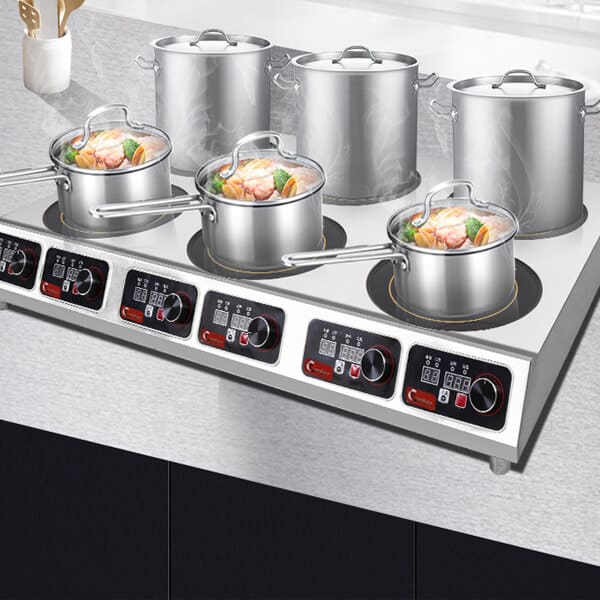
7. Fiberglass Reinforced Mats vs. Pure Silicone: Choosing the Right Grade for 300°C+
Pure silicone is too soft and heat-sensitive for commercial use. The only viable option is fiberglass reinforced silicone.
The fiberglass mesh provides structural integrity and prevents the mat from stretching or warping under heat. It also creates a harder surface that allows for some sliding, striking a balance between protection and usability.
8. Hygiene Protocols: Managing Grease Accumulation Underneath Protection Mats
Mats hide dirt. Grease, boil-over liquid, and crumbs get trapped between the mat and the glass. In a hot kitchen, this layer cooks onto the glass, forming a stubborn carbon deposit.
If you use mats, they must be removed and washed after every shift. Failure to do so creates a hygiene hazard and can actually damage the glass surface due to carbon buildup hotspots.
9. Schott Ceran Reality: Is High-Grade Commercial Glass Tough Enough Without Mats?
Honestly? Yes. AT Cooker uses premium glass-ceramic rated for extreme hardness. It is designed to take the abuse of steel pans.
While scratches are aesthetically displeasing, they rarely affect performance. Many chefs prefer the “naked” glass because it offers better thermal feedback and easier sliding. Mats are an option, not a requirement.
10. The “Sugar Grain” Danger: How Mats Hide Abrasive Particles that Cause Damage
The biggest scratch risk isn’t the pan; it’s sugar or salt granules caught underneath. A mat can trap these granules.
If a chef drags a heavy pot over a mat with salt underneath, the mat presses the crystals into the glass, acting like sandpaper. This hidden abrasion can be worse than direct pan contact.
11. Cost Analysis: Monthly Mat Replacement vs. Long-Term Glass Maintenance
Commercial mats wear out. They burn, tear, and get sticky. Expect to replace them monthly in a busy kitchen ($20/mat x 12 = $240/year).
Compare this to the cost of a replacement glass top after 5 years. Often, the cost of mats exceeds the cost of the glass maintenance. It comes down to aesthetic preference vs. operational expense.
12. Alternative Solutions: Using Parchment Paper for Specific Delicate Service Styles
For messy jobs (like searing marinated meats), chefs sometimes use parchment paper. It is disposable, prevents sticking, and keeps the glass clean.
However, paper burns at 220°C. It is safe for boiling or simmering, but dangerous for high-heat searing. Never leave paper unattended on an induction unit.
13. The NTC Sensor Conflict: How Mats Delay Temperature Feedback Loops
Induction units use an NTC (Negative Temperature Coefficient) sensor under the glass to monitor heat. A mat insulates this sensor.
This causes a delay. The pan might be 200°C, but the sensor only reads 150°C. This lag can cause the unit to overshoot its target temperature, burning the food before the sensor catches up to regulate the power.
14. Hidden Carbonization: The Risk of Oil Polymerizing Unnoticed Beneath the Mat
Micro-spills of oil seep under mats. The heat polymerizes this oil into a sticky, brown resin that bonds to the glass.
This “varnish” is incredibly difficult to remove and can create an uneven surface that eventually causes stress cracks. If you use mats, absolute cleanliness is mandatory to prevent this hidden carbonization.
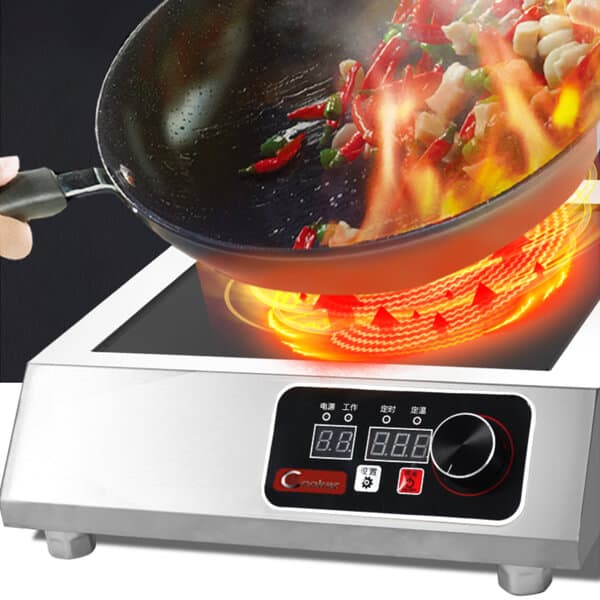
| Scenario | Silicone Mat Recommended? | Reason |
|---|---|---|
| Stock Pot / Boiling | YES | Prevents scratches, no sliding needed. |
| Sauté / Frying | NO | Interferes with sliding, traps heat. |
| Cast Iron Pans | YES | Rough bottoms damage glass. |
| High Temp Searing | NO | Mat will melt/degrade quickly. |
5-year Warranty | 2-year Free Exchangeable | 1-year Free Return
Final Thoughts from AT Cooker
Mats are tools, not magic shields. Use them for static boiling to protect against scratches. Remove them for high-speed sautéing to ensure performance and sensor accuracy. The durability of AT Cooker glass is designed to work naked, but we support your choice to protect it.
With stock ready in the USA, Germany, France, UK, Belgium, Italy, Spain, and Bulgaria, we offer robust equipment that stands up to the rigors of commercial use—with or without a mat. Visit our About Us page for more maintenance tips.