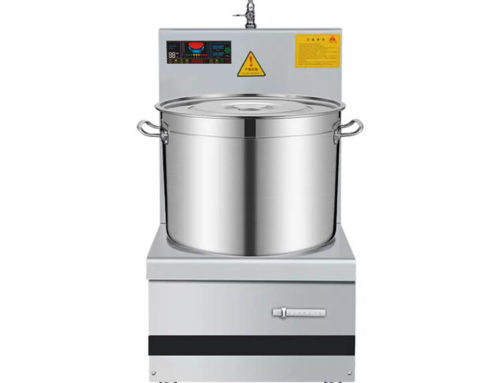
Stop Burning Money: The Financial Reality of 95% Efficiency Induction vs 40% Gas Stock Pot Burners
5-year Warranty | 2-year Free Exchangeable | 1-year Free Return
AT Cooker Executive Insight: Every month, thousands of restaurant owners pay utility bills that are double what they should be. The culprit? Inefficient gas equipment. A standard gas burner wastes 60% of the fuel you buy, heating the kitchen air instead of the pot. In a commercial kitchen energy audit, stock pot burners are often the biggest offenders due to their long operating hours. By switching to the AT Cooker ATT-ABT S Commercial Induction Stock Pot Burner, you leverage 95% thermal efficiency to slash operating costs. Here is the financial reality of commercial induction vs gas efficiency.
Making stock is the foundation of flavor, but it shouldn’t be the foundation of your bankruptcy. Simmering bone broth for 12 to 24 hours on a gas burner is akin to leaving a window open with the heater on. The physics of combustion are inefficient by nature; heat rises around the pot, not just into it.
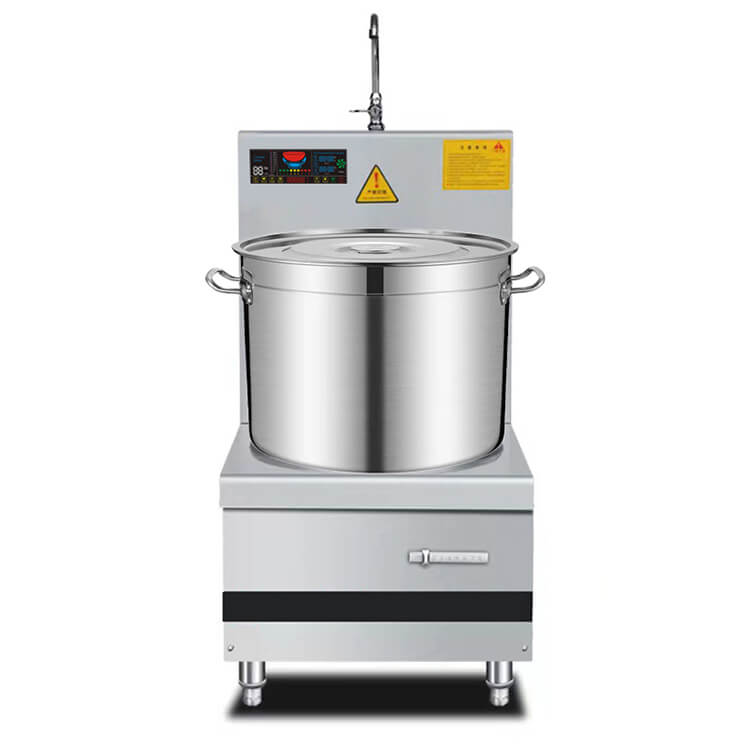
Modern sustainable commercial kitchen equipment changes the rules. The Induction Soup Cooker ATT-ABT S uses magnetic friction to generate heat directly within the steel walls of the 98L barrel. This means nearly every cent of electricity you pay for ends up in the soup. In this financial breakdown, we calculate the stock pot burner operating cost difference and the undeniable ROI of going electric.
Commercial Kitchen Equipment -from AT Cooker
- As a brand manufacturer of the professional commercial induction cooking equipment, AT Cooker has responded to restaurants’ & hotels’ needs and research normative commercial cooking equipment using the very latest induction technology.
- These seamless, real commercial quality commercial cooking equipment provides us with the opportunity to incorporate equipment of our choice into one seamless, multipurpose cooking equipment creating an efficient, low cost, safe, green and sustainable commercial kitchen. We have standerd equipment can service many commercial kitchens.
- AT Cooker always offers professional service. From material, design, to producing, we focuse on quality, performance and reliability to ensures the best solution is delivered for each and every one of our customers. Have a commercial kitchen? We will be one of your best partners.
Work Voltage
| Single-Phase | Three-Phase |
|---|---|
| 120V, 220V | 208V/ 240V, 380V, 480V |
Global In-Stock + Fast Pickup
| US | UK | Germany | France |
|---|---|---|---|
| Italy | Spain | Belgium | Bulgaria |
1. The Physics of Waste: Why Gas Burners Lose 60% of Energy to the Ambient Air
If you put your hand next to a gas stock pot burner, you feel intense heat. That heat is waste. A gas burner operates by combustion, releasing hot gases that flow around the pot. Physics dictates that only about 40% of this energy is absorbed by the pot; the rest escapes into your kitchen.
Induction has no “escape route” for energy. The magnetic field creates heat inside the pot wall. The air gap does not heat up. This results in 95% thermal efficiency cooking, meaning you are using nearly all the electricity you pay for to cook the food.
2. Calculating the Real-World ROI: Payback Period for Heavy-Duty Induction Stock Pot Burners
An induction unit costs more upfront than a gas burner. But let’s calculate the ROI. If a 100,000 BTU gas burner costs $1.50/hour to run and wastes 60%, you are throwing away $0.90 every hour.
An AT Cooker 15KW induction burner, running at partial power to maintain a simmer, might cost $0.40/hour with zero waste. Over 3,000 operating hours a year, the savings exceed $3,000 annually, paying for the unit in 12-18 months.
3. The “Double-Dip” Savings: Reducing Kitchen HVAC Loads by Eliminating Radiant Gas Heat
Every BTU of waste heat from a gas burner puts a load on your air conditioning. You pay to generate the heat (gas bill), and then you pay to remove it (electric bill).
❄️ The Cool Kitchen Bonus
By switching to induction, you eliminate this thermal load. Your kitchen stays 10 degrees cooler, and your HVAC system runs 30% less often. This “Double-Dip” saving is often overlooked in a basic heavy duty soup cooker ROI calculation.
4. Quantifying the Annual Cost of Idle Gas Pilot Lights in 24-Hour Operations
A commercial pilot light burns gas 24/7. It can consume up to $15-$20 of gas per month per burner. In a large kitchen with 10 burners, that is $2,400 a year for lights that do no cooking.
Induction has zero idle consumption. When the pot is removed, energy transfer stops instantly. There is no pilot light to feed, cutting a significant “vampire load” from your utility bill.
5. Comparing Time-to-Boil: How Faster Heating Cycles Drastically Lower Total Energy Consumption
Time is energy. If a gas burner takes 60 minutes to boil 100L of water, and an induction burner takes 30 minutes, the induction unit runs for half the time.
Even if electricity costs more per unit than gas, the sheer speed of induction reduces the total “Energy Hours” required to complete the task, lowering the overall cost per batch of soup.
5-year Warranty | 2-year Free Exchangeable | 1-year Free Return
6. Understanding “Effective Heat”: Why 15KW Induction Outperforms 100,000 BTU Gas Units
Chefs often compare KW to BTU incorrectly. 1 KW = 3,412 BTU. So, 15KW = 51,180 BTU. A chef might say, “But my gas burner is 100,000 BTU, so it’s twice as strong!”
Wrong. Gas is 40% efficient, so effective heat is 40,000 BTU. Induction is 95% efficient, so effective heat is 48,600 BTU. The 15KW induction unit actually delivers more cooking power to the pot than the 100,000 BTU gas burner.
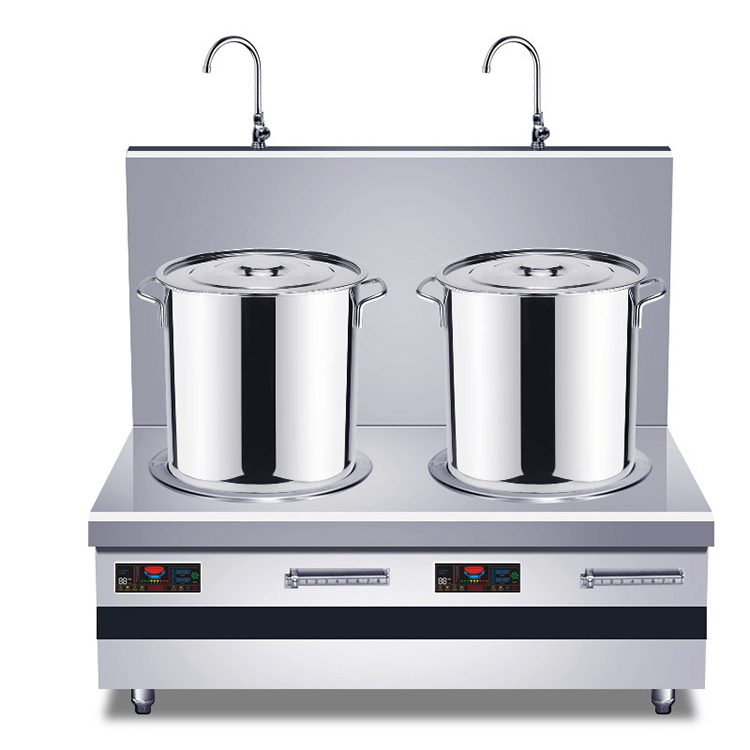
7. The Impact of Direct Magnetic Friction vs Indirect Flame Conduction on Utility Bills
Indirect conduction (gas) relies on the thermal conductivity of the pot bottom, which degrades as carbon builds up on the exterior. Magnetic friction (induction) happens inside the metal structure.
This means induction efficiency does not degrade over time. A dirty pot cooks just as fast as a clean one. This consistent performance ensures your utility bills stay predictable year after year.
8. Maintenance Cost Reduction: Eliminating Expensive Gas Line Cleaning and Carbon Buildup Removal
Gas burners clog. Ports get blocked with boil-overs, requiring manual drilling or chemical cleaning. Gas lines need professional inspection.
The ATT-ABT S has a sealed glass-ceramic top. There are no ports to clog. Cleaning involves a wet cloth. This reduction in maintenance labor and parts adds to the total savings of the unit.
9. Peak Demand Analysis: Balancing High-Amp Electrical Loads Against Constant Gas Flow
Commercial electricity billing often includes “Peak Demand” charges. Induction allows for smart management. Because the ATT-ABT S heats so fast, you can stagger your startup times.
Start your soup pots 30 minutes later than the ovens, smoothing out your electrical demand curve and avoiding peak surcharges.
10. The Environmental Impact: Meeting Institutional Sustainability Goals with Electrified Kitchens
Many institutions are mandating “Net Zero” carbon goals. You cannot achieve this burning fossil fuels. Electrifying your kitchen with AT Cooker equipment allows you to source power from renewable grids.
This move not only lowers your reducing restaurant utility bills but also markets your business as an eco-friendly leader.
11. Hidden Consumption: The Long-Term Cost of Decarbonizing Clogged Gas Burner Nozzles
A clogged gas burner burns inefficiently, producing yellow flames (incomplete combustion) and soot. This drops efficiency to 30% or lower.
Induction has no nozzles. Its efficiency remains at 95% for the life of the machine. You never pay for “dirty burning” fuel waste.
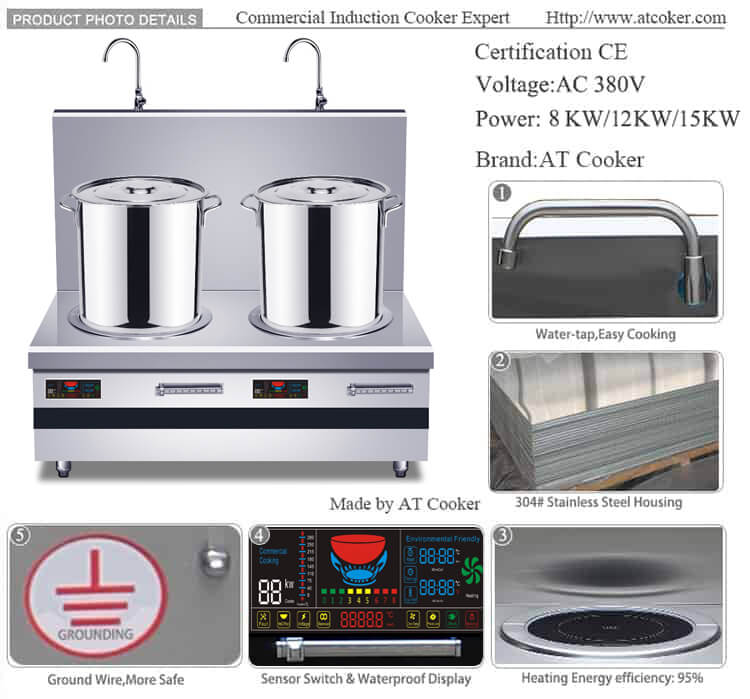
12. Leveraging “Thermal Inertia”: Strategies to Turn Off Induction Early While Retaining Simmer Heat
Because the ATT-ABT S is often used with heavy stainless steel pots (98L capacity), the thermal mass is huge. You can turn the induction unit OFF 20 minutes before service ends.
The pot will stay hot enough to serve. With gas, you’d leave the flame on. This strategy squeezes free energy out of every shift.
| Cost Factor | Gas Burner | AT Cooker Induction |
|---|---|---|
| Thermal Efficiency | 40% | 95% |
| Waste Heat | High (HVAC Load) | Low (Direct) |
| Idle Cost | Pilot Lights | Zero |
| Boil Speed | Slow | Fast (2x) |
5-year Warranty | 2-year Free Exchangeable | 1-year Free Return
Final Thoughts from AT Cooker
Burning money is not a business strategy. Upgrading to the AT Cooker Commercial Induction Stock Pot Burner is. It stops the waste, speeds up the cook, and cools down the kitchen.
With stock ready for fast delivery in the USA, Germany, France, UK, Belgium, Italy, Spain, and Bulgaria, we can help you stop the financial bleed today. Visit our About Us page to request a detailed ROI calculation for your specific kitchen.