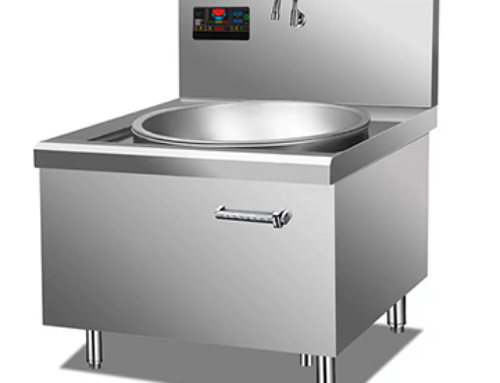
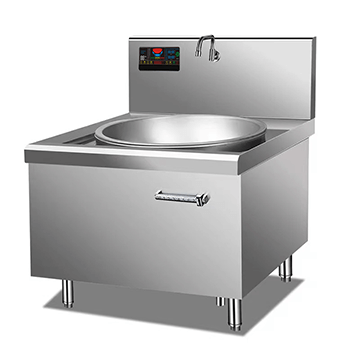
Wok stations are the heart of Asian restaurants—high-heat stir-frying, searing, tossing are essential. The fuel—gas, electric, or induction—directly impacts cooking speed, energy costs, and safety. AT Cooker’s komerční indukční wok models (3.5KW-12KW) redefine efficiency. Below, we break down each fuel option and explain why induction stands out.
1. Three Fuel Options: Gas, Electric, and Induction
Each fuel source has distinct technology:
- Plyn: Open flame beneath wok (up to 1000°F)
- Electric: Heating element warms plate, transfers to wok
- Indukce: Electromagnetic fields heat wok directly
A SF Chinese restaurant: “Skeptical at first, but induction heats just as fast and saves $200/month on utilities.”
2. Gas Wok Burners: Intense Heat for Stir-Frying
Gas reaches 800-1000°F, critical for “wok hei” (smoky charred flavor). 15K-100K BTU outputs. Responsive: crank heat in seconds. But only 30-35% efficiency. Ventilation hoods ($1,500-$3,000) required. Flame inconsistency from wind/fans.
3. Electric Wok Stations: Consistent Control, Easy Use
240V elements, 200-600°F, digital controls. No open flame, low maintenance, uniform heat. But slow response (5 min to high, 2-3 min to adjust). Max 600°F unsuitable for authentic wok hei.
4. Induction Heats Cookware Directly for Maximum Efficiency
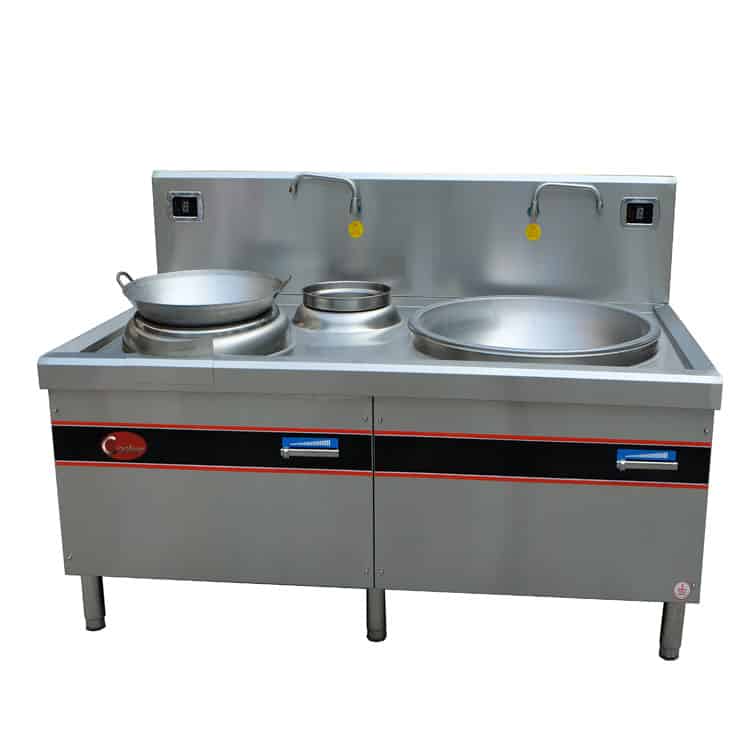
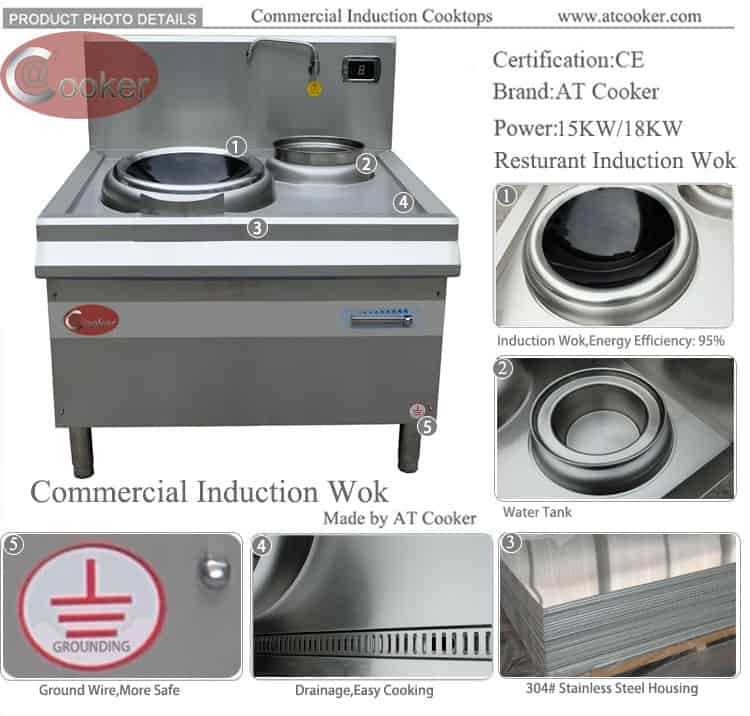
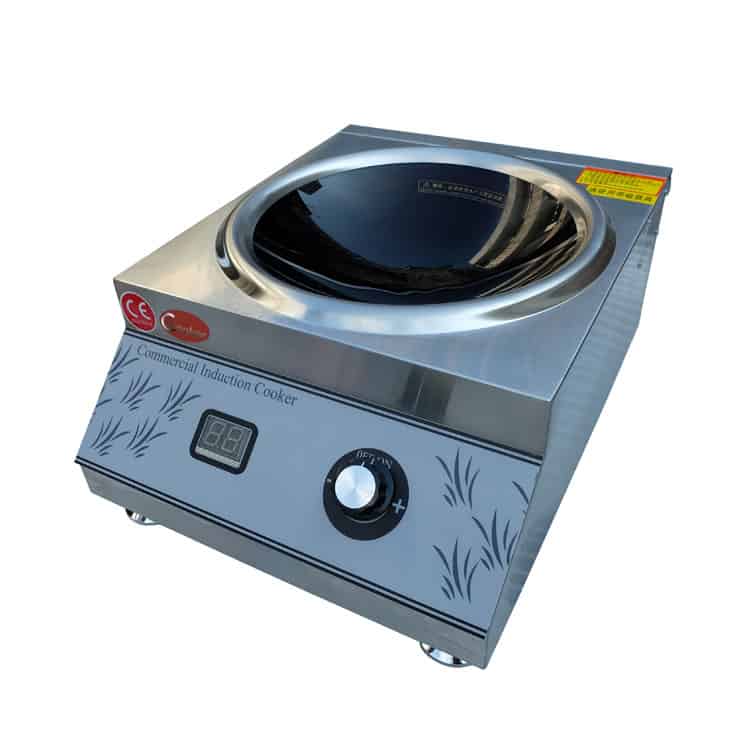
AT Cooker’s 5KW and 12KW models use electromagnetic induction—304# SS bodies, German Infineon IGBT. Reaches 800°F in 2 min (matching gas). A Chicago takeout: “Customers can’t tell difference from gas. Energy bill dropped $250/month.” Wok detection cuts power when no wok present (saves 10%).
| Fuel Type | Heating Method | Účinnost | Max Temp | Heat-Up (800°F) |
|---|---|---|---|---|
| AT Cooker Induction (12KW) | Electromagnetic direct | 90-95% | 850°F | 2 min |
| Gas (100K BTU) | Open flame | 30-35% | 1000°F | 1.5 min |
| Electric (5KW) | Element → plate → wok | 50-55% | 600°F | 5+ min |
5. Gas Heats Marginally Faster but Wastes More Energy
Gas: 1.5 min to 800°F, max 1000°F. Induction: 2 min, max 850°F. Difference rarely noticeable. A culinary school: “Students couldn’t distinguish stir-fries from gas vs induction—both achieved charred edges.”
Plynový hořák
1000°F max
Induction AT
850°F in 2 min
Elektrické
600°F max
6. Induction Is Most Energy-Efficient (90-95%)
At 6 hrs/day: Induction $324/month; Gas $315/month + $150 vent + $8 maintenance = $473; Electric $245/month + $4 element = $249 (but lower performance). With hidden costs, induction is cheapest.
Customer Story: Chen, SF Chinese Restaurant: “Gas: $315 propane + $150 vent + $100/yr repairs = $475/month. Induction: $324/month, no extras. Save $1,812/year.”
7. Electric Has Slower Heat Response
Electric takes 3-4 min to go from 300°F to 600°F (gas/induction: 30 sec). A fast-food chain: “Fell 15 orders behind during lunch. Switching to induction cut wait times 2 min per order.”
8. Gas Requires Proper Ventilation for Combustion Gases
Gas produces CO, NO2, smoke—requiring 500+ CFM hoods ($1,500-$3,000 install, $300-$500/yr maintenance). Induction needs only 100-200 CFM basic ventilation. A food court vendor: “Mall wouldn’t allow gas wok. Induction needs no special hood—saved $2,000.”
9. Induction Generates Less Ambient Heat
Gas releases 65-70% as ambient heat; induction only 5-10%. A Miami restaurant: “Gas woks: kitchen hit 98°F, staff exhausted. Induction: 85°F, AC bill dropped $120/month.”
Ambient Heat Impact (6 hrs)
- Indukce: Adds 3-5°F (minimal AC)
- Plyn: Adds 15-20°F (AC runs 50% more)
- Electric: Adds 10-12°F (AC runs 30% more)
10. Electric Easier to Install Without Gas Lines
Electric needs only 240V outlet (1-2 hrs, $100-$200). Gas: 1-2 days (plumber + electrician). But electric’s lower performance limits appeal. A food truck: “Electric couldn’t get hot enough. Portable induction with generator solved both issues.”
11. Gas Delivers Traditional Experience Many Chefs Prefer
Many chefs prefer gas for tactile feedback: flame sound, knob adjustment. A NY master chef: “Gas feels like extension of my hand.” But younger chefs adapt quickly to induction. A culinary graduate: “Learned on induction in school—more precise. Gas learning curve was steeper.”
12. Induction Requires Compatible Cookware
Induction needs ferrous (iron) woks—aluminum/copper without magnetic layer won’t work. New cookware: $50-$150. AT Cooker offers compatible 14-inch carbon steel wok, pre-seasoned. “Included wok heats evenly, perfect wok hei—didn’t need to buy anything extra.”
13. Efficiency and Safety Make Induction a Top Choice
Induction outperforms in two critical areas:
- Efektivita: 90-95% conversion cuts costs 40-50% vs gas
- Bezpečnost: No open flame, cool-to-touch surfaces
AT Cooker’s induction wok stations (3.5KW countertop, 12KW built-in) offer gas-like performance with induction efficiency. Faster ROI, safer operation, consistent results.
Často kladené otázky
What fuel options are available for commercial wok stations?
Three primary fuel types: gas (natural gas or propane, 30-35% efficiency, up to 1000°F), electric (heating elements, 50-55% efficiency, max 600°F), and induction (electromagnetic, 90-95% efficiency, 850°F in 2 min). AT Cooker specializes in induction wok stations from 3.5KW to 12KW with German Infineon IGBT modules.
Which wok station fuel type is most energy-efficient?
Induction wok stations are the most efficient at 90-95%, compared to 50-55% for electric and 30-35% for gas. A San Francisco restaurant saved $1,812/year switching from gas to induction: gas cost $475/month (propane + vent hood + maintenance) vs induction at $324/month with no extra fees.
Can induction woks achieve the same wok hei as gas?
Yes. AT Cooker’s 12KW induction wok reaches 800°F in 2 minutes, matching gas performance. A culinary school tested both: “Students couldn’t distinguish between stir-fries from gas vs induction—both achieved the charred edges we look for.” A Chicago restaurant reported customers can’t tell the difference.
Do induction wok stations require special ventilation?
No. Gas wok stations produce carbon monoxide and require 500+ CFM commercial vent hoods ($1,500-$3,000 installation, $300-$500/year maintenance). Induction produces no combustion gases and needs only basic 100-200 CFM ventilation, saving $1,000-$2,500 upfront.
What cookware works with induction wok stations?
Induction requires ferrous (iron-containing) woks. Carbon steel and cast iron work perfectly. Aluminum or copper woks without a magnetic base will not heat. AT Cooker offers a compatible 14-inch carbon steel induction wok, pre-seasoned for immediate use ($50-$150 investment).