Eliminate Sweat: How Commercial Induction Woks Keep Chefs Cool While Searing Beef
5-year Warranty | 2-year Free Exchangeable | 1-year Free Return
AT Cooker Executive Insight: Working in a commercial kitchen often feels like working in a blast furnace. Traditional gas woks create a “Heat Wall” that exhausts chefs, increases turnover, and skyrockets HVAC bills. There is a better way. By switching to AT Cooker Commercial Induction Woks, you can lower the ambient kitchen temperature by 10°C or more. We explore the science of reducing commercial kitchen ambient heat and why “Cool Kitchen” technology is the future of chef retention.
Picture a busy Friday night line. The air is thick, the noise is deafening, and the temperature near the wok station hovers around 45°C (113°F). The chef is drenched in sweat, dehydrated, and irritable. This isn’t just uncomfortable; it’s unsustainable. The culprit? Inefficient gas combustion.
For decades, we accepted that “if you can’t stand the heat, get out of the kitchen.” But with modern technology, the heat doesn’t have to be there in the first place. AT Cooker induction technology focuses energy so precisely that you can sear beef at 300°C without heating the air around you. This shift to flameless commercial cooking benefits not only the chef’s health but also the restaurant’s bottom line.
In this article, we will break down the thermodynamics of why induction runs cool, how much you can save on air conditioning, and why cooler kitchens produce better food.
Commercial Kitchen Equipment -from AT Cooker
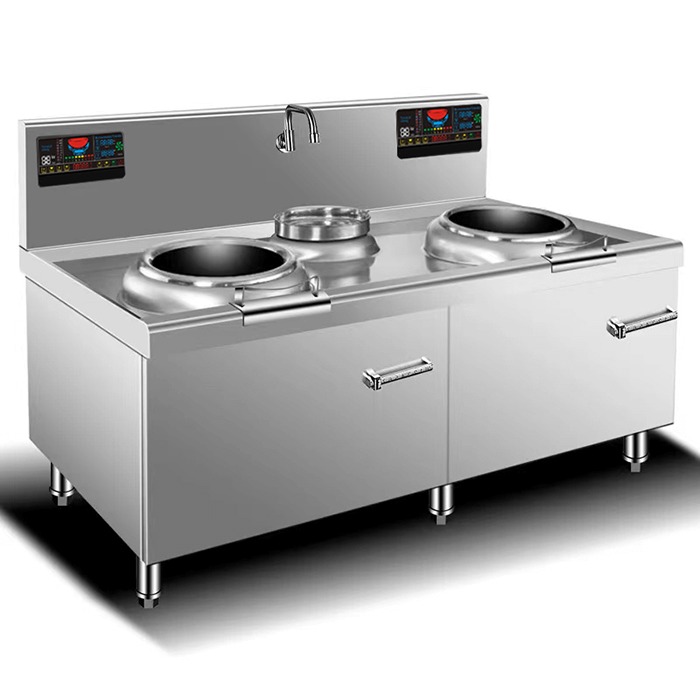
- As a brand manufacturer of the professional commercial induction cooking equipment, AT Cooker has responded to restaurants’ & hotels’ needs and research normative commercial cooking equipment using the very latest induction technology.
- These seamless, real commercial quality commercial cooking equipment provides us with the opportunity to incorporate equipment of our choice into one seamless, multipurpose cooking equipment creating an efficient, low cost, safe, green and sustainable commercial kitchen. We have standerd equipment can service many commercial kitchens.
- AT Cooker always offers professional service. From material, design, to producing, we focuse on quality, performance and reliability to ensures the best solution is delivered for each and every one of our customers. Have a commercial kitchen? We will be one of your best partners.
Work Voltage
| Single-Phase | Three-Phase |
|---|---|
| 120V, 220V | 208V/ 240V, 380V, 480V |
Global In-Stock + Fast Pickup
| US | UK | Germany | France |
|---|---|---|---|
| Italy | Spain | Belgium | Bulgaria |
1. The Thermodynamics of Searing: Direct Energy Transfer vs. Radiant Heat Waste
In a gas kitchen, you are not just cooking the food; you are cooking the chef. A traditional gas burner operates at about 40% thermal efficiency. This means that for every $100 you spend on gas, $60 is wasted heating the air around the wok. This is “Radiant Heat Waste,” and it is the primary enemy of kitchen comfort.
Induction is different. Using electromagnetic friction, the AT Cooker wok station transfers 95% of its energy directly into the steel pan. There is no open flame to radiate heat outwards. The only heat source is the pan itself. This fundamental shift in thermodynamics is the key to induction wok HVAC savings.
2. Measuring Ambient Temperature Drops: The 10-Degree Difference at the Cook Line
We took a thermometer to the trenches. In a standard commercial kitchen with 4 gas woks running at full blast, the ambient temperature at the chef’s head height measured 42°C (107°F).
️ The Induction Difference
After switching to AT Cooker 30KW Induction Woks, the temperature at the same spot dropped to 28°C (82°F). That is a massive 14°C difference. For a chef standing there for an 8-hour shift, this is the difference between exhaustion and endurance.
3. HVAC Load Reduction: Turning Down the AC While Turning Up the Heat
Every BTU of waste heat generated by a gas burner must be removed by your HVAC system. This is a double cost: you pay for the gas to create the heat, and then you pay for the electricity to remove it.
By switching to induction, you reduce the “sensible heat load” on your kitchen ventilation system by up to 50%. This allows you to run your makeup air units at lower speeds or install smaller, less expensive HVAC systems in new builds.
5-year Warranty | 2-year Free Exchangeable | 1-year Free Return
4. Chef Retention Strategy: How Cooler Kitchens Reduce Staff Turnover Rates
The restaurant industry faces a chronic staffing shortage. Chefs leave because the working conditions are brutal. Working in a 40°C kitchen is physically draining and mentally stressful.
Investing in cool kitchen technology is an investment in your team. A cooler kitchen means happier staff, fewer sick days, and lower turnover. When chefs see that you care about their comfort by installing flameless equipment, loyalty increases.
5. Eliminating the “Heat Wall”: Improving Ergonomics for High-Volume Searing Stations
Stand in front of a gas wok range, and you feel it—a solid wall of hot air hitting your torso and face. This “Heat Wall” causes fatigue. Induction eliminates this barrier. You can place your hand inches away from the induction coil (without a pan), and it is cool. This allows chefs to stand closer to the work, improving posture and leverage when tossing heavy woks.
6. Health Implications: Reducing Dehydration and Heat Exhaustion Risks for Staff
Heat stress is a serious occupational hazard. It leads to dehydration, kidney stress, and cognitive decline (which leads to mistakes and accidents). In extreme cases, chefs suffer heat stroke.
By removing the open flame, you remove the primary source of environmental stress. Improving chef working conditions isn’t just nice to do; it’s a liability reduction strategy.
7. Efficiency Comparison: Why 90% of Induction Energy Goes Into the Beef, Not the Air
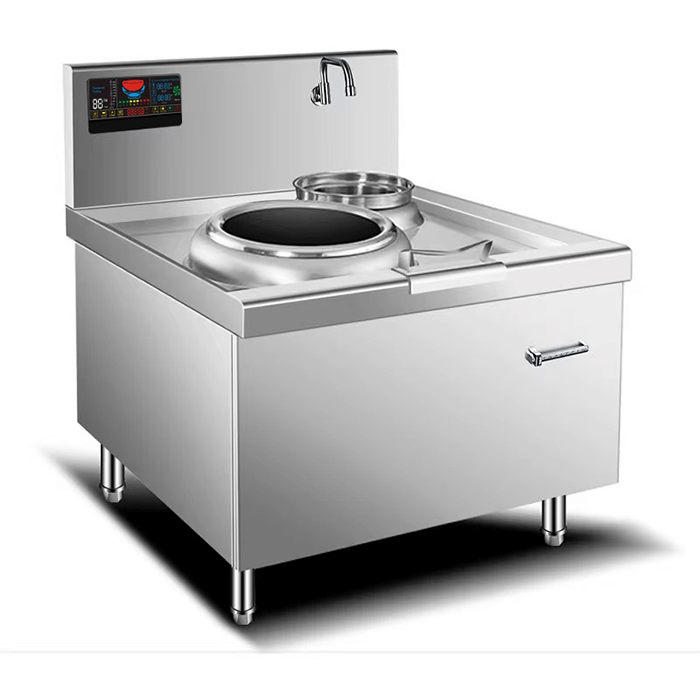
Let’s talk physics. Gas heat spreads out. Induction heat focuses in. With our concave coil design, 90-95% of the electrical energy is converted into heat inside the steel of the wok.
This means we can sear beef at 300°C just as fast as a gas burner, but without heating the handle, the air, or the chef. The energy goes where you want it: into the food.
8. The “Waist-Level Thermal Test”: Protecting Chefs from Chronic Radiant Heat Exposure
Gas ovens and ranges emit intense infrared radiation at waist level. Over a 20-year career, this chronic heat exposure can cause skin issues and other health problems for chefs.
Induction units run cool to the touch (except for the residual heat from the pan itself). The chassis of an AT Cooker unit remains at ambient temperature, protecting the chef’s body from long-term thermal damage.
9. Silent Searing: Reducing Psychological Fatigue by Eliminating Combustion Roar
Heat isn’t the only stressor; noise is too. The roar of a turbo jet burner is deafening. Induction is silent. The only sound is the food sizzling.
This quieter environment lowers psychological stress. Chefs can communicate without shouting. Orders are heard clearly. The kitchen becomes a calmer, more professional workspace.
5-year Warranty | 2-year Free Exchangeable | 1-year Free Return
10. Preventing Grease Fires: The Safety Benefit of Flameless High-Heat Cooking
When searing beef, grease splatters. On a gas range, that splatter hits an open flame and flares up. This is a fire hazard and releases acrid smoke.
On an induction wok, splatter hits a cool ceramic surface or stainless steel body. It doesn’t ignite. This drastically reduces the risk of kitchen fires and keeps the air cleaner.
11. Maintaining Hygiene: How Sweat Reduction Minimizes Food Contamination Risks
It’s an unpleasant truth: sweating chefs drip. In a hot kitchen, chefs are constantly wiping their brows. This increases the risk of cross-contamination.
A cool chef is a clean chef. By keeping the ambient temperature low, you maintain a higher standard of hygiene in the food preparation area.
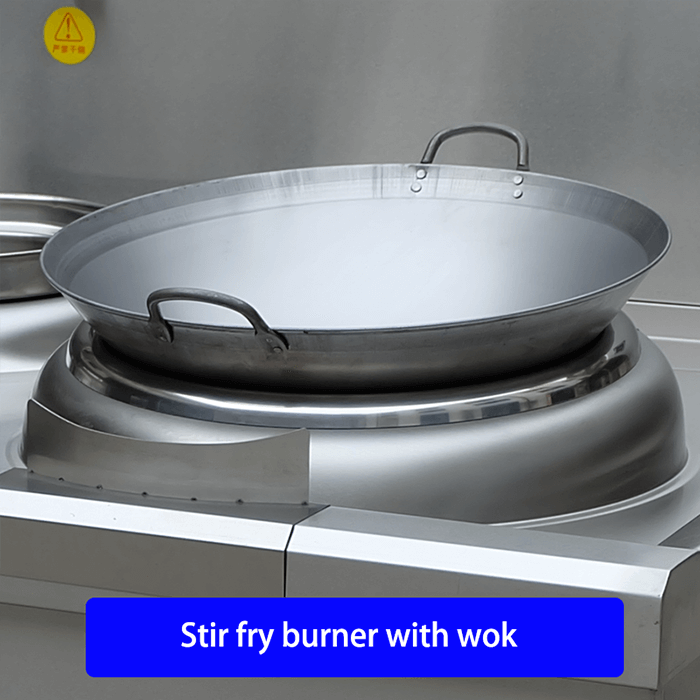
12. Cost Analysis: Saving on Cooling Bills While Increasing Output Speed
Finally, let’s look at the ROI. An energy efficient wok station saves you money in two ways simultaneously:
- Direct Energy: Electricity is used 95% efficiently vs 40% for gas.
- Indirect Energy: Your AC bill drops by 30-50% because it’s not fighting the oven.
| Factor | Gas Kitchen | Induction Kitchen |
|---|---|---|
| Ambient Temp | Hot (40°C+) | Cool (~25°C) |
| HVAC Load | Maximum | Reduced |
| Chef Comfort | Low | High |
| Hygiene | Sweat Risk | Clean |
Final Thoughts from AT Cooker
The days of the sweating, suffering chef are ending. Commercial induction allows you to sear beef with incredible power while keeping your kitchen cool, quiet, and efficient. It is a win for the chef, a win for the food, and a win for the owner.
With global stock available in the USA, Germany, France, and beyond, AT Cooker is ready to help you retrofit your kitchen. Don’t let your profits go up in smoke (and heat). Visit our About Us page to learn more.