Instant Heat Recovery: The Key to Maintaining Professional Stir-Fry Rhythm with Commercial Induction Woks
5-year Warranty | 2-year Free Exchangeable | 1-year Free Return
In the high-octane environment of a commercial Chinese kitchen, the chef is akin to a drummer in a heavy metal band. There is a rhythm to the service—a beat established by the roar of the wok, the toss of the ladle, and the hiss of oil. This rhythm isn’t just about speed; it’s about thermal precision. When a chef dumps a kilo of cold marinated beef into a hot wok, the temperature crashes. How fast that temperature bounces back—the commercial induction wok heat recovery rate—determines whether the beef sears to perfection or boils in its own juices.
For decades, gas was the undisputed king because chefs believed only fire could react fast enough. But physics tells a different story. In this deep dive, we will explore why modern heavy duty electric wok performance has not only caught up to gas but surpassed it in the critical metric of “Instant Rebound,” enabling a level of chef workflow optimization that old-school burners simply cannot match.
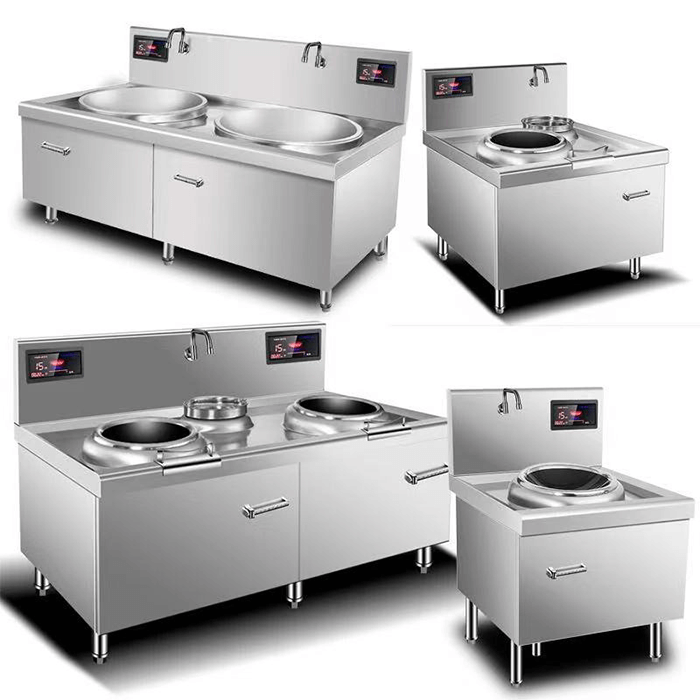
Commercial Kitchen Equipment -from AT Cooker
- As a brand manufacturer of the professional commercial induction cooking equipment, AT Cooker has responded to restaurants’ & hotels’ needs and research normative commercial cooking equipment using the very latest induction technology.
- These seamless, real commercial quality commercial cooking equipment provides us with the opportunity to incorporate equipment of our choice into one seamless, multipurpose cooking equipment creating an efficient, low cost, safe, green and sustainable commercial kitchen. We have standerd equipment can service many commercial kitchens.
- AT Cooker always offers professional service. From material, design, to producing, we focuse on quality, performance and reliability to ensures the best solution is delivered for each and every one of our customers. Have a commercial kitchen? We will be one of your best partners.
Work Voltage
| Single-Phase | Three-Phase |
|---|---|
| 120V, 220V | 208V/ 240V, 380V, 480V |
Global In-Stock + Fast Pickup
| US | UK | Germany | France |
|---|---|---|---|
| Italy | Spain | Belgium | Bulgaria |
1. The Thermodynamics of Thermal Shock: What Happens When Cold Beef Hits a Hot Wok?
Every professional chef knows the sound. You heat the wok until it’s smoking (approx 280°C), add oil, and then toss in the protein. Sizzle! But what happens next is invisible yet critical. The cold mass of meat absorbs the heat energy from the pan instantly. This is “thermal shock.”
In a low-power setup, the pan temperature plummets below the Maillard reaction threshold (140°C-160°C). Instead of searing, the meat begins to stew. The juices leak out, and you end up with a grey, tough product. To prevent this, the heat source must pump energy back into the pan faster than the food can absorb it. This is where fast heat recovery cooking equipment becomes the MVP of the kitchen line.
2. Gas vs. Induction: Comparing Temperature Recovery Curves in High-Volume Service
Traditionalists argue that gas is faster. Visual flames are deceptive. A gas flame heats the air around the wok more than the wok itself. Its thermal efficiency is often below 40%. When the temperature drops, the gas burner has to heat the air, which heats the steel, which then heats the food.
AT Cooker’s commercial induction woks boast an efficiency of over 90%. When the sensor detects a 1°C drop, the magnetic field intensifies instantly. The recovery curve is vertical, not sloped. This means the wok returns to searing temperature in seconds, not minutes, maintaining the crucial stir fry rhythm needed for peak service.
3. The “Soggy Vegetable” Risk: Why Instant Rebound is Non-Negotiable for Texture
Nothing ruins a reputation faster than soggy Bok Choy. Green vegetables release water (Chu Shui) when cooked slowly at low temperatures. To keep them crisp and vibrant green, the water inside the cell walls must turn to steam instantly, cooking the vegetable from the inside out while the surface sears.
If your wok station lags, the vegetables sit in a lukewarm pool of water. AT Cooker technology ensures that the heat input is relentless. Even when you dump a large batch of washed vegetables, the heavy duty electric wok performance ensures the water evaporates immediately upon contact, preserving the crunch and color.
5-year Warranty | 2-year Free Exchangeable | 1-year Free Return
4. Chef Workflow Analysis: Eliminating Micro-Waits Between Batch Additions
Watch a master chef. They don’t cook one dish at a time; they cook components. They might sear protein, remove it, then sear vegetables. Between these steps, there is a “Micro-Wait”—the few seconds they pause to let the wok heat up again.
In a busy shift, these seconds add up to hours. With chef workflow optimization using induction, these waits disappear. The moment the protein leaves the wok, the empty pan shoots back up to temperature instantly. The chef can throw in the garlic and ginger immediately. This fluid motion increases the restaurant kitchen throughput significantly.
5. The Role of High-Power Density in Counteracting Ingredient Thermal Inertia
Thermal inertia is the resistance of an object to changing temperature. A frozen bag of peas has high thermal inertia. To overcome this, you need “Power Density”—the amount of kilowatts per square inch of coil.
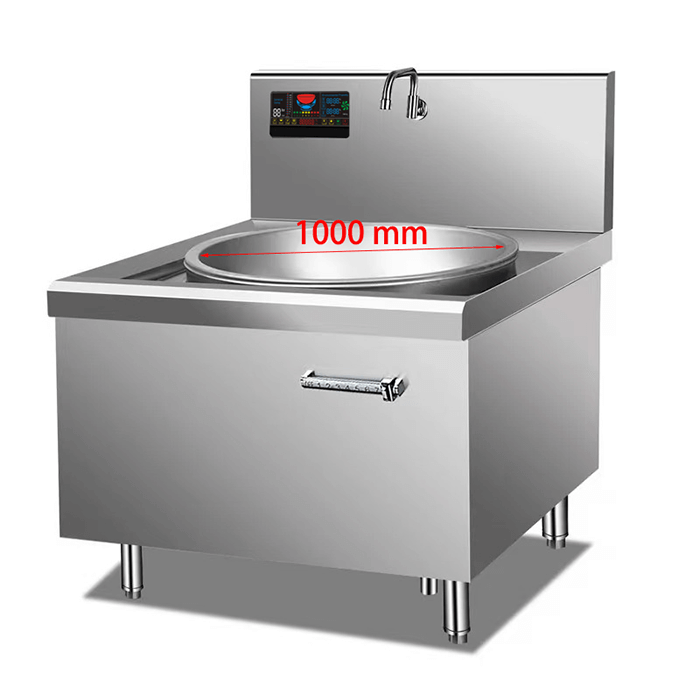
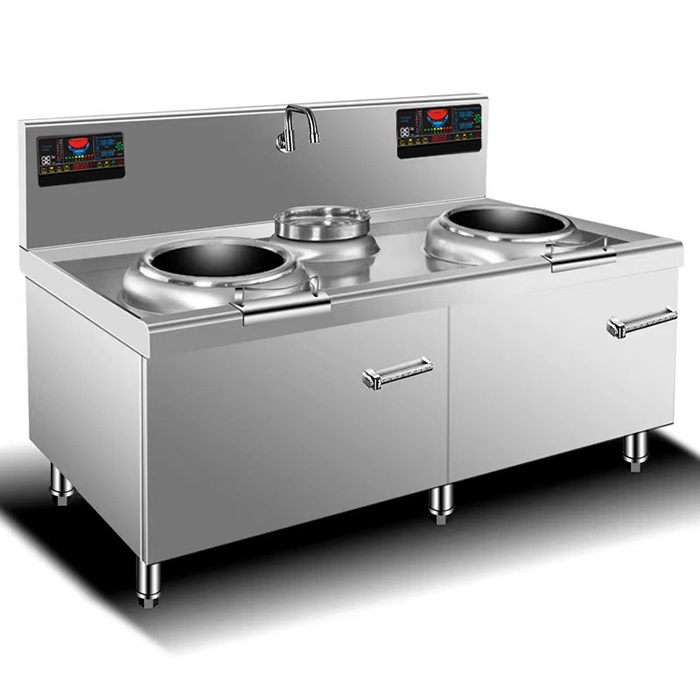
Our units, such as the 30KW or 35KW commercial induction woks, pack massive power density into a concentrated magnetic field. This brute force capability allows the wok to bully the ingredients into submission, forcing heat into them regardless of their starting temperature.
6. Maintaining “Wok Hei” Continuity: Ensuring Smoke Point Temperatures Don’t Dip
Maintaining wok hei (the “Breath of the Wok”) is the holy grail of Cantonese cooking. It requires the oil to be on the verge of combustion, catching microscopic aerosolized oil droplets on fire briefly. This only happens at temperatures above 230°C.
If the heat recovery is slow, the temperature dips below this smoke point, and the Wok Hei vanishes. AT Cooker’s induction coil design ensures that the heat is sustained even during vigorous tossing, keeping the Wok Hei flavor profile consistent from the first dish of the night to the last.
7. Sensor Latency: How Smart Chips Detect and React to Temperature Changes in Milliseconds
The brain of the induction cooker is just as important as the muscle. Old induction units had slow sensors. By the time they realized the pan was cold, the food was already boiling.
We utilize 32-bit digital processing chips from Infineon (Germany). These chips sample the coil resistance and feedback loop thousands of times per second. This ultra-low sensor latency means the machine reacts to a temperature drop before the chef even notices it. This is the “Smart” in smart cooking.
5-year Warranty | 2-year Free Exchangeable | 1-year Free Return
8. The Impact of Pan Thickness and Material on Heat Retention vs. Recovery Speed
The wok itself is part of the equation. We generally recommend 409 or 430 stainless steel composite materials for induction. While a thicker pan retains heat better (buffering the shock), it also takes longer to heat up.
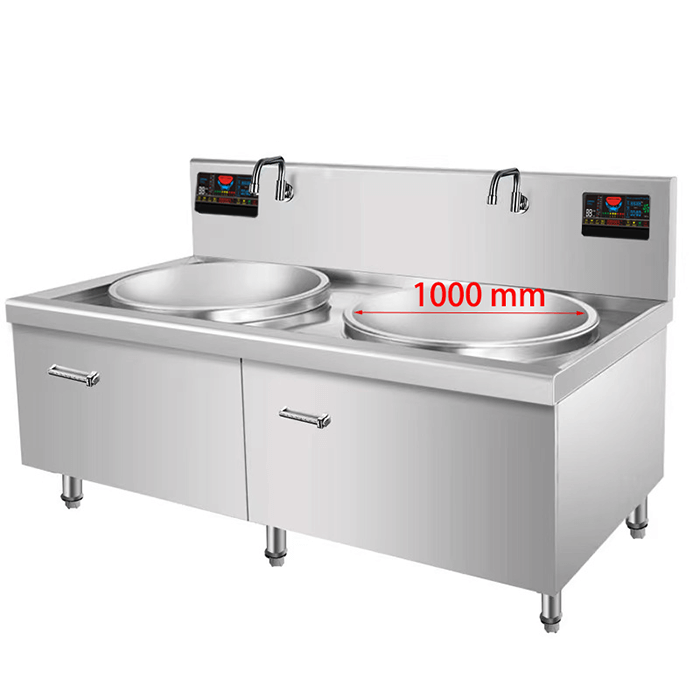
With our high-speed recovery technology, chefs can use slightly thinner, lighter woks (which are easier on the wrist) without worrying about heat loss. The induction engine drives energy so fast that the thermal mass of the pan becomes less critical, reducing chef fatigue.
9. Operational Throughput: How Faster Recovery Directly Increases Dishes Per Hour
Let’s do the math. If a gas wok takes 45 seconds to recover heat between batches, and an induction wok takes 5 seconds, you save 40 seconds per cycle. Over a dinner service of 100 cycles, that’s over an hour of saved time.
Increase in Dishes Per Hour with Induction Recovery
This efficiency allows kitchens to serve more tables with the same number of staff, directly impacting the bottom line. Operational throughput is the hidden ROI of switching to electric.
10. Energy Management: The Cost of Maintaining Ready-Heat vs. On-Demand Recovery
Gas stoves are often left running at full blast even when no cooking is happening, just to keep the wok hot. This is “Ready-Heat,” and it burns money.
Induction utilizes “On-Demand Recovery.” Because the recovery is instant, chefs can confidently turn the dial down or use the Pan Sensor mode (which cuts power when the pan is lifted) without fear of losing their heat bank. The energy bill savings from this feature alone often pay for the equipment in 12-18 months.
11. Preventing “Chu Shui” (Water Release): Why Continuous High Heat is Vital for Crisp Green Vegetables
We mentioned soggy vegetables before, but technically, this is about cellular structure. “Chu Shui” happens when the internal pressure of the vegetable isn’t high enough to flash-steam the cell walls.
AT Cooker’s continuous high-frequency magnetic field ensures the water molecules inside the vegetable vibrate violently, creating internal heat that matches the external heat. This dual-action cooking locks in nutrients and texture, solving the “Chu Shui” problem permanently.
12. Understanding “Miao Hui” Technology: The Industry Standard for Zero-Lag Power Restoration
In the industry, we call this “Miao Hui” (Second Return). It is the gold standard for commercial induction wok heat recovery. It means the power restoration is virtually instantaneous.
Unlike consumer units that might “pulse” on and off, our industrial mainboards provide a steady, relentless stream of energy. Whether you are tossing a 2kg fried rice or searing a 500g scallop dish, the “Miao Hui” capability ensures that the wok is always waiting for you, not the other way around.
5-year Warranty | 2-year Free Exchangeable | 1-year Free Return
Final Thoughts: Upgrade Your Rhythm
A kitchen without rhythm is chaos. By eliminating the thermal lag that breaks a chef’s flow, AT Cooker induction woks do more than just cook food—they restore order and speed to the line. Don’t let your equipment be the bottleneck in your operation.
Ready to Experience “Instant Rebound”?
Contact our engineering team today to discuss which power level fits your menu.