Simultaneous Cooking: Ramen and Udon Without Flavor Cross-Contamination
5-year Warranty | 2-year Free Exchangeable | 1-year Free Return
In the competitive world of Asian noodle shops, variety attracts customers. Offering both rich, alkaline Ramen and delicate, neutral Udon increases your appeal. But for the kitchen, this mix creates a hidden nightmare: Flavor Cross-Contamination. Cooking these two distinct noodle types in the same water is a culinary sin that ruins the texture and taste of both.
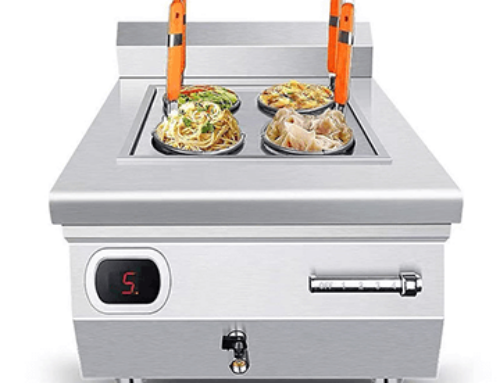
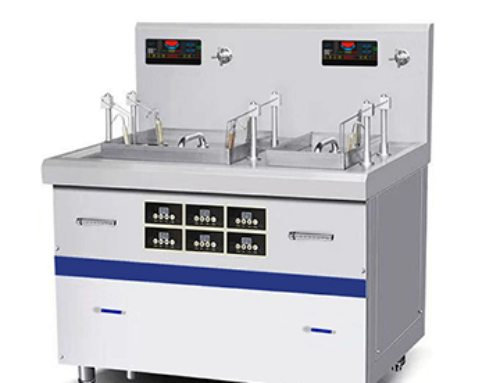
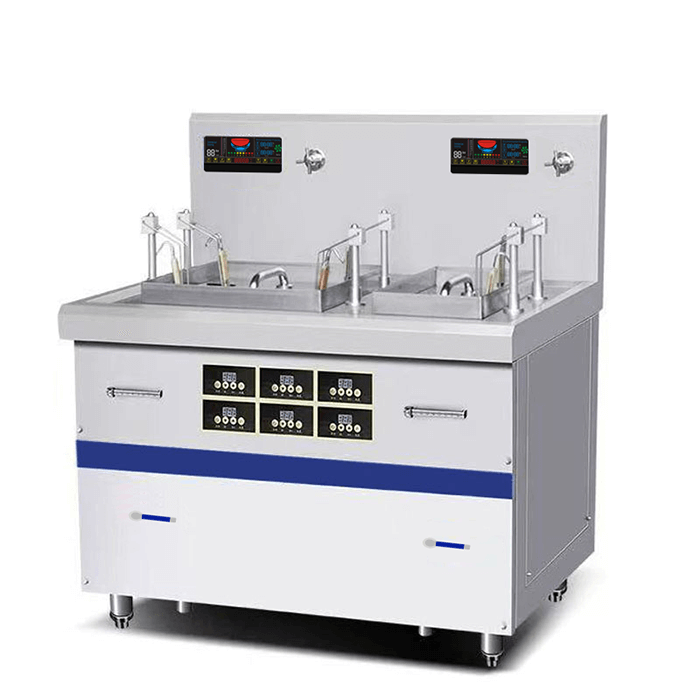
How do you handle a ticket with one Tonkotsu Ramen and one Kitsune Udon without running two separate machines or waiting for water changes? The answer lies in the commercial multi-basket pasta cooker with a split-tank design. At AT Cooker, our ATT-APST A6 allows you to maintain strict flavor isolation while boosting throughput.
Commercial Kitchen Equipment -from AT Cooker
- As a brand manufacturer of the professional commercial induction cooking equipment, AT Cooker has responded to restaurants’ & hotels’ needs and research normative commercial cooking equipment using the very latest induction technology.
- These seamless, real commercial quality commercial cooking equipment provides us with the opportunity to incorporate equipment of our choice into one seamless, multipurpose cooking equipment creating an efficient, low cost, safe, green and sustainable commercial kitchen. We have standerd equipment can service many commercial kitchens.
- AT Cooker always offers professional service. From material, design, to producing, we focuse on quality, performance and reliability to ensures the best solution is delivered for each and every one of our customers. Have a commercial kitchen? We will be one of your best partners.
Work Voltage
| Single-Phase | Three-Phase |
|---|---|
| 120V, 220V | 208V/ 240V, 380V, 480V |
Global In-Stock + Fast Pickup
| US | UK | Germany | France |
|---|---|---|---|
| Italy | Spain | Belgium | Bulgaria |
1. The Science of Starch Transfer: Why Udon and Ramen Cooking Water Don’t Mix
Ramen dough typically contains Kansui (alkaline salts), which gives it that distinct yellow color and chewy texture. Udon is neutral, made simply of wheat flour, salt, and water. When you cook Ramen, Kansui leaches into the water, turning it alkaline (pH 8-9) and yellow.
If you then cook Udon in this same alkaline water, the Udon will absorb the Kansui. The result? Your pure, white Udon turns yellowish and develops a strange, soapy flavor. This is preventing flavor transfer in boiling water 101: Never mix the streams. You need physical separation.
2. Understanding the Impact of Kansui (Alkaline) Leaching on Neutral Udon Noodles
It’s not just about color. The alkaline environment changes the gelatinization process of the Udon starch. It can make the surface slimy while leaving the core hard.
Using a single-tank cooker for both is a recipe for disaster. The only professional solution is a separate zone noodle boiler system.
3. The Advantage of Split-Tank Designs vs Single-Vat Basket Configurations
Many “multi-basket” cookers are just one big tank with 6 holes. This is fine for cooking 6 portions of Ramen, but useless for mixed menus.
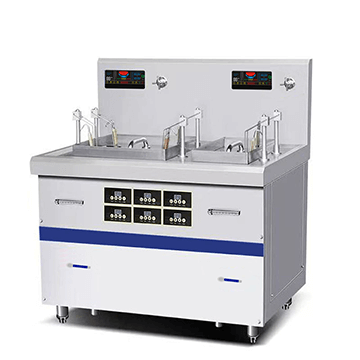
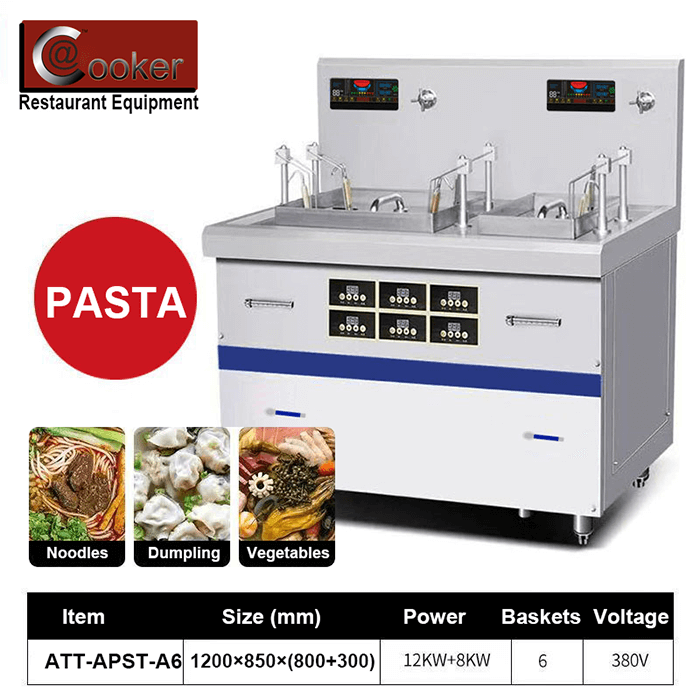
The ATT-APST A6 features a true split-tank design (Double Tank). You have a massive 108L main tank and a secondary 72L tank. This creates two completely isolated water environments. You can dedicate the large tank to high-volume Ramen and the smaller tank to Udon (or vice versa), ensuring zero cross-contamination.
4. Using Independent Auto-Lift Timers for Drastically Different Noodle Cook Times
Ramen might take 90 seconds. Frozen Udon might take 45 seconds. Dried Udon might take 8 minutes. Tracking this manually is chaos.
Our commercial induction noodle station is equipped with independent auto-lift systems for each basket. You can program Basket 1 for Ramen (90s) and Basket 4 (in the other tank) for Udon (4 mins). The machine manages the timing, so your staff doesn’t have to.
5. How Overflow Skimming Systems Remove Surface Starch Foam Continuously
As noodles cook, they release starch foam. In a mixed tank, this foam carries flavor.
The ATT-APST A6 is designed with a continuous overflow system. A trickle of fresh water pushes the starchy surface foam into the drain before it can build up. This keeps the water cleaner for longer, reducing the risk of “Hun Tang” (muddy soup) and flavor transfer even within the same noodle type.
6. Preventing “Soup Clouding”: Keeping Cooking Water Clear for Broth Presentation
If you serve “Chintan” (clear broth) Ramen or Udon, the cooking water quality matters. If the noodles are coated in thick, starchy water when lifted, they will cloud the clear soup in the bowl.
By using the split-tank system, you prevent the heavy starch release of Udon from contaminating the water used for delicate Ramen, ensuring your broth remains crystal clear upon serving.
5-year Warranty | 2-year Free Exchangeable | 1-year Free Return
7. Operational Protocols: Color-Coding Baskets for Specific Noodle Varieties
Hardware needs software (protocols). We recommend color-coding your basket handles. Use Black handles for the Ramen tank and White handles for the Udon tank.
This simple visual cue, combined with the physical separation of the independent heating zones pasta cooker, makes it impossible for staff to accidentally dunk Udon into the Kansui-rich Ramen water during a rush.
8. The Role of High-Volume Water Capacity in Diluting Potential Flavor Transfer
The solution to pollution is dilution. With a net capacity of 108L + 72L, the ATT-APST A6 holds a massive amount of water.
Even if a tiny amount of starch is released, the large water volume dilutes it instantly. This high water-to-noodle ratio is essential for maintaining a neutral flavor profile throughout a 4-hour lunch service without needing a complete water change.
9. Energy Efficiency Analysis: Boiling Two Zones vs Running Two Separate Machines
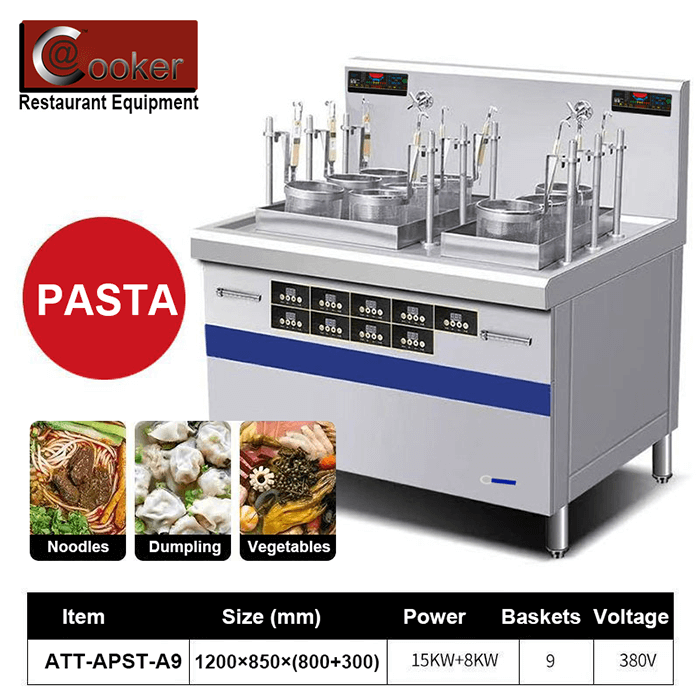
Running two separate gas boiling tanks is inefficient and takes up valuable hood space. The ATT-APST A6 integrates two zones into one footprint.
Because it uses induction (95% efficiency), maintaining the boil in both tanks costs significantly less than running two atmospheric gas burners. Plus, the Sensor switch allows you to turn down the Udon tank to standby mode if no orders are coming in, while keeping the Ramen tank at full boil.
10. Customer Perception: The “Clean Flavor” Standard in Specialty Noodle Shops
Modern diners are sophisticated. They can taste the difference between a clean, dedicated boil and a “muddy” mixed boil.
Promoting your use of a segregated cooking system signals quality. It tells customers you respect the integrity of each ingredient. This attention to detail builds trust and justifies premium pricing in specialty noodle shops.
11. The “Partition Board” Strategy: Physically Isolating Water Convection Currents in One Unit
Even within a single tank, convection currents can mix water. Our split-tank design uses a solid stainless steel partition wall, not just a divider.
This ensures that the violent rolling boil in the 15KW tank does not disturb the simmer in the 8KW tank. The water physics are completely isolated, allowing you to run two different thermal profiles simultaneously (e.g., violent boil for Ramen, gentle simmer for delicate dumplings).
12. Managing “Hun Tang” (Muddy Soup): Why Continuous Overflow is Critical for Mixed Menus
“Hun Tang” happens when starch accumulates, thickening the water until it’s like glue. This ruins texture.
The A6’s design encourages continuous overflow. By keeping the water level high and skimming the surface constantly, we remove the suspended starch particles. This keeps the cooking medium fresh and “sharp,” ensuring that every noodle has a clean surface for sauce adhesion.
5-year Warranty | 2-year Free Exchangeable | 1-year Free Return
Final Thoughts: One Machine, Two Worlds
You don’t need two kitchens to serve two types of perfect noodles. You just need the right machine. The ATT-APST A6 gives you the power of separation in a single, efficient footprint.
Upgrade Your Workflow Efficiency
Ready to serve Ramen and Udon side-by-side without compromise? Contact us today.