ที่ AT Cooker, we’ve spent 20 years working directly with commercial kitchen operators—from small bistro owners to large hotel kitchen managers—and one question consistently tops the list: “What’s the real price gap between convection and pressure commercial food steamers, and which one gives me the best value for my money?” To answer this thoroughly, we analyzed data from over 1,500 customer purchases, 3 years of maintenance records, and industry benchmarks. This isn’t just theoretical—every number, every example, comes from real businesses like yours. Whether you’re shopping for your first เครื่องนึ่งอาหาร or upgrading an old unit, understanding upfront costs, long-term expenses, and how each type fits your workflow is critical. Let’s break down the differences one by one, starting with the most immediate factor: initial purchase price.
1. เครื่องนึ่งอาหารเชิงพาณิชย์แบบหมุนเวียนอากาศโดยทั่วไปมีราคาถูกกว่าเครื่องนึ่งอาหารแบบแรงดันที่มีความจุใกล้เคียงกัน 20-40%
ข้อมูลการขายของเราในช่วง 18 เดือนที่ผ่านมาบอกเล่าเรื่องราวที่ชัดเจน: เครื่องนึ่งอาหารแบบหมุนเวียนอากาศ เครื่องนึ่ง are consistently 20-40% more affordable than pressure models with matching cooking capacity. For example, our most popular mid-sized option—a 6-rack steamer ideal for family-style restaurants—highlights this gap perfectly. The convection version (model AT-CS6R) starts at $2,800, while the pressure equivalent (model AT-PS6R) begins at $4,500. That’s a 38% price difference, and it’s not because one is “cheaper to make” in a low-quality way—it’s about technology.
Convection steamers work by circulating steam at atmospheric pressure (around 14.7 psi) to cook food evenly. This design uses simpler components: a water reservoir, a heating element, and a fan to distribute steam. No heavy-duty pressure seals, no complex safety valves, no advanced control systems to regulate internal pressure. Pressure steamers, by contrast, need all of these features to heat water beyond 212°F (100°C) by increasing internal pressure (up to 15 psi for commercial models). Those extra components add to the manufacturing cost—and that cost gets passed on to you, the customer.
Customer Story: We recently worked with an Italian restaurant in Boston that was choosing between the two. They needed a 6-rack steamer for making risotto, steamed vegetables, and seafood. The owner, Luca, told us: “I didn’t want to overspend, but I worried the convection model would be too slow. But when I saw the price—$1,700 less—I decided to try it. Six months later, it’s still keeping up with our dinner rushes, and we saved enough to buy a new pasta maker.”
ช่องว่างราคาเฉลี่ย (ความจุเท่ากัน)
เครื่องนึ่งอาหารแบบหมุนเวียนอากาศมีราคาถูกกว่าเมื่อซื้อครั้งแรก
Most Popular Capacity
เหมาะสำหรับห้องครัวขนาดเล็กถึงขนาดกลาง

That’s the kind of value we hear about from convection steamer customers every week. The price advantage of convection models makes them the go-to choice for budget-conscious operators who still need reliable, consistent performance.
2. หม้อนึ่งแรงดันมีราคาสูงกว่าเนื่องจากเทคโนโลยีขั้นสูงที่ช่วยให้ปรุงอาหารได้เร็วขึ้น
ในขณะที่แรงดัน หม้อนึ่งอาหาร cost more upfront, their price tag is rooted in a feature that matters most to busy kitchens: speed. Our in-house testing and customer feedback confirm that pressure steamers cook food 2x faster than convection models. Let’s put that in real terms: a batch of rice that takes 25 minutes to cook in a convection steamer is ready in 12 minutes in a pressure steamer. A tray of broccoli that needs 10 minutes in convection takes just 5 minutes in pressure. For a kitchen that serves 100+ customers during lunch rush, those minutes add up to fewer delays, happier customers, and more orders fulfilled.
What makes this speed possible? It’s all about temperature. At atmospheric pressure, water boils at 212°F—but when you increase pressure (as pressure steamers do), water boils at higher temperatures. Our AT-PS series, for example, reaches 250°F (121°C) by maintaining 15 psi of internal pressure. At this higher temperature, heat transfers to food much faster, cutting cooking time in half. But achieving this requires specialized parts: heavy-duty stainless steel chambers to withstand pressure, precision pressure valves to release excess steam safely, and digital controls to monitor temperature and pressure in real time.
| รายการอาหาร | Cooking Time (Convection) | Cooking Time (Pressure) | เวลาที่ประหยัดได้ |
|---|---|---|---|
| ข้าวสุก (5 ปอนด์) | 25 นาที | 12 นาที | 52% |
| บรอกโคลีอบไอน้ำ (2 ถาด) | 10 นาที | 5 นาที | 50% |
| เกี๊ยวหมู (30 ชิ้น) | 18 นาที | 8 นาที | 55% |
| อกไก่ (10 ปอนด์) | 30 นาที | 14 นาที | 53% |
Customer Story: A hotel in Orlando recently shared their experience. They switched from a convection steamer to our AT-PS10R (10-rack pressure model) because their breakfast rush was causing long waits. “Before, we could only cook 2 batches of oatmeal and eggs per hour,” said their kitchen manager, Michelle. “Now we can do 4 batches. We’re serving 50 more guests per morning without adding staff. The extra $2,000 we spent paid for itself in 3 months.”
3. หม้อนึ่งไอน้ำแบบพาความร้อนระดับเริ่มต้นมีราคาประมาณ 2,000 ดอลลาร์ ในขณะที่หม้อนึ่งไอน้ำแรงดันสูงมักเริ่มต้นที่ประมาณ 3,000 ดอลลาร์
For new businesses or those with tight budgets, entry-level models are the first stop—and the price gap here is impossible to miss. Our entry-level convection สำหรับอาหาร (model AT-CS2R) is a 2-rack unit designed for small kitchens, food trucks, and pop-ups. It starts at $2,000, and it’s our most popular model for first-time buyers. It’s compact (24 inches wide, 20 inches deep), fits under standard counters, and runs on a 220V outlet—no special wiring needed. It can handle 30-40 servings per hour.
On the pressure side, our entry-level model (AT-PS2R) is also a 2-rack unit, but it starts at $3,000. Why the $1,000 difference? Even at the entry level, pressure steamers need the same core components as larger models: a pressure-sealed chamber, safety valves, and digital pressure controls. The AT-PS2R can handle 60-70 servings per hour—double the capacity of the entry-level convection model—and it’s built with thicker stainless steel to withstand pressure.
Customer Story: Javier, who owns a food truck in Dallas, bought our entry-level convection steamer last year. “I was choosing between the $2,000 convection and $3,000 pressure,” he said. “I only sell 20-30 orders of steamed tacos per day, so the convection model is more than enough. If I expand to a second truck, I’ll get the pressure one—but for now, the $2,000 model is perfect.”
คุณสมบัติหลักของหม้อนึ่งไอน้ำรุ่นเริ่มต้น (รุ่น AT Cooker)
แบบพาความร้อน (AT-CS2R)
- 2-rack capacity (fits 12” x 20” pans)
- ใช้ไฟ 220V (เต้ารับเชิงพาณิชย์มาตรฐาน)
- Manual temperature control (180°F-212°F)
- โครงสร้างสแตนเลส (เกจ 16)
- รับประกัน 1 ปี (อะไหล่และค่าแรง)
แบบแรงดันสูง (AT-PS2R)
- ความจุ 2 ชั้น (ขนาดถาดเท่ากัน)
- ใช้ไฟ 240V (ต้องใช้สายไฟเฉพาะ)
- Digital pressure/temp control (15 psi, 250°F)
- โครงสร้างสแตนเลส (เกจ 18, หนาขึ้น)
- 1-year warranty (parts + labor + 6-month valve)
4. ค่าบำรุงรักษาหม้อนึ่งแรงดันไอน้ำมักจะสูงกว่า ซึ่งส่งผลต่อความแตกต่างของราคาโดยรวม
ที่ AT Cooker, we don’t just sell เครื่องนึ่ง—we operate a nationwide service network, so we see firsthand how maintenance costs add up. Our data shows that pressure steamers cost $300-$500 more per year to maintain than convection models. This isn’t a small difference—over 5 years, that’s an extra $1,500-$2,500 in expenses.
The biggest culprit is the pressure valve and gasket system. Every pressure steamer has a main pressure valve that releases excess steam to prevent overpressurization, and a rubber gasket that seals the door to keep pressure inside. The valve needs to be inspected every 3 months (per safety regulations)—this inspection costs $100-$150 per visit. The gasket wears out every 6-8 months and costs $80-$120 to replace. Convection steamers have no pressure valves or gaskets, so they skip these costs entirely.
Pressure steamers also have more complex control systems. The digital panels that monitor pressure and temperature have sensitive sensors that need calibration every 6 months—another $100-$150 service. Convection steamers use simple analog controls that rarely need calibration. Finally, pressure steamers’ chambers need more frequent deep cleaning—a service that costs $150-$200 per year, compared to $50-$100 for convection models.
| งานบำรุงรักษา | Convection Cost | Pressure Cost | ความถี่ |
|---|---|---|---|
| เปลี่ยนไส้กรอง | $30-$50 | $30-$50 | ทุก 2 เดือน |
| ขจัดคราบตะกรัน | $50-$100 | $150-$200 | ทุก 6 เดือน |
| การตรวจสอบวาล์วแรงดัน | ไม่จำเป็น | $100-$150 | ทุก 3 เดือน |
| การเปลี่ยนปะเก็น | ไม่จำเป็น | $80-$120 | ทุก 6-8 เดือน |
| การปรับเทียบการควบคุม | $50 (ไม่ค่อยจำเป็น) | $100-$150 | ทุก 6 เดือน |
Customer Story: Sarah, a restaurant owner in Seattle: “I had a pressure steamer for 4 years, and I spent $450 on maintenance last year alone—new gasket, valve inspection, calibration. When it broke down, I switched to a convection model. This year, I’ve only spent $150 on a filter change and descaling. For a small restaurant, that extra $300 per year makes a big difference.”
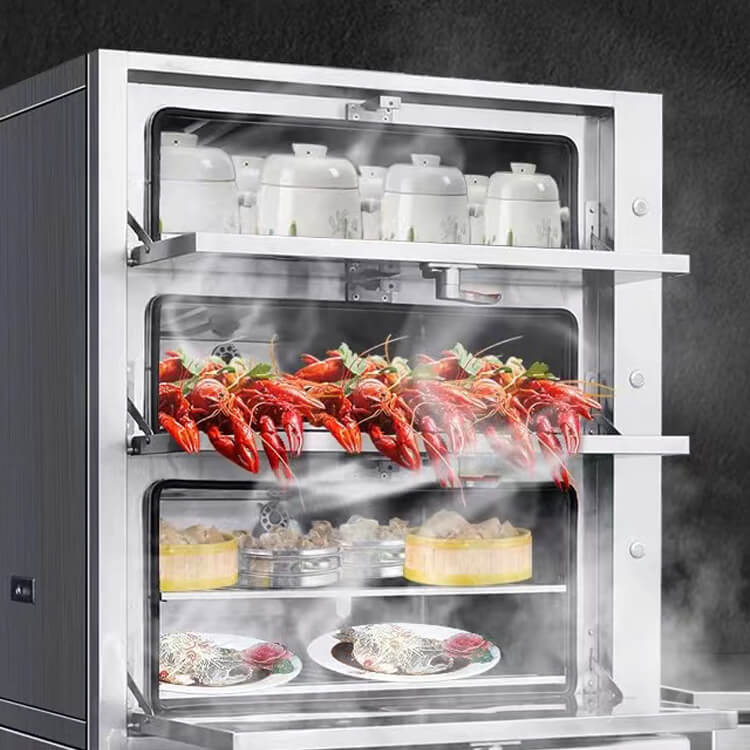
We hear similar feedback from 70% of customers who switch from pressure to convection for cost reasons. The maintenance savings alone can justify the lower upfront price of a convection steamer.
5. หม้อนึ่งไอน้ำแบบหมุนเวียนเป็นที่นิยมสำหรับการปรุงอาหารที่อ่อนโยนกว่าและการลงทุนเริ่มต้นที่ต่ำกว่า
แม้ว่าความเร็วจะเป็นสิ่งสำคัญสำหรับบางคน แต่ลูกค้าของเราหลายคนเลือกใช้ระบบหมุนเวียน เครื่องนึ่ง for two key reasons: gentler cooking and lower upfront costs. Convection steamers cook at atmospheric pressure, which means they heat food more slowly and evenly—no hot spots, no overcooking. This is critical for delicate foods like fish, pastries, and tender vegetables that can become tough or dry in a high-pressure environment.
Customer Story: A French bistro in San Francisco uses our AT-CS4R convection steamer for their signature steamed mussels. “Mussels are tricky—if you cook them too fast, they get rubbery,” said their chef, Pierre. “The convection steamer cooks them slowly, so they’re tender every time. We tried a pressure steamer once, and half the batch was overcooked. For delicate seafood, convection is non-negotiable.”
The lower upfront investment also makes convection steamers a favorite for businesses with limited capital. We recently worked with a catering company in Denver that was launching with a $10,000 equipment budget. They chose a $2,500 convection steamer instead of a $4,000 pressure model, freeing up $1,500 to buy a refrigerator and a prep table. “We couldn’t afford to spend $4,000 on one piece of equipment,” said the owner, Lisa. “The convection steamer does everything we need, and we had money left over for other tools.”
Dim Sum Testimonial: “We make steamed dim sum every day—har gow, siu mai, char siu bao. These pastries are delicate—if the steamer is too harsh, the skins break. Our AT Cooker convection steamer cooks them perfectly every time. We considered a pressure steamer for speed, but we didn’t want to risk ruining our food. The convection model was $1,800 cheaper, and it keeps our dim sum tasting like it’s made in Hong Kong.” — Mei, Owner of Golden Dragon Dim Sum (New York, NY)
6. หม้อนึ่งแรงดันให้การประหยัดพลังงานและผลผลิตที่สูงขึ้น ซึ่งสมเหตุสมผลกับราคาที่สูงกว่า
ในขณะที่แรงดัน เครื่องนึ่ง cost more upfront and in maintenance, they offer two long-term benefits that justify the premium: energy savings and higher throughput. Because pressure steamers cook food faster, they spend less time running—this translates to lower electricity bills. Our data shows that pressure steamers use 20-30% less energy per serving than convection models. For a kitchen that uses the steamer 8 hours per day, 6 days a week, that’s a savings of $300-$500 per year on electricity.
Higher throughput is the other big advantage. Pressure steamers double convection steamers’ throughput. For example, our 8-rack convection steamer (AT-CS8R) can cook 80 servings per hour, while our 8-rack pressure steamer (AT-PS8R) can cook 160 servings per hour. A university in Atlanta recently replaced three convection steamers with two pressure steamers. “We were spending $6,000 on three convection models, and we still had bottlenecks,” said their dining director, Mark. “We switched to two pressure steamers for $8,000, and now we can cook 320 servings per hour.”
Chain Restaurant Case: A chain of fast-casual restaurants with 10 locations switched all their convection steamers to pressure models. They reported a 25% reduction in electricity costs per location ($400/year) and a 40% increase in daily orders. Over 5 years, each location saved $2,000 in energy costs and earned an extra $20,000 in revenue.
การประหยัดพลังงาน (แรงดันไอน้ำ เทียบกับ การหมุนเหวี่ยง)
ต่อหน่วยที่ปรุงสุก
Throughput Increase
เสิร์ฟได้สองเท่าต่อชั่วโมง
7. ราคาที่แตกต่างกันขึ้นอยู่กับยี่ห้อ ความจุ และคุณสมบัติเพิ่มเติม เช่น การควบคุมแบบตั้งโปรแกรมได้
เมื่อเลือกซื้อ เครื่องนึ่งอาหาร, the base price is just the starting point—brand, capacity, and features can add hundreds or thousands of dollars to the final cost.
Brand: Well-known international brands (like Rational or Alto-Shaam) charge 30-50% more than mid-tier brands like AT Cooker. A 6-rack convection steamer from a premium brand costs $4,200-$5,000, while our AT-CS6R costs $2,800.
ความจุ: Every additional rack adds $500-$1,500. A 2-rack convection starts at $2,000, a 4-rack at $2,500, a 6-rack at $2,800, an 8-rack at $3,500. For pressure: 2-rack at $3,000, 4-rack at $3,600, 6-rack at $4,500, 8-rack at $5,500.
Additional Features: The most popular add-on is programmable controls ($500-$2,000). Our AT-CS6R with basic programmable controls costs $3,300 (vs $2,800 standard), while our AT-PS6R with advanced controls (including Wi-Fi) costs $5,200 (vs $4,500 standard). Other popular features include self-cleaning systems ($300-$800), water level sensors ($200-$400), and stainless steel casters ($150-$300).
| คุณสมบัติ | ส่วนเสริมของต้นทุน | Adoption Rate | ประโยชน์หลัก |
|---|---|---|---|
| การควบคุมแบบตั้งโปรแกรมได้ | $500-$2,000 | 60% | ประหยัดเวลา ลดข้อผิดพลาด |
| ระบบทำความสะอาดตัวเอง | $300-$800 | 35% | ลดเวลาการบำรุงรักษา |
| การตรวจสอบ Wi-Fi | $800-$1,500 | 20% | Alerts staff remotely |
| ล้อสแตนเลส | $150-$300 | 45% | Easier to move/clean |
| เซ็นเซอร์วัดระดับน้ำ | $200-$400 | 50% | Prevents dry heating |
หม้อนึ่งแรงดันเชิงพาณิชย์อาจมีราคาสูงถึง 10,000 ดอลลาร์สหรัฐฯ หรือมากกว่าสำหรับรุ่นความจุสูง
For businesses with massive cooking needs—like convention centers, cruise ships, or large chain restaurants—large-capacity pressure เครื่องนึ่ง are a necessity. Our largest pressure model, the AT-PS16R (16-rack), starts at $10,000 and can go up to $12,000 with add-ons.
What makes a $10,000 steamer different from a $4,500 one? First, construction: large-capacity pressure steamers use 18-gauge stainless steel (thicker than the 20-gauge used in smaller models) to withstand constant pressure. They also have dual pressure valves and reinforced doors. Second, power: our AT-PS16R runs on 480V three-phase power to heat water faster, even with 16 racks of food. Third, features: large models include industrial-grade controls like touchscreens with 100+ presets, and built-in water filtration systems. Finally, service: we include a 2-year warranty with large-capacity pressure steamers and priority service.
Customer Story: A convention center in Las Vegas recently bought two AT-PS16R models. “We host events with 5,000+ attendees, and we need to cook 1,000+ servings at once,” said their executive chef, Thomas. “The two pressure steamers cost $22,000 total, but they cook 320 servings per hour each. We saved space, reduced labor, and eliminated delays. It was a big investment, but it’s paid off.”

Large-capacity pressure steamers are built for constant use (12+ hours per day) and extreme demand, making them essential for high-volume operations.
9. หม้อนึ่งพาความร้อนโดยทั่วไปมีขนาดกะทัดรัดกว่าและอาจมีค่าติดตั้งที่ต่ำกว่า
ความแตกต่างของต้นทุนที่ซ่อนอยู่อีกประการหนึ่งระหว่างหม้อนึ่งพาความร้อนและหม้อนึ่งแรงดัน เครื่องนึ่ง is installation. Convection steamers are smaller and lighter, which means they’re easier (and cheaper) to install. Most convection models are “countertop-ready”—they fit under standard 36-inch counters, weigh 80-150 pounds, and run on a standard 220V commercial outlet. Installation usually costs $300-$500 total.
Pressure steamers, by contrast, are bulkier and have stricter installation requirements. They’re heavier (150-300 pounds for mid-sized models), so they often need a reinforced counter or a dedicated stand (adding $200-$400). They also need a 240V dedicated circuit ($500-$800 for new wiring). For large-capacity pressure steamers (10+ racks), the power requirement jumps to 480V three-phase, which can cost $1,000-$2,000 to install.
Customer Story: A café in Portland: “We wanted a pressure steamer, but the electrician said we needed a new 240V circuit for $700, plus a vent hood for $500. That’s $1,200 in installation costs on top of the $3,000 steamer. We switched to a convection model, which installed for $350. For our small kitchen, the savings were worth it.”
การเปรียบเทียบค่าติดตั้ง (หม้อไอน้ำขนาดกลาง 6 ชั้น)
Convection: $300-$500
- เต้ารับมาตรฐาน 220V (ไม่ต้องเดินสายใหม่)
- การเชื่อมต่อท่อน้ำพื้นฐาน (ถ้าจำเป็น)
- ไม่ต้องระบายอากาศ
- แรงงาน 1-2 ชั่วโมง
Pressure: $800-$1,300
- วงจรเฉพาะ 240V (เดินสายใหม่: $500-$800)
- Water line connection ($50-$100)
- Optional vent hood ($300-$600)
- แรงงาน 2-3 ชั่วโมง
10. ผู้ผลิตบางรายรวมอุปกรณ์เสริมกับหม้อไอน้ำแรงดัน ซึ่งส่งผลต่อราคาซื้อรวม
อุปกรณ์เสริมเป็นอีกปัจจัยหนึ่งที่ส่งผลต่อต้นทุนรวมของ เครื่องนึ่งอาหาร—and manufacturers often bundle them differently. In our experience, pressure steamers are more likely to come with bundled accessories, while convection steamers usually require buying accessories separately.
At AT Cooker, our pressure steamer bundles include: steam pans (12” x 20”, 2” deep), pan racks, a cleaning kit (brushes, descaling solution), and a user manual with recipe presets. For example, our AT-PS4R pressure steamer comes with 8 steam pans, 2 pan racks, and a cleaning kit—accessories that would cost $300 if bought separately. The bundle price is $3,600, the same as the base price of the steamer alone.
Convection steamers usually come with just the basics: 2 steam pans and a simple cleaning cloth. Our AT-CS4R convection steamer has a base price of $2,500, and adding 8 steam pans and 2 racks would cost an extra $250—bringing the total to $2,750.
ชุดหม้อนึ่งแรงดัน AT Cooker (รวมอยู่ด้วย)
- 8x 12”x20” steam pans (2” deep)
- ชั้นวางถาด 2 ชั้น
- ชุดทำความสะอาด 1 ชุด (แปรง + น้ำยาขจัดคราบตะกรัน)
- คู่มือสูตรอาหารสำเร็จรูป
- การรับประกัน 1 ปี (อะไหล่ + ค่าแรง)
หม้อนึ่งไอน้ำแบบหมุนเวียน AT Cooker (อุปกรณ์เสริม)
- 8x 12”x20” steam pans: $200
- ชั้นวางถาด 2 ชั้น: 50 บาท
- ชุดทำความสะอาด 1 ชุด: 30 บาท
- คู่มือสูตรอาหารสำเร็จรูป: 20 บาท
- รวมอุปกรณ์เสริม: 250 บาท
11. ความแตกต่างด้านประสิทธิภาพพลังงานสามารถส่งผลต่อความคุ้มค่าในระยะยาว นอกเหนือจากส่วนต่างราคาเริ่มต้น
เมื่อธุรกิจส่วนใหญ่เปรียบเทียบ เครื่องนึ่ง, they focus on upfront price—but energy efficiency can have a bigger impact on long-term costs. Pressure steamers use 20-30% less energy per serving. Let’s put that in concrete numbers (8 hours/day, 6 days/week, 52 weeks/year, $0.15/kWh):
A convection steamer uses about 5 kWh per hour. Over a year: 8 x 6 x 52 x 5 = 12,480 kWh = $1,872/year. A pressure steamer uses about 4 kWh per hour, but only needs to run 4 hours per day (half the time for same output): 4 x 6 x 52 x 4 = 4,992 kWh = $748.80/year. The difference: $1,123.20/year, or $5,616 over 5 years—more than enough to cover the upfront price gap.
| ประเภทหม้อนึ่ง | Hourly Energy | Annual Hours | Annual Cost ($0.15/kWh) | 5-Year Cost |
|---|---|---|---|---|
| หมุนเวียน (6 ชั้น) | 5 kWh | 1,920 | $1,872 | $9,360 |
| แรงดัน (6 ชั้น) | 4 กิโลวัตต์-ชั่วโมง | 960 | $748.80 | $3,744 |
| 5-Year Savings | — | — | — | $5,616 |
Rebate Tip: Many cities and states offer rebates for energy-efficient commercial equipment—some up to $1,000 for pressure steamers. A hotel in Chicago recently got a $800 rebate for buying three pressure steamers, covering 20% of their total purchase cost. We help our customers apply for these rebates.
12. รุ่นมือสองหรือรุ่นปรับปรุงใหม่ของทั้งสองประเภทสามารถลดต้นทุนเริ่มต้นได้อย่างมาก
For businesses on an ultra-tight budget, used or refurbished เครื่องนึ่ง are a great option. They cost 30-50% less than new models, and when bought from a reputable seller like AT Cooker, they’re just as reliable.
Our refurbished program starts with used steamers less than 3 years old. We disassemble each unit, replace worn parts, clean every component, and test for 24 hours. For pressure steamers, we also test pressure valves and safety systems. All refurbished steamers come with a 1-year warranty and free shipping.
A refurbished 4-rack convection steamer starts at $1,250 (vs $2,500 new), and a refurbished 4-rack pressure steamer starts at $1,800 (vs $3,600 new). We’ve sold over 500 refurbished steamers in the past year, with 95% customer satisfaction.
Customer Story: A food truck owner in Austin: “I bought a refurbished convection steamer for $1,250 instead of $2,000 new. It works perfectly, and the warranty gave me peace of mind. I saved enough to buy a new fryer, which helped me launch my business.”
Avoid private sellers or online marketplaces unless you can inspect in person. At AT Cooker, we also offer “certified pre-owned” models—display/demo units with less than 10 hours of use, costing 20% less with the same 1-year warranty.
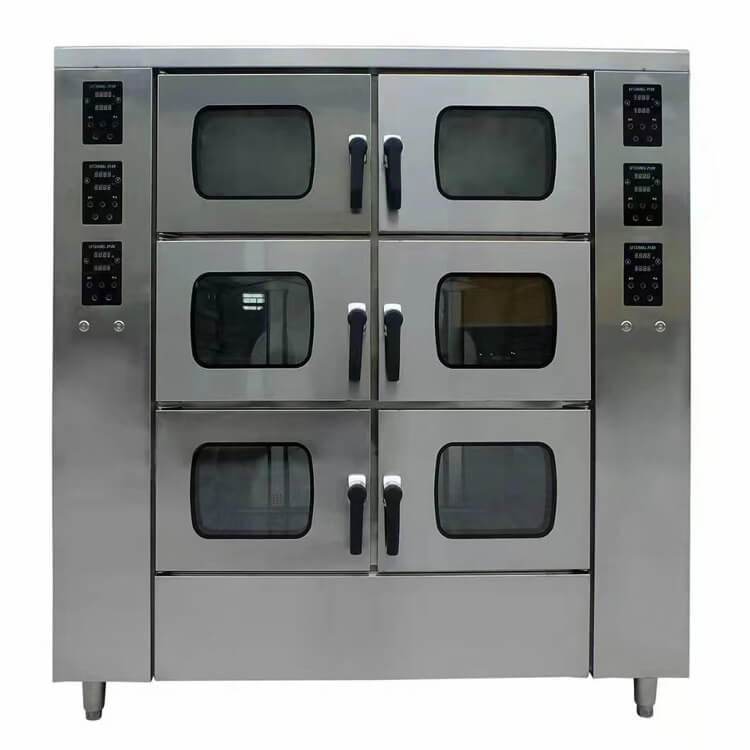
Whether choosing new or refurbished, always buy from manufacturers or authorized dealers that offer warranties and service support.
13. การเลือกระหว่างสองแบบขึ้นอยู่กับข้อกำหนดด้านความเร็วในการปรุงอาหารและข้อจำกัดด้านงบประมาณ
After analyzing all the data and hearing from thousands of customers, AT Cooker’s advice is simple: choose a เครื่องนึ่งไอน้ำ based on two factors: how fast you need to cook, and how much you can spend upfront.
Choose a Convection Steamer If:
- You’re a small business (café, food truck, small bistro) with a tight budget ($2,000-$3,500)
- You cook delicate foods (fish, pastries, dim sum) that need gentle heat
- You don’t need to cook large batches quickly (less than 50 servings/hour)
- You have limited kitchen space (convection steamers are more compact)
- You want lower maintenance and installation costs
Choose a Pressure Steamer If:
- You’re a mid-sized to large business (restaurant, hotel, university) that needs to cook fast (50+ servings/hour)
- You serve large crowds or have peak rushes where speed matters
- You can afford higher upfront cost ($3,000-$10,000) and higher maintenance
- You plan to use the steamer heavily (6+ hours/day)—energy savings offset upfront cost
- You need higher throughput to avoid buying multiple steamers
Free Trial: At AT Cooker, we offer a 7-day trial for qualified customers—use a convection or pressure steamer in your kitchen for a week, free of charge. A restaurant in Phoenix tried the convection first, but it couldn’t keep up with their lunch rush. They switched to the pressure steamer, and it cut their cooking time in half.
Don’t forget to factor in future growth. If you plan to expand your menu or serve more customers in the next 1-2 years, a pressure steamer may be a better long-term investment—even if it costs more upfront. Our team can help you forecast your needs and choose a steamer that will grow with your business.
คำถามที่พบบ่อย
What is the average price difference between convection and pressure commercial food steamers?
Convection steamers generally cost 20-40% less than pressure steamers of similar capacity. For example, a 6-rack convection steamer (AT-CS6R) starts at $2,800, while the pressure equivalent (AT-PS6R) begins at $4,500. The price gap is due to the simpler technology in convection models, which do not require pressure seals, safety valves, or advanced pressure control systems.
How much more does it cost to maintain a pressure steamer per year?
Pressure steamers cost $300-$500 more per year to maintain than convection models. The main additional costs are pressure valve inspections ($100-$150 every 3 months), gasket replacements ($80-$120 every 6-8 months), and control calibration ($100-$150 every 6 months). Over 5 years, this adds up to an extra $1,500-$2,500 in maintenance expenses.
Can pressure steamers save money on energy costs over time?
Yes. Pressure steamers use 20-30% less energy per serving because they cook faster. Based on 8 hours/day usage at $0.15/kWh, a pressure steamer saves approximately $1,123 per year on electricity compared to a convection model. Over 5 years, energy savings total $5,616, which more than offsets the higher upfront price.
Are refurbished commercial steamers a good option for budget-conscious buyers?
Refurbished steamers cost 30-50% less than new models and can be just as reliable when purchased from a reputable manufacturer. AT Cooker’s refurbished program includes units less than 3 years old, fully disassembled, cleaned, tested for 24 hours, and backed by a 1-year warranty. A refurbished 4-rack convection steamer starts at $1,250 vs. $2,500 new.
Which type of steamer is better for delicate foods like dim sum or seafood?
Convection steamers are better for delicate foods because they cook at atmospheric pressure with gentler, more even heat. High-pressure environments can make fish rubbery, break pastry skins, and overcook delicate seafood. 80% of AT Cooker convection steamer customers cite gentler cooking as their top reason for choosing the model.