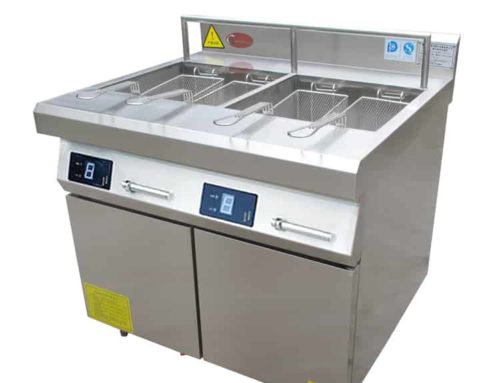
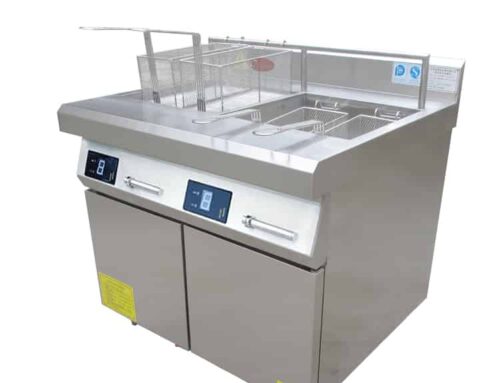
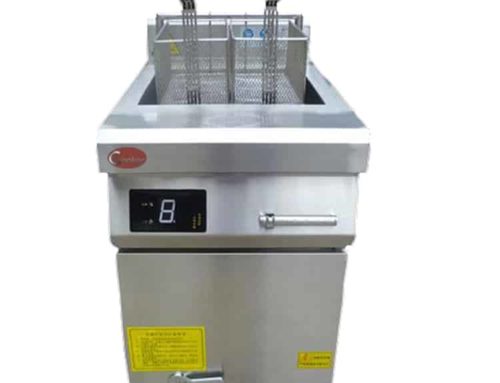
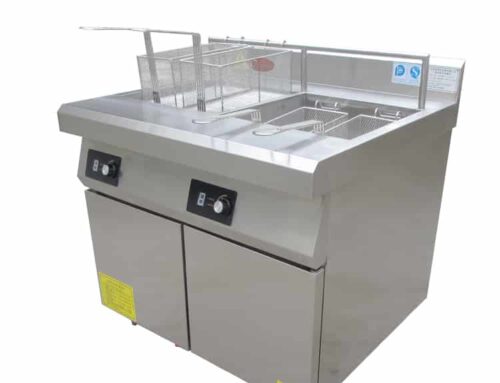
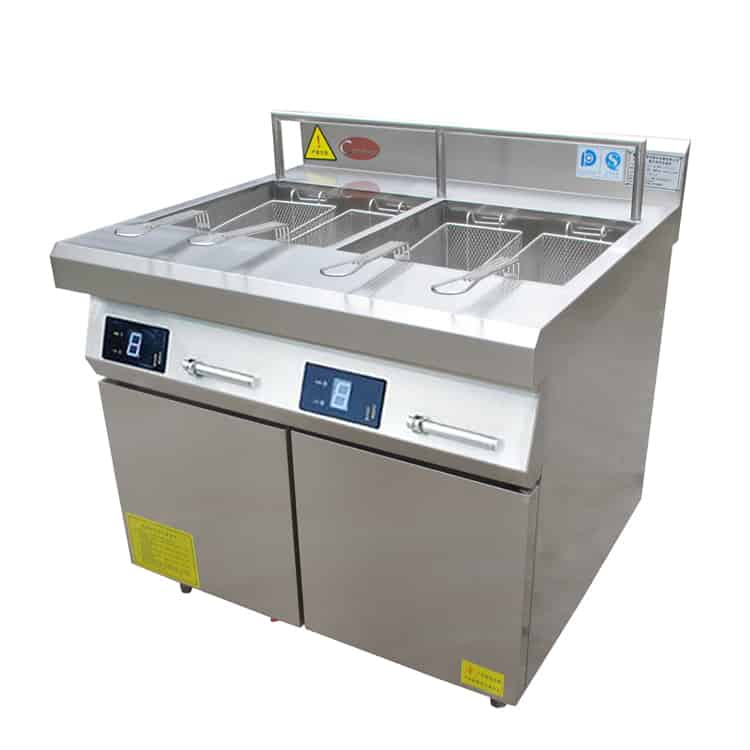
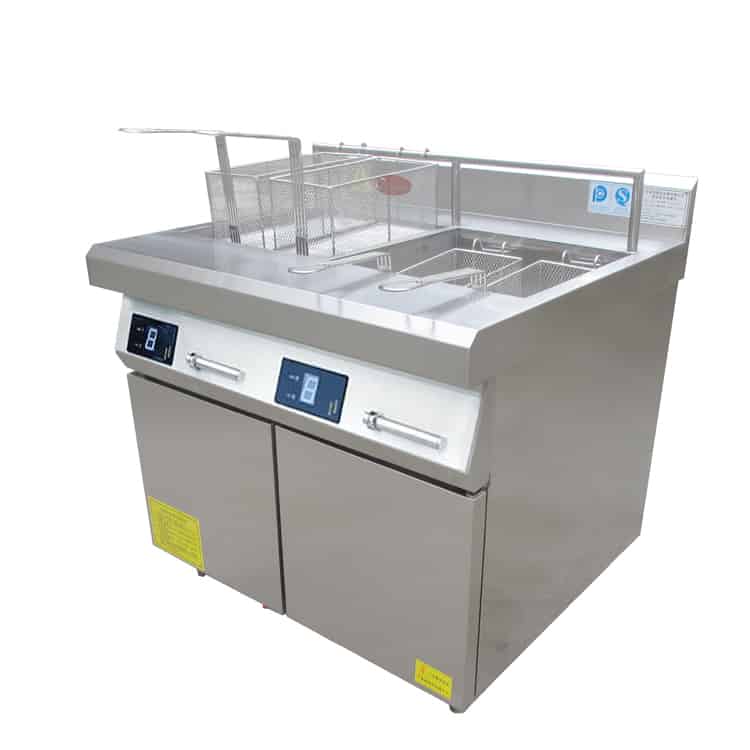
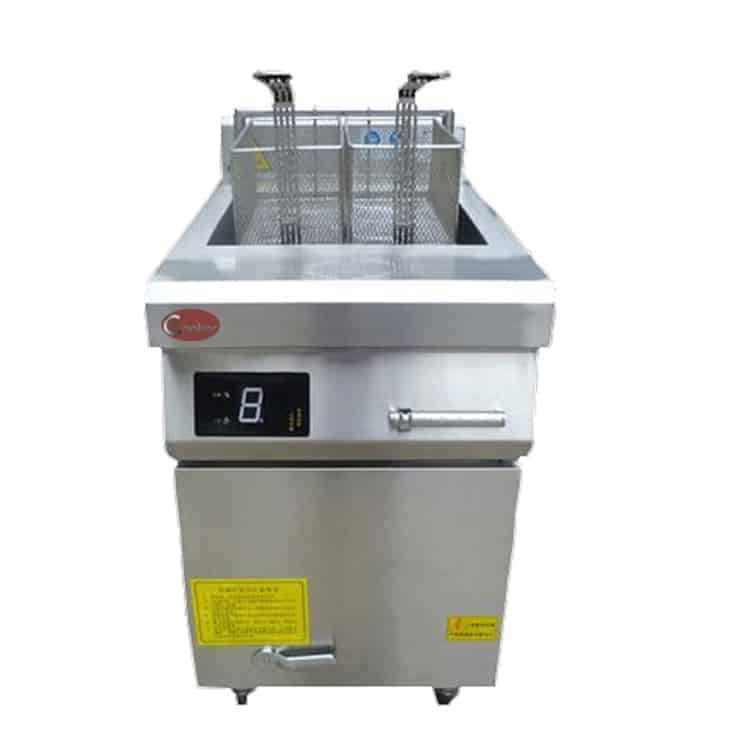
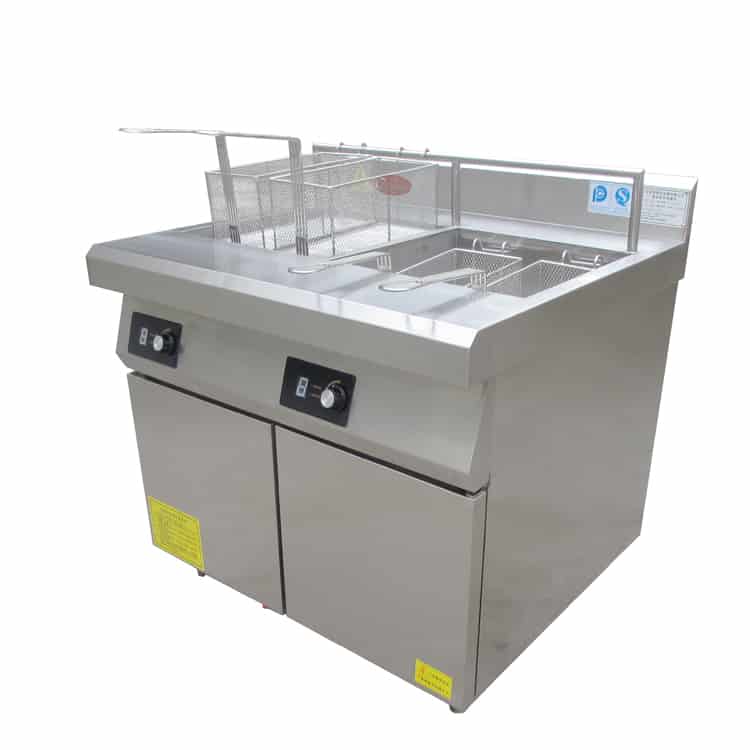
Commercial deep fryers—gas, electric, or induction—are backbone of restaurants and catering. Choosing depends on speed, precision, cost, safety, maintenance. AT Cooker offers gas (propane) and electric (induction) from 15L countertop to 50L floor-standing. Below, 14 critical differences.
1. Heating Speed: Gas Heats Faster
Gas: open flame, 350-375°F in 6-8 min. Electric: elements, 10-12 min. AT Cooker’s propane ATT-LP-F50: 30L to 375°F in 7 min. An Austin burger joint: “Cold oil to cooking fries in 7 min—critical for 11 AM rush. Old electric took 12 min.” Gap widens at 50L: gas 9 min, electric 15 min. Induction narrows to 8-9 min.
Gas
30L to 375°F
Electric
30L to 375°F
การเหนี่ยวนำ
30L to 375°F
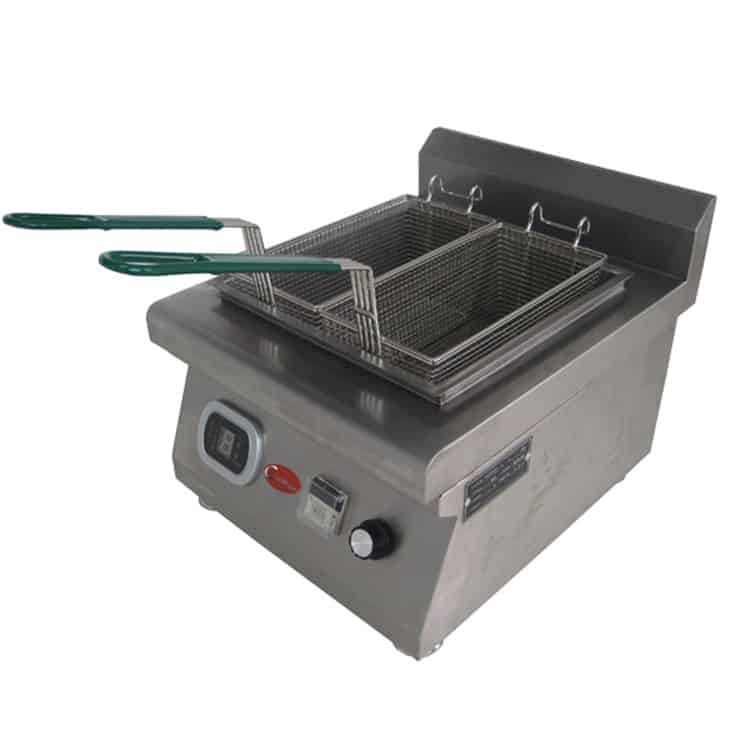
2. Temperature Control: Electric Superior Precision
Electric induction: ±2°F (digital PID, 10 adjustments/sec). Gas: ±5-8°F (mechanical, flame variability). AT Cooker’s ATT-ID-F30: PID controller keeps exactly 350°F. A sushi restaurant: “Tempura needs precision. Electric hits 350°F and stays. Gas bounced 340-360°F, ruining 15% of batches.” Precision extends oil life 20-30% (saves $150-200/mo).
3. Installation: Gas More Expensive
Electric: just outlet ($300 for 240V line). Gas: gas line + Type I hood ($2,000-$5,000+). A Chicago café: “15L electric install $300. Gas would need $1,200 line + $800 hood = $2,000.” AT Cooker induction fryers work with standard commercial electrical. A hotel: “No electrical modification for 30KW induction—plugged into existing 480V.”
4. Energy Efficiency: Electric Induction Outperforms
Electric induction: 85-90% energy to heat. Gas: 50-60% (40-50% lost to air). At 8 hrs/day: induction $36/day; gas $18/day (cheaper fuel). But induction efficiency means less idle waste. A fast-food chain: “Electric induction saves $200/mo vs gas—heat oil only when needed, no wasted open flames.” Renewable-powered electric = near-zero emissions.
| คุณสมบัติ | Gas Deep Fryers | Electric Deep Fryers | รุ่นหม้อต้ม AT |
|---|---|---|---|
| Heat-Up (30L to 375°F) | 6-8 min (flame) | 10-12 min; 8-9 (induction) | ATT-ID-F30 |
| Temp Precision | ±5-8°F | ±2°F (PID) | ATT-ID-F30 |
| Install Cost | $1,500-5,000 | $300-1,000 | ATT-ID-F15 |
| ประสิทธิภาพพลังงาน | 50-60% | 85-90% (induction) | ATT-ID-F30 |
| Operating (8hr/day) | $540-600/mo | $800-1,080/mo | Depends on rates |
5. Safety: Electric Fewer Fire Hazards
Electric eliminates open flames. AT Cooker electric fryers include:
- Auto Shut-Off: Cuts power above 400°F or if empty
- Overheat Protection: Dual sensors monitor pot + oil
- Cool-Touch Exterior: Insulated sides <120°F
Customer Story: Maria, Miami: “Small kitchen, staff moving constantly. Gas open flames felt risky. Electric induction: no flame, auto shut-off. Zero safety incidents in 2 years.”
6. Operating Costs: Gas Cheaper in Gas-Rich Regions
In gas-cheap regions (US Midwest): gas 30-50% less to run. In high-electricity areas (Europe): electric induction may be cheaper. A burger chain (TX + CA): “Texas: gas $450/mo, electric $900. California: electric $600/mo, gas $700.” AT Cooker helps calculate ROI based on local rates.
7. Heat Recovery: Electric Induction Faster
After adding cold food: induction recovers in 30-60 sec; gas 60-90 sec. AT Cooker’s 30KW induction: 350°F to 375°F in 45 sec; gas 75 sec. A chicken chain: “50 batches/day—faster recovery = 10 more customers/hour. Gas couldn’t keep up, long lines.” Ideal for continuous frying.
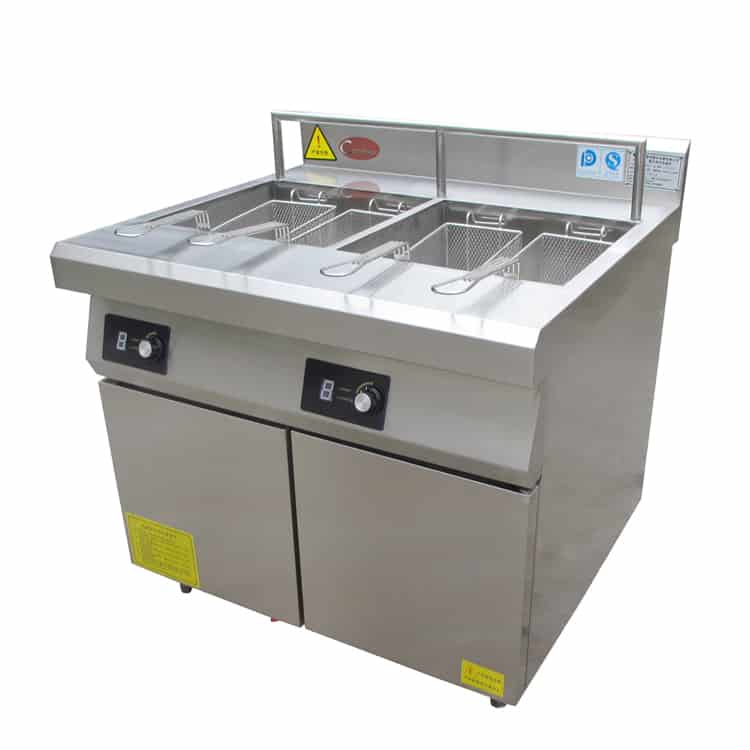
8. Maintenance: Electric Easier
Gas: monthly (clean burners, check lines, replace electrodes). Electric: quarterly (check elements, wipe coils, calibrate thermostats).
- แก๊ส: $150/fryer/month (10 fryers = $12,000/yr)
- Electric: $50/fryer/quarter (10 fryers = $2,000/yr)
AT Cooker electric elements: 15-min replacement, no service call. A restaurant: “Replaced element during lunch break. Gas repair would shut us down half day.”
9. Noise: Electric Quieter
Gas: 70-75 dB (burner whoosh + ventilation). Electric induction: 55-60 dB (no moving parts). A café with open kitchen: “Gas so loud, customers complained. Electric quiet enough for no soundproofing.” A hotel lounge: “Fry near bar—electric silent, guests don’t hear over music.”
10. Power Outage: Gas Works Without Electricity
Gas advantage: works during outages (manual ignition). Electric: shuts down completely. A Florida coastal restaurant: “3-day outage after storm—gas fryer let us serve while others closed.” AT Cooker propane fryers have manual ignition. A caterer: “Outdoor events, no generators needed. Electric would need 5KW generator.”
11. Oil Longevity: Electric Extends Oil Life
Electric precision extends oil life 20-30%. A fried chicken restaurant: “Gas: change oil every 3 days (50L = $100). Electric: every 4 days, saving $800/month.” AT Cooker electric fryers have built-in filtration: “Filter cleans oil overnight—extra day per batch, cutting oil costs 25%.”
12. Kitchen Layout: Electric More Flexible
Gas: must be near gas line + hood. Electric: anywhere with outlet. A food truck: “Can’t run gas line in truck—electric plugs into 240V generator, fits next to grill.” AT Cooker 15-20L countertop: only 24” wide. A café: “Kitchen 8 feet wide—electric fits small counter; gas needs dedicated 3-foot space near hood.”
13. Durability: Gas Burners vs. Electric Elements
Gas burners: 5-7 years (SS, corrosion-resistant). Electric elements: 3-4 years. Induction coils: 6-8 years (longest). A diner: “Gas burners 10 years, still work. Replaced electric elements twice. Induction coil 5-year warranty—expect it to outlast gas.” AT Cooker uses Incoloy elements (heat-resistant alloy).
14. Environmental Impact: Electric Greener
Gas emits CO₂ and NOx. Electric: zero direct emissions; near-zero with renewables. A university (solar): “Electric fryers zero emissions—gas would add 5 tons CO₂/year.” AT Cooker induction fryers ENERGY STAR certified (15% less energy). A corporate café: “Save 10,000 kWh/year, reduce footprint 7 tons.”
Which is faster: gas or electric deep fryer?
Gas deep fryers heat up faster (6-8 minutes for 30L to 375°F) vs electric (10-12 minutes). However, electric induction fryers recover heat faster after adding food (30-60 seconds vs 60-90 seconds for gas), making them better for continuous high-volume frying.
Are electric deep fryers more energy efficient than gas?
Yes. Electric induction fryers convert 85-90% of energy into heat, while gas fryers only convert 50-60% (the rest is lost to the kitchen). However, gas fuel is often cheaper per unit, so operating costs depend on local electricity vs gas prices.
What is the temperature precision difference between gas and electric fryers?
Electric fryers with digital PID controllers maintain ±2°F accuracy, while gas fryers fluctuate ±5-8°F due to flame variability. This precision reduces oil degradation by 20-30% and produces more consistent frying results.
Which deep fryer is safer for a small kitchen?
Electric deep fryers are safer for small kitchens because they have no open flame, auto shut-off above 400°F, overheat protection with dual sensors, and cool-touch exterior below 120°F. Many fire codes require electric fryers in high-traffic areas like mall food courts.
How much does it cost to install a gas vs electric deep fryer?
Electric fryers cost $300-$1,000 to install (just an electrical outlet). Gas fryers cost $1,500-$5,000+ (gas line + Type I ventilation hood). For large gas fryers without existing gas infrastructure, installation can exceed $5,000.
Choose Between Gas & Electric Deep Fryers
Share your frying volume, fuel costs, and kitchen layout—we’ll recommend the right type.