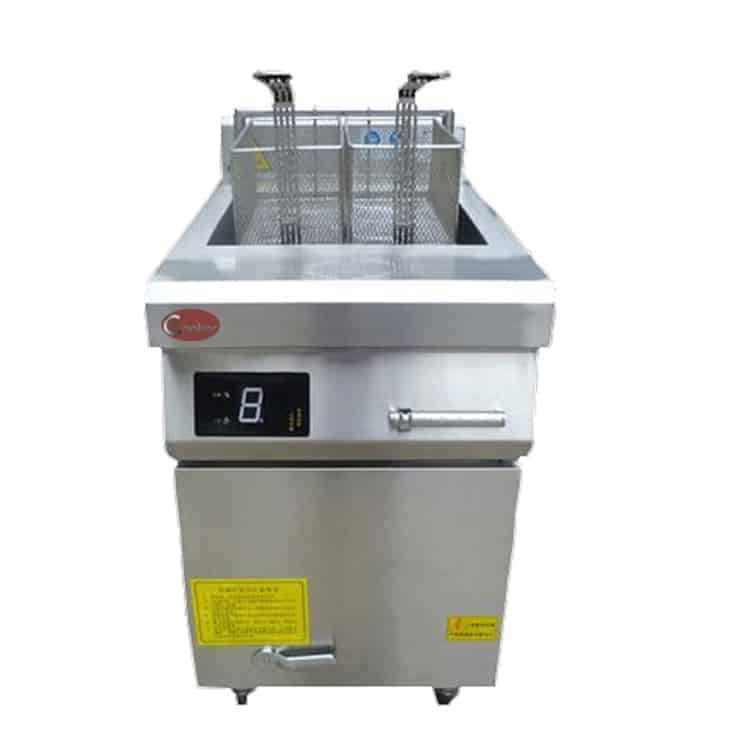
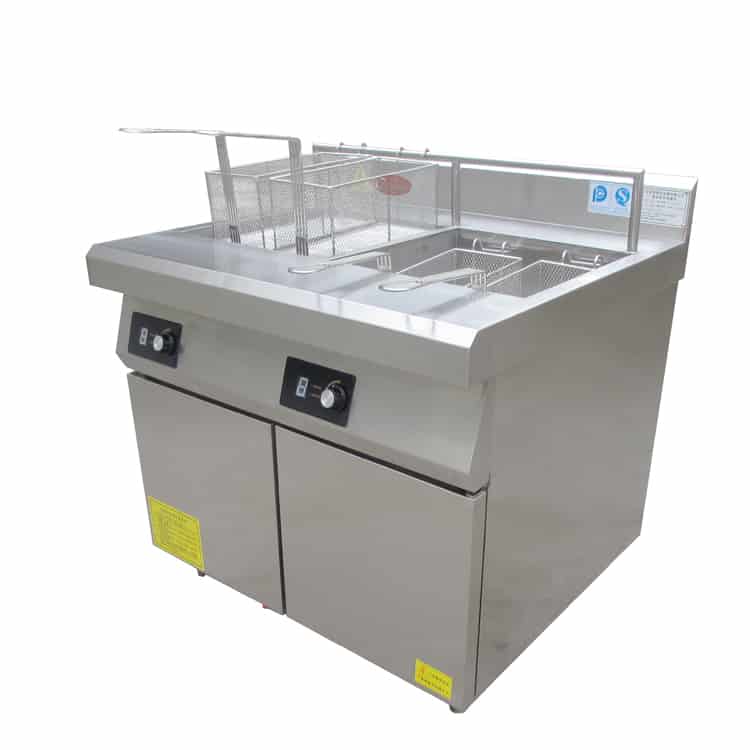
Commercial fryers’ oil hold capacity spans a wide range, and consumption rates vary drastically based on usage. AT Cooker offers models from 10L countertop to 80L dual-tank. Below, 14 factors that determine how much oil your fryer holds and how fast it consumes.
1. Commercial Fryers Typically Hold 15 to 60 Pounds of Oil
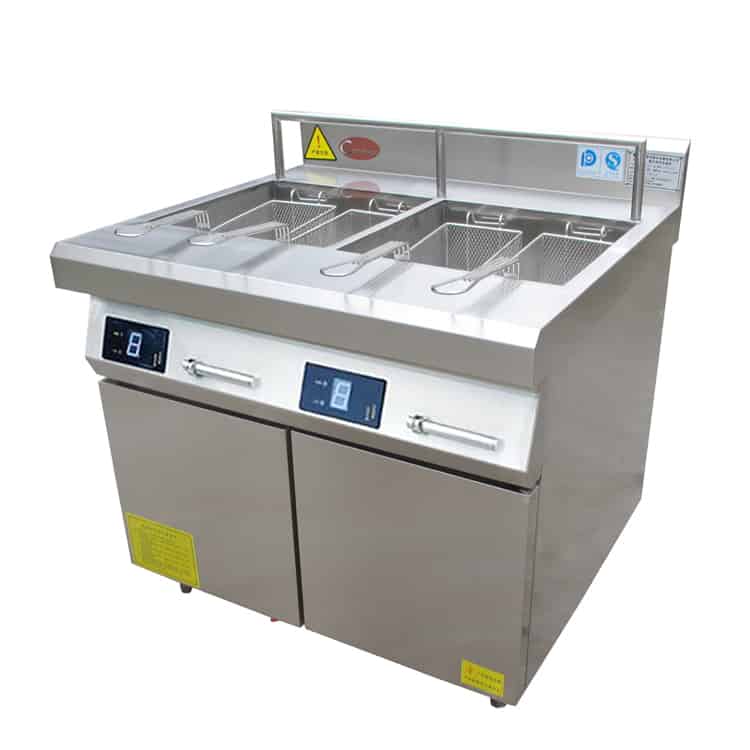
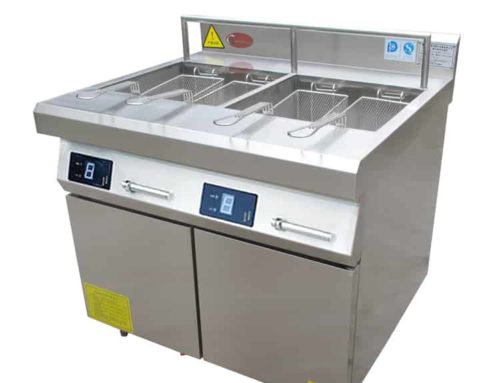
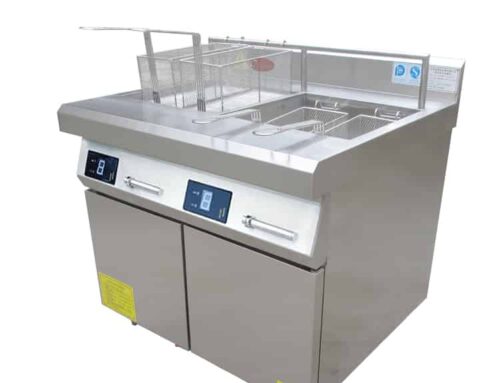
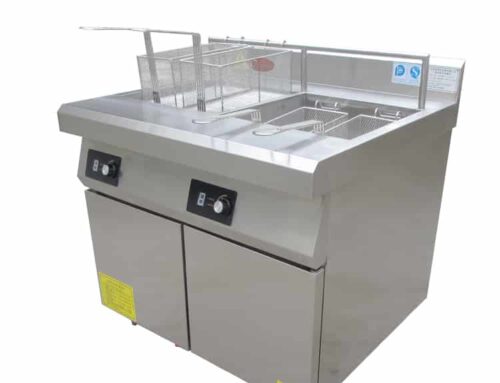
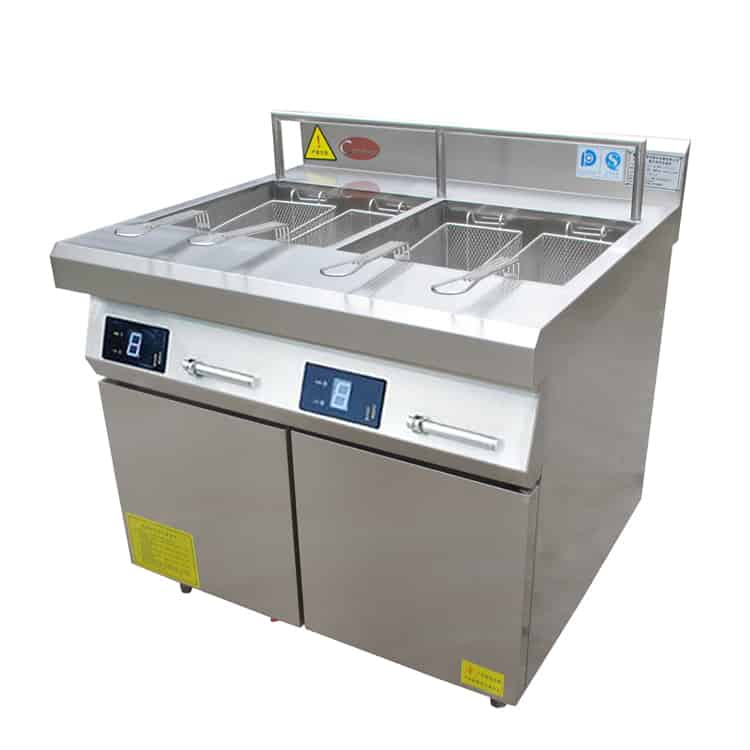
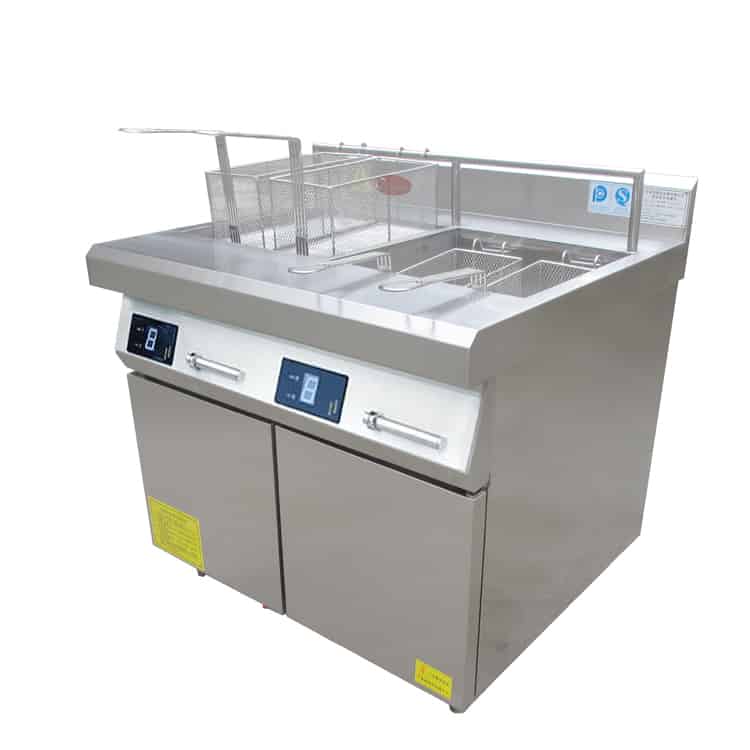
Most standard models fall between 15–60 lbs (17–65L), while industrial-grade units (like AT Cooker’s 40L×2 model) can hold up to 73 lbs (80L). The key is matching capacity to output: a small café needs far less oil than a busy burger chain.
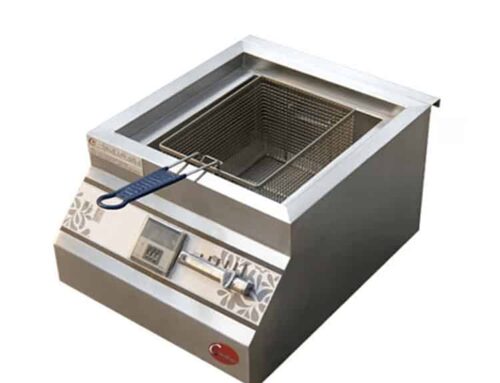
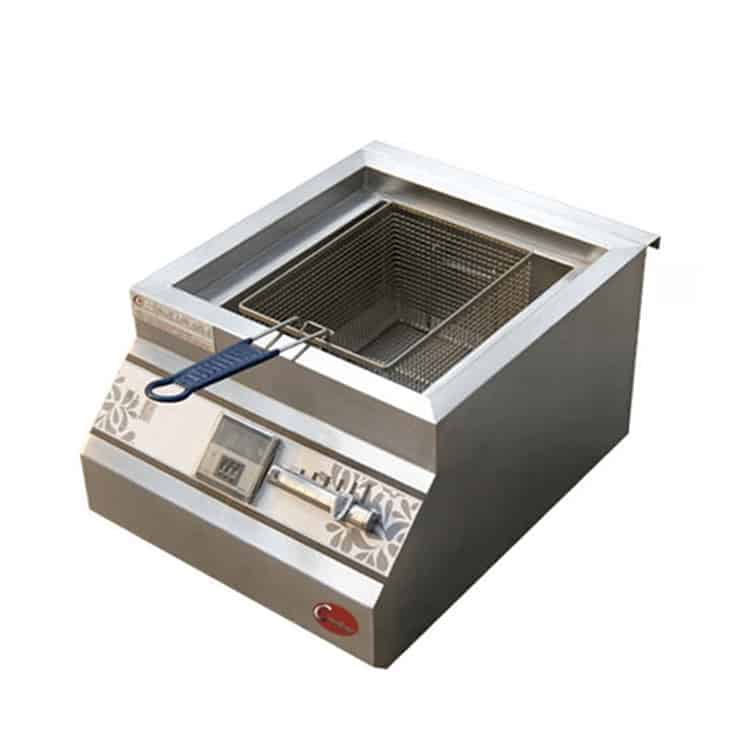
- Compact Countertop (5KW): 8.5–13.8 lbs (10–15L). Perfect for cafés or food trucks frying 50–100 portions daily.
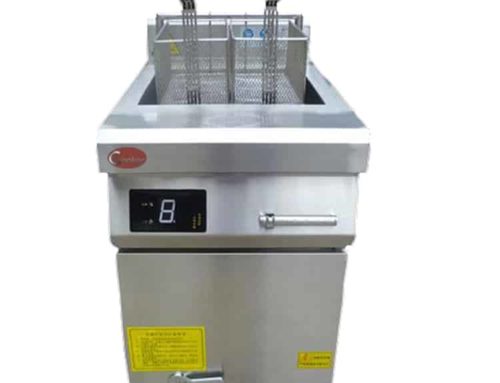
- Mid-Volume Freestanding (8–15KW): 19.5–21.16 lbs (23L). The 23L induction fryer is a bestseller—enough for 200–300 portions daily.
- High-Volume Dual-Tank (10–12KW×2): 68–73.6 lbs (80L total). Handles 500+ portions with separate tanks.
Oil Conversion: 1L vegetable oil = ~0.85 lbs; 1L peanut oil = ~0.92 lbs. All AT Cooker specs reference net oil capacity (usable volume).
| AT Cooker 型号 | 油容量 (L) | Oil Capacity (lbs) | 功率 | Ideal Kitchen | Daily Output |
|---|---|---|---|---|---|
| 5KW Single-Basket Countertop | 10升 | 8.5 磅 | 5千瓦 | Cafés, food trucks | 50–100 |
| 5KW Dual-Basket Countertop | 15升 | 12.75 磅 | 5千瓦 | Small restaurants | 100–150 |
| 23L Freestanding Induction | 23升 | 19.55 磅 | 8–15KW | Mid-sized restaurants | 200–300 |
| 40L×2 Dual-Tank | 80L (40L×2) | 68 磅 | 10–12KW×2 | Stadiums, hotels | 500+ |
2. 食用油消耗率取决于使用频率
High-volume operations (4+ hours daily) consume oil 2–3x faster than low-volume kitchens (1–2 hours daily). AT Cooker’s popular models and typical replacement cycles (vegetable oil):
- Low-Volume (1–2 hrs/day): 10L countertop, oil replacement every 5–7 days. ~42–60L monthly.
- Mid-Volume (3–4 hrs/day): 23L freestanding, replacement every 3–4 days. ~172–228L monthly.
- High-Volume (5+ hrs/day): 40L×2, replacement every 2–3 days. ~780–1,200L monthly.
FFA Threshold: Once free fatty acid exceeds 1%, oil produces off-flavors and smoke. AT Cooker’s 10-hour auto-shutoff timer reduces idle degradation by 15%.
3. 定期过滤可延长食用油寿命,降低消耗
Food particles left in oil accelerate degradation by burning and releasing acids. Filtration removes these particles, extending oil life by 30–50%. AT Cooker’s fryers simplify filtration with built-in faucet drains, cool-touch oil handles, and compatibility with commercial filtration machines.
| Filtration Method | Replacement Cycle | Monthly Consumption |
|---|---|---|
| 无过滤 | 3 days | 230L |
| 每日过滤 | 5 days | 138L |
| 机器过滤 | 6 days | 115L |
Case Study: A catering company in Miami: with daily filtration (10 min after closing), oil replacement went from every 3 days to every 5 days—saving 40% on oil costs monthly. For a 23L fryer, that’s $192/month savings.
4. Induction Precise Temperature Control Slows Oil Degradation
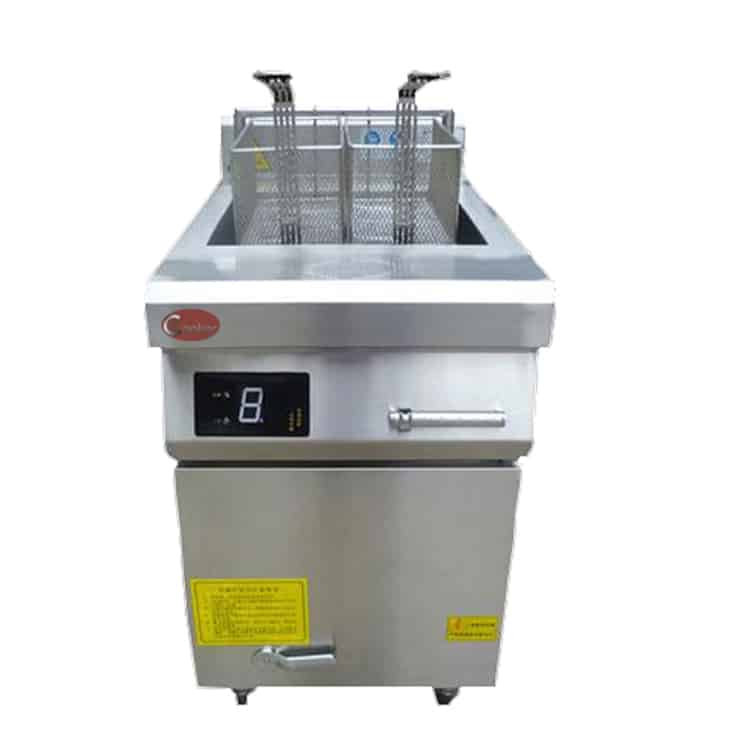
Oil degradation accelerates above 375°F (190°C). AT Cooker’s induction fryers use PID controllers adjusting heat 10 times/sec, maintaining ±2°F—far more precise than gas (±5–8°F) or standard electric (±3–4°F). Result: oil lasts longer.
A chicken chain: “Gas fryer bounced 360–385°F, oil degraded every 2 days. Induction stays at 370°F exactly, oil lasts 4 days. Cut oil costs in half.” Anti-high-temperature warnings alert staff if oil nears 390°F, saving 10–15L monthly.
5. Oil Capacity Is Proportional to Fryer Size
Larger fryers hold more oil because they’re designed for higher demand. AT Cooker’s dimensions:
- Countertop 10L: 400×400×450mm, tank 200×280×180mm.
- Freestanding 23L: 500×800×950mm, tank 340×340×200mm.
- Dual-Tank 80L: 1000×800×1100mm, tank 400×400×250mm×2.
Lesson: A Las Vegas hotel: “Bought a small countertop fryer with 20L tank—weighed 60 lbs full, couldn’t move it. Switched to AT Cooker’s 15L countertop, lightweight enough to store when not in use.”
6. Food Type Influences Oil Consumption
Breaded/battered foods shed crumbs and absorb more oil, accelerating degradation. Plain foods produce fewer particles. A kitchen frying mostly breaded foods replaces oil 20–30% more frequently.
- Breaded (chicken): 23L fryer, oil every 3 days. Monthly: 230L. “Breading sheds crumbs that burn in oil.”
- Plain (fries): Same 23L fryer, oil every 4 days. Monthly: 172L. “Fries produce almost no crumbs.”
Tip: AT Cooker recommends separate fryers for breaded and plain foods. A Chicago diner: “Separate fryers let us keep fry oil 4 days, chicken oil 3 days—saving 15L monthly.”
7. 先进的油品管理系统监测质量
Modern fryers include oil quality sensors measuring FFA levels or conductivity in real time. AT Cooker’s 40L×2 offers an optional sensor integrated with digital display:
- Measures conductivity every 15 minutes.
- Displays “Quality Score” (1–10): 10=fresh, 3=replace soon, 1=replace immediately.
- Alert at score 3, giving staff time to plan replacement.
Result: A hotel with 10 fryers: “Before, changed oil every 3 days regardless. Now only when sensor says so—sometimes lasts 4 days, saving 50L monthly.”
8. Electric Fryers’ Consistent Heat Lowers Consumption
Gas fryers have hot spots (areas of higher temperature) that cause oil to degrade faster locally. AT Cooker’s induction fryers use magnetic heating across the entire tank bottom, eliminating hot spots.
- Gas: Hot spots 390°F, rest 370°F. FFA 1.5% in hot spots vs 0.8% elsewhere—entire batch replaced, wasting 50%.
- AT 烹饪器感应: 370°F uniform. FFA 0.8% everywhere—no wasted oil.
Hidden Benefit: Electric fryer users replace oil 15–20% less frequently than gas users. A 20-location chain: “Switched from gas—went from 10,000L to 8,500L monthly.”
9. 油品周转率影响质量和消耗量
High turnover (large volumes daily) means oil doesn’t degrade much. Low turnover means oil sits longer, degrading from idle heat. Two kitchens with the same fryer can have drastically different consumption.
- High Turnover: Burger chain, 23L, 300 portions/day. Oil lasts 3 days (7.6L/day). Monthly: 228L.
- Low Turnover: Café, same 23L, 50 portions/day. Oil lasts 4 days (5.75L/day). Monthly: 172L. But quality is lower.
Optimization: A Seattle café: “Switched from 23L to 10L fryer for 50 portions/day. Oil lasts 3 days, tastes fresh. Monthly use dropped 172L to 100L.”
10. Environmental Factors Increase Evaporation
High ambient temperature (>80°F) or humidity (>60%) accelerates oil evaporation—5–10% of monthly consumption. AT Cooker’s 23L fryer has 3-layer insulation reducing evaporation by 70%.
Florida Test: “Old uninsulated fryer lost 1L/day to evaporation. AT Cooker insulated fryer loses 0.3L daily—saving 21L monthly ($63).”
Tips: keep lid closed when not in use, install exhaust fans, monitor levels weekly. An Arizona bakery: “Lid closed + exhaust fan—evaporation 0.8L to 0.4L daily. 146L saved/year.”
11. 维护措施延长食用油寿命
AT Cooker recommends three maintenance areas:
- 油箱清洁: Weekly (non-abrasive cleaner + soft brush). Dirty tank reduces oil life by 20%.
- Element Inspection: Quarterly. Faulty elements cause hot spots. AT Cooker induction coils are sealed—just wipe with dry cloth.
- 密封件更换: Annually. Worn seal increases evaporation and temperature fluctuations.
Case Study: School cafeteria with 5 AT Cooker fryers: “Before maintenance, oil every 3 days. After weekly cleaning + quarterly checks, oil lasts 4 days—saving 50L monthly.”
12. 初始加油量与实际消耗量
Initial fill = one-time cost to fill to max level. Actual consumption = recurring replacement. Confusing the two leads to budget errors.
- 10L Countertop: Initial = 10L. Daily consumption = ~1.4–2L.
- 23L Freestanding: Initial = 23L. Daily consumption = ~5.75–7.6L.
- 40L×2 Dual-Tank: Initial = 80L. Daily consumption = ~26–40L.
Budget Tip: A new restaurant owner: “Budgeted for 23L initial fill ($69) but forgot monthly consumption (172L = $516). AT Cooker helped adjust budget to include both.” Use their Consumption Calculator on the website.
13. 油位传感器可防止过度使用和溢出
AT Cooker’s fryers have two sensor types:
- 低油位传感器: Alerts when below minimum safe level. Prevents overheating and degradation. Displays “Low Oil” on screen.
- Overfill Sensor (high-end): Stops oil flow at max level. Prevents spills during cooking.
Real Impact: A fast-food chain: “Low oil sensor saved us from ruining oil multiple times. Used to waste 5L monthly from overheating; now zero.”
14. 成本分析:食用油购买 + 处置费用
Total oil costs include both purchase and disposal (hidden cost, 10–15% of total). Monthly analysis for AT Cooker’s 23L fryer (172L consumption):
| Cost Item | Calculation | Monthly |
|---|---|---|
| Oil Purchase | 172L × $3/L | $516 |
| Disposal | 172L × $0.30/L | $51.60 |
| Total | $567.60 |
Many AT Cooker customers partner with biodiesel companies for free pickup + $0.10/L rebate. A Miami hotel: “Cuts disposal to zero, adds $17.20/month.” Optimizing both can reduce total oil costs 15–20% annually ($1,021–$1,362 for a $6,811/yr kitchen).
5年保修 | 2年免费换货 | 1年免费退货
商用油炸锅的最佳油容量是多少?
商用油炸锅的油容量通常在10至50升之间。最佳容量取决于您的每日油炸量。高流量餐厅适合30-50升的油槽,而较小规模的经营可以使用10-20升的设备。AT Cooker提供从15升到40升的型号,以匹配不同的业务规模。.
商用油炸锅的油应该多久更换一次?
换油频率取决于使用量和食物类型。高流量经营(每天油炸4小时以上)应每3-5天更换一次油。中等使用(每天2-3小时)可以间隔5-7天。始终使用测试条或通过目视检查油的颜色变深、起泡或异味来监测油的质量。.
哪些因素影响油炸锅的油耗率?
关键因素包括:油炸温度(更高温度加速油质劣化)、食物含水量(湿润食物引入水分)、面糊/裹粉的吸收、过滤频率以及油的类型。具有精确温度控制的电磁油炸锅与燃气型号相比,可减少15-20%的油耗。.
如何减少商用油炸锅的油耗?
最佳实践:保持最佳温度(175-190°C),每天过滤油以去除食物残渣,避免超载炸篮,使用高烟点的高品质油,不使用时盖上油炸锅以防止氧化,并选择电磁油炸锅以实现精确温度控制和能源效率。.
电磁油炸锅和燃气油炸锅的油效率有什么区别?
电磁油炸锅的能源效率为90-95%,而燃气型号为30-45%。精确的温度控制减少油质劣化,将油的使用寿命延长20-30%。电磁加热还消除了导致局部油燃烧的热点。其结果是更低的油耗、更好的食物质量以及随时间降低的运营成本。.
选择适合您食用油容量和消耗量需求的商用炸锅
Share your daily frying volume, food type, and kitchen size—we’ll recommend the ideal fryer to minimize consumption and costs.