Unlocking Natural Rice Sweetness: The Role of Precise Heat in Commercial Induction Steaming
AT Cooker Insight: Cooking perfect rice in bulk is not just about heat; it is about chemistry. The difference between bland, mushy rice and sweet, distinct grains lies in precision rice steaming technology. Here, we explore how the AT Cooker ZFGT-A R24 utilizes scientific thermal curves to maximize starch gelatinization, delivering superior flavor that keeps customers coming back.
For any Asian restaurant, canteen, or sushi bar, rice is not just a side dish; it is the soul of the meal. Yet, many commercial kitchens struggle with consistency. One batch is perfect, the next is dry, and the bottom layer is burnt. The culprit is often outdated gas equipment that relies on brute force rather than scientific precision.
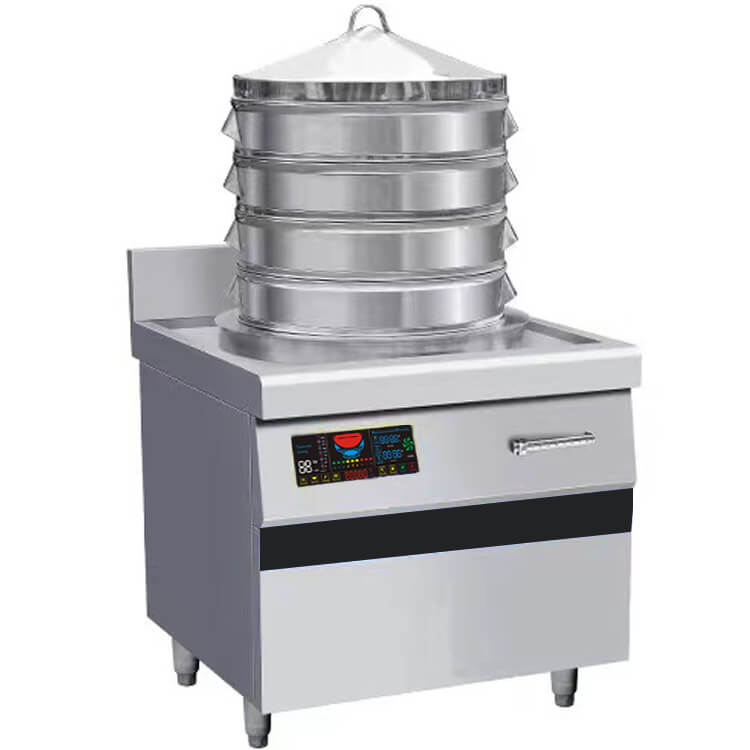
At AT Cooker, we have spent 15 years perfecting the art of large-scale grain cooking. We know that unlocking the natural sweetness of rice—that subtle, aromatic sugar profile known as “Gan” (甘)—requires hitting a very specific thermal window. Our Freestanding Induction Rice Steamer ZFGT-A R24 is designed not just to cook rice, but to optimize the starch gelatinization process in rice through exacting induction control.
In this deep dive, we will explain the science behind the sweetness and how upgrading to high-power induction can transform your bulk rice quality.
1. Understanding the Alpha-Amylase Enzyme Window for Maximum Sugar Conversion
Rice is primarily composed of starch, which is flavorless in its raw state. To make it sweet, we rely on an enzyme called Alpha-Amylase, which naturally exists in the grain. When activated by heat and water, this enzyme breaks down complex starch chains into simpler sugars (glucose and maltose).
However, this enzyme is picky. It is most active between 40°C and 60°C. If the temperature rises too slowly, the rice gets mushy. If it rises too fast (like in a raging gas fire), the enzyme is destroyed before it can work its magic, resulting in cooked but bland rice.
The ZFGT-A R24 uses an intelligent power controller to navigate this thermal window perfectly. By modulating its 24KW power output, it ensures the rice stays in the “sweet spot” just long enough to maximize sugar conversion before accelerating to the boiling point.
2. How Stable Temperatures Enhance Starch Gelatinization Better Than Gas Fluctuations
Gas flames are inherently unstable. They flicker with air drafts, drop in pressure during peak hours, and create hot spots. This inconsistency leads to uneven starch gelatinization process in rice. Some grains burst (overcooked), while others remain chalky (undercooked).
- Temperature fluctuates ±10°C
- Uneven heat distribution (Hot bottom, cold top)
- Relies on manual flame adjustment
- Result: Inconsistent texture and sweetness
- Temperature stability ±1°C
- Omni-directional steam saturation
- Digital sensor control (8 Power Levels)
- Result: Uniform gelatinization across all 24 layers
3. The Impact of Consistent Steam Saturation on Preserving Natural Grain Aroma
Aroma is a huge part of taste. The natural scent of rice comes from volatile compounds that can be easily stripped away by “wet” steam or excessive boiling. The goal is to cook with “dry” saturated steam.
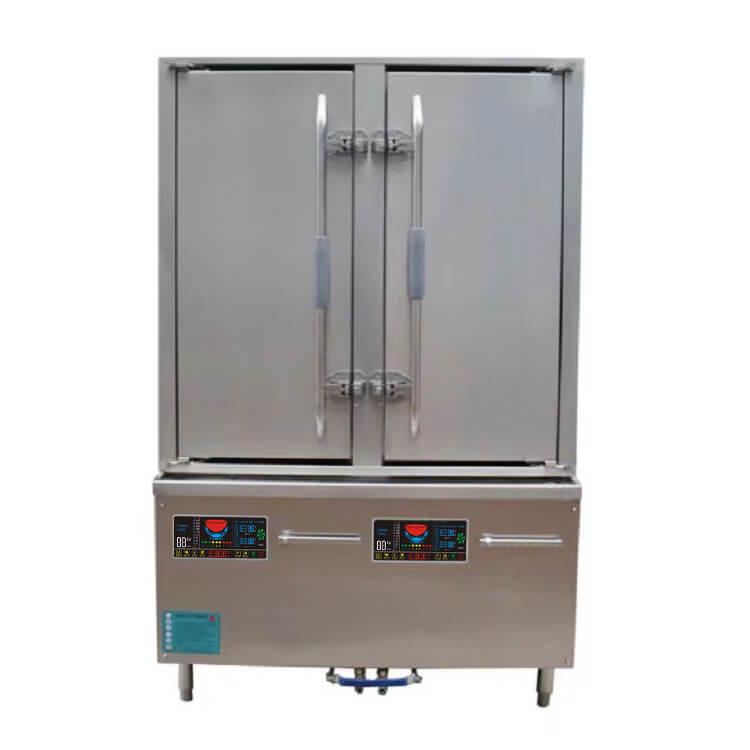
The ZFGT-A R24 features an automatic water filling and steam vent system that maintains perfect pressure. With 90% – 95% energy efficiency, the induction generator creates steam instantly. This rapid steam generation ensures that the cabinet is filled with high-energy, consistent steam that penetrates the grain without soaking it, locking in the natural aroma known as “Mi Xiang” (Rice Fragrance).
4. Comparing Glucose Content Levels in Rice Cooked via Induction vs Traditional Methods
Does precision rice steaming technology actually change the chemical composition of the final product? Studies suggest yes. When heat is applied precisely, the breakdown of amylopectin is more complete.
| Parameter | Traditional Gas Cooking | AT Cooker Induction Steaming |
|---|---|---|
| Heating Curve | Linear / Uncontrolled | Step-Curve / Optimized |
| Sugar Conversion | Partial | Maximized |
| Moisture Retention | Variable (Dry or Soggy) | Consistent (62-65%) |
| Flavor Profile | Neutral | Naturally Sweet |
5. Why Precise Heat Curves Are Critical for Premium Sushi Rice Sweetness
Sushi rice is the ultimate test for any steamer. It requires a firm exterior and a soft, sticky interior to hold the vinegar seasoning without becoming mushy. This texture is achieved by manipulating the heat curve: a soak phase, a rapid boil phase, and a steam phase.
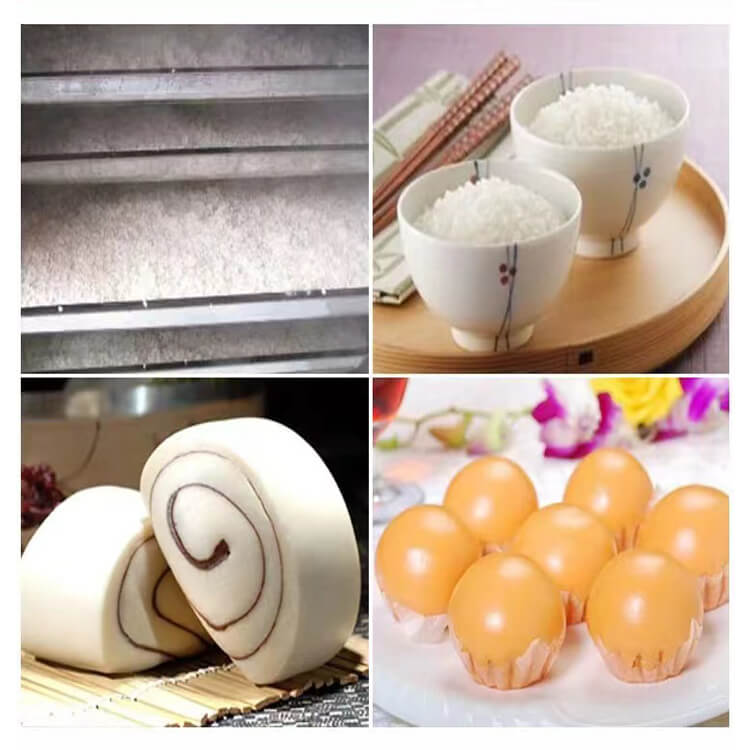
A heavy duty food steamer for sushi must be programmable. The ZFGT-A R24 allows chefs to set specific power levels. For sushi, you might start at Level 8 for rapid steam generation, then drop to Level 4 for a gentle finish. This control is impossible with a standard gas valve.
6. Preventing Flavor Dilution: The Danger of Excess Condensation in Older Steamers
One of the biggest complaints with old steamers is the “rain” effect. Condensation forms on the ceiling of the cabinet and drips onto the top trays of rice. This water dilutes the flavor and creates a layer of unusable, soggy mush.
At AT Cooker, our engineering solves this. The ZFGT-A R24 utilizes a 304# stainless steel body with advanced insulation and an arched ceiling design that directs condensation to the sides, not onto the food. This ensures that the top tray tastes exactly the same as the bottom tray.
7. The Relationship Between Grain Hydration Speed and Final Taste Profile
Speed matters. If rice sits in lukewarm water too long, it absorbs too much liquid before cooking starts, leading to a bland taste. The ZFGT-A R24 is a powerhouse, capable of steaming 120kg of rice in just 30-35 minutes.
This rapid cycle means the grain is cooked quickly, preserving its structural integrity and biting texture (“Q-texture”). Fast hydration via high-pressure steam locks in the starches rather than letting them leach out into the water.
8. How Rapid Initial Heating Seals the Grain Surface to Trap Nutrients
The concept is similar to searing a steak. By applying high heat (up to 180°C steam capability) instantly via the 24KW induction system, the surface of the rice grain seals.
9. The Role of “Mi Xiang” (Rice Fragrance) Release During Constant Boiling Phases
During the vigorous boiling phase of steaming, the rice releases its characteristic aroma. In induction vs gas rice taste comparisons, induction wins because it maintains a vigorous, rolling boil simulation throughout the water tank.
The electromagnetic field creates agitation in the water molecules, ensuring that steam is generated aggressively and consistently. This drives the “Mi Xiang” deep into the core of the rice bed on every tray.
10. Preserving the “Rice Oil” Gloss: Indicators of Perfectly Locked Sugars
Have you ever noticed that premium rice has a shiny, oily sheen? That is not added oil; it is the natural rice lipids rising to the surface. It is a visual indicator of perfectly cooked rice where the sugars have been locked in.
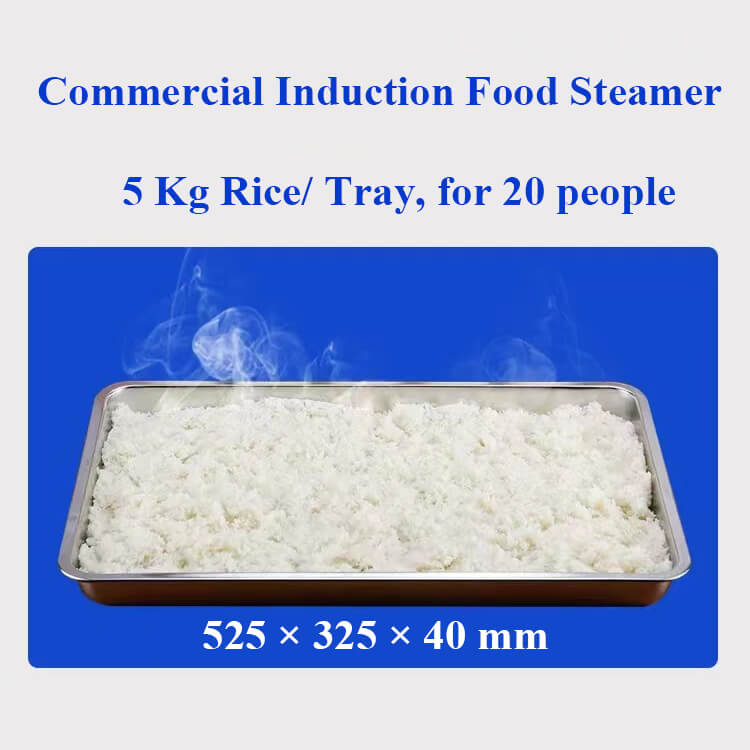
Achieving this gloss requires precise water ratios and exact heat control. The automatic water filling system of the ZFGT-A R24 ensures the water level is always optimal, preventing dry heat which dulls the grain, or excess water which washes away the gloss.
11. Customer Perception: Can Diners Distinguish the Sweetness Difference in Blind Tests?
You might wonder, “Do customers really notice?” The answer is yes. In markets where rice is a staple, diners are incredibly perceptive.
A slightly sweeter, more aromatic rice elevates the entire meal. It makes the curry taste richer, the sushi taste fresher, and the stir-fry feel more authentic. Improving bulk rice quality is often the lowest-cost way to significantly boost customer satisfaction scores.
12. Reducing Flavor Oxidation During Extended Holding Periods with Smart Control
The reality of commercial kitchens is that rice must be held warm for service. This is where quality usually drops—rice turns yellow and develops a stale cardboard taste due to oxidation.
The AT Cooker ZFGT-A R24 excels here. Its insulation and precise low-power holding modes keep the rice hot without continuing the cooking process. By maintaining a sealed, humid environment without excessive heat application, it slows down oxidation, keeping the rice white and sweet for hours.
Why Choose AT Cooker for Your Kitchen?
- Reliability: 5-year Warranty for All Commercial Cooking Equipment.
- Peace of Mind: 2-years Free Exchangeable & 1-year Free Return.
- Speed: Stock available in the USA, Germany, France, UK, Belgium, Italy, Spain, and Bulgaria.
We combine 15 years of industry pain-point analysis with cutting-edge induction technology.
Final Thoughts from AT Cooker
Cooking rice is simple; cooking perfect rice at scale is a science. Unlocking natural rice sweetness isn’t about adding sugar; it’s about adding precision. With the ZFGT-A R24, you are not just buying a steamer; you are investing in flavor retention, consistency, and happy customers.
Stop settling for mediocre, unevenly cooked bulk rice. Upgrade to precision induction today. For more information, visit our About Us page. For deeper reading on starch chemistry, resources like Wikipedia’s Starch Gelatinization or China’s Baike on Gelatinization offer great technical background.