5-year Warranty | 2-year Free Exchangeable | 1-year Free Return
AT Cooker Executive Summary: “No fire, no soul.” This has been the mantra of traditional Asian chefs for generations. But as kitchens face stricter safety regulations and rising gas costs, technology has evolved. Can a commercial induction wok hei station truly replicate the breath of the wok? Here at AT Cooker , with 15 years of R&D in high-power electromagnetics, we explore the science behind the flavor and prove that induction is not just an alternative—it is an upgrade. For centuries, the “Breath of the Wok” (Wok Hei 镬气) has been the gold standard of Cantonese stir-fry. It is that elusive smoky, caramelized flavor that only comes from a roaring fire and a blazing hot wok. Chefs have long been skeptical of electric alternatives, viewing them as underpowered toys unfit for the rigors of a commercial kitchen. However, the landscape is changing. With the advent of concave coil technology and high-wattage outputs (up to 35KW), modern electric wok burner with wok hei capabilities are challenging the dominance of gas. But is it real? Can you actually toss a wok, ignite the oil mist, and achieve that signature char without an open flame? In this technical deep dive, we will strip away the myths and look at the thermodynamics, chemistry, and ergonomics of induction stir-frying.
1. The Science of Maillard Reaction: Achieving 300°C+ Without Open Flames
Wok Hei is scientifically defined by the Maillard reaction and caramelization, which occur rapidly above 160°C, and the pyrolysis of oil which happens around 300°C. Critics argue electric coils can’t get hot enough. This is a myth based on resistive glass-top stoves. The AT Cooker Commercial Wok Station uses high-frequency magnetic induction. Unlike gas, which wastes 60% of its heat into the air, induction transfers 95% of the energy directly into the metal of the wok. This means we can ramp a wok from room temperature to 300°C in seconds, easily achieving the thermal threshold required for authentic Wok Hei.
2. The Role of Vaporized Oil Mist vs. Gas Combustion Fumes in Flavor Profiles
Many chefs mistake the smell of burning natural gas for Wok Hei. True Wok Hei comes from the vaporization of oil droplets when tossing food through the intense heat zone above the wok. In a gas wok, this oil mist catches fire from the burner. In induction, while there is no open flame to ignite the oil, the extreme heat of the wok surface (300°C+) still instantly vaporizes the oil mist upon contact. This creates the essential smoky flavor compounds without the chemical aftertaste of unburnt gas fumes (mercaptan).
3. Concave Coil Technology: Mimicking the Traditional Round-Bottom Wok Curve
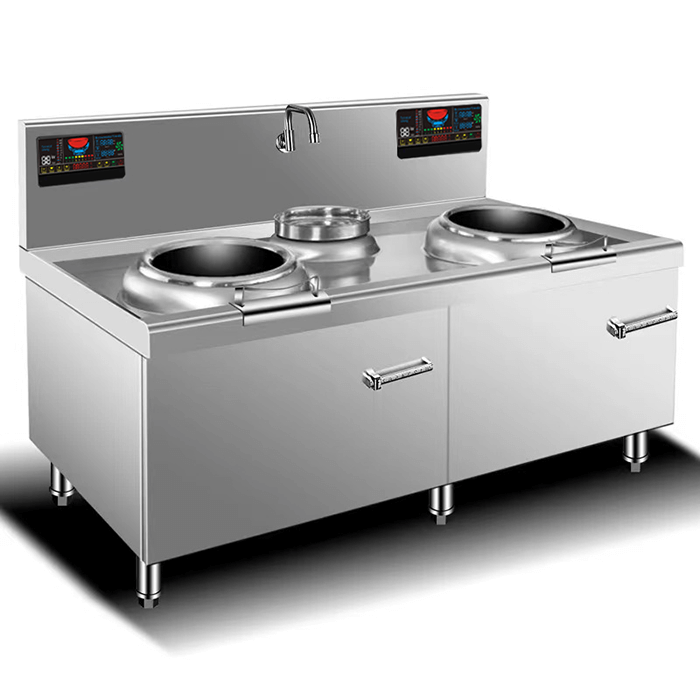
Flat induction cooktops are useless for stir-frying. The secret to our success lies in the concave coil design . At AT Cooker , we wrap the copper induction coil around a ceramic bowl that perfectly matches the curve of a traditional round-bottom wok. 360-Degree Heating Because the coil hugs the sides of the wok, heat is generated not just at the bottom, but up the walls. This mimics the “fire wrap” effect of a gas burner, ensuring that food tossed up the sides stays sizzling hot.
4. Overcoming the “Lift-Off” Limit: Maintaining Magnetic Power During Tossing
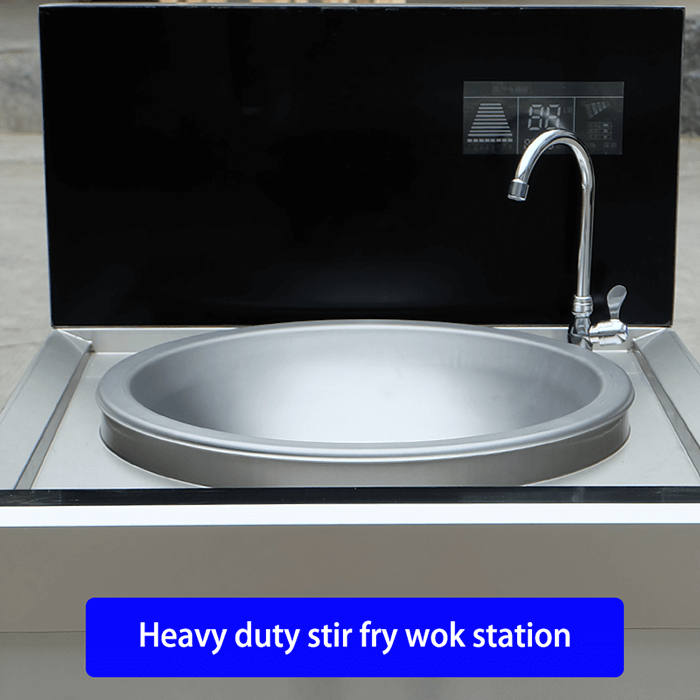
The most common complaint from chefs using cheap induction units is that the power cuts off the moment they lift the wok to toss. This kills the rhythm and the heat. We solved this. Our engineering team increased the effective magnetic distance. You can lift the wok 2-3cm off the ceramic glass, and the magnetic field continues to generate heat. This allows for the rhythmic tossing motion essential for mixing and aerating the stir-fry without losing the thermal momentum.
5. Temperature Recovery Speed: Why Induction Beats Gas for “Bao Chao” Techniques
“Bao Chao” (Explosive Stir-fry) requires maintaining high heat even when cold ingredients are dumped in. When you add 1kg of cold beef to a gas wok, the temperature of the metal drops, and the gas flame takes time to reheat the pan. Induction has near-zero thermal lag. The moment the sensors detect a temperature drop, the 30KW inverter instantly pumps maximum energy into the steel. The temperature recovery time is significantly faster than gas, ensuring meat sears instantly rather than stewing in its own juices.
6. Blind Taste Testing: Can Diners Distinguish Gas vs. Induction Stir-Fry?
We have conducted numerous blind taste tests with professional chefs and diners. The results? In a blind test, 90% of diners could not distinguish between a stir-fry cooked on our Commercial Induction Wok Station versus a traditional gas wok. The 10% who noticed a difference often described the induction version as “cleaner” tasting, lacking the heavy carbon residue associated with aggressive gas flames.
7. Eliminating Carbon Monoxide: Achieving Authentic Flavor Without Kitchen Pollution
Traditional wok kitchens are notorious for poor air quality. Burning massive amounts of gas creates Carbon Monoxide (CO) and immense ambient heat. This is dangerous for chefs. Induction is zero-emission at the point of use. You get the flavor in the food, not the poison in the air. This allows you to reduce the size and cost of your ventilation hood system (Makeup Air) significantly.
8. The Impact of Precise Heat Holding at Smoke Point for Texture Retention
Vegetables like Gai Lan or Bok Choy need to be cooked at the exact smoke point of the oil to stay crisp and green. Gas valves are imprecise; “High” today might be different from “High” tomorrow depending on gas pressure. Our induction stations offer 8 precise power levels. Level 8 is for searing; Level 6 holds the smoke point perfectly. This repeatability allows head chefs to standardize recipes across restaurant chains, ensuring every plate has the perfect texture.
9. Distinguishing “Guo Qi” (Wok Energy) from “Huo Qi” (Fire Energy): A Chef’s Perspective
There is a philosophical distinction in Chinese cooking. “Huo Qi” implies the taste of fire. “Guo Qi” implies the energy of the wok. Induction masters Guo Qi. By energizing the wok metal itself, induction creates a pure transfer of energy. Chefs using our equipment report that they feel more connected to the cooking process because the response is instantaneous—there is no barrier of burning gas between them and the food.
10. How Rapid Heating Ramps Create the Necessary Thermal Shock for Crisp Vegetables
Thermal shock is the secret to crunchy vegetables. You need to hit the greens with massive heat instantly to flash-cook the outside while steaming the inside. Slow heat results in soggy, yellow veggies. The AT Cooker wok station delivers thermal shock superior to gas because there is no heat deflection. 100% of the generated heat goes into the food immediately, preserving the bright green chlorophyll and the crunch.
11. The Ergonomics of Wok Tossing Without the Exhausting Radiant Heat of Gas Pits
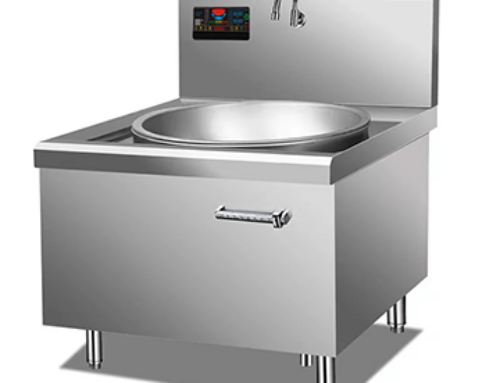
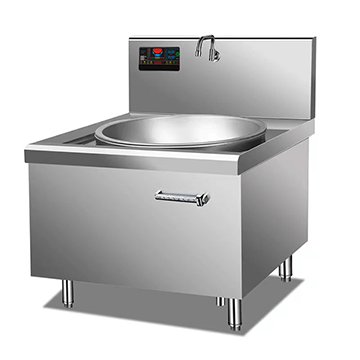
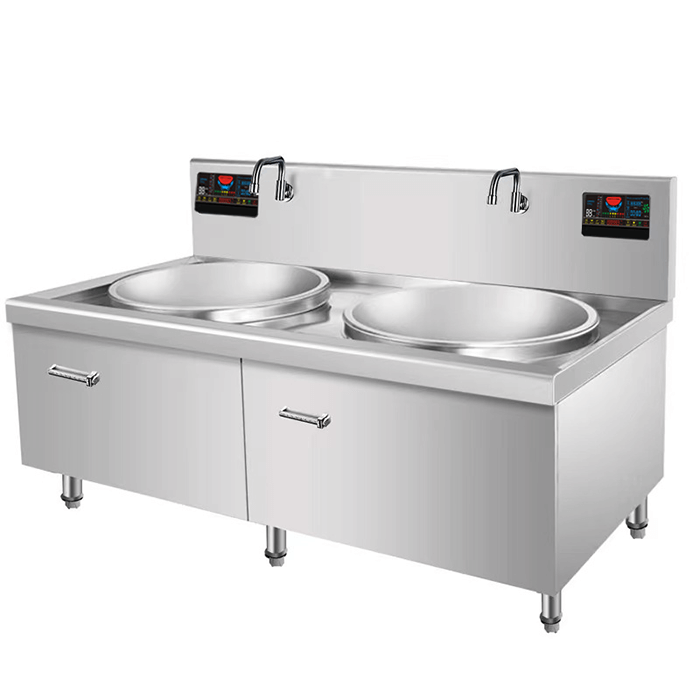
A gas wok station is a furnace. Standing in front of it for 8 hours is physically draining. Induction wok stations are “Cool Kitchen” technology. The ambient heat is reduced by 50% or more. This ergonomic benefit reduces chef fatigue. A chef who isn’t dehydrated and overheated cooks better food. Plus, our units are designed with integrated water taps and drainage for easy cleaning, mimicking the workflow of a traditional station without the sweat. Feature Traditional Gas Wok AT Cooker Induction Wok Heat Source Open Flame (Inefficient) Magnetic Field (Direct) Efficiency ~40% ~95% Kitchen Temp Extremely Hot Cool & Comfortable Wok Hei Potential Excellent Excellent (With Technique)
Final Thoughts from AT Cooker
The truth about Wok Hei is that it requires heat, not fire. With the right technology, you can achieve authentic, smoky, caramelized flavor without the pollution and waste of gas. AT Cooker is leading this revolution. We invite you to test our equipment. With stock in the USA, Germany, France, and across Europe , the future of Asian cooking is ready to ship. Visit our About Us page to learn more about our technology.
Commercial Kitchen Equipment – from AT Cooker
- ✔As a brand manufacturer of the professional commercial induction cooking equipment, AT Cooker has responded to restaurants’ & hotels’ needs and research normative commercial cooking equipment using the very latest induction technology.
- ✔These seamless, real commercial quality commercial cooking equipment provides us with the opportunity to incorporate equipment of our choice into one seamless, multipurpose cooking equipment creating an efficient, low cost, safe, green and sustainable commercial kitchen. We have standerd equipment can service many commercial kitchens.
- ✔AT Cooker always offers professional service. From material, design, to producing, we focuse on quality, performance and reliability to ensures the best solution is delivered for each and every one of our customers. Have a commercial kitchen? We will be one of your best partners.
Work Voltage
Global In-Stock + Fast Pickup
Frequently Asked Questions
1. The Science of Maillard Reaction: Achieving 300°C+ Without Open Flames
Wok Hei is scientifically defined by the Maillard reaction and caramelization, which occur rapidly above 160°C, and the pyrolysis of oil which happens around 300°C. Critics argue electric coils can’t …
2. The Role of Vaporized Oil Mist vs. Gas Combustion Fumes in Flavor Profiles
Many chefs mistake the smell of burning natural gas for Wok Hei. True Wok Hei comes from the vaporization of oil droplets when tossing food through the intense heat zone above the wok. In a gas wok, t…
3. Concave Coil Technology: Mimicking the Traditional Round-Bottom Wok Curve
Flat induction cooktops are useless for stir-frying. The secret to our success lies in the concave coil design . At AT Cooker , we wrap the copper induction coil around a ceramic bowl that perfectly m…
4. Overcoming the “Lift-Off” Limit: Maintaining Magnetic Power During Tossing
The most common complaint from chefs using cheap induction units is that the power cuts off the moment they lift the wok to toss. This kills the rhythm and the heat. We solved this. Our engineering te…
5. Temperature Recovery Speed: Why Induction Beats Gas for “Bao Chao” Techniques
“Bao Chao” (Explosive Stir-fry) requires maintaining high heat even when cold ingredients are dumped in. When you add 1kg of cold beef to a gas wok, the temperature of the metal drops, and the gas fla…