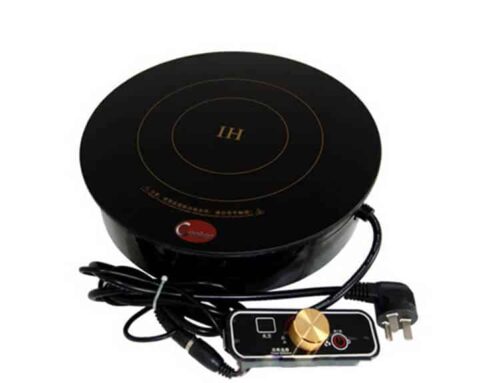
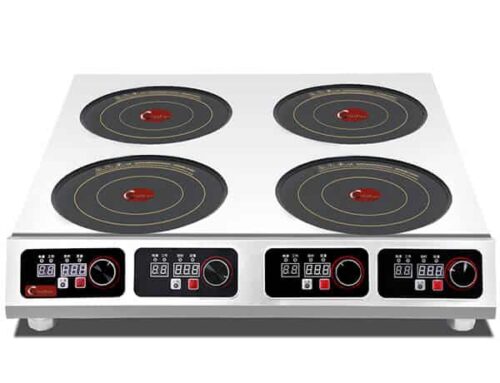
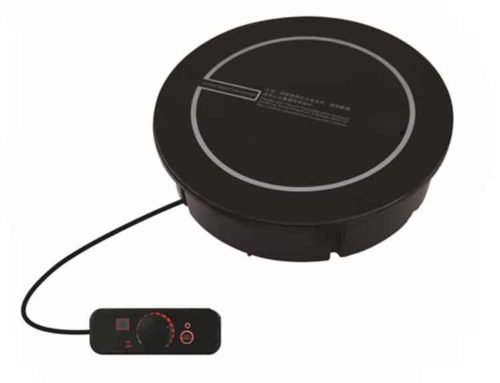
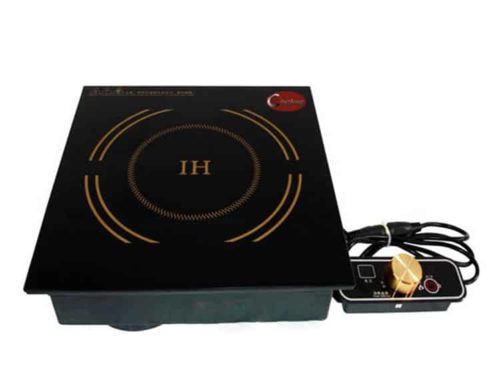
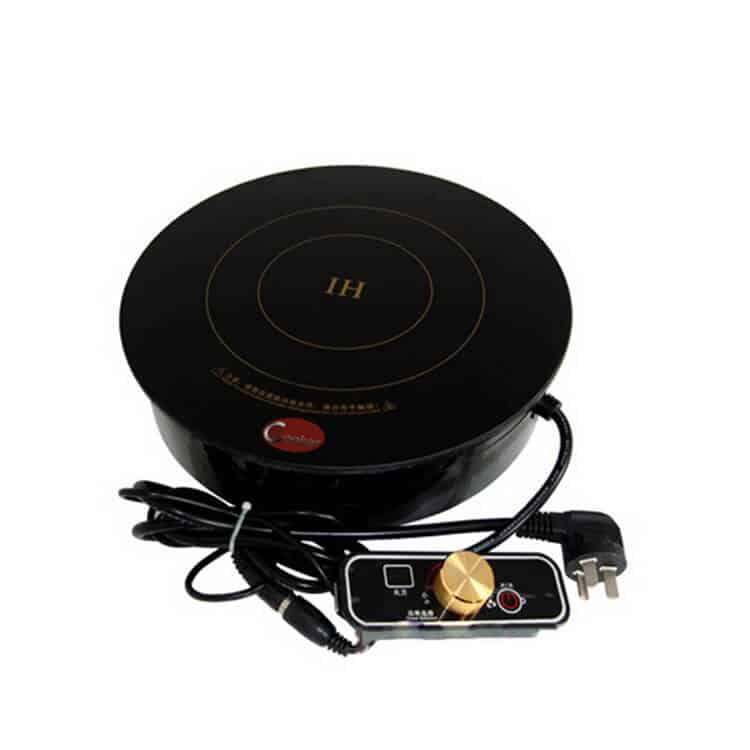
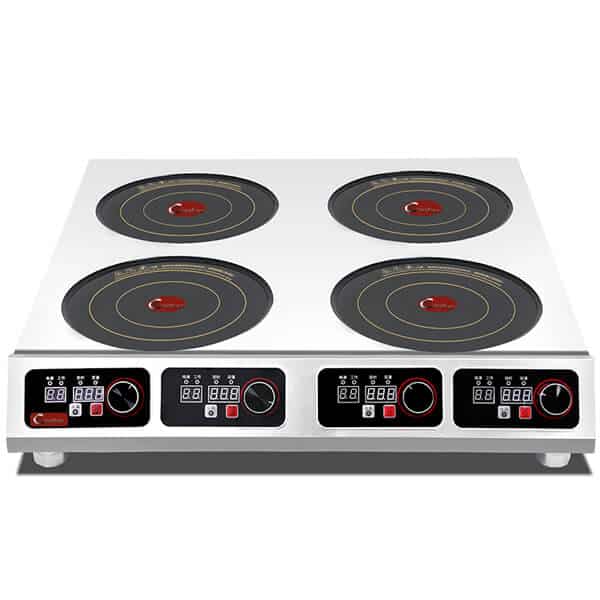
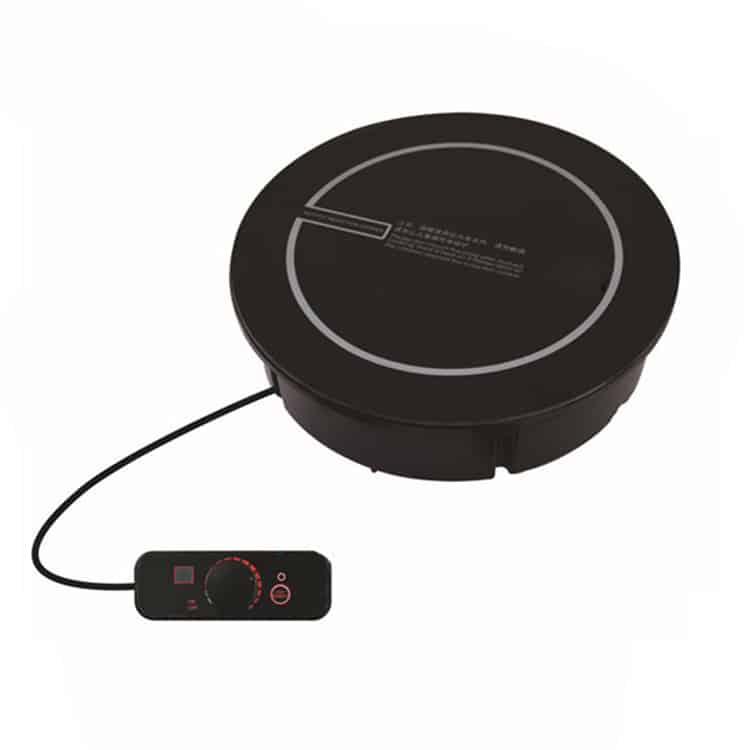
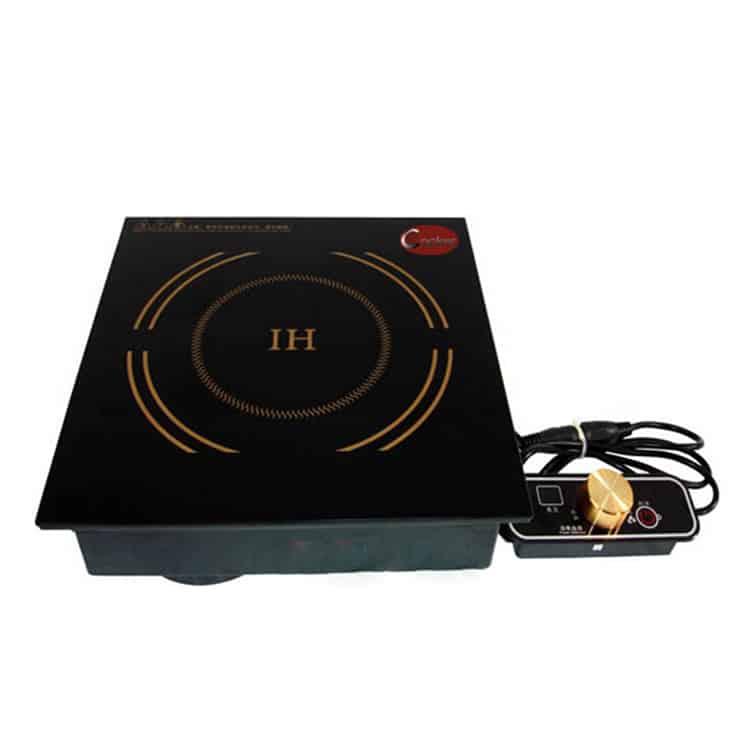
Large induction hot plates (3KW+, like AT Cooker’s QRPT-AB3) are workhorses for commercial kitchens. But high power and continuous use make overheating a critical risk. Below, 13 anti-overheating safety features engineered into AT Cooker’s large induction hot plates.
1. Automatic Shut-Off Prevents Overheating
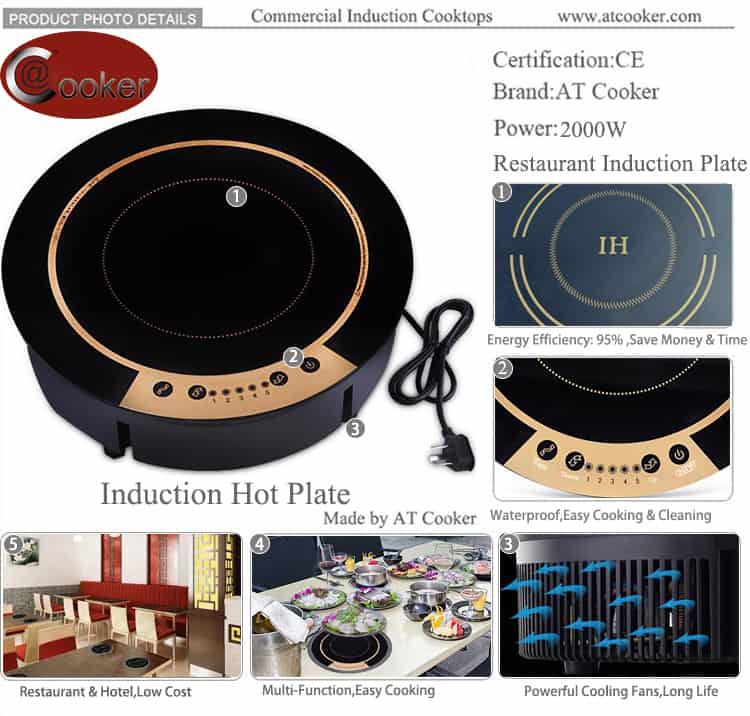
AT Cooker’s QRPT-AB3 integrates Automatic Fault Detection: when surface exceeds 300°F (149°C) or internal hits 120°C, the system cuts power. A Chicago café: “Cook forgot oil—within 2 min, hot plate detected overheating and shut off. Avoided burnt pan and fire.”
Mechanism: Circuit board monitors via built-in sensors. Power restored only after cooling to 150°F (66°C) and user reset. Works with all 8 power levels.
2. Built-In Temperature Sensors Monitor Surface Heat
QRPT-AB3 sensors embedded near the induction coil track surface and internal temps in real time, feeding the real-time display (±2°F precision vs mechanical thermostats ±10°F). A Seattle bakery: “Keep chocolate at exactly 115°F—no more burnt batches.”
Anti-Dry Heating: Sensor detects no cookware or empty pan for >1 minute, triggers warning—preventing coil overheating from dry running.
3. Overheat Protection Circuits Cut Power
Independent of the main board, these hardwired circuits trigger at two thresholds: surface >300°F for 10s, or internal >120°C. Fail-safe: no software or user input needed. An Austin food truck: “Vent blocked by towel—overheat circuit kicked in at 118°C. Saved the entire unit.”
| Safety Feature | How It Works | Trigger | Alert |
|---|---|---|---|
| Auto Fault Detection | Cuts power on overheating | >300°F / >120°C | Red flash |
| Temp Sensors | Continuous ±2°F monitoring | Real-time | Red display |
| Overheat Circuit | Hardwired independent cutoff | >300°F (10s) | All lights flash |
| Anti-Overheat Warning | Audio/visual alert | >270°F / >110°C | Beep + red |
| Anti-Dry Heating | Detects no cookware | >1 min no pan | Beep + flash |
4. Thermal Fuses for Extreme Cases
QRPT-AB3 includes two thermal fuses: surface (melts at 320°F/160°C) and internal (130°C/266°F). One-time use ($5 replacement vs $500 unit). Miami restaurant: “Metal spoon reflected heat, spiked to 315°F. Fuse melted, shut off power—replaced fuse for $5.”
5. Warning Indicators Alert Users
QRPT-AB3 warnings: visual (temp display turns red at 270°F) + audio (85dB beep, 1s intervals; speeds to 0.5s if rising). Contextual: slow beep = adjust power; fast beep = stop cooking.
Normal
Green display
Warning
Red + slow beep
Critical
Flashing + fast beep
6. Cooling Fans Maintain Safe Temperatures
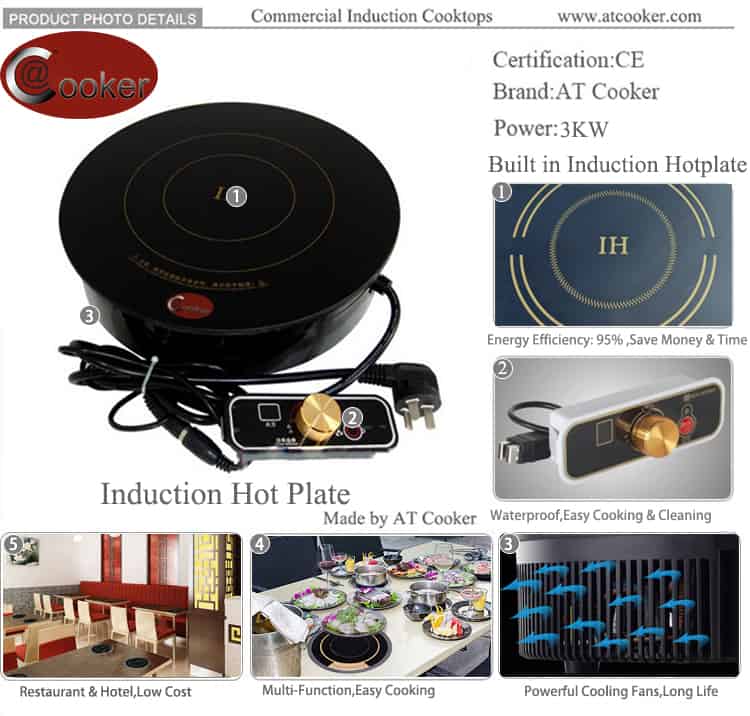
QRPT-AB3 uses a brushless cooling fan (activates at 60°C/140°F). Metal housing acts as heat sink; bottom feet raise unit 2cm for air circulation. Compact 320×320×230mm. LA catering: “3–4 hours straight at events—fan keeps it from overheating.”
Built-In Tip: Leave 5cm clearance around vents. Blocked vents are the #1 cause of overheating in built-in setups.
7. Safety Locks Prevent Accidental Changes
QRPT-AB3 knob switch lock: press and hold 3s to lock power level. Chicago school: “Students help with prep—lock prevents accidental power increases. Set level 4 for chili, lock it, no worries.” Higher-end AT Cooker models offer digital passcode locks.
8. Heat-Resistant Materials Minimize Risks
- Surface: Ceramic glass (resistant to 750°F), cools quickly when off.
- Housing: Thick-gauge steel (withstands 300°F), acts as heat sink.
- Wiring: Silicone-insulated (rated 200°C) vs PVC (melts at 105°C).
Seattle Bakery: “Left metal sheet 10 min at level 6. Surface 280°F, housing only 120°F. No one got burned.”
9. Timers Limit Continuous Operation
QRPT-AB3 compatible with external timer (1–120 min): when timer ends, drops to level 1 if no action. Miami hotel: “Set 45 min for eggs—drops to level 1, prevents overheating during 2-hour breakfast rush.” Higher-end models (QRPT-AB5) include 10-hour digital countdown with auto-shutoff.
10. Redundant Safety Systems
AT Cooker industrial hot plates include: dual temp sensors (backup if one fails), primary + backup overheat circuits, thermal fuse + resettable breaker. Chicago plant: “8 hrs/day, 5 days/week. One sensor failed, backup kept working—zero downtime.”
11. Induction Technology Reduces Overheating Risk
Induction heats only ferrous cookware—surface stays 50–70°F cooler than the pan. Denver diner: “Gas surface hit 350°F (spills burned instantly). QRPT-AB3 surface only 200°F when pan is 270°F. No surface fires.” When cookware removed, magnetic field stops, surface cools to 100°F in 5–10 min.
12. User Manuals Recommend Safe Procedures
- Use ≥22cm flat-bottom ferrous cookware.
- Never dry run (triggers warning but stresses components).
- Clean vents weekly (blocked = overheating).
- Dedicated 15A circuit (shared = voltage fluctuations).
Portland Café: “Used 20cm pan (too small)—kept triggering overheat. Switched to ≥22cm per manual, warnings stopped.”
13. Regular Maintenance Ensures Safety
- Weekly: Wipe ceramic surface, clear vents, test warnings.
- Monthly: Check temp accuracy (IR thermometer), inspect wiring, test safety lock.
- Annual: Replace thermal fuses, calibrate sensors, inspect internal components.
Miami Hotel: “Weekly checks + annual service. QRPT-AB3 running 3 years, zero overheating issues. Maintenance is quick and cheaper than replacing the unit.”
What automatic shut-off features do large induction hot plates have?
AT Cooker large induction hot plates include Automatic Fault Detection that cuts power when surface exceeds 300°F (149°C) or internal components hit 120°C. Power is restored only after cooling to 150°F (66°C) and user reset. This prevents equipment damage and kitchen fires.
How do temperature sensors prevent overheating in induction hot plates?
Built-in sensors embedded near the induction coil monitor surface and internal temperatures in real time with ±2°F precision. They feed data to a real-time display, alerting staff when temperatures exceed safe thresholds. Sensors also trigger anti-dry heating warnings when no cookware is detected.
What happens if an induction hot plate overheats?
Multiple safety layers activate: overheat protection circuits (hardwired, independent of main board) cut power at 300°F surface or 120°C internal. Thermal fuses melt at extreme temperatures (320°F surface, 130°C internal) as a last resort. Audio/visual warnings alert users before critical thresholds are reached.
How does induction technology reduce overheating vs gas hot plates?
Induction heats only ferrous metal cookware—the ceramic surface stays 50–70°F cooler than the pan. Gas hot plates heat the entire surface and surrounding air. When cookware is removed from induction, the magnetic field stops and the surface cools to 100°F in 5–10 minutes vs 20+ minutes for electric.
What maintenance is needed for induction hot plate safety features?
Weekly: wipe ceramic surface, clear cooling vents, test audio/visual warnings. Monthly: verify temperature accuracy with IR thermometer, inspect power cord, test safety lock. Annual (by authorized technician): replace thermal fuses, calibrate sensors, inspect circuit board and cooling fan for wear.
Choose a Safe, Reliable Large Induction Hot Plate
Share your daily usage hours, menu needs, and kitchen layout—we’ll recommend the perfect large hot plate with all anti-overheating safety features.