Can Dim Sum Restaurants Really Cut Energy Bills by 50% with Commercial Induction Steamers?
5-year Warranty | 2-year Free Exchangeable | 1-year Free Return
AT Cooker Executive Insight: Dim Sum restaurants operate on thin margins and high volume. The heart of the kitchen—the steamer station—often runs for 12 to 15 hours a day, burning gas continuously to keep water boiling. This energy waste is staggering. Can switching to a commercial induction dim sum steamer drastically change your profit and loss statement? At AT Cooker, our data shows that by eliminating waste heat, pilot lights, and slow startup times, you can cut your utility bills by up to 50%. Here is the financial and operational reality of going flameless.
The traditional Dim Sum kitchen is hot, noisy, and energy-hungry. Massive gas steamers chug fuel all day, even when no orders are coming in, just to maintain readiness. This inefficiency is accepted as the “cost of doing business.” It shouldn’t be.
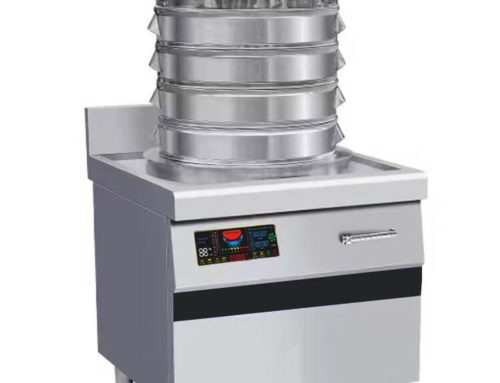
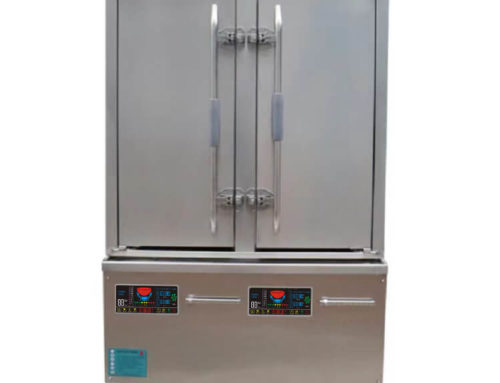
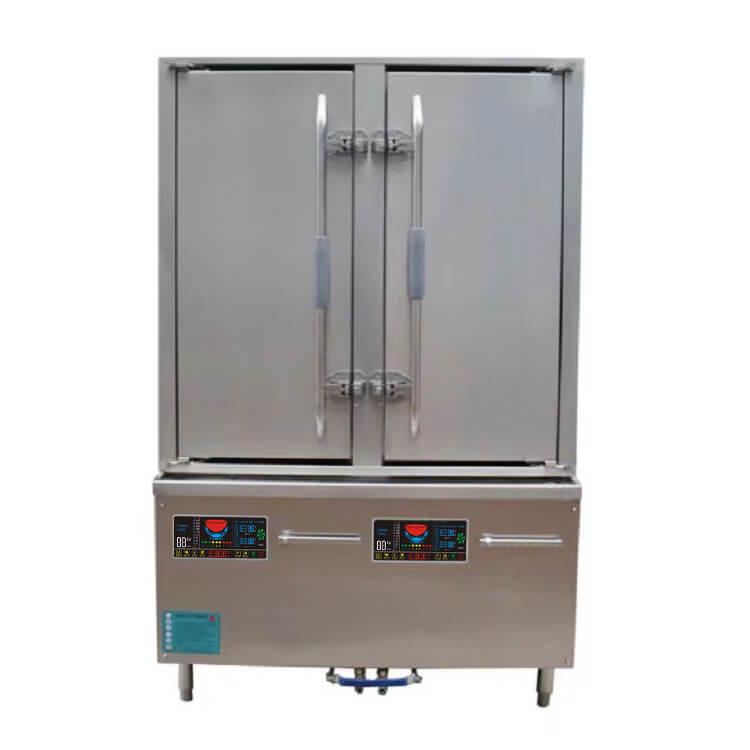
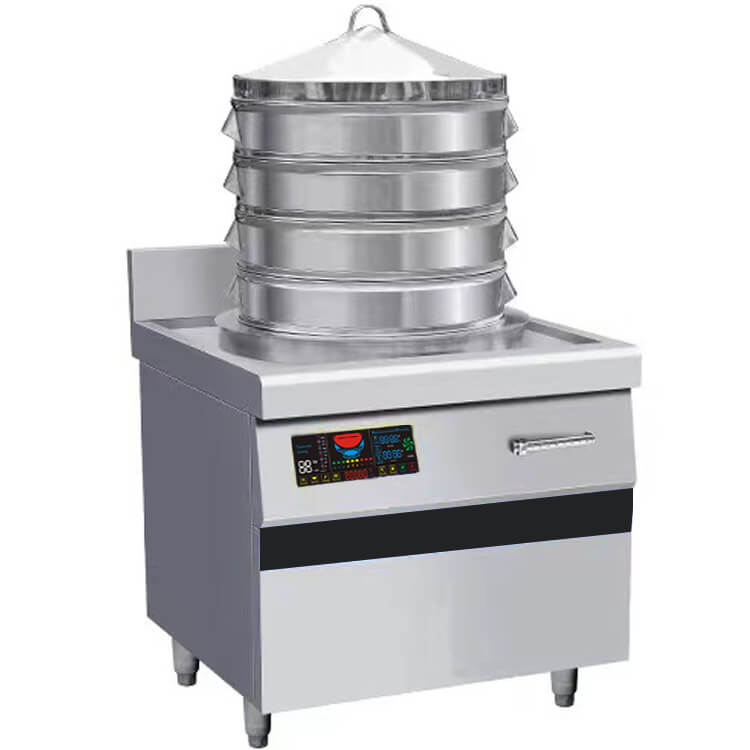
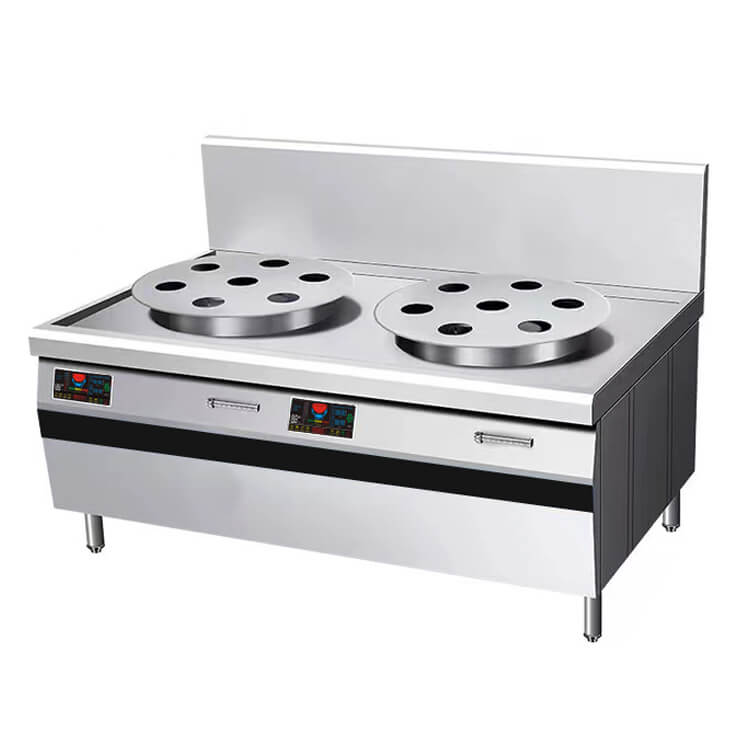
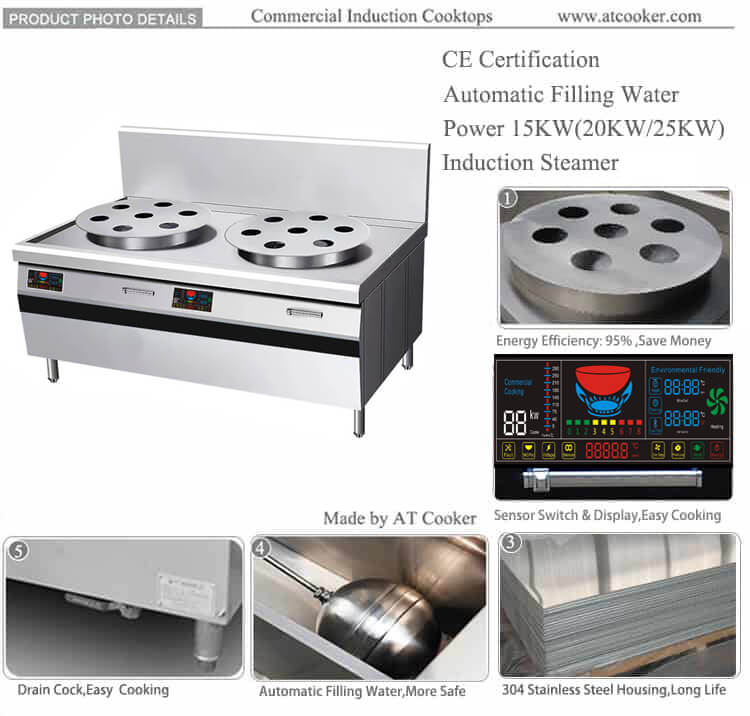
Modern energy saving restaurant equipment like our Commercial Bun Steamer utilizes high-efficiency induction technology. By generating heat directly in the water tank via magnetic friction, we achieve 95% thermal transfer. There is no waste heat heating the kitchen, and no gas burnt keeping a pilot light alive. In this guide, we analyze the real-world savings of induction vs gas steamer cost.
Global In-Stock + Fast Pickup
| Single-Phase | Three-Phase |
|---|---|
| 120V, 220V | 208V/ 240V, 380V, 480V |
Global In-Stock + Fast Pickup
| US | UK | Germany | France |
|---|---|---|---|
| Italy | Spain | Belgium | Bulgaria |
1. Understanding the Efficiency Gap: 95% Induction Transfer vs 40% Gas Thermal Efficiency
Gas steamers are inherently inefficient. The combustion process heats the air, the metal chassis, and finally, the water. Physics dictates that 60% of this heat escapes up the flue, heating your kitchen instead of your food.
The AT Cooker Commercial Induction Steamer operates at 95% efficiency. The magnetic field generates heat directly inside the water tank walls. There is almost zero energy loss between the source and the water. This 55% efficiency gap is the primary driver of your potential savings.
2. Eliminating Idle Energy Waste: The Hidden Cost of Always-On Gas Pilot Lights
Gas steamers often have pilot lights or “standby modes” that burn gas 24/7. Even when the restaurant is closed, you are paying for gas. In a busy kitchen, chefs leave the burners on “low” between batches to avoid the slow startup time.
Induction consumes zero energy when idle. When the steamer drawer is empty, the magnetic field stops. There is no pilot light, no phantom load, and no wasted money during downtime.
3. Calculating the Payback Period: When Does Energy Saving Cover the Equipment Investment?
Induction equipment has a higher upfront cost than gas. However, the ROI is rapid. If a gas steamer costs $300/month to run and an induction steamer costs $150/month, you save $1,800/year.
ROI Calculation
Including HVAC savings and maintenance reductions, most busy Dim Sum restaurants see a full return on investment in 12-18 months. After that, the monthly savings become pure profit.
4. HVAC Impact: Lowering Air Conditioning Costs by Reducing Ambient Kitchen Heat
A gas steamer acts like a giant radiator, raising the kitchen temperature by 10-15 degrees. Your air conditioning must work overtime to remove this waste heat.
Induction steamers are cool to the touch. The heat goes into the steam, not the room. By switching to induction, you reduce the load on your HVAC system, reducing commercial kitchen utility bills further by cutting AC electricity consumption.
5. Speed to Boil: How Faster Start-Up Times Reduce Daily Operating Hours
A gas steamer can take 45-60 minutes to reach boiling temperature. Staff must arrive an hour early just to turn it on.
The 25KW induction engine of the AT Cooker unit boils water in 15 minutes. This allows you to start your kitchen later, saving 45 minutes of labor and electricity every single morning.
5-year Warranty | 2-year Free Exchangeable | 1-year Free Return
6. Water Consumption Analysis: Does Faster Steaming Cycles Reduce Water Bills?
Gas steamers boil violently and inefficiently, evaporating massive amounts of water that must be replaced. This increases water and sewage bills.
Induction steamers use a sealed, pressurized environment. Steam is generated precisely and circulated efficiently. This reduces evaporation loss, meaning you use less water to cook the same amount of food, contributing to sustainable commercial cooking appliances goals.
7. Comparing Monthly Utility Rates: Is Electricity Cheaper than Gas in Your Region?
Even if natural gas is cheaper per unit than electricity, the efficiency gap matters. You need 2.5 units of gas to do the work of 1 unit of electricity (due to 40% vs 95% efficiency).
In most regions, this efficiency multiplier makes induction cheaper to operate, even with higher electrical rates. Plus, eliminating gas lines removes the monthly base connection fees for gas service in electric-only kitchens.
8. The Hidden Cost of Gas Line Maintenance and Cleaning Carbon Buildup
Gas burners clog with carbon. Pilots fail. Gas lines leak. Maintaining a gas steamer is dirty, expensive work.
Induction units are solid-state. There are no burners to scrub, no jets to unclog. The smooth stainless steel and glass surfaces wipe clean in minutes, reducing labor costs for cleaning and maintenance.
9. Peak Hour Performance: Maintaining High Steam Pressure Without Energy Spikes
Gas lines suffer pressure drops during peak hours when all appliances are running, causing steamer performance to lag.
Induction runs on a steady electrical current. The commercial bun steamer efficiency remains constant at 100% output, ensuring that your Har Gow steams perfectly at 7:00 PM on a Friday, just as it did at 11:00 AM.
10. How Intelligent Sensors Cut Power Instantly When Steamer Drawers Are Empty
If a steamer drawer is pulled out, a gas burner keeps firing, wasting heat. The AT Cooker unit features magnetic sensors.
When a drawer is removed, power to that specific zone is cut instantly. This “Smart Steam” technology ensures you only pay for energy when there is actually food inside the machine.
11. The Role of Multi-Layer Insulation Design in Minimizing Radiant Heat Loss
Our steamers are built like a thermos. High-density insulation surrounds the cooking chamber, keeping the heat in.
This means the exterior of the unit stays cool (safe for staff), and the internal temperature holds steady with minimal energy input. This passive efficiency is impossible with the open-flame design of gas steamers.
| Cost Factor | Gas Steamer | AT Cooker Induction |
|---|---|---|
| Thermal Efficiency | 40% | 95% |
| Idle Cost | High (Pilot Light) | Zero |
| HVAC Load | High Waste Heat | Minimal |
| Startup Time | 45-60 Mins | 15 Mins |
5-year Warranty | 2-year Free Exchangeable | 1-year Free Return
Final Thoughts from AT Cooker
Cutting energy bills by 50% is not a fantasy; it is a mathematical certainty when switching from inefficient gas to AT Cooker Commercial Induction Steamers. The savings in fuel, HVAC, and labor make this the smartest investment for any Dim Sum restaurant.
With stock ready for immediate delivery in the USA, Germany, France, UK, Belgium, Italy, Spain, and Bulgaria, we can help you start saving money today. Visit our About Us page to request a detailed ROI analysis for your kitchen.