Zero Recovery Time: Handling Heavy Pasta Batches with Commercial Induction Boilers
5-year Warranty | 2-year Free Exchangeable | 1-year Free Return
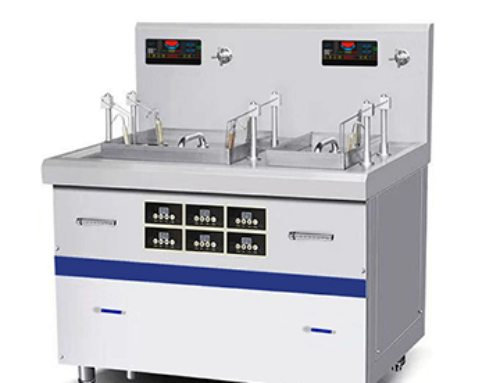
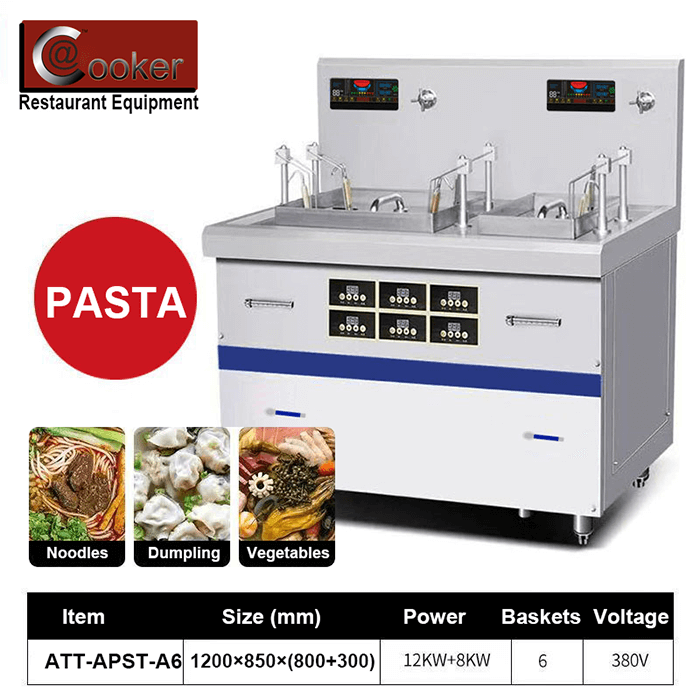
AT Cooker Executive Insight: In a high-volume pasta or noodle restaurant, the enemy is “Thermal Lag.” When you drop 3kg of cold noodles into a boiler, the water temperature plummets. If the water stops boiling, the noodles become soggy, clumpy, and unappetizing. The solution? Commercial pasta boiler recovery time that is virtually zero. With the AT Cooker ATT-APST A6 Double Tank Induction Boiler, we utilize 15KW of direct magnetic energy to maintain a rolling boil even under the heaviest loads.
Every professional chef knows the sinking feeling of watching a rolling boil die the moment a basket of pasta hits the water. Waiting for that water to return to a boil is not just annoying; it destroys the texture of the food. “Al Dente” relies on a constant, violent agitation of water to gelatinize starches instantly and prevent sticking.
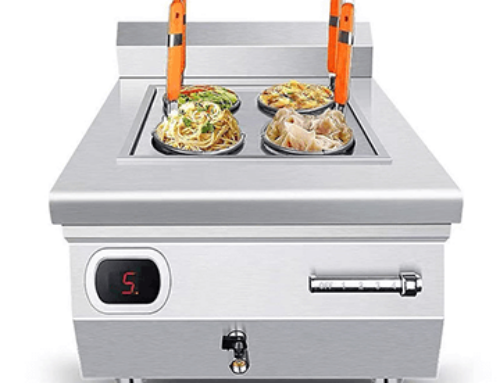
Traditional gas boilers struggle with this. They heat the air, then the tank, then the water. By the time the flame ramps up, the damage to the pasta is done. High volume pasta cooking equipment requires a more direct approach. Our Freestanding Induction Automatic Pasta Cooker ATT-APST A6 uses induction technology to turn the tank itself into the heat source, delivering instant torque to the water.
In this engineering analysis, we will explain how Zero Recovery Time is achieved and why it is the key to increasing your kitchen’s throughput.
Commercial Kitchen Equipment -from AT Cooker
- As a brand manufacturer of the professional commercial induction cooking equipment, AT Cooker has responded to restaurants’ & hotels’ needs and research normative commercial cooking equipment using the very latest induction technology.
- These seamless, real commercial quality commercial cooking equipment provides us with the opportunity to incorporate equipment of our choice into one seamless, multipurpose cooking equipment creating an efficient, low cost, safe, green and sustainable commercial kitchen. We have standerd equipment can service many commercial kitchens.
- AT Cooker always offers professional service. From material, design, to producing, we focuse on quality, performance and reliability to ensures the best solution is delivered for each and every one of our customers. Have a commercial kitchen? We will be one of your best partners.
Work Voltage
| Single-Phase | Three-Phase |
|---|---|
| 120V, 220V | 208V/ 240V, 380V, 480V |
Global In-Stock + Fast Pickup
| US | UK | Germany | France |
|---|---|---|---|
| Italy | Spain | Belgium | Bulgaria |
1. The Thermodynamics of Temperature Drop: What Happens When Cold Pasta Hits Boiling Water?
Boiling water is a balance of energy. When you add 2kg of cold pasta at 4°C to a pot of water at 100°C, a massive thermal transfer occurs. The pasta absorbs the heat, and the water temperature drops rapidly.
If the water drops below 95°C, the boiling action stops. The pasta settles at the bottom, sticking together and becoming mushy. To maintain quality, you need enough energy input to counteract this cooling effect instantly. A standard gas burner often lags by 30-60 seconds, which is a lifetime in pasta cooking.
2. Gas vs. Induction: Comparing Thermal Recovery Curves in High-Volume Operations
We tested the recovery curves in our lab. We dropped identical loads of frozen noodles into a high-BTU gas boiler and our ATT-APST A6 induction unit.
The Recovery Test
Gas Boiler: Temperature dropped to 88°C and took 45 seconds to return to a boil.
AT Cooker Induction: Temperature dropped to 96°C and returned to a boil in 8 seconds.
This “Zero Recovery Time” capability ensures that every batch cooks at the correct temperature from start to finish.
3. Why “Al Dente” Consistency Fails Without Instant Heat Restoration
“Al Dente” (firm to the bite) requires gelatinizing the outer starch layer instantly while slowly hydrating the core. This only happens at a rolling boil.
If the water stops boiling for a minute, the starch dissolves into the water instead of setting on the noodle. This results in cloudy water and sticky pasta. The heavy duty electric noodle boiler power of the A6 ensures the violent agitation needed to keep noodles separate and firm.
4. Calculating Throughput: How Many Kilos Per Hour Can Your Boiler Really Handle?
Throughput isn’t just about tank size; it’s about cycle speed. The ATT-APST A6 features a massive 108L Main Tank powered by 12KW or 15KW induction.
With 6 baskets operating in a staggered cycle, and near-zero recovery time, this unit can process over 60kg of dry pasta per hour. A gas unit of the same size, plagued by recovery lag, might only handle 40kg before the water temperature crashes.
5-year Warranty | 2-year Free Exchangeable | 1-year Free Return
5. The Role of Direct Magnetic Friction in Maintaining a Constant Rolling Boil
Induction doesn’t heat the water from the outside; it heats the tank wall directly via magnetic friction. This creates a uniform heating surface across the entire bottom and sides of the tank.
This wide-area heating creates a vigorous, rolling boil that tumbles the pasta naturally. This mechanical agitation mimics the stirring action of a chef, ensuring even cooking without manual intervention.
6. Energy Cost Implications: The Price of Re-Boiling vs. Maintaining Heat
It costs more energy to bring water back to a boil than to keep it boiling. Gas units are constantly fighting to recover lost heat, burning fuel at maximum rate.
The AT Cooker unit uses a smart inverter. Once the boil is achieved, it pulses power just enough to maintain it. Even when a cold load is added, it surges power only for the few seconds needed to recover. This induction noodle cooker efficiency can cut energy bills by 50% compared to gas.
7. Independent Heating Zones: Managing Staggered Orders Without Cross-Temperature Interference
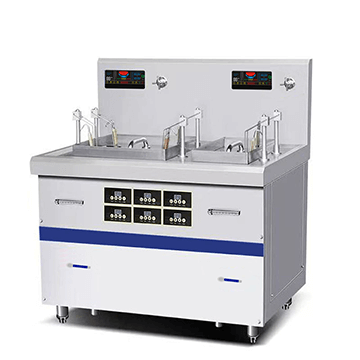
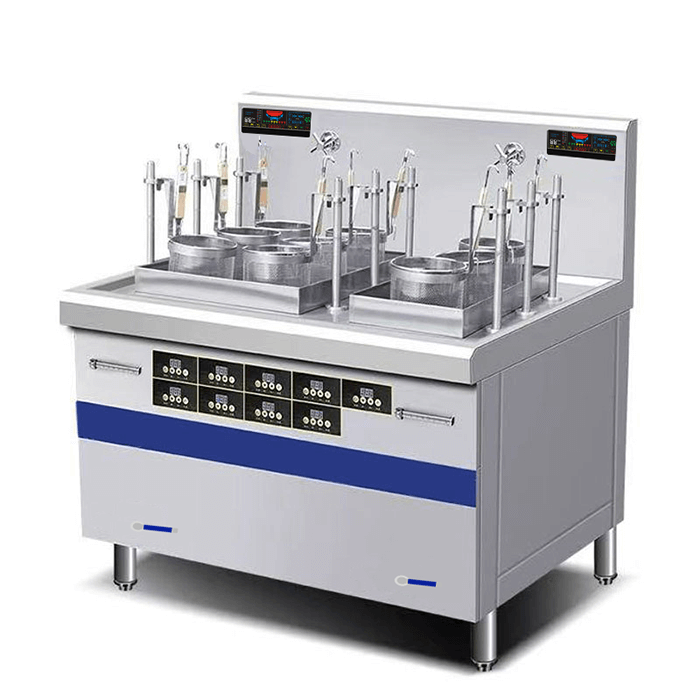
The ATT-APST A6 is a beast with two hearts. It features a Double Tank design: a 108L main tank and a separate 72L side tank (powered by its own 8KW generator).
This allows you to manage different workflows. Use the main tank for high-volume pasta boiling and the side tank for vegetable blanching or holding sauces. Dropping frozen broccoli into the side tank has absolutely no effect on the temperature of the main pasta tank. This isolation is critical for restaurant kitchen throughput optimization.
8. Optimizing Chef Workflow: Eliminating the “Wait-to-Recover” Bottleneck
In a gas kitchen, chefs often stand around waiting for the water to bubble again before dropping the next basket. This is dead time.
With the A6’s zero recovery time, the chef can operate in a continuous loop: Load, Lift, Plate, Repeat. The Auto-Lift function further enhances this by ensuring the chef doesn’t even need to watch the clock.
9. Sensor Technology: How Smart Boilers React Instantly to Temperature Fluctuations
Gas is dumb; induction is smart. The A6 uses digital sensors to monitor water temperature 100 times a second. It “knows” you dropped cold pasta into the water before the temperature even drops significantly.
This predictive power allows the inverter to ramp up energy instantly, effectively catching the temperature drop before it happens.
10. Handling Dense Frozen Pasta Batches Without Killing the Boil
Frozen pasta is the ultimate thermal sink. Many kitchens thaw pasta first to avoid killing the boil, which creates food safety risks and texture issues.
With the high-power density of the ATT-APST A6, you can cook directly from frozen. The 15KW generator provides enough energy to overcome the latent heat of fusion (melting ice) instantly, keeping the water boiling and the workflow safe.
11. Strategies for Preventing Starch Saturation and Clouding During Continuous Heavy Loads
When you boil 50kg of pasta, the water gets starchy and thick. This raises the boiling point and affects texture. In gas boilers, changing water takes 30 minutes to reheat, so chefs avoid it.
With the A6’s rapid heating, you can drain and refill the tank mid-service without a massive downtime penalty. The integrated faucet drain makes this process quick, ensuring your dinner service starts with fresh, clean water.

12. The “Violent Boil” Necessity: Ensuring Texture Integrity for Thick and Heavy Noodle Varieties
Thick noodles like Udon or Knife-Cut noodles require a “Violent Boil” to keep them moving. Gentle simmering results in a clumpy brick of dough.
The A6 allows you to dial in specific power levels for different baskets. You can have a violent boil for Udon in the main tank and a gentle simmer for wontons in the side tank, all managed automatically.
| Feature | Gas Boiler | AT Cooker A6 Induction |
|---|---|---|
| Recovery Time | Slow (30-60 sec) | Zero (Instant) |
| Tank Config | Single Heat Zone | Double Tank (Independent) |
| Frozen Batch | Kills the Boil | Maintains Boil |
| Throughput | Standard | High Volume |
5-year Warranty | 2-year Free Exchangeable | 1-year Free Return
Final Thoughts from AT Cooker
Zero recovery time is not just a spec; it is the secret to serving better food faster. The ATT-APST A6 Double Tank Induction Boiler is engineered for high-volume kitchens that cannot afford to wait.
With global stock in the USA, Germany, France, UK, Belgium, Italy, Spain, and Bulgaria, we can upgrade your pasta station immediately. Eliminate the bottleneck. Choose AT Cooker. Visit our About Us page to learn more.