Zero Waste Cooking: Eliminating Burnt Rice at the Bottom Tray with Induction Steamers
5-year Warranty | 2-year Free Exchangeable | 1-year Free Return
AT Cooker Executive Insight: In the high-volume catering industry, “Yield” is the metric of success. Every grain of rice that ends up in the bin is profit lost. Traditional gas steaming cabinets are notorious for uneven heating, often scorching the bottom trays and creating a layer of inedible carbonized rice. This waste adds up to thousands of dollars annually. The solution is preventing burnt rice in commercial kitchens through technology. By switching to the AT Cooker Commercial Induction Rice Steamer, you achieve uniform saturation, 100% edible yield, and significantly lower labor costs.
For canteens, schools, and large Asian restaurants, rice is a staple. Yet, it is often cooked inefficiently. A standard gas steamer relies on a flame heating a water tank at the bottom. This creates a “hot zone” at the base where temperatures can spike, drying out the water reservoir and scorching the lowest trays of rice.
This “Crust Tax” accounts for 10-15% of total production in some kitchens. With induction rice cabinet efficiency, the heat is generated directly within the water tank walls via magnetic friction, controlled by precise digital sensors. This eliminates hot spots, ensures consistent steam pressure, and guarantees that the rice on the bottom tray is just as fluffy and white as the rice on the top.
In this sustainability guide, we analyze the physics of steam cooking and how induction technology can help you achieve a Zero Waste kitchen.
Commercial Kitchen Equipment -from AT Cooker
- As a brand manufacturer of the professional commercial induction cooking equipment, AT Cooker has responded to restaurants’ & hotels’ needs and research normative commercial cooking equipment using the very latest induction technology.
- These seamless, real commercial quality commercial cooking equipment provides us with the opportunity to incorporate equipment of our choice into one seamless, multipurpose cooking equipment creating an efficient, low cost, safe, green and sustainable commercial kitchen. We have standerd equipment can service many commercial kitchens.
- AT Cooker always offers professional service. From material, design, to producing, we focuse on quality, performance and reliability to ensures the best solution is delivered for each and every one of our customers. Have a commercial kitchen? We will be one of your best partners.
Global In-Stock + Fast Pickup
| Single-Phase | Three-Phase |
|---|---|
| 120V, 220V | 208V/ 240V, 380V, 480V |
Global In-Stock + Fast Pickup
| US | UK | Germany | France |
|---|---|---|---|
| Italy | Spain | Belgium | Bulgaria |
1. The Thermodynamics of Direct Heat vs. Circulating Steam Cooking
Traditional rice cookers use a heating element at the bottom to boil water, which then steams the rice. This method often leads to scorching because the heat source is concentrated in one area. If the water runs low, the bottom layer of rice burns.
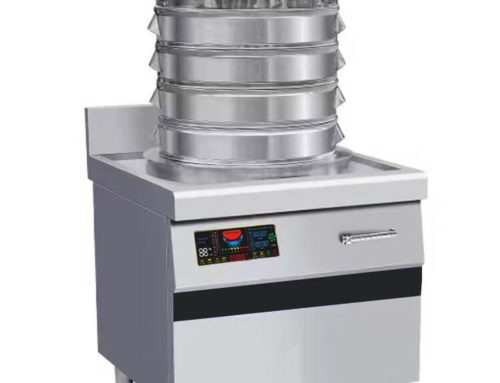
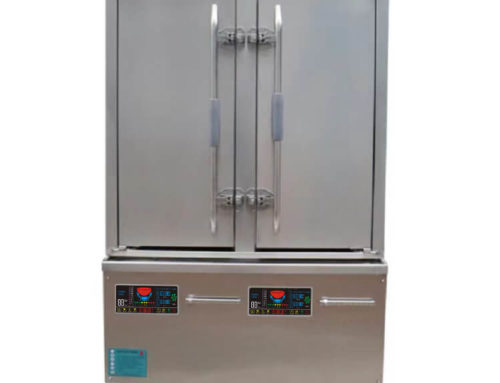
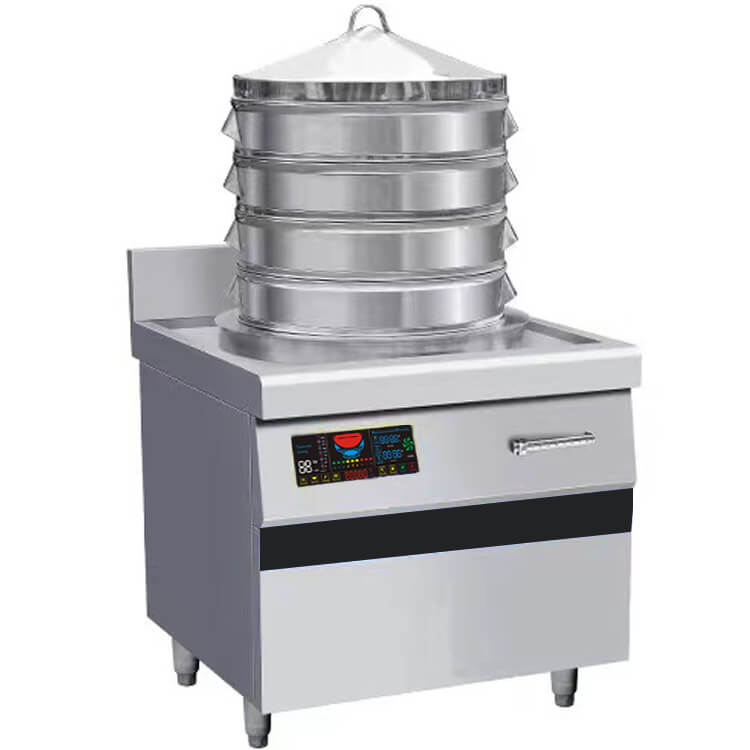
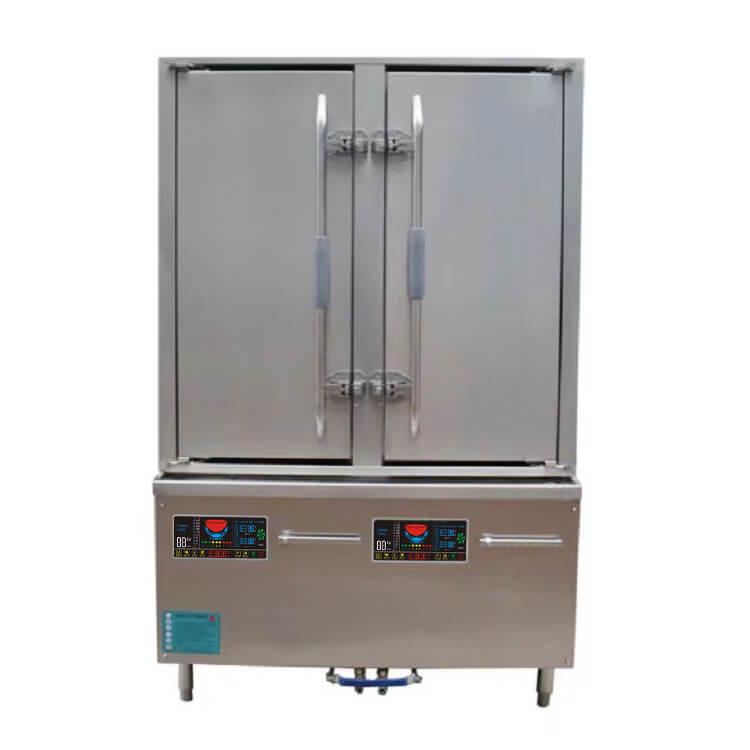
The AT Cooker Commercial Induction Rice Steamer operates differently. It generates steam rapidly and circulates it evenly throughout the cabinet. The induction coil heats the water tank with 95% efficiency, ensuring a constant supply of saturated steam that cooks every grain from the top rack to the bottom without direct contact scorching.
2. Calculating Annual Financial Loss from Discarding Burnt Rice Layers
In a busy canteen, losing the bottom 2cm of rice in every tray is standard. Let’s do the math: If you discard 1kg of rice per batch, and you cook 10 batches a day, that is 10kg of waste daily.
Over a year, that is 3,650kg of rice thrown away. At wholesale prices, this “burnt offering” costs thousands of dollars. Preventing burnt rice in commercial kitchens isn’t just about quality; it’s about stopping a major financial leak.
3. How Induction Technology Maintains Precise Saturation to Prevent Drying
Burnt rice happens when moisture evaporates faster than it can be replaced. Gas steamers fluctuate in temperature, causing cycles of “wet” and “dry” heat.
Induction provides commercial rice steamer benefits by maintaining a precise, constant boil. The steam saturation remains at 100%, ensuring the rice grains stay hydrated throughout the cook cycle, preventing the crust formation that leads to waste.
4. Reducing Labor Costs Associated with Scrubbing Scorched Rice Trays
A burnt tray takes 10 minutes of hard scrubbing to clean. A clean tray takes 30 seconds to rinse.
If your kitchen staff spends an hour a day scraping carbonized rice, you are paying unnecessary wages. By switching to induction, the rice slides right out, allowing you to reallocate that labor to food prep or service, improving overall commercial kitchen sustainable equipment ROI.
5. Ensuring Uniform Hydration Across All Rack Levels in the Cabinet
In vertical steamers, the bottom trays often get soggy while the top trays stay dry. This inconsistency forces chefs to rotate trays mid-cook, which releases heat and wastes time.
The AT Cooker design features engineered steam channels that distribute moisture evenly to all levels simultaneously. Every tray finishes at the same time with the same texture, eliminating the need for manual rotation.
5-year Warranty | 2-year Free Exchangeable | 1-year Free Return
6. The Role of Automatic Water Refill in Preventing Dry-Boil Scorch
The most common cause of catastrophic burning is the water tank running dry. Human error is usually to blame.
Our units come with intelligent auto-refill sensors. As the water level drops, the system adds water automatically without interrupting the boil. If the water supply fails, the induction unit cuts power instantly, preventing the “Dry-Boil” scenario that destroys heating elements and ruins food.
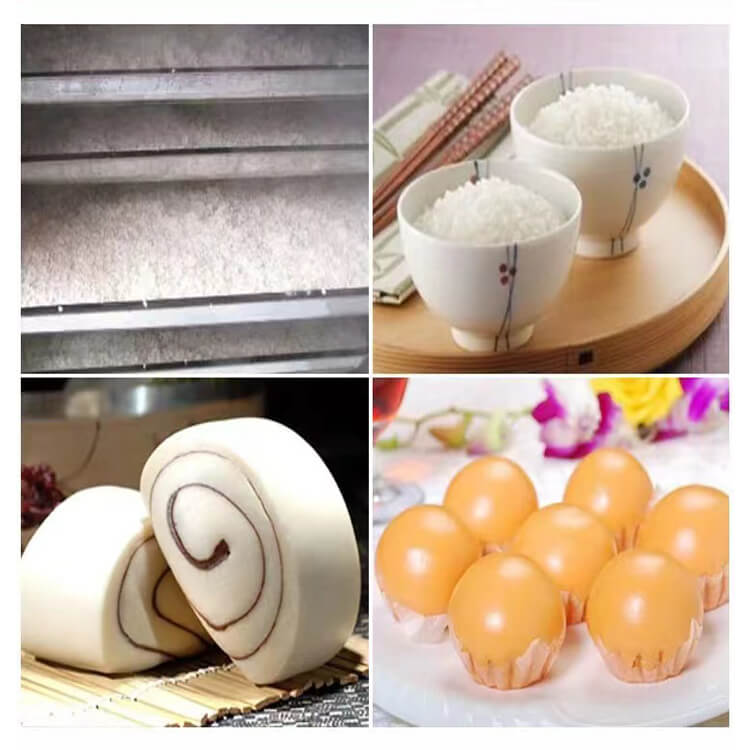
7. Comparing Stainless Steel Tray Conductivity in Gas vs. Induction Units
Stainless steel trays conduct heat rapidly. In a gas unit, radiant heat from the burner box can overheat the metal trays at the bottom.
In our induction steamer, the heat source is shielded and focused solely on water vaporization. The trays are heated only by steam, ensuring a gentle, indirect cook that protects the delicate grain structure of the rice.
8. How Programmable Timers Prevent Overcooking During Shift Distractions
In a busy kitchen, it is easy to forget a steamer for 10 extra minutes. That 10 minutes turns fluffy rice into mush or gum.
The induction rice cabinet efficiency is boosted by digital timers. You set the exact time for Jasmine, Basmati, or Brown Rice. When the time is up, the unit stops heating and enters a “Warm Holding” mode, preventing overcooking even if the chef is busy elsewhere.
9. Eliminating Flavor Contamination from Carbonized Grains in Bulk Batches
Burnt rice has a strong, acrid smell that permeates the entire cabinet. If the bottom tray burns, the smoke rises and taints the flavor of the top 10 trays.
By eliminating the burn at the source, you protect the flavor integrity of the entire batch. This is crucial for high-standard catering where consistent taste is mandatory.
10. The Impact of Tray Depth and Rice Density on Bottom-Layer Quality
Deep trays (15cm+) are often used to save space, but they compress the bottom layer of rice, making it dense and prone to uneven cooking.
We recommend using standard depth trays with our high-capacity cabinets. The uniform steam circulation ensures that even in a fully loaded 24-tray cabinet, the density remains light and the grains separate, how to reduce food waste in restaurants effectively.
11. Differentiating Between Intentional Crispy Layers and Unwanted Carbonized Waste
Some cuisines value “Guoba” (crispy rice). This requires controlled heat. Unwanted carbonization is black and bitter.
The precision of AT Cooker induction allows chefs to program a specific “Crisping” cycle if desired, or avoid it entirely. You have the control to choose the texture, rather than accepting burning as an accident.
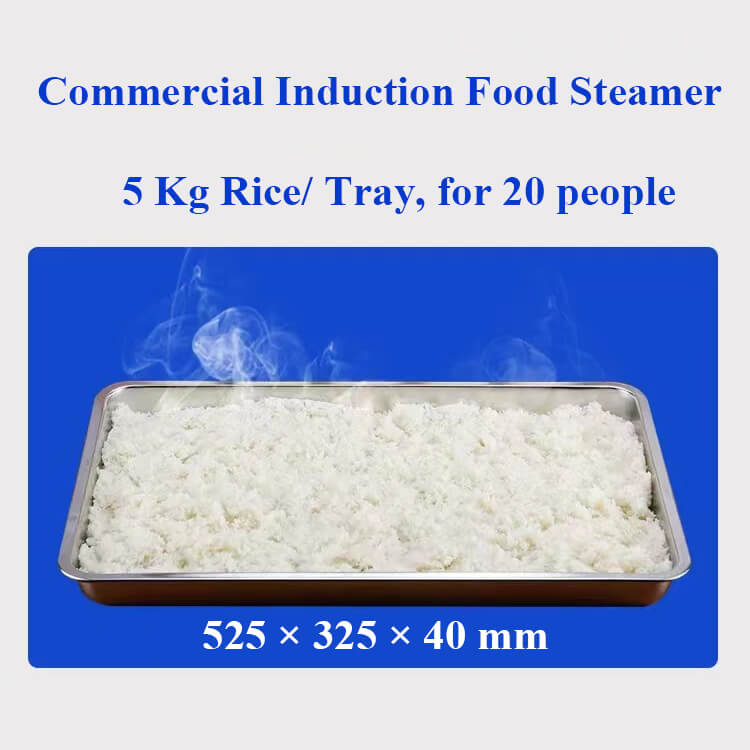
12. Improving Canteen Efficiency by Serving 100% of the Cooked Weight
When you cook 50kg of rice, you should be able to serve 50kg. With traditional steamers, you might only serve 45kg due to waste.
Switching to induction gives you 100% yield. This efficiency allows you to buy less raw rice, cook fewer batches, and serve more customers, directly improving your reducing food cost in canteens strategy.
| Waste Factor | Gas Steamer | AT Cooker Induction |
|---|---|---|
| Burnt Layer | Common (10% loss) | Zero (0% loss) |
| Cleaning Time | High (Scrubbing) | Low (Rinsing) |
| Energy Use | Inefficient (40%) | Efficient (95%) |
| Consistency | Variable | Perfect |
5-year Warranty | 2-year Free Exchangeable | 1-year Free Return
Final Thoughts from AT Cooker
Burnt rice is money in the trash. The AT Cooker Commercial Induction Rice Steamer stops this waste immediately. It pays for itself through food savings, labor reduction, and energy efficiency.
With stock ready for fast delivery in the USA, Germany, France, UK, Belgium, Italy, Spain, and Bulgaria, we can help you achieve a Zero Waste kitchen today. Visit our About Us page to learn more about our sustainable cooking solutions.