Will a High-Power 3-Door Commercial Steamer Trip Your Restaurant Circuit Breakers?
AT Cooker Insight: Upgrading to a 3-door commercial steamer is a massive leap in productivity, but it brings heavy electrical demands. Replacing a gas steamer with a 25KW induction unit like the ZFGT-A V25 requires precise infrastructure planning. Here, we leverage 15 years of engineering experience to guide you through calculating amperage, balancing phases, and preventing power trips to ensure your kitchen runs flawlessly.
The Friday night rush is in full swing. The dining room is packed, the expo line is shouting orders, and your kitchen is humming with the rhythm of service. Suddenly, silence. The exhaust hood stops, the lights dim, and your high-volume steamer goes dark. You have just tripped the main circuit breaker. The kitchen stops, but the orders keep coming.
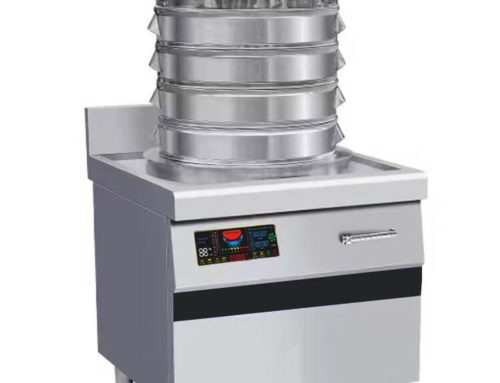
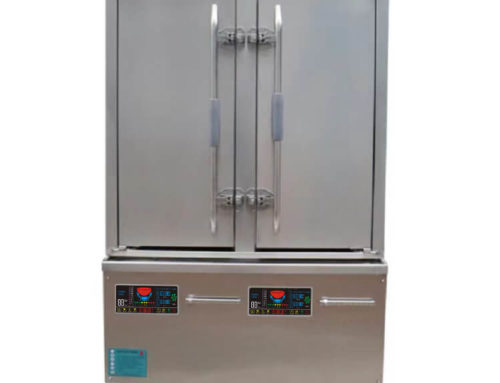
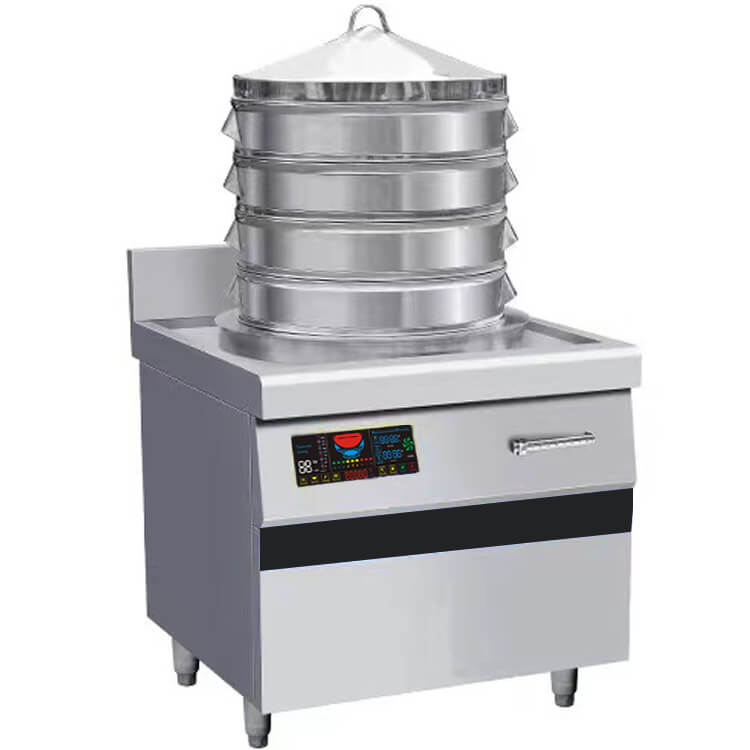
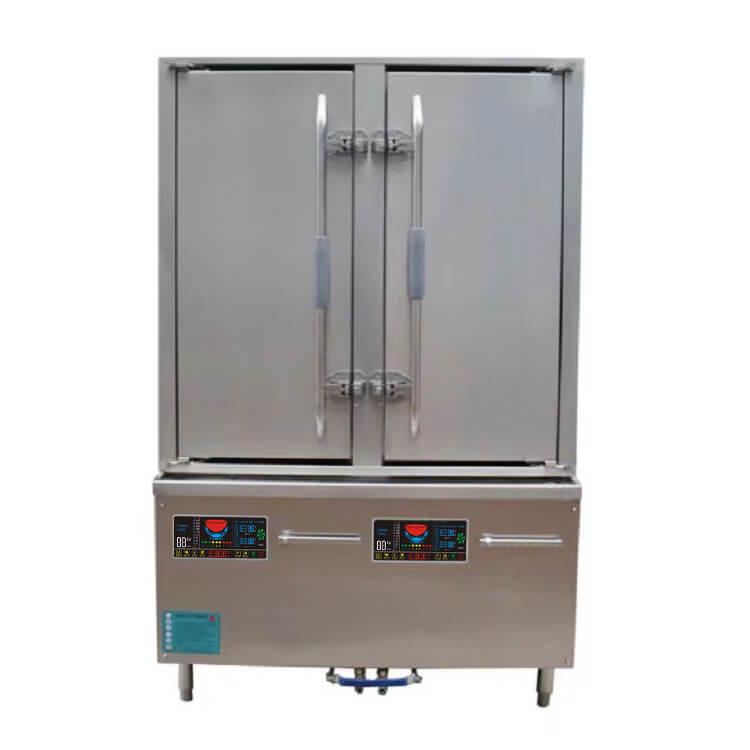
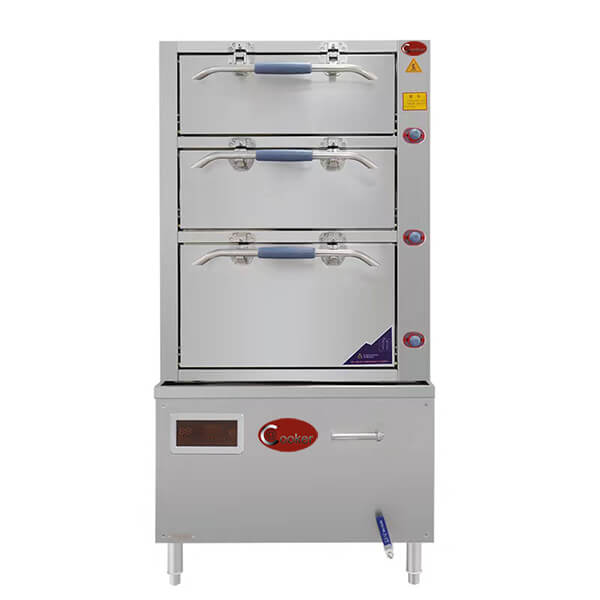
This nightmare scenario is more common than you think. As modern kitchens transition away from fossil fuels to high-efficiency electric equipment, the load on your electrical panel increases significantly. A machine like the Vegetable/ seafood steamer ZFGT-A V25 is an engineering marvel—capable of steaming 120kg of rice per hour with 95% energy efficiency—but it is also a beast that demands to be fed 25,000 Watts of power.
Unlike a residential microwave, installing a 380V commercial steamer requires verifying your commercial kitchen electrical capacity. In this guide, we will break down the electrical requirements in plain English, helping you prevent expensive downtime.
1. Calculating Total Amperage Load: Steamers vs. Existing Equipment
The root cause of a restaurant circuit breaker overload is usually a failure to perform basic math before installation. You cannot simply look at the size of the plug; you must calculate the amperage draw. The ZFGT-A V25 is rated at 25KW. On a standard commercial 3-phase 380V system, the calculation is specific.
The Amperage Formula
Formula: Amps = Watts / (Volts × √3)
Applying the ZFGT-A V25 Specs:
25,000 Watts / (380 Volts × 1.732) ≈ 38 Amps per phase
While the calculation shows ~38 Amps, safety codes (like the NEC in the US or IEC in Europe) recommend that a breaker should only be loaded to 80% of its capacity for continuous use. Therefore, you need a 50 Amp breaker minimum for this single machine.
If your main kitchen panel is rated for 200 Amps and your existing refrigeration, HVAC, and lighting are already drawing 150 Amps, adding a 38-Amp continuous load pushes you to 188 Amps. That leaves zero margin for error. If a compressor kicks on, you will trip the main.
2. Why Dedicated Circuits are Non-Negotiable for High-Power Steamers
In a commercial kitchen, “sharing” circuits is dangerous. We, along with every reputable electrician, strictly advise that a 3-phase steamer installation must have a dedicated circuit.
❌ Shared Circuit (Risky)
- Voltage dips when other devices start
- High risk of connection point overheating
- Impossible to isolate faults quickly
- Voids Warranty: Often invalidates manufacturer protection
✅ Dedicated Circuit (Safe)
- Stable voltage for sensitive electronics
- Wire gauge perfectly matched to the 25KW load
- Compliance with local fire codes
- Protection: Ensures longevity of the ZFGT-A V25
3. The Role of Soft-Start Technology in Preventing Instant Breaker Trips
Traditional electric boilers are brutal on electrical grids. When you flip the switch, they demand full power instantly. This creates an “inrush current” spike that can be 5 times the operating current, often tripping magnetic breakers immediately.
4. Identifying Warning Signs of an Overloaded Electrical Panel
Your building will often warn you before a catastrophic failure. As a kitchen operator, you need to be vigilant during peak hours. If you notice these signs, your electrical panel is screaming for help:
Critical Indicators of Overload:
- Hot Breakers: If the metal panel door is warm, internal bus bars are overheating.
- Buzzing Noise: A hum from the panel indicates vibration from excessive current.
- Dimming Lights: When the steamer ramps up, do the lights fade? That’s voltage sag.
- Acrid Smell: A fishy smell near outlets is melting wire insulation.
While we offer a 5-year Warranty for All AT Cooker’s Commercial Cooking Equipment, this covers the machine, not your building’s wiring. Ignoring these signs puts your entire business at risk.
5. Understanding GFCI Breaker Sensitivity in High-Moisture Kitchen Zones
Induction technology involves high-frequency magnetic fields. Inherent to this technology is a small amount of capacitive leakage current. While harmless to humans, this can confuse standard residential Ground Fault Circuit Interrupters (GFCI), causing them to “nuisance trip.”
For commercial steamer electrical requirements, you should install Class A or Class B industrial GFCIs designed for inverter loads. Furthermore, the ZFGT-A V25 is engineered with a 3D three-dimensional radiation shielding design. This not only protects the chef from magnetic radiation but also keeps leakage currents well within safety standards, minimizing breaker trips.
6. The Impact of Voltage Fluctuations on Heavy-Duty Induction Performance
Induction cookers are “Constant Power” devices. This means if you set the machine to Level 8 (Max Power), the computer tries to pull 25KW regardless of the voltage.
Amps = Watts / Volts.
If your local grid is unstable and voltage drops from 380V to 350V (a brownout), the amperage increases to maintain the 25KW output. This sudden rise in induction steamer power consumption can trip a breaker that was sized too tightly. We recommend installing voltage stabilizers in industrial zones to keep the supply steady.
7. Balancing Electrical Phases to Prevent Single-Leg Overload
In a 3-phase system, you have three live wires (L1, L2, L3). The AT Cooker unit draws power evenly from all three. However, your kitchen might not be balanced.
If your electrician lazily connected all your single-phase appliances (microwave, warmer, slicer, mixer) to Line 1, that line is already working hard. When you add the steamer, Line 1 might overload and trip the main breaker, even though Line 2 and Line 3 are barely used. A professional “Load Balancing” service can redistribute these loads, freeing up capacity for your new steamer.
8. Comparing Peak-Hour Power Consumption: Induction vs. Resistive Electric Steamers
Not all “25KW” ratings are equal. A traditional resistive electric steamer is a “dumb” load—it turns on the heating element and keeps it on, drawing max power constantly to fight heat loss.
Induction is smarter. The ZFGT-A V25 boasts 90% – 95% energy efficiency. It transfers energy directly to the water tank via magnetic field. It reaches 180℃ extremely fast and then cycles the power down to maintain steam pressure. This means the average load on your electrical system is much lower.
| Feature | Old Electric Steamer | AT Cooker Induction (ZFGT-A V25) |
|---|---|---|
| Heating Method | Resistive Coil (Slow) | Electromagnetic (Instant) |
| Efficiency | ~50% – 60% | 90% – 95% |
| Amp Draw Profile | Constant Peak | Smart Cycling (Low Avg) |
| Breaker Stress | High (Thermal Buildup) | Low (Intermittent) |
9. Assessing Cable Gauge Suitability to Prevent Heat-Induced Tripping
The breaker protects the wire, but if the wire is too thin, it creates its own problems. Undersized copper wire acts like a toaster filament—it gets hot when current flows through it. This heat travels up the wire into the breaker, triggering its thermal trip mechanism even if the amperage is technically within limits.

Do not reuse old wiring just to save money. For a 25KW / 380V load, you typically need 8 AWG or 6mm² wire (check local codes). Always use heat-resistant insulation (THHN) and ensure terminal blocks are torqued correctly.
10. Managing Peak-Load Distribution During Simultaneous Banquet Cooking
The “Banquet Spike” occurs when chefs turn on every piece of equipment at 4:30 PM. This creates a massive demand spike that can trip the main breaker.
Because the ZFGT-A V25 is so fast (steaming 5kg of rice per layer in just 30-35 minutes), you do not need to preheat it for hours like old gas steamers. You can stagger your start-up times. Turn on the fryers first, then the ovens, and turn on the steamer last, just before it is needed. This operational tweak flattens your energy curve.
11. The Hidden Risk of Breaker Fatigue from Frequent Resets
A circuit breaker is not a light switch. Every time it trips under load, an electrical arc damages the contacts. A breaker that has tripped 20 times is “tired” and may start tripping at 30 Amps instead of 40.
If you find yourself resetting the breaker frequently, stop. You are not fixing the problem; you are destroying the safety device. Replace the breaker and fix the underlying capacity issue. We build our equipment with durability in mind—offering 2-years Free Exchangeable and 1-year Free Return policies—and your electrical infrastructure deserves the same quality.
Ready to Upgrade?
We stock equipment globally in the USA, Germany, France, UK, Belgium, Italy, Spain, and Bulgaria for fast delivery. Don’t let power fears stop you from saving 50% on energy bills.
Final Thoughts from AT Cooker
Will a high-power 3-door commercial steamer trip your restaurant’s breakers? It certainly can if you ignore the physics. But with proper calculation, dedicated circuits, and the advanced engineering of the ZFGT-A V25, you can run high-power induction safely. The energy savings and improved workflow are well worth the initial setup.
Verify your capacity, upgrade your wiring if needed, and embrace the power of induction. For more details on our range or to consult with our technical team, visit our About Us page. Always refer to local standards like NFPA 70 or GB 50054-2011.