Achieving Perfect Al Dente Texture Even With Frozen Batches in Commercial Automatic Boilers
5-year Warranty | 2-year Free Exchangeable | 1-year Free Return
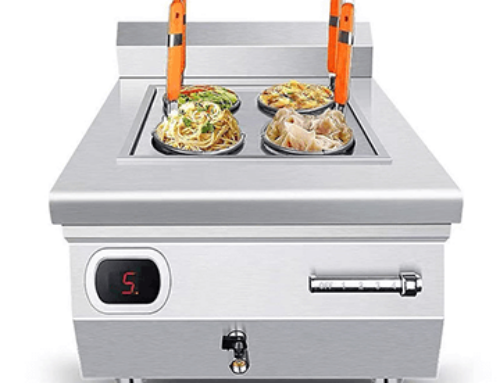
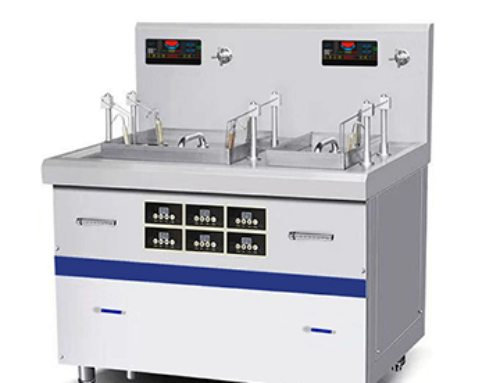
AT Cooker Executive Insight: Using frozen pasta or noodles in a high-volume restaurant is a smart logistical move, but it often comes at the cost of quality. Dropping sub-zero dough into boiling water creates a “Thermal Shock” that can kill the boil and ruin the texture. To achieve a perfect “Al Dente” or “Q” texture with frozen batches, you need a boiler that fights back. The AT Cooker ATT-APST A6 uses 15KW of direct induction power to maintain a rolling boil regardless of the load. This guide explains how to master cooking frozen pasta commercial style without sacrificing quality.
There is a fine line between “Al Dente” (firm to the bite) and “Soggy.” That line is defined by temperature. When you cook fresh pasta, the impact on the water is minimal. When you cook frozen pasta, you are dropping ice into the pot. The latent heat required to melt that ice creates a massive energy deficit.
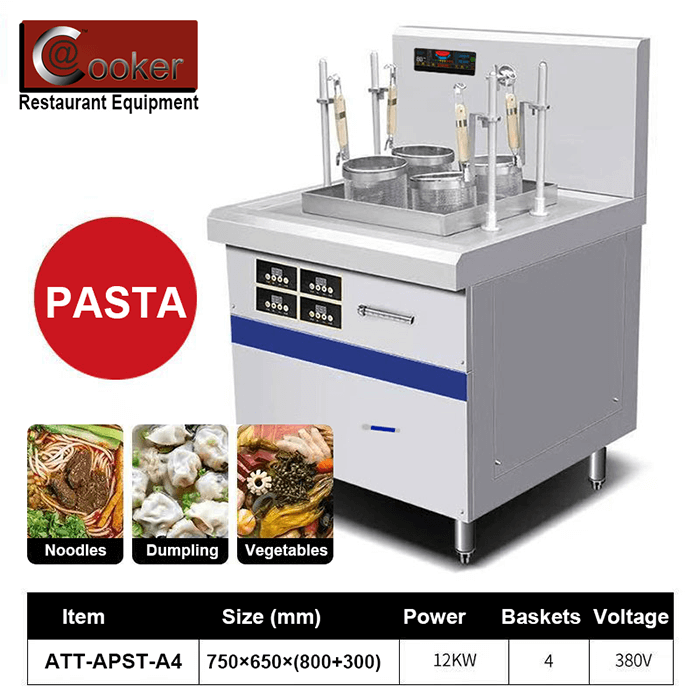
In a standard gas boiler, the water temperature crashes, the boiling stops, and the noodles soak in hot water rather than cooking in it. This results in a mushy exterior and a raw center. To solve this, you need an automatic noodle boiler machine with high recovery speed. Our Freestanding Induction Automatic Pasta cooker ATT-APST A6 is engineered to handle this thermal shock, delivering premium texture every time.
In this technical deep dive, we will explore the thermodynamics of frozen pasta and how induction technology ensures you never serve a soggy bowl again.
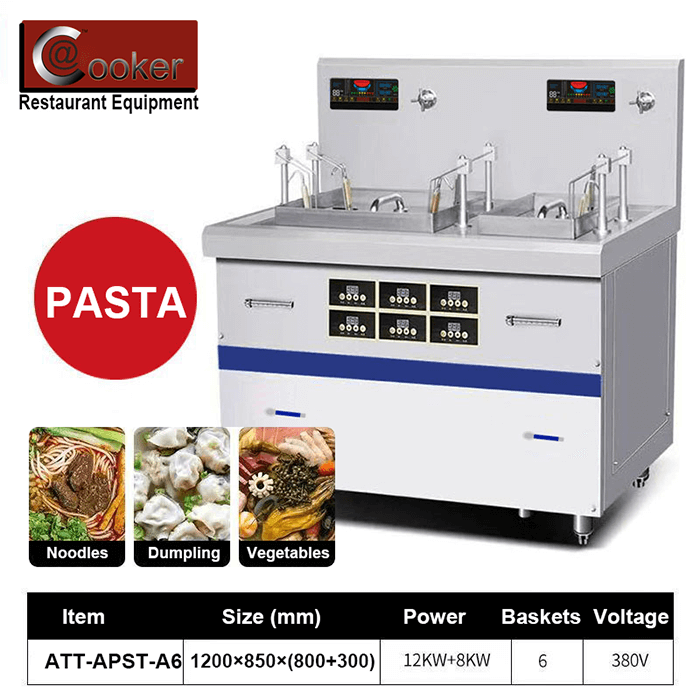
Commercial Kitchen Equipment -from AT Cooker
- As a brand manufacturer of the professional commercial induction cooking equipment, AT Cooker has responded to restaurants’ & hotels’ needs and research normative commercial cooking equipment using the very latest induction technology.
- These seamless, real commercial quality commercial cooking equipment provides us with the opportunity to incorporate equipment of our choice into one seamless, multipurpose cooking equipment creating an efficient, low cost, safe, green and sustainable commercial kitchen. We have standerd equipment can service many commercial kitchens.
- AT Cooker always offers professional service. From material, design, to producing, we focuse on quality, performance and reliability to ensures the best solution is delivered for each and every one of our customers. Have a commercial kitchen? We will be one of your best partners.
Work Voltage
| Single-Phase | Three-Phase |
|---|---|
| 120V, 220V | 208V/ 240V, 380V, 480V |
Global In-Stock + Fast Pickup
| US | UK | Germany | France |
|---|---|---|---|
| Italy | Spain | Belgium | Bulgaria |
1. The Thermodynamics of Thermal Shock: What Happens When -18°C Pasta Hits the Water
Cooking is a battle of temperatures. When you submerge -18°C frozen pasta into 100°C water, a violent energy exchange occurs. The ice in the pasta absorbs massive amounts of heat to melt (latent heat of fusion), causing the surrounding water temperature to drop rapidly.
If the water drops below 90°C, the boiling stops. The mechanical agitation of the bubbles ceases, and the noodles settle at the bottom. This “Dead Zone” is where texture is lost. The pasta hydrates without cooking, leading to a gluey surface and a hard center.
2. Why Traditional Gas Boilers Struggle to Recover Fast Enough for Al Dente Results
Gas boilers heat the water indirectly: Flame -> Tank -> Water. This process has significant thermal lag. When the water cools, the thermostat triggers the flame, but it takes time for the heat to penetrate the steel and reach the water.
During this lag time (often 45-60 seconds), the frozen pasta is soaking in non-boiling water. This delay is why many chefs refuse to use frozen products. It’s not the pasta’s fault; it’s the boiler’s fault.
3. The Critical Role of “Violent Boiling” in Preventing Sticking of Frozen Strands
Frozen noodle nests are prone to sticking. To separate them, you need a “Violent Boil”—aggressive turbulence that physically breaks the nest apart.
If the boil dies upon impact, the noodles stay clumped. The AT Cooker ATT-APST A6 uses 15KW of power to ensure that the water never stops moving, even for a second. This agitation acts as an invisible stirrer, ensuring every strand is individual and evenly cooked.
4. How Induction Technology Provides Immediate Energy Response to Cold Loads
Induction is different. The magnetic field generates heat directly inside the tank wall. There is no lag. The moment the sensor detects the temperature drop from the frozen load, the inverter dumps 15,000 Watts of energy into the water.
⚡ Zero Lag Recovery
This instant response allows the A6 to overcome the thermal shock of frozen food 4x faster than gas, maintaining the critical rolling boil needed for Al Dente texture.
5. Calculating the Correct Water-to-Frozen-Product Ratio for Texture Stability
Even with induction, you cannot break the laws of physics. You need thermal mass. The ATT-APST A6 features a massive 108L Main Tank.
This high volume of water acts as a buffer. Dropping 1kg of frozen pasta into 100L of boiling water causes a negligible temperature drop compared to dropping it into a 20L pot. The combination of high volume and high power is the secret to frozen ramen cooking equipment success.
5-year Warranty | 2-year Free Exchangeable | 1-year Free Return
6. The Danger of the “Mushy Exterior, Raw Interior” Phenomenon with Slow Heating
Slow heating cooks the outside of the noodle before the heat penetrates the frozen core. By the time the center is cooked, the outside is overdone and mushy.
Rapid, high-heat induction cooking forces heat into the core quickly, ensuring the entire noodle cooks at the same rate. This preserves the bite and elasticity of the dough.
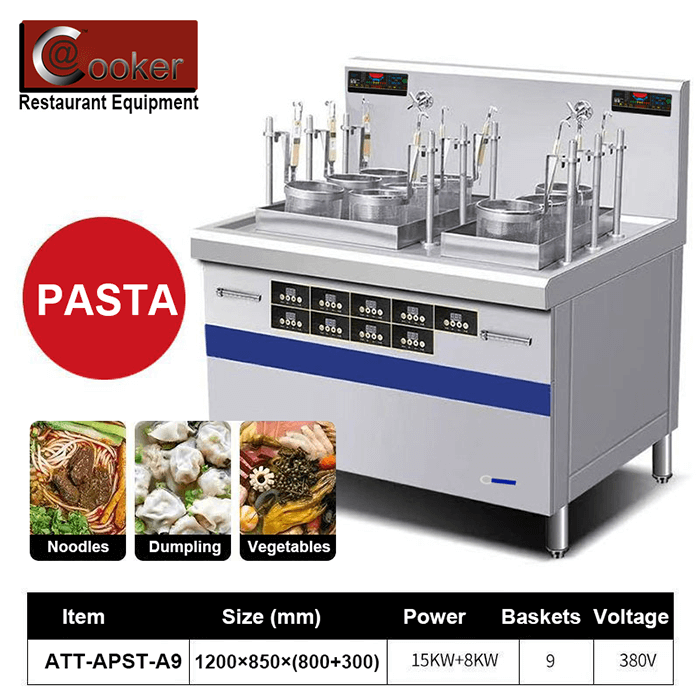
7. Automating Consistency: Using Programmable Lift Timers for Exact Frozen Cook Cycles
Frozen pasta requires precise timing—often longer than fresh. Guesswork ruins batches. The A6 features programmable auto-lift baskets.
You can program the exact time needed for a specific frozen product (e.g., 4 minutes 30 seconds). The machine drops the basket, cooks it perfectly, and lifts it out automatically. This consistency allows you to scale your operation without relying on highly skilled chefs.
8. Energy Analysis: The Cost of Maintaining Rolling Boil vs. Reheating from Simmer
Re-boiling water takes more energy than maintaining a boil. Because the A6 recovers so fast, it spends less time in the high-consumption “recovery phase” and more time in the efficient “maintenance phase.”
This efficiency curve means that despite its high power, the A6 is cheaper to run per kg of cooked pasta than a gas unit that burns fuel constantly to fight thermal lag.
9. Comparing Starch Release Rates: Frozen vs. Fresh Pasta in Commercial Vats
Frozen pasta often releases less starch than fresh, provided the water boils immediately. If it sits in warm water, it bleeds starch, clouding the tank.
The commercial induction pasta cooker benefits include cleaner water. The rapid seal created by the induction boil keeps starch inside the noodle, extending the life of your cooking water and improving the flavor of the final dish.
10. Achieving the “Q-Texture” Snap: Why Rapid Temperature Recovery is the Secret
In Asian noodle culture, “Q” stands for the perfect elastic bite. This texture is only possible if the gluten is set instantly by high heat.
The A6’s ability to maintain 100°C even with frozen loads ensures that the gluten matrix sets firm, delivering the snap that customers crave, distinguishing your noodles from the soggy competition.
11. Managing the “Carryover Cooking” Phase: Auto-Lifting at the Precise Second
Noodles continue to cook after they leave the water. If you pull them late, they overcook in the bowl. The auto-lift feature of the A6 ensures they are removed at the exact second required to account for carryover cooking.
This precision is critical for delivery orders, where the noodles will sit in broth for 20 minutes before being eaten.
12. The “Surface Starch Shearing” Effect: How High-Power Turbulence Improves Mouthfeel
The turbulence of a rolling boil creates a shearing effect that polishes the surface of the noodle, removing excess slime. This creates a smooth, pleasant mouthfeel.
The ATT-APST A6 generates intense magnetic turbulence in the water, ensuring that even frozen noodles come out clean, smooth, and perfectly textured.
| Frozen Cooking | Gas Boiler | AT Cooker A6 Induction |
|---|---|---|
| Recovery | Slow (>60s) | Fast (<12s) |
| Texture | Inconsistent | Perfect Al Dente |
| Agitation | Stops on Load | Continuous Boil |
| Automation | Manual | Auto-Lift |
5-year Warranty | 2-year Free Exchangeable | 1-year Free Return
Final Thoughts from AT Cooker
Frozen noodles are the future of high-efficiency dining, but only if you have the right equipment. The ATT-APST A6 Automatic Induction Pasta Cooker turns a potential quality liability into a consistent asset.
With global stock in the USA, Germany, France, UK, Belgium, Italy, Spain, and Bulgaria, we can equip your kitchen for high-volume success. Stop fearing frozen. Embrace the power of induction. Visit our About Us page to learn more.