Die richtige Wahl Elektrischer Dampfgarer Die Kapazität ist eine entscheidende Frage für gewerbliche Küchen – zu klein, und es entstehen Engpässe; zu groß, und Sie verschwenden Energie und Geld. Entscheidend ist die Abstimmung der Produktionskapazität auf das erwartete Essensvolumen. AT Cooker bietet Modelle vom 3-Blech-Tischgerät bis zu industriellen 48-Blech-Systemen.
Kleinbetriebe (unter 100 Mahlzeiten/Tag): Kompaktes Tischgerät mit 2–4 Behältern
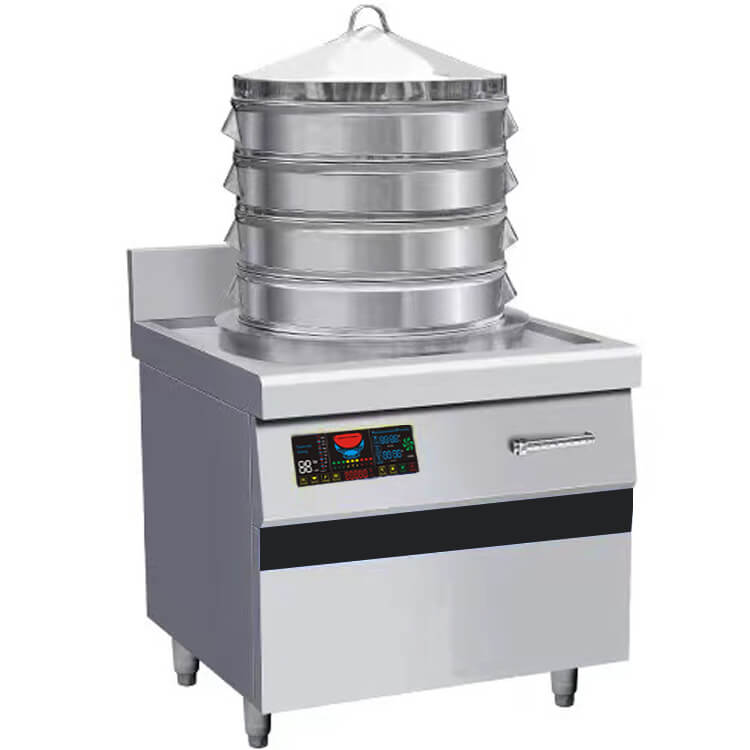
Küchen mit geringem Volumen – kleine Cafés, Foodtrucks, Boutique-Bäckereien – servieren 50–100 Mahlzeiten täglich. Ein kompaktes Tischgerät Elektrischer Dampfgarer (2–4 Bleche) ist ideal: passt auf begrenzten Raum, verbraucht weniger Energie, produziert ausreichend Chargen ohne übermäßige Komplexität.
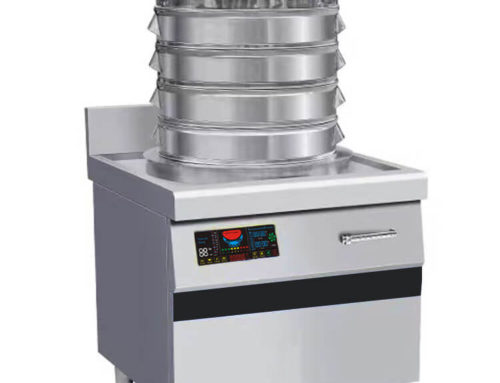
AT Cooker’ZFGT-E1 (3 Bleche, 6 KW, B65×T73×H75 cm) produziert ca. 150 Portionen täglich. Ein Café in Portland: “Wir dämpfen Reis, Teigtaschen, Gemüse für Frühstück und Mittagessen. Eine Charge fürs Frühstück (30 Portionen), zwei fürs Mittagessen (60) – kein Stress, keine Verschwendung.”
Formel: Tägliche Mahlzeiten × 1,2 (20%-Puffer) ÷ Portionen pro Charge = benötigte Chargen/Tag. Für 80 Mahlzeiten: 96 ÷ 37,5 = ~2,5 Chargen → 3-Blech-Dampfgarer ist ausreichend.
Küchen mit mittlerem Volumen (100–300 Mahlzeiten/Tag): Stapelgerät mit 6–8 Behältern
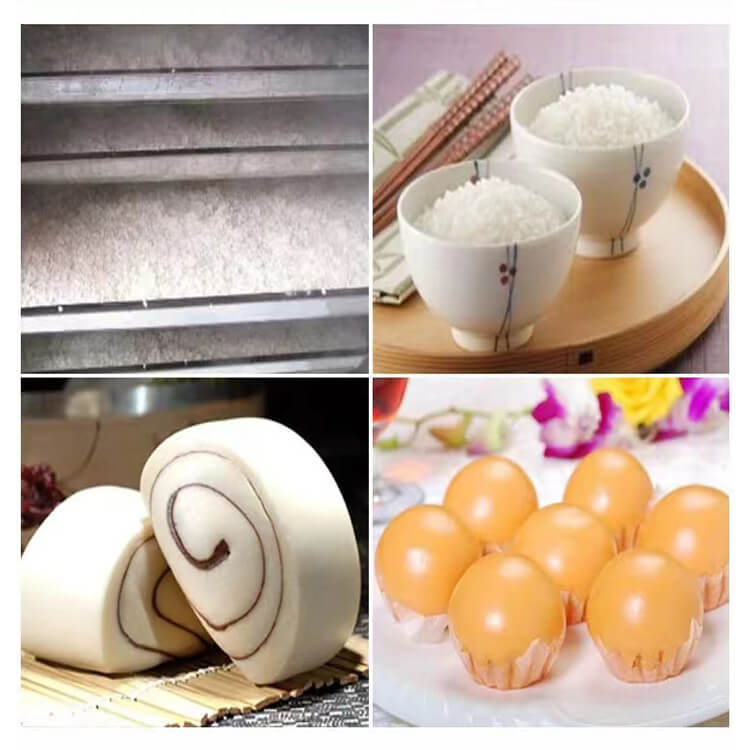
Mittelgroße Restaurants, Hotels, Schulkantinen servieren 100–300 Mahlzeiten täglich. AT Cooker bietet zwei Modelle:
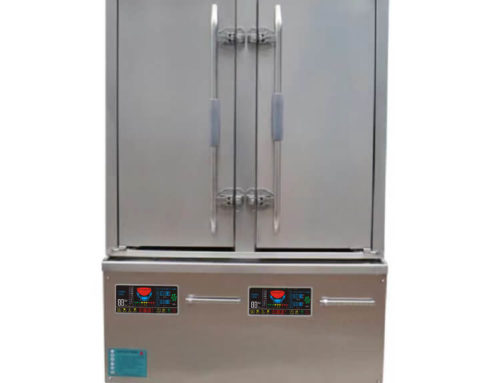
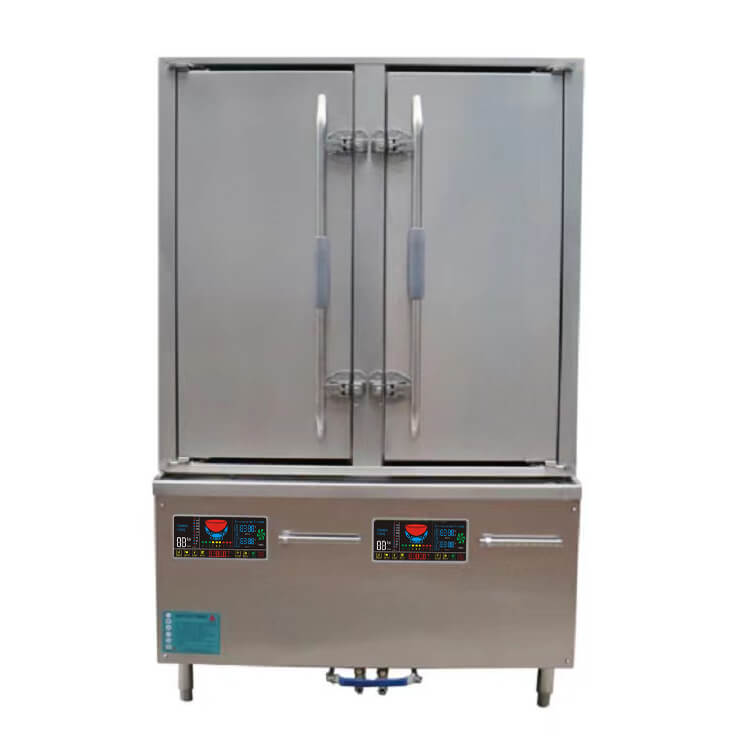
- ZFGT-E3 (9 Bleche, 9 KW): ~450 Portionen täglich. Stellfläche B73×T80×H161 cm. Ein Hotel in Denver: “100 Portionen Reis fürs Frühstück, 150 Dim Sum fürs Abendessen – eine Charge Frühstück, zwei Chargen Abendessen. Kein Hetzen mehr.”
- ZFGT-E6 (18 Bleche, 36 KW): ~900 Portionen täglich. Ideal für die Erweiterung des Abendessens oder die Erweiterung des Menüs.
| AT Cooker-Modell | Bleche | Tageskapazität | Spitzenstunde | Leistung | Ideale Küche |
|---|---|---|---|---|---|
| ZFGT-E1 (Tischgerät) | 3 | 150–200 | 75–100 | 6 KW | Cafés (50–100) |
| ZFGT-E3 (Standgerät) | 9 | 450–500 | 225–250 | 9 KW | Restaurants (100–300) |
| ZFGT-E6 (Standgerät) | 18 | 900–1.000 | 450–500 | 36 KW | Große Restaurants (300–600) |
| ZFGT-R 24 (Industrie) | 24–48 | 200–2.400 | 600–1.200 | 20–25 KW | Stadien (600+) |
Hochkapazitätsbetriebe (300+ Mahlzeiten/Tag): Modulares Gerät mit 10–20 Behältern
Bankettsäle, Stadien, Cateringunternehmen servieren 300+ Mahlzeiten täglich. AT Cooker’ZFGT-R 24 (24–48 Bleche, erweiterbar) produziert 1.200–2.400 Portionen täglich.
- Modulares Design: Starten Sie mit 24 Blechen, erweitern Sie auf bis zu 48 je nach Bedarf.
- Automatische Wasserbefüllung: 50-L-Tank mit automatischer Nachfüllung für unterbrechungsfreie 4-stündige Bankettservices.
- Mehrzonen-Temperatur: Unabhängige Kammern: Reis 100℃, Meeresfrüchte 95℃, Dim Sum 98℃ gleichzeitig.
Fallstudie: Cateringunternehmen in LA: “48-Blech-ZFGT-R 24 für 1.500+ Hochzeiten. 500 Reis, 300 Teigtaschen, 700 Gemüse in 3 Chargen – spart 4 Stunden Vorbereitung. Für kleinere Veranstaltungen 24 Bleche verwenden.”
Chargenkochkapazität: Servicekontinuität während der Spitzenzeiten
Die Produktionskapazität ist nicht nur die Tagesleistung – es geht um Chargengröße und Wiederherstellungsgeschwindigkeit. AT Cooker’s features:
- Fast Recovery: 36 KW boilers generate full steam in 2–3 min—70% less wait vs traditional.
- Easy Tray Access: Sliding racks for 1–2 min swap, no heavy lifting.
- Cook/Hold: Hold at 90–95℃ up to 4 hours—cook in advance, serve as needed.
Chicago Diner: ZFGT-E3 (9 trays): “Old steamer: 30 servings/batch, 10 min recovery. ZFGT-E3: 450 servings/batch, 2 min recovery. 50% more customers during lunch rush.”
5. Modular Steamers: Expanding Capacity as Volume Grows
Fixed-capacity steamers lead to costly replacements. AT Cooker’s modular options:
- ZFGT-R 24 Modular: 24 trays → add 12-tray modules to 36 or 48. No new wiring/plumbing.
- Stackable Units: Two ZFGT-E3 = 18 trays, 900 servings/day, same floor space.
Start
200 meals/day
Grow
400 meals/day
Scale
800 meals/day
Austin Restaurant: “Started with 9-tray ZFGT-E3 (200 meals/day). Added second unit after 6 months (400 meals). If we grow to 600, add 18-tray ZFGT-E6—no need to sell old unit.”
6. Cook/Hold Functionality: Supporting Staggered Services
Hospitals, schools, hotels have staggered service (breakfast 7–10 AM, lunch 12–2 PM). AT Cooker’s cook/hold (ZFGT-E6, ZFGT-R 24): cook at optimal temp, auto-reduce to 90–95℃ for up to 4 hours, moisture retention keeps food fresh.
Boston Hospital: “300 patients over 3 hours. Cook 300 servings rice at 6 AM, hold until 9 AM—tastes freshly cooked. Before: 3 separate batches, wasting 2 hours staff time.”
7. Menu Diversity: Adjusting Capacity for Mixed Items
A restaurant serving 300 meals (50% rice, 30% dumplings, 20% seafood) needs separate tray allocation: rice 3 trays, dumplings 3, seafood 2 = 8 trays total. A 9-tray ZFGT-E3 suffices.
- Adjustable Heights: ZFGT-E6/ZFGT-R 24 widen gaps for tall items.
- Multi-Zone: ZFGT-R 24 has 3 independent chambers (100℃/98℃/95℃).
- Specialized Trays: Perforated for seafood, non-stick for dumplings.
NY Dim Sum: “10 types daily, 3 chambers cook 3 items at once. Cut cooking time 40% vs 3 separate steamers.”
8. Energy Efficiency: Balancing Capacity and Costs
AT Cooker’s energy-saving features: heat recovery (22% boiler savings), VFD (adjust power by batch size), 3-layer insulation (70% less heat loss).
- ZFGT-E1 (6 KW): $7.20/day → $216/month.
- ZFGT-E3 (9 KW): $10.80/day → $324/month.
- ZFGT-R 24 (25 KW): $30/day → $900/month → $0.60/meal (vs $1.08 for ZFGT-E3).
Tipp: Choose ENERGY STAR models (like ZFGT-E6) for $500–$1,000 utility rebates.
9. Kitchen Layout: Ensuring the Steamer Fits Your Space
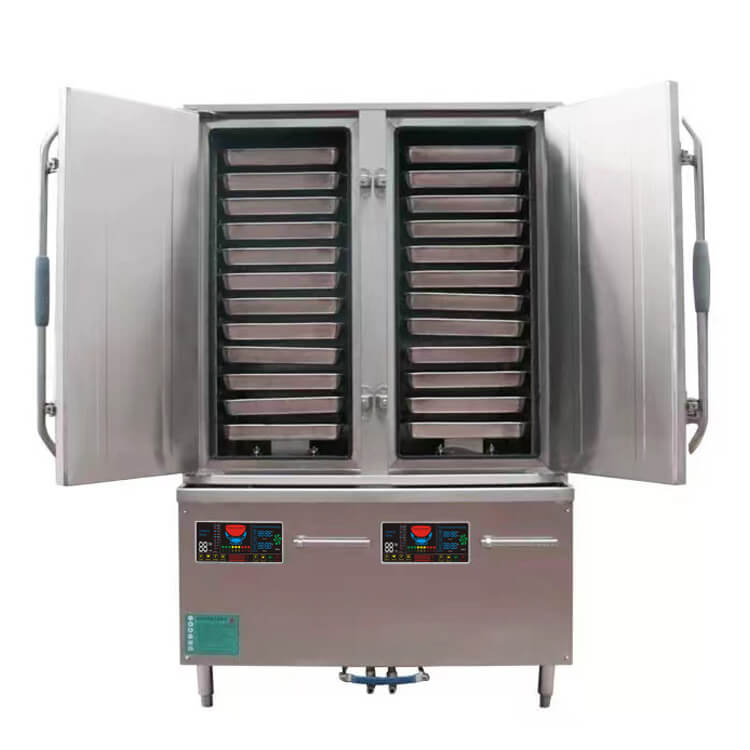
AT Cooker’s models for different spaces:
- Tischgerät (ZFGT-E1): W65×D73×H75 cm. Standard 24″ countertops. Miami food truck: “6-foot kitchen, fits perfectly next to grill.”
- Freestanding (ZFGT-E3/E6): W73–148×D80×H161 cm. Leave 30 cm clearance.
- Industrial (ZFGT-R 24): W120×D110×H185–220 cm. Large open kitchens.
10. Buffer Capacity: Planning for Unexpected Volume Surges
Always add 20–30% buffer to expected volume. Examples:
- 100 meals/day + 30% = 130 → ZFGT-E1 (150–200).
- 300 meals/day + 30% = 390 → ZFGT-E3 (450–500).
- 1,000 meals/day + 30% = 1,300 → ZFGT-R 24 (1,200–2,400).
Seattle Café: “Expected 80 meals/day, got 120 after viral food blog review. ZFGT-E1 (150/day) handled the surge.”
11. Long-Term Scalability: Investing in Growth
Think 1–3 years ahead. AT Cooker’s scalable options: modular trays (add 12-tray modules), stackable units (add second ZFGT-E3), compatible accessories (specialized trays, water tanks).
Restaurant Chain: 5 locations standardized on ZFGT-E6: “200 meals/day at start → 1,000 meals/day across 5 locations. Same model everywhere, simplifying training. Add trays or stack as each location grows.”
What electric steamer capacity do I need for a small café?
For a small café serving 50–100 meals daily, a 3-tray countertop electric steamer (like AT Cooker ZFGT-E1, 6 KW) is ideal. It produces 150–200 servings daily, fits on standard countertops, and plugs into standard 220V outlets without electrical upgrades.
How do I calculate the right steamer capacity for my meal volume?
Use this formula: Daily meals × 1.2 (20% buffer) ÷ Servings per batch = Required batches/day. For example, 300 meals × 1.2 = 360 ÷ 50 servings per tray = 7.2 trays needed. A 9-tray freestanding steamer handles this comfortably.
What is the advantage of modular electric steam?
Modular steamers let you start with 24 trays and add 12-tray modules to reach 36 or 48 as demand grows—no need to replace the entire unit. The cost of adding a module ($1,500) is far less than buying a new 48-tray steamer ($8,000).
How does menu diversity affect steamer capacity?
A diverse menu (rice, dumplings, seafood) requires separate tray allocation for each item. A 300-meal restaurant with 50% rice, 30% dumplings, 20% seafood needs 8 trays total. Multi-zone chambers let you cook different items at different temperatures simultaneously.
What buffer capacity should I add for volume surges?
Add 20–30% buffer to your expected daily volume. For 100 meals/day, plan for 130 meals/day capacity. For 1,000 meals/day, plan for 1,300. This handles holidays, events, and unexpected growth without bottlenecks.
Choose the Right Electric Steamer Capacity for Your Meal Volume
Share your expected daily meal volume, menu diversity, and kitchen space—we’ll recommend the ideal AT Cooker steamer.