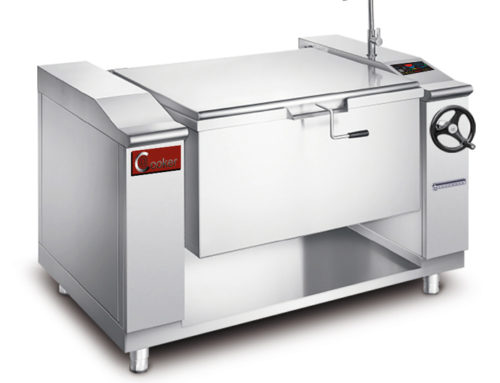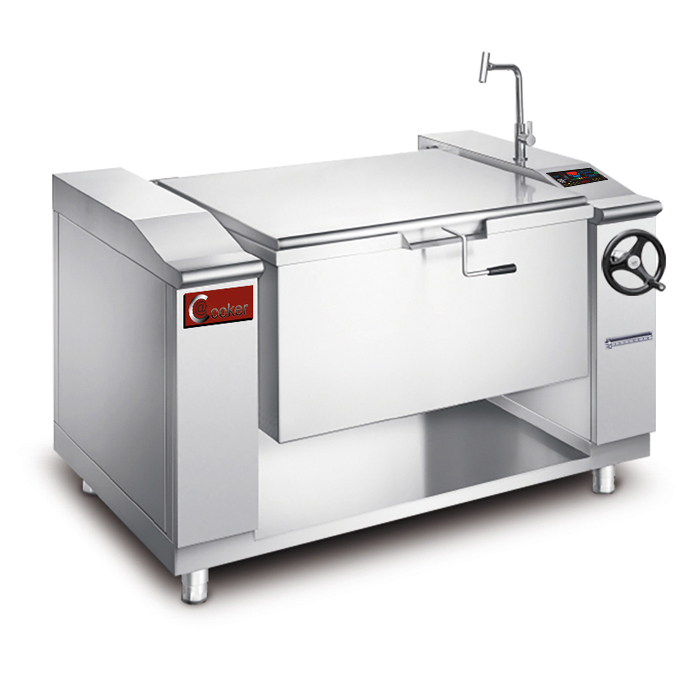
Elegir la capacidad adecuada para su equipo de cocina bratt pan is critical to avoiding bottlenecks during peak service or wasting energy on underused large units. Capacity is measured in liters (standard for commercial equipment) or quarts (1 liter ≈ 1.0567 quarts). At AT Cooker, we offer electric tilting bratt pans in 80L to 300L capacities, engineered for efficiency (90-95%), durability (304# stainless steel), and safety.
Capacidades de Bratt Pan AT Cooker y Volúmenes de Operación Ideales
| Modelo | Capacity (L/Q) | Ideal Operation | Daily Volume | Características Clave |
|---|---|---|---|---|
| ATT-ABT-BP (80L) | 80L / 84.5Q | Pequeñas cafeterías, restaurantes de 50 asientos | 20-40 lbs food | 8 power levels, 15KW, 10-hr countdown |
| ATT-ABT-BP (120L) | 120L / 126.8Q | Restaurantes medianos, hoteles pequeños | 40-60 lbs food | Auto water valves, 304# steel |
| ATT-ABT-BP (150L) | 150L / 158.5Q | Restaurantes grandes, escuelas | 60-80 lbs food | 5-yr warranty, fault detection, 20-30KW |
| ATT-ABT-BP (200L) | 200L / 211.3Q | Hoteles, empresas de catering | 80-100 lbs food | Heavy-duty, real-time power display |
| ATT-ABT-BP (300L) | 300L / 317Q | Estadios, bases militares | 100+ lbs food | 30KW, extra-large tank, 95% efficiency |
Operaciones pequeñas a medianas: 40-60 litros (42-63 cuartos)
Small-to-medium operations—50-seat restaurants, cafes, and small delis—typically serve 50-150 customers daily, with average batch sizes of 10-30 pounds. A bratt pan capacity of 40-60 liters is sufficient, balancing batch size with energy efficiency.
Why AT Cooker’s 80L Model Works: While slightly above the 40-60L range, it offers flexibility for growth (handles 20-40 lbs per batch), 90-95% energy efficiency, and versatility for usos de sartén bratt (sautéing, braising, boiling). For a cafe serving 100 customers daily, it eliminates multiple small batches, saving 1-2 hours.
Consejo profesional: Avoid undersized 30L models. They require 2-3 batches to meet peak demand, increasing labor and energy costs. AT Cooker’s 80L model is a cost-effective middle ground.
Operaciones a gran escala: 80-100 litros (85-105 cuartos) y más
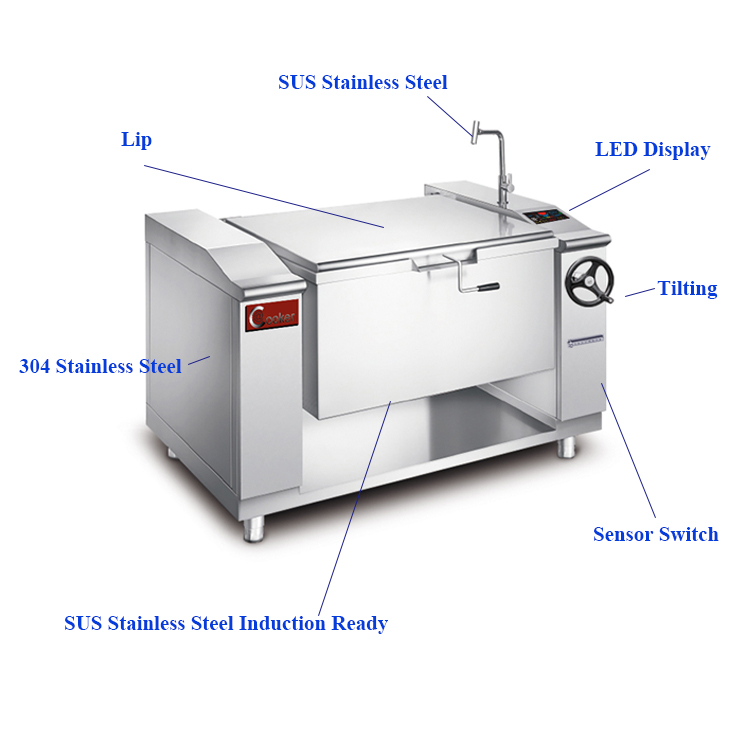
Large-scale operations—150+ seat restaurants, hotels, schools, hospitals—serve 200+ customers daily with batch sizes of 40-80 pounds. They need bratt pans of 80-100 liters or larger.
AT Cooker 120L & 150L Features: 20-30KW power reaches 356°F in 10 minutes for back-to-back batches. Auto water valves refill between batches (critical for schools serving 500+ students). 304# stainless steel withstands 8+ hours daily use. A hotel using the 150L model cooks 70 lbs of soup in one batch—serving 300 guests.
Operaciones extragrandes: 200L+ (211+ cuartos)
Extra-large operations—stadiums, military bases, catering companies—serve 500+ customers daily with batch sizes of 100+ pounds. They need 200L+ bratt pans.
AT Cooker 200L & 300L Features: 300L cooks 100+ lbs per batch (feeds 500+ guests). Hydraulic tilting assist for pouring large loads. 10-hour countdown for slow-braising. A military base using the 300L prepares 150 lbs of stir-fry in one batch—feeding 600 soldiers, saving 4+ hours.
Factores Clave para Adaptar la Capacidad a su Volumen
Choosing capacity isn’t just about operation size—consider these factors for your equipo de cocina bratt pan:
- Tamaño promedio de la tanda: 30 lbs → 60-80L; 80 lbs → 120-150L.
- Volumen máximo de servicio: 50 seats may need 80L if serving 30 guests at once (lunch rush).
- Complejidad del menú: Diverse usos de sartén bratt (sautéing, braising, boiling) benefit from slightly larger pans.
- Crecimiento futuro: Choose 20-30% larger than current needs.
- Eficiencia energética: AT Cooker’s 90-95% efficiency minimizes waste, but avoid 200L+ if you only cook 40 lbs daily.
Expert Tip: Al comprar sartén bratt en venta, ask suppliers to calculate capacity based on your menu. AT Cooker’s team uses your daily dish volume to recommend the exact model.
Operaciones Especializadas: Menos de 30 Litros (32 Cuartos)
Specialty operations—food trucks, small bakeries—may only need bratt pans under 30 liters for small-batch, niche uses (e.g., 10 lbs of caramelized onions per day).
Limitations: Small pans are cheaper but not suitable for high-volume needs. A food truck serving 100 customers daily would need 5+ batches in a 30L pan. AT Cooker recommends 80L+ models for most commercial operations.
Conclusión: Encuentre la capacidad perfecta de su bratt pan con AT Cooker
Tu equipo de cocina bratt pan capacity should align with daily volume, batch size, and growth plans. AT Cooker’s electric bratt pans—80L to 300L—are engineered for high-volume cooking with efficiency, durability, and safety.
Ready to choose? Contact AT Cooker with your daily food volume and menu. With 20 years of experience, we’ll recommend a equipo de cocina bratt pan model that saves time and money.
Preguntas frecuentes
How do I calculate the right bratt pan capacity?
Calculate your largest typical batch size in pounds, then choose a pan that can handle it in one cycle. As a rule: 30 lbs batches need 60-80L, 60 lbs need 120-150L, and 100+ lbs need 200-300L. Always add 20-30% headroom for future growth.
What is the difference between liters and quarts for bratt pans?
1 liter equals approximately 1.0567 quarts. Commercial equipment is typically rated in liters. AT Cooker offers 80L (84.5Q), 120L (126.8Q), 150L (158.5Q), 200L (211.3Q), and 300L (317Q) models.
Can I use a small bratt pan for a large operation?
A small pan in a large operation means multiple batches, increasing labor and energy costs. For 200+ customers daily, AT Cooker recommends at least 120L to cook 40-60 lbs per batch in a single cycle.
What bratt pan size do I need for a food truck?
Food trucks with small-batch needs (10-15 lbs per day) may use under-30L pans. However, AT Cooker recommends 80L+ for most operations—it handles growth and diverse menu items without requiring multiple batches.
How does bratt pan capacity affect energy costs?
Larger pans use more energy per cycle, but AT Cooker’s 90-95% efficiency minimizes waste. The key is matching capacity to your actual volume—an oversized 200L pan cooking only 40 lbs daily wastes energy, while a right-sized 80L pan maximizes efficiency.