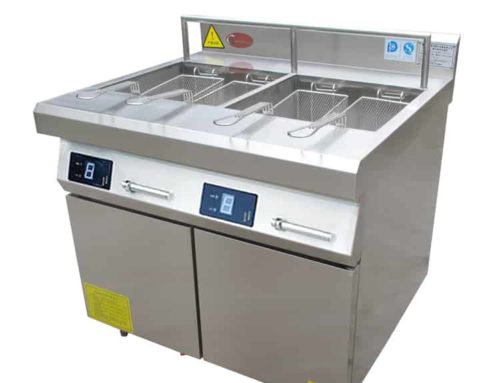
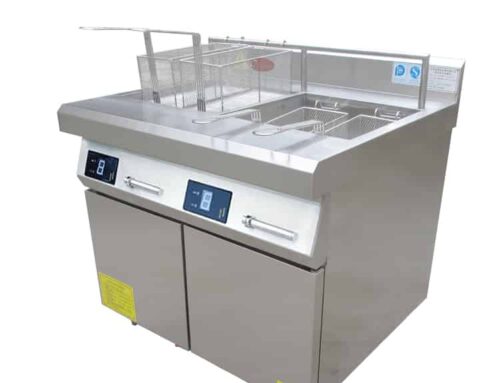
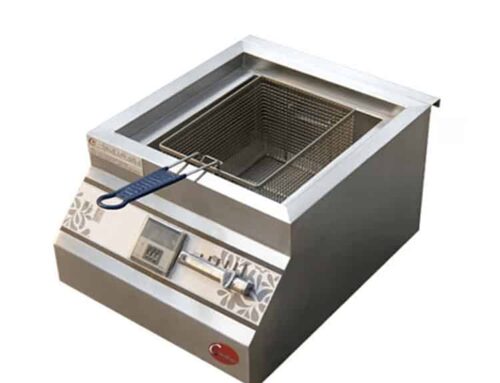
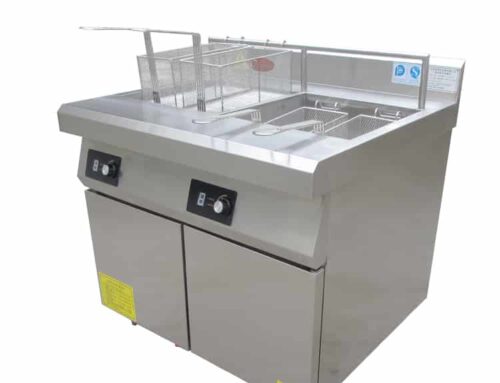
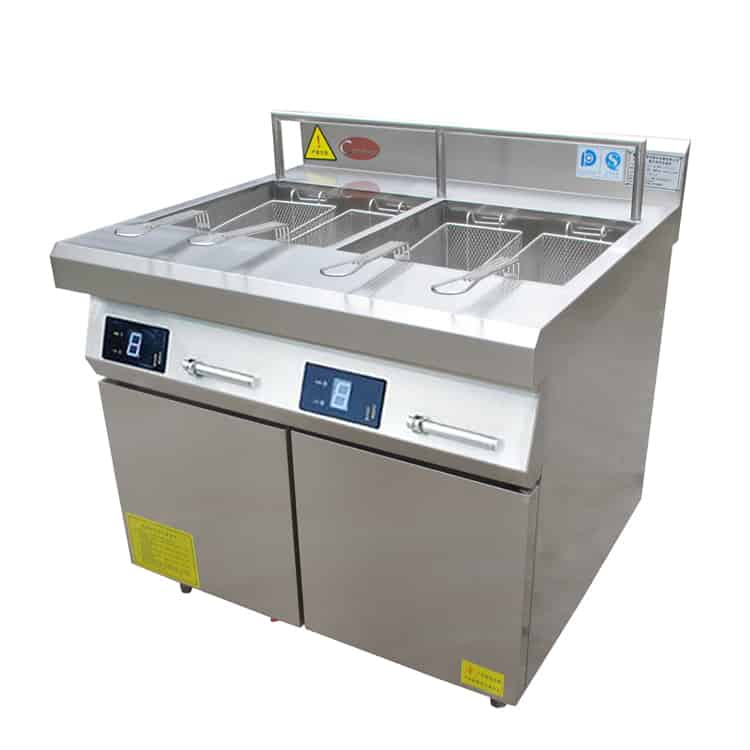
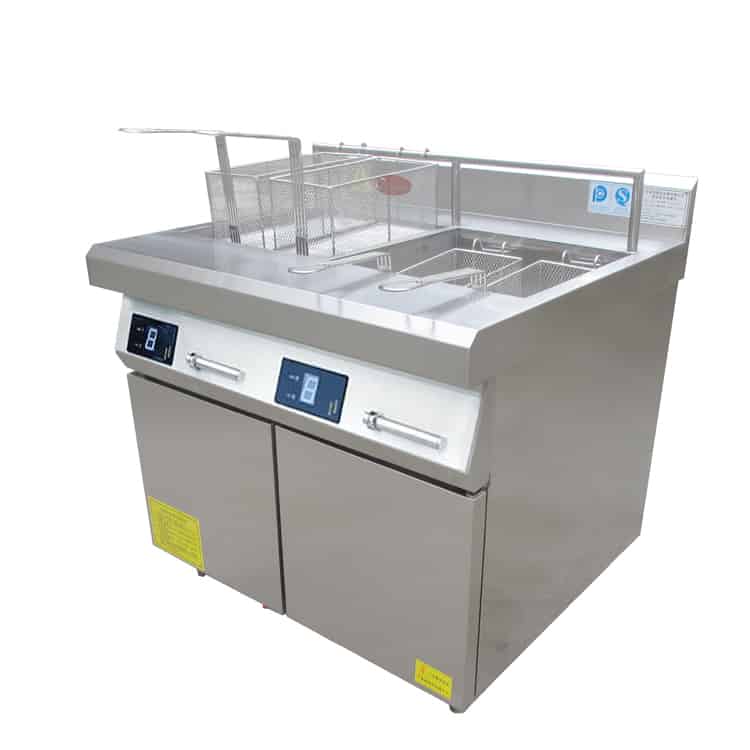
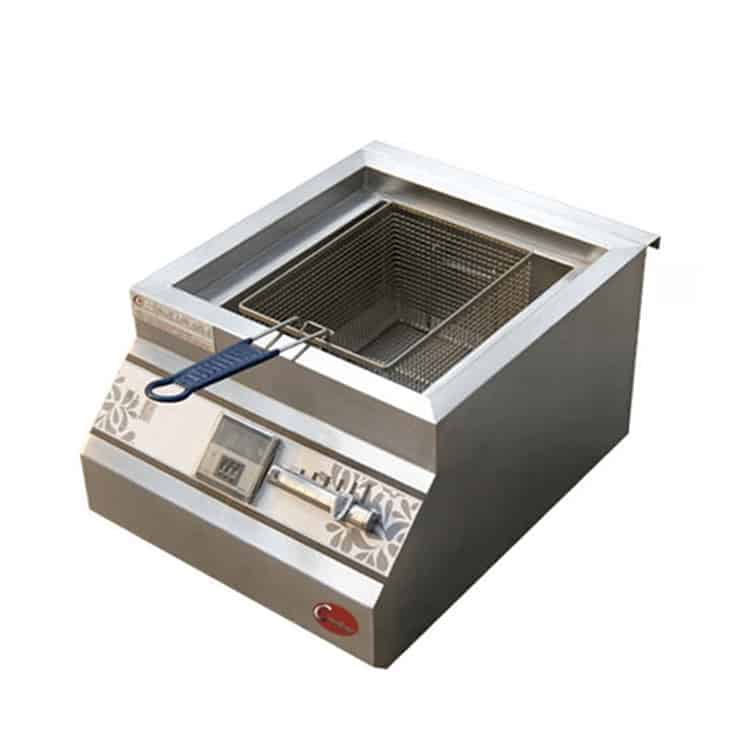
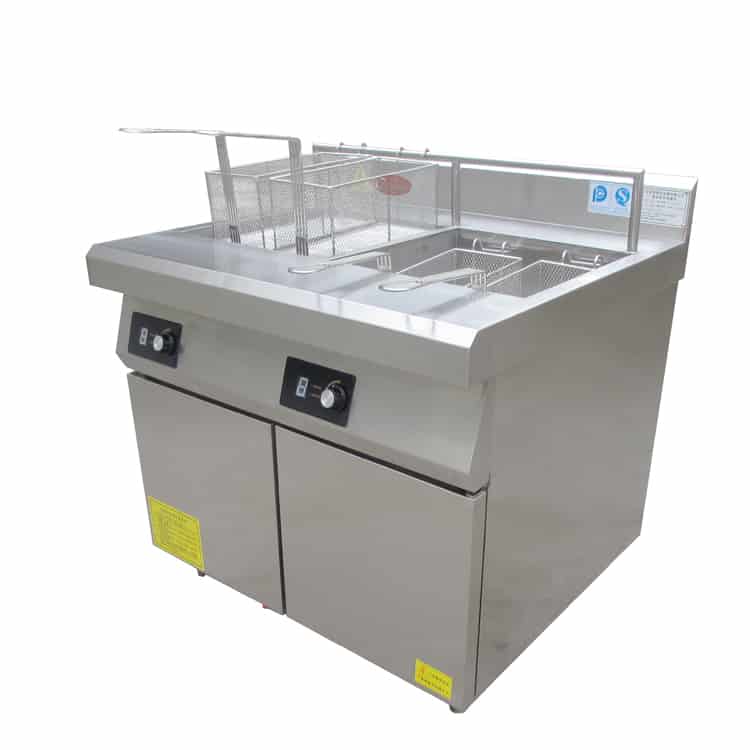
Elegir la capacidad de producción adecuada para una modelos de freidora de inmersión comercial is critical for balancing speed, quality, and cost. Too little capacity leads to long wait times; too much wastes energy and space. At AT Cooker, we’ve helped thousands of businesses select the perfect fryer capacity by analyzing menu volume, peak times, and food types. This guide breaks down how to calculate your required pounds-per-hour (PPH) capacity.
1. Determine Your Menu Volume by Estimating Total Pounds Per Hour
Start by listing all fried items and their average portion size. Calculate portions per hour during peak times. Example: a fast-food restaurant serving 200 portions of fries (0.25 lbs each) + 150 portions of nuggets (0.1 lbs) + 50 portions of onion rings (0.15 lbs) = 72.5 lbs/hour.
| Artículo Frito | Portions/Hour | Tamaño de la Porción (lbs) | Total lbs/Hora |
|---|---|---|---|
| Papas Fritas | 120 | 0.2 | 24 |
| Tiras de Pollo Frito | 80 | 0.15 | 12 |
| Palitos de Mozzarella | 40 | 0.1 | 4 |
| Verduras Tempura | 30 | 0.12 | 3.6 |
| Total Required | — | — | 43.6 lbs/hr |
AT Cooker Tool: Our free Capacity Calculator simplifies this—input your menu items and sales data. A food truck in Austin discovered they needed 30 lbs/hour instead of the 50 lbs/hour they were considering.
2. Commercial Deep Fryers Range From 10 to 50+ Pounds Per Hour
Freidoras comerciales come in a range of capacities. Compact models (food trucks/cafes) start at 10-20 lbs/hour; mid-sized units (restaurants) range 25-40 lbs/hour; large industrial fryers reach 50+ lbs/hour. AT Cooker’s lineup:
- AT-F10: 10-15 lbs/hour (countertop, food trucks)
- AT-F25: 25-30 lbs/hour (standalone, small restaurants)
- AT-F40: 40-45 lbs/hour (double-basket, busy diners)
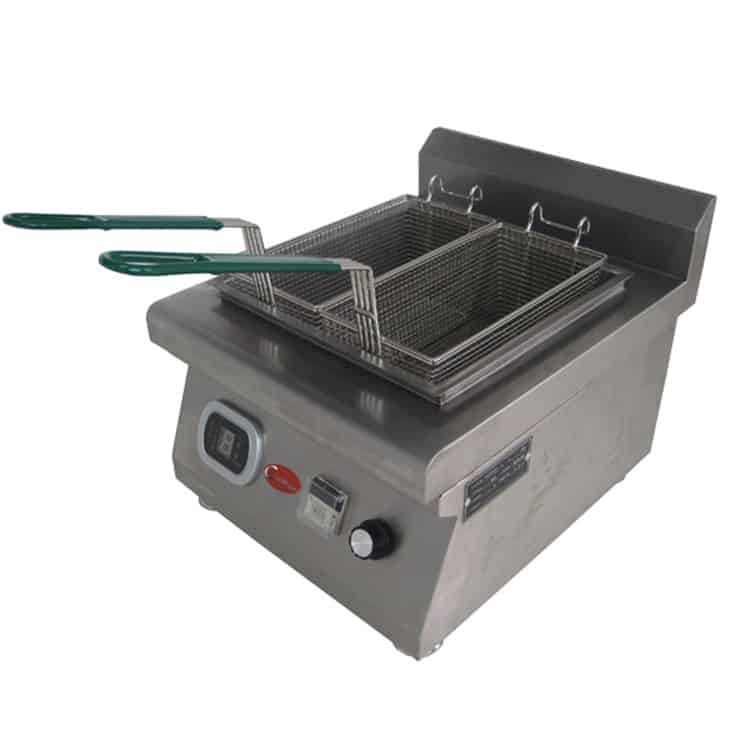
AT-F10 Compact
Food trucks, cafes
AT-F40 High-Volume
Busy restaurants
3. Match Fryer Capacity to Peak Service Times
80% of fried food sales happen during 20% of operating hours. A restaurant might sell 5 lbs/hour in the morning but 40 lbs during evening rush. Size for peak, not average.
| Hora del día | Demand (lbs/hr) | % de Ventas Diarias |
|---|---|---|
| 9 AM – 11 AM | 5–8 | 10% |
| 11 AM – 2 PM (Hora Punta del Almuerzo) | 35–40 | 50% |
| 2 PM – 5 PM | 10–15 | 15% |
| 5 PM – 8 PM (Hora Punta de la Cena) | 25–30 | 25% |
Lesson Learned: A Chicago burger chain installed 20 lbs/hour fryers—worked fine except 5-7 PM. Long lines led to 15% lost sales until upgrading to 30 lbs/hour models. “We focused on average instead of peak—big mistake.”
4. Different Foods Have Varying Cooking Times
A 30 lbs/hour fryer produces: 36 lbs of fries daily (6-min batches: 10 × 3.6 lbs) vs 22 lbs of chicken (10-min batches: 6 × 3.6 lbs). Mixed menus need careful planning. A Boston seafood restaurant uses two fryers: one for shrimp (4 min) and one for fillets (7 min)—“Separating them doubled total output.”
| Comida Frita | Cook Time (min) | Batches/Hour | Effective (lbs/hr) |
|---|---|---|---|
| Papas Fritas | 3–4 | 15–20 | 32–35 |
| Anillos de cebolla | 4–5 | 12–15 | 28–30 |
| Tiras de pollo | 6–7 | 8–10 | 22–25 |
| Pollo frito entero | 12–15 | 4–5 | 14–16 |
AT Cooker’s adjustable baskets help: smaller baskets for quick items, larger for slow items. This flexibility increases effective capacity by 10-15%.
5. Multiple Smaller Fryers Offer Flexibility vs. a Single Large Unit
Multiple freidoras de inmersión let you cook different foods simultaneously (avoiding flavor transfer), isolate breakdowns, and adjust to demand. A 40 lbs/hour demand can be met by 1 × 45 lbs/hour or 2 × 25 lbs/hour fryers.
Customer Story: Lisa, Family Diner (Portland): “Switched from one 50 lbs/hour fryer to three 20 lbs/hour fryers. We cook fries, chicken, and mozzarella at the same time without flavor mixing. During slow hours, only run one—saving $50/month on energy.”
Downside: multiple fryers take more space and require more venting. For tight kitchens (food trucks), a single high-capacity unit is often better.
6. Factor in Batch Cooking Times and Recovery Rates
Fryer capacity depends on how quickly oil recovers temperature after adding cold food. AT Cooker’s induction fryers have rapid recovery (oil returns to 350°F in 30-45 seconds), while standard electric takes 60-90 seconds. A 45-second recovery allows 8 batches/hour; 90 seconds allows only 4—cutting capacity in half.

Rule of Thumb: Fill baskets to 70% capacity for optimal recovery. A Miami fast-food chain: “We thought bigger batches would speed things up, but recovery took so long we produced less. Sticking to 70% capacity increased hourly output by 15%.”
7. Account for Menu Expansion or Increased Demand
Al elegir un freidora comercial, plan for growth. We recommend sizing up by 20-30%. Example: current demand 25 lbs/hour + planned growth 5 lbs/hour = recommended 30-35 lbs/hour.
Customer Story: Austin burger joint: “Started with 20 lbs/hour demand, bought 30 lbs/hour fryer. Six months later, added fried cheese curds, demand jumped to 28 lbs/hour—perfect fit. If we’d bought 20 lbs/hour, we’d be replacing it already.”
Modular fryer systems (stackable models) let you start with one 25 lbs/hour fryer and add a second as demand grows—avoiding over-investment upfront.
8. Adjustable Temperature Controls for Optimal Cooking Efficiency
Different foods need different temperatures (fries at 350°F, chicken at 375°F). Cooking at wrong temperature increases cook time, reducing hourly output. AT Cooker’s digital controls allow precise settings (±2°F).
Real Example: Chicago restaurant: “Cooking fries at 340°F instead of 350°F added 2 minutes per batch—reducing hourly output from 30 to 22 lbs. Digital controls keep us at exactly 350°F, maintaining full capacity.”
Cómo los controles de temperatura aumentan la capacidad
- Ajustes precisos: Avoid under/overheating (+5-10% capacity)
- Precalentamiento rápido: Start cooking faster (1-2 extra batches/hour)
- Preajustes programables: One-touch for fries, chicken, etc.
- Corrección automática: Adjusts heat during cooking to maintain temperature
9. High-Capacity Fryers May Use More Energy but Reduce Per-Pound Cost
High-capacity fryers (40+ lbs/hour) use 15-20% more energy than 25 lbs/hour models, but often reduce total energy per pound of food. They cook larger batches faster with less heat loss.
| Modelo | Capacity (lbs/hr) | Energy (kWh/hr) | Per Pound (kWh/lb) |
|---|---|---|---|
| AT-F25 | 25 | 6.5 | 0.26 |
| AT-F40 | 40 | 7.8 | 0.195 |
Energy Per Pound
High-capacity saves 25%
Time Savings
High-capacity cooks faster
Customer Story: Las Vegas restaurant: “Switched from two 25 lbs/hour to one 40 lbs/hour. Total energy use dropped 12%. Faster cooking means less time with lid open.”
10. Regular Maintenance Ensures Peak Capacity and Efficiency
Neglected fryers lose 10-20% capacity over time. Oil buildup, dirty elements, and clogged filters slow cooking and reduce recovery rates.
AT Cooker Maintenance Checklist
- Diario: Filter oil to remove debris
- Semanal: Clean heating elements
- Mensual: Calibrate temperature controls
- Trimestral: Inspect oil lines/heating coils
Resultado: A fast-food chain implementing this routine saw capacity remain at 95% of new levels after 2 years, vs 75% for locations with poor maintenance. “Now they last 5+ years at full capacity.”
11. Consider Space Constraints and Ventilation Requirements
A 40 lbs/hour fryer requires 2-3 feet of counter space plus 1-2 feet clearance for ventilation; a 15 lbs/hour model fits in 1-2 feet. Larger fryers produce more smoke and need more powerful hoods (100-200 CFM per square foot).
Caution: A Los Angeles food truck installed a 30 lbs/hour fryer: “It fit, but our small hood couldn’t handle the smoke. Had to upgrade the hood for $800.”
AT Cooker’s space-saving designs: slimline 30 lbs/hour fryer is 6 inches narrower than standard. A Manhattan bistro: “AT Cooker’s slim fryer was the only 30 lbs/hour model that fit our tiny kitchen.”
12. Energy-Efficient Models Lower Costs Without Sacrificing Capacity
Eficiente energéticamente freidoras de inmersión (induction models) deliver same capacity as standard fryers but use 15-30% less energy. AT Cooker’s induction fryers use magnetic technology to heat oil directly, wasting less energy.
Customer Story: Jake, Beachside Grill (San Diego): “AT Cooker’s induction model cooks 40 lbs/hour—same as old electric—but uses 25% less energy. $1,200 saved per fryer per year. Paid for itself in 8 months.”
Some utilities offer rebates (up to $500/unit). A 10-restaurant chain saved $5,000 in rebates plus $10,800/year in energy costs.
13. Consult Supplier Specifications and Industry Benchmarks
Manufacturer specs and industry benchmarks (e.g., National Restaurant Association: “quick-service restaurants need 30-50 lbs/hour per fry station”) guide capacity planning. AT Cooker provides detailed per-food-type output data for all models.
Key Specs to Compare
- Maximum PPH rating (under ideal conditions)
- Recovery time (oil returns to set temperature)
- Basket size (affects batch size and cook time)
- Energy use per pound (long-term costs)

Free Service: Our sales team offers free menu analysis. A Denver restaurant: “Thought we needed 40 lbs/hour, but AT Cooker’s analysis showed 30 lbs/hour was enough—saving $600 upfront.”
AT Cooker’s Step-by-Step Guide to Choosing the Right Fryer Capacity
Siga estos pasos para determinar su ideal modelos de freidora de inmersión comercial capacidad:
Lista de verificación de planificación de capacidad
- Calcule la demanda horaria máxima: portions/hour × portion size for all fried items
- Ajuste según el tipo de alimento: Add 10-20% if cooking long-time items (whole chicken)
- Planifique el crecimiento: Size up by 20-30% for menu expansion
- Considere la flexibilidad: Multiple smaller fryers vs. one large unit
- Verifique el espacio/ventilación: Ensure kitchen fits fryer and required hood
- Compare especificaciones: Recovery time, energy efficiency, real-world capacity
Whether you need a compact 15 lbs/hour fryer for a food truck or 40 lbs/hour for a busy restaurant, AT Cooker has a model to match. Contact us for a free capacity assessment.
Preguntas frecuentes
How do I calculate the production capacity I need for my commercial deep fryer?
Start by listing all fried menu items with their portion sizes (in pounds) and portions sold per hour during peak times. Multiply portions by portion size for each item, then sum them up. For example: 200 portions of fries at 0.25 lbs = 50 lbs/hr + 150 portions of nuggets at 0.1 lbs = 15 lbs/hr = 65 lbs/hr total. We recommend choosing a fryer rated 10-15% above your calculated peak demand.
What is the typical capacity range for commercial deep fryers?
Commercial deep fryers range from 10 lbs/hour (compact countertop models for food trucks) to 50+ lbs/hour (large industrial units). AT Cooker offers AT-F10 (10-15 lbs/hr), AT-F25 (25-30 lbs/hr), and AT-F40 (40-45 lbs/hr). Most standard restaurant operations need 25-40 lbs/hour capacity.
Should I buy one large fryer or multiple smaller fryers?
Multiple smaller fryers offer flexibility: cook different foods simultaneously (avoiding flavor transfer), isolate breakdowns, and adjust capacity to demand. However, they require more space and ventilation. For tight kitchens or food trucks, a single high-capacity unit is often more practical.
How does food type affect fryer capacity?
Different foods have different cooking times. A 30 lbs/hour rated fryer can produce 32-35 lbs/hr of fries (3-4 min cook time) but only 14-16 lbs/hr of whole fried chicken (12-15 min cook time). Plan capacity based on your slowest-cooking items, or use separate fryers for fast and slow items.
How much energy does a high-capacity commercial fryer use?
A 40 lbs/hour fryer (AT-F40) uses about 7.8 kWh/hr (0.195 kWh/lb), while a 25 lbs/hour model (AT-F25) uses 6.5 kWh/hr (0.26 kWh/lb). The high-capacity model uses 25% less energy per pound of food. Energy-efficient induction models can reduce consumption by an additional 15-30%.