풀 클래드 쿡웨어의 반응성이 중요한 이유
In a commercial kitchen, the difference between a perfect reduction and a broken sauce is often measured in seconds. When a chef turns the dial from “Boil” to “Simmer,” they expect the food to react instantly. This quality, known as “Responsiveness,” is the hallmark of fine dining.
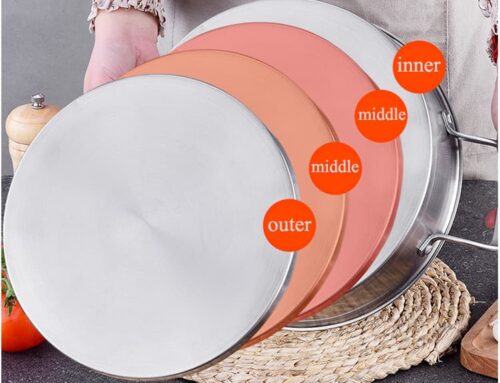
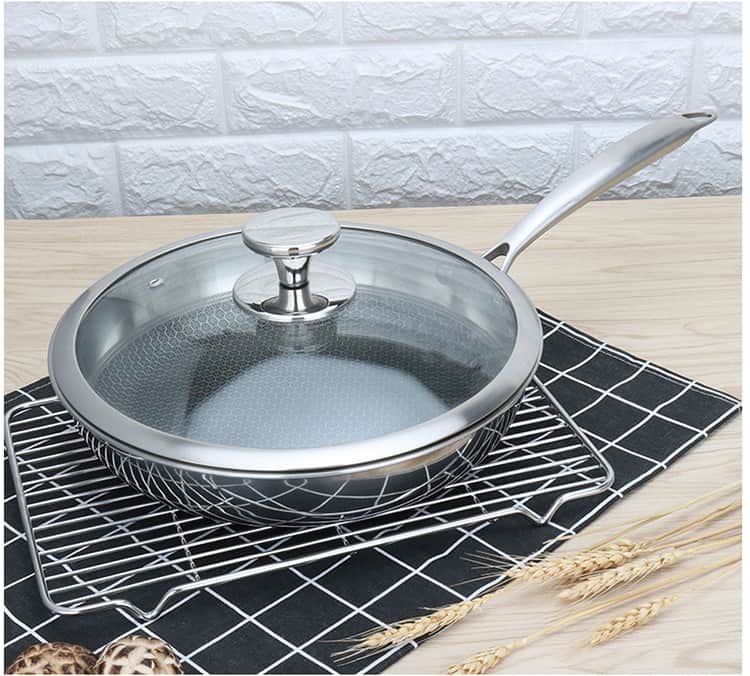
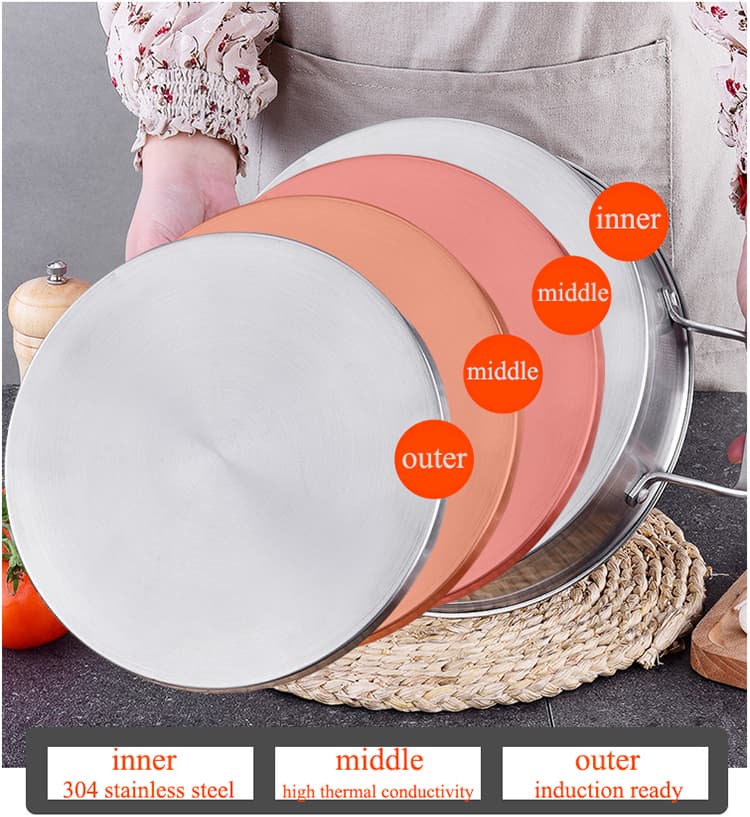
While commercial induction cookers are capable of instant adjustments, the cookware often lags behind. Traditional “Disc-Bottom” pots are slow to react. The solution? Fully clad induction cookware responsiveness. By fusing layers of conductive aluminum all the way up the sidewalls, AT Cooker‘s Tri-Ply cookware matches the speed of the induction generator, giving chefs the ultimate control over their culinary creations.
상업용 주방 장비 – AT Cooker 제공
- 전문 상업용 인덕션 조리 장비 브랜드 제조업체로서 AT Cooker는 레스토랑 및 호텔의 요구에 부응하고 최신 인덕션 기술을 사용하여 규범적인 상업용 조리 장비를 연구했습니다.
- 이러한 끊김 없고 실제 상업용 품질의 상업용 쿠킹 장비는 당사가 선택한 장비를 하나의 끊김 없고 다목적 쿠킹 장비에 통합하여 효율적이고 저렴하며 안전하며 친환경적이며 지속 가능한 상업용 주방을 만들 수 있는 기회를 제공합니다. 당사는 많은 상업용 주방에 서비스를 제공할 수 있는 표준 장비를 보유하고 있습니다.
- AT Cooker는 항상 전문적인 서비스를 제공합니다. 재료, 디자인, 생산에 이르기까지 품질, 성능 및 신뢰성에 중점을 두어 모든 고객에게 최상의 솔루션을 제공합니다. 상업용 주방이 있으신가요? 당사는 귀하의 최고의 파트너 중 하나가 될 것입니다.
작동 전압
| 단상 | 삼상 |
|---|---|
| 120V, 220V | 208V/ 240V, 380V, 480V |
글로벌 재고 + 빠른 픽업
| 미국 | 영국 | 독일 | 프랑스 |
|---|---|---|---|
| 이탈리아 | 스페인 | 벨기에 | 불가리아 |
1. The Physics of Thermal Conductivity: How the Aluminum Core Drivers Speed
2. Comparing “Ramp-Up” Velocity: Clad vs. Disc-Bottom on High Power
When you blast 3500W of power, a “Disc-Bottom” pan heats the disc first. The heat then slowly crawls up the thin, single-layer steel walls. This creates a delay.
With fully clad cookware, the entire body heats up in unison. The “Ramp-Up” velocity is significantly faster because the thermal mass is distributed, not concentrated. This means water boils faster and pans reach searing temperatures in seconds, maximizing the potential of commercial induction temperature control.
3. The “Cool-Down” Factor: Preventing Carryover Cooking When Power is Cut
Responsiveness isn’t just about getting hot; it’s about stopping. Disc-bottom pans hold a massive amount of heat in the base. When you turn the power off, that disc continues to cook the food (Carryover Cooking).
Fully clad pans have a more balanced thermal mass. When you cut the power, the heat dissipates much faster. This gives chefs the ability to “brake” the cooking process instantly—essential for delicate sauces like Hollandaise or Custard.
4. Lateral Heat Distribution: Why Sidewall Temperature Matters for Response
5. The Impact of Disc-Bottom Air Gaps on Thermal Latency and Lag
Many cheaper “Impact Bonded” pans have microscopic air gaps between the disc and the body. Air is an insulator.
These gaps create “Thermal Latency”—a lag where the induction works hard, but the heat struggles to jump the gap. Fully clad cookware is roll-bonded under immense pressure, fusing the metals into a solid sheet. There are no gaps, resulting in zero stainless steel pan thermal latency.
6. Matching Induction Frequency: How Cladding Thickness Affects Magnetic Coupling
Commercial induction operates at 20-30kHz. The thickness of the magnetic steel layer affects how well it “couples” with this frequency.
AT Cooker’s cladding is engineered with a specific gauge of 430-grade ferritic steel on the exterior. This optimization ensures maximum magnetic flux absorption, translating electrical energy into heat with 95%+ efficiency, further enhancing speed.
7. Preventing “Temperature Overshoot” During Delicate Chocolate Tempering
When melting chocolate, you need 45°C, not 50°C. Heavy disc bottoms act like flywheels; once they get momentum, they keep going, leading to “Temperature Overshoot.”
Clad cookware is more agile. It stops heating the moment the sensor says stop. This precision prevents scorching and allows for direct-pan tempering without a water bath.
8. The Role of 18/10 Stainless Steel Interiors in Smoothing Out Heat Spikes
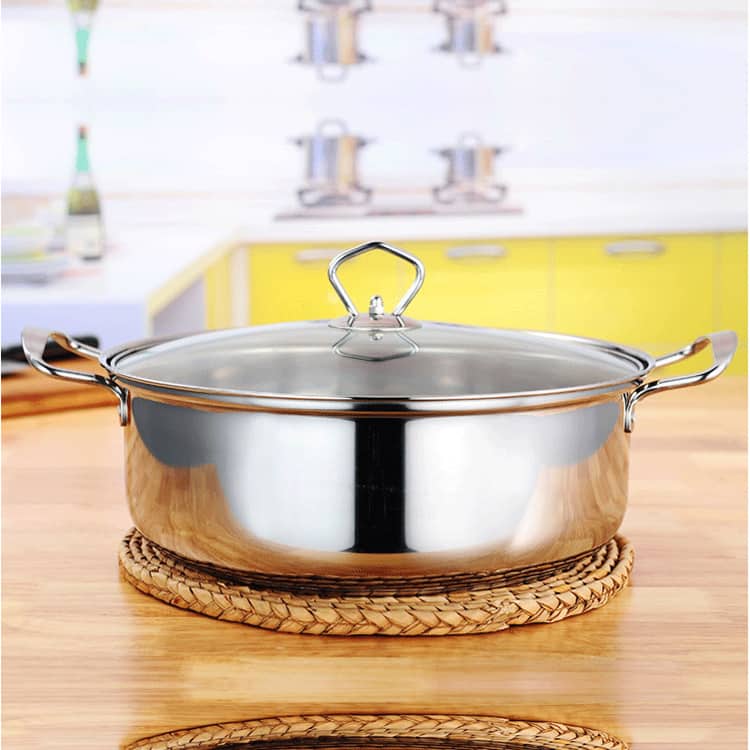
The interior layer matters too. We use 18/10 (304) stainless steel. While not a great conductor, its low thermal conductivity actually helps smooth out the intense “spikes” of heat from the induction coil.
It acts as a final filter, ensuring the heat reaching the food is even and gentle, preventing localized burning even if the coil power pulses.
9. Durability and Performance: Do Warp-Resistant Clad Pans Maintain Better Sensor Accuracy?
As discussed in previous articles, warping kills performance. Clad cookware is structurally superior because the layers reinforce each other.
A flat pan stays in perfect contact with the glass sensors. This physical stability ensures that the “temperature feedback loop” remains accurate over years of service, maintaining the precision cooking equipment standards required by chefs.
10. Cost vs. Control: Is the Price Premium of Full Cladding Justified for Saucier Stations?
Fully clad pans cost more. Is it worth it? For boiling water? Maybe not. For a Saucier station? Absolutely.
The labor cost of a ruined sauce or the reputation cost of inconsistent food far outweighs the price of the pan. For fine dining induction cookware, full cladding is an investment in consistency.
11. The “Huo Hou” Connection: How Instant Material Response Replicates Traditional Wok Control
12. Analyzing “Re Min Du” (Heat Sensitivity): Why Professional Chefs Reject Composite Discs
Professional chefs talk about “Re Min Du” (Heat Sensitivity). They want the pan to feel like an extension of their hand.
Composite discs feel “numb” or sluggish. Clad cookware feels “alive” and reactive. This tactile feedback is why impact bonded vs clad performance comparisons always favor clad in professional taste tests.
5년 보증 | 2년 무료 교환 | 1년 무료 반품
Final Thoughts: The Need for Speed
You bought a fast induction cooker. Don’t slow it down with slow pans. Upgrade to AT Cooker fully clad cookware and experience the true speed and precision your kitchen is capable of.
자주 묻는 질문
풀 클래드 쿡웨어가 디스크 바닥 팬보다 반응성이 더 뛰어난 이유는 무엇인가?
풀 클래드(트라이플라이) 쿡웨어는 두꺼운 알루미늄 코어를 스테인리스 강 층 사이에 측벽 끝까지 샌드위치 구조로 넣습니다. 이 알루미늄 코어는 인덕션 코일이 작동할 때 열을 용기 전체에 즉시 분배하는 “열 고속도로” 역할을 합니다. 디스크 바닥 팬은 바닥에만 금속이 있어 열이 얇은 강 벽을 따라 천천히 올라가야 하므로 다이얼 조정과 온도 변화 사이에 상당한 지연이 발생합니다.
클래드 쿡웨어는 전원이 꺼졌을 때 잔열 조리를 어떻게 방지하는가?
디스크 바닥 팬은 두꺼운 바닥 디스크에 막대한 열을 저장하여 전원이 차단된 후에도 음식이 계속 조리됩니다(잔열 조리). 풀 클래드 팬은 열 질량을 본체와 측벽 전체에 고르게 분산시키므로 전원이 멈추면 열이 훨씬 빠르게 발산됩니다. 이는 셰프가 조리 과정을 즉시 “제동”할 수 있게 해주며, 홀랜다이즈 소스나 커스터드처럼 쉽게 타는 섬세한 소스에 매우 중요합니다.
전문 셰프들이 소시에 스테이션에 클래드 쿡웨어를 선호하는 이유는 무엇인가?
소시에 작업은 정밀한 온도 제어를 요구합니다. 초콜릿을 정확히 45°C에서 녹이고, 소스를 타지 않게 졸이고, 달걀을 매끄럽게 템퍼링하는 것입니다. 클래드 쿡웨어는 다이얼 조정에 즉시 반응하고 센서가 신호를 보내는 순간 가열을 멈춥니다. 디스크 바닥 팬은 관성으로 인해 온도 오버슈트를 일으키는 “플라이휠”처럼 작동하여 섬세한 조리를 망칩니다. 클래드 쿡웨어의 정밀성은 폐기물 감소와 일관된 결과를 통해 더 높은 비용을 정당화합니다.
“서라운드 히트”란 무엇이며 어떻게 조리 효율을 향상시키는가?
디스크 바닥 팬에서는 바닥만 뜨거워지고 측벽은 차갑게 유지됩니다. 풀 클래드 쿡웨어는 측벽을 포함한 본체 전체를 가열하여 모든 방향에서 열로 음식을 둘러쌉니다. 이 “서라운드 히트” 효과는 더 낮은 전력 설정으로도 같은 결과를 얻을 수 있게 하며, 액체가 바닥뿐만 아니라 뜨거운 측면에서도 증발하므로 졸이는 시간을 단축합니다. 더 적은 에너지 투입으로 더 나은 결과를 얻을 수 있습니다.
클래드 쿡웨어는 인덕션에서 전통적인 “화후”(불 조절)를 어떻게 재현하는가?
“중국 요리에서 ”화후“는 셰프가 열을 즉시 조작하는 능력을 말합니다. 강하게 굽고, 약불로 끓이고, 몇 초 안에 윤기를 내는 것입니다. 인덕션 위의 클래드 쿡웨어는 가스 웍에 가장 가까운 현대적 등가물로, ”디지털 화후"를 제공합니다. 알루미늄 코어의 즉각적인 반응성과 인덕션의 즉각적인 전력 조정이 결합되어 셰프에게 빠른 온도 변화가 필요한 복잡한 기술을 실행하는 데 필요한 촉각적 피드백과 제어를 제공합니다.
Experience True Precision
Equip your kitchen with cookware that keeps up with your chefs. Contact us for our commercial clad series.