Steel vs. chrome cooking surfaces are the two main options for flat grills. Steel excels in heat retention, durability, and high-heat searing. Chrome offers non-stick ease and a shiny look for delicate foods. Below, 13 key differences to help you choose the right surface for your kitchen.
| Cecha | Steel Surface | Chrome Surface |
|---|---|---|
| Heat Retention | Excellent (up to 800°F) | Moderate (max 350°F) |
| Non-Stick | With seasoning | Inherent (slick) |
| Trwałość | 7–10 years | 3–5 years (re-plate) |
| Rust Resistance | Needs oiling (or use 304 SS) | Good until chipped |
| 5-Yr Maintenance | $0 (steel) | $700+ (re-plating) |
| Najlepsze dla | High-heat searing, heavy-duty | Delicate, low-heat foods |
1. Steel: Excellent Heat Retention & Even Distribution
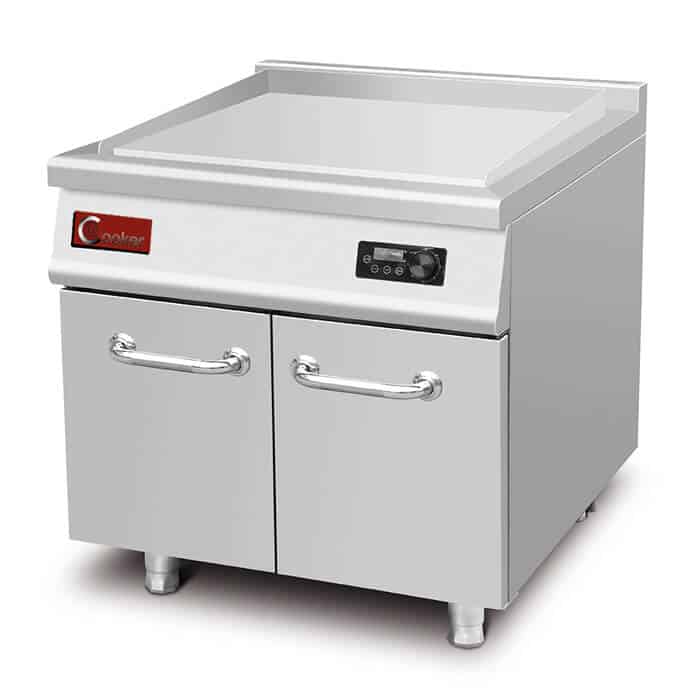
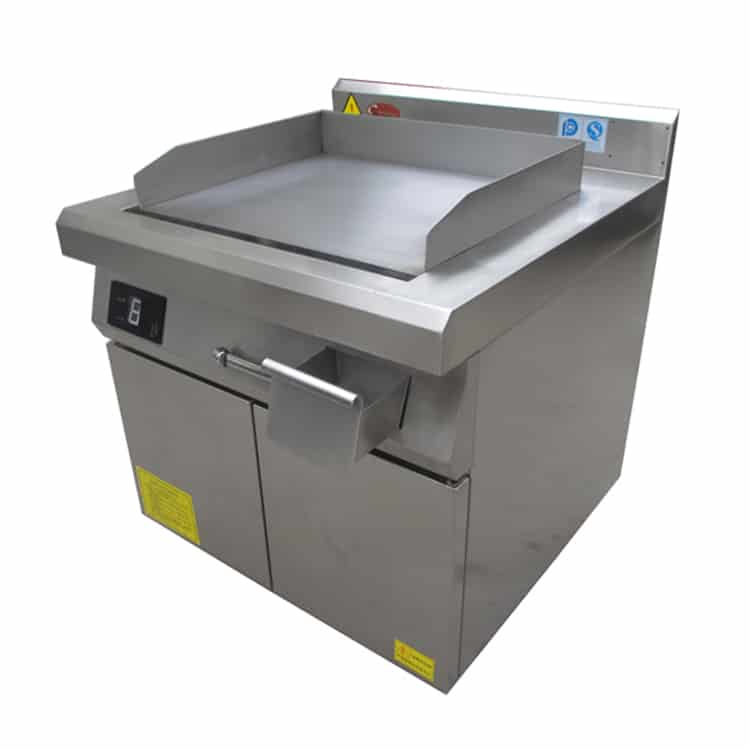
Steel (carbon or stainless) absorbs and retains heat efficiently. Thick steel plates (1-inch/25mm) distribute heat evenly across the entire surface, eliminating hot/cold spots. Ideal for consistent cooking across large volumes. AT Cooker QRPLT-A5CB35: induction-heated steel cookware achieves 95% energy efficiency with even heat across the 6mm tempered glass surface.
2. Chrome: Smooth, Non-Stick Finish
Chrome plating creates an ultra-smooth, non-porous surface. Food slides off easily—ideal for eggs, pancakes, fish, and grilled cheese at 200–350°F. No seasoning required. However, chrome cannot handle high heat (>350°F) without damage to the plating. Best for delicate, low-to-medium heat cooking where food release is the priority.
3. Steel: More Durable & Warp-Resistant
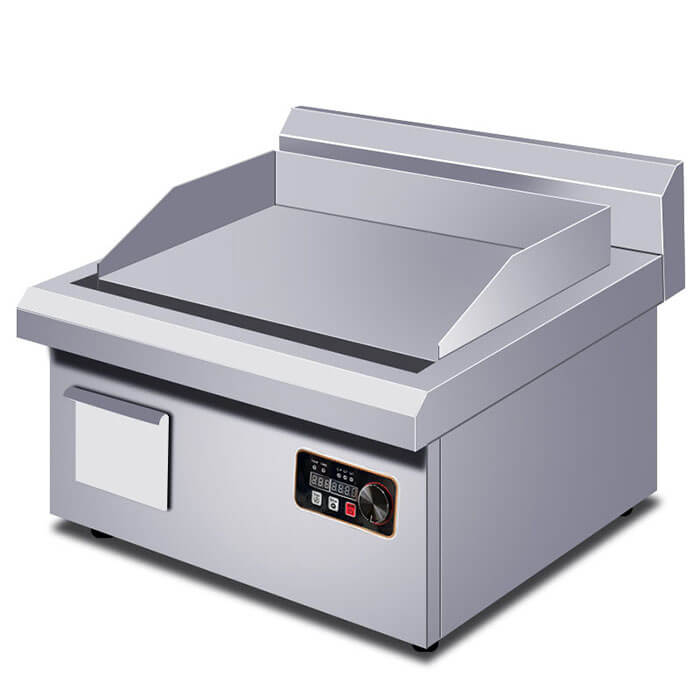
Steel withstands extreme temperatures (up to 800°F) without warping. Carbon steel melting point: 1,450°F. Thick plates resist impact from heavy cookware (cast iron Dutch ovens). Lifespan: 7–10 years with maintenance. Chrome: thin plating chips on impact, underlying steel warps at 400°F+. Lifespan: 3–5 years before re-plating needed.
4. Chrome Plating Wears Off Over Time
Chrome plating typically lasts 2–3 years before wearing thin. Re-plating costs $300–$700 per surface. Signs of wear: food starts sticking, surface looks dull, rust appears at edges. A sandwich shop: chrome grill rusted after 18 months from edge chip, $600 replacement. Steel: no plating to wear—surface actually improves with age through seasoning.
5. Steel Develops Natural Seasoning
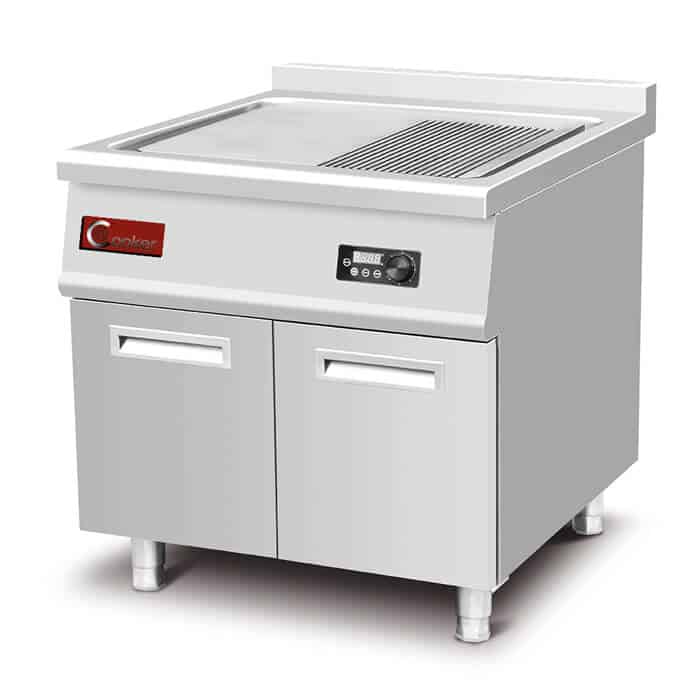
Steel develops a polymerized oil layer (seasoning) with use—this natural non-stick coating enhances flavor and prevents sticking. The longer you use it, the better it performs. Initial seasoning: heat + oil cycle before first use. Maintenance: oil after each cleaning. A diner: “Steel grill took time to season, but now it’s non-stick, cleans easily, no rust. 400+ grilled cheeses daily, zero issues.”
6. Chrome Easier to Clean Initially
Chrome’s slick surface means food residue wipes off easily with a damp cloth—no scrubbing needed. Ideal for kitchens with tight cleaning windows (food trucks, breakfast diners). However, once plating wears, cleaning becomes harder (food sticks to exposed steel). Steel: requires scraping + seasoning after cleaning, but seasoned steel eventually matches chrome’s ease.
7. Steel Requires Maintenance to Prevent Rust
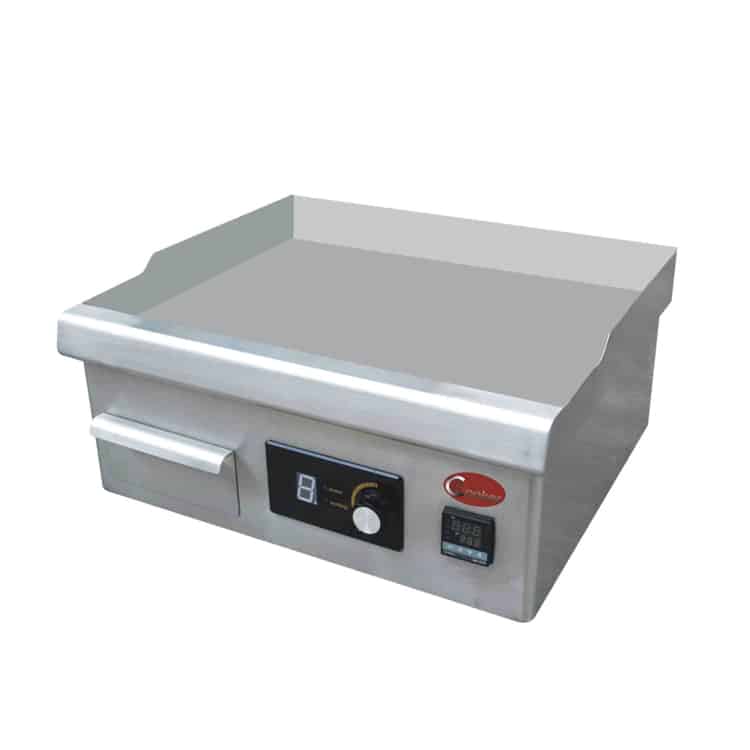
Carbon steel contains iron that reacts with moisture. Daily oiling, thorough drying, and immediate seasoning repair are essential. Florida seafood restaurant: old carbon steel grill rusted in 6 months from ocean air. Solution: upgrade to 304 stainless steel (AT Cooker’s QRPLT-A5CB35 body)—chromium forms protective oxide layer, no rust after 4 years.
8. Chrome Resists Rust but Can Chip
Chrome is non-porous—no moisture penetration, no rust initially. But if plating chips (dropped spatula, edge impact), exposed steel rusts quickly. Rust spreads under remaining plating. Boston sandwich shop: edge chip led to rust along entire surface in 1 month, $600 replacement. Inspection: check weekly for chips; re-plating needed ASAP.
“Switched from chrome to steel last year. Chrome needed re-plating every 18 months at $400 each. Steel took time to season, but now it’s non-stick, no rust. 400+ grilled cheeses daily, 2-minute nightly cleanup. Steel’s durability and low cost make it worth the initial effort.”
— Mike, Diner Owner (Chicago, IL)
9. Steel Preferred for High-Heat Searing
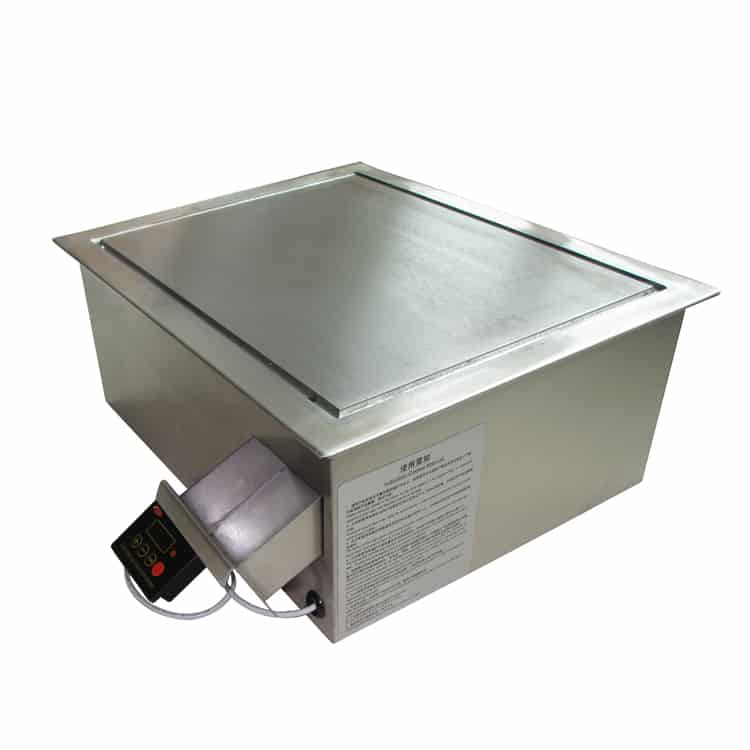
Steel withstands 450–600°F for searing steaks, charring vegetables. Maillard reaction (browned flavors) requires consistent high heat—steel delivers. Chrome: limited to 200–350°F; high heat damages plating. Steel’s heavy-duty construction handles cast iron Dutch ovens and large batches. For high-volume searing, steel is the only viable option.
10. Chrome Offers a Shinier Appearance
Chrome’s mirror-like finish is ideal for open kitchens and display cooking where presentation matters. The shiny surface looks professional and clean when new. Steel: matte, utilitarian look. Some chefs prefer steel’s seasoned patina as a sign of experience. For brand-focused, low-heat operations (pancake shops, food trucks), chrome’s appearance is a plus.
11. Steel Improves with Age; Chrome Degrades
Steel’s seasoning builds over time—better non-stick, better flavor, better performance. A 5-year-old steel grill often outperforms a new one. Chrome: degrades from day one. Plating thins with use, food starts sticking after 2–3 years, re-plating needed. Long-term: steel is an appreciating asset; chrome is a depreciating one.
12. Chrome Less Tolerant of Abrasive Cleaning
Chrome: only soft cloths and non-abrasive cleaners. Metal scrapers, grill stones, or steel wool damage the plating immediately. Steel: can handle metal scrapers, grill stones, and aggressive scrubbing without permanent damage. Staff flexibility: steel allows any tool for stuck-on food; chrome requires careful training and tool restrictions.
13. Choosing Depends on Cooking Style & Maintenance
Choose steel if: high-heat searing (400°F+), long-term durability (7–10 yrs), low long-term costs, don’t mind seasoning. Choose chrome if: delicate low-heat foods (200–350°F), fast initial cleaning, presentation matters, plan to replace every 2–3 years. AT Cooker QRPLT-A5CB35: hybrid design—6mm tempered glass (non-stick like chrome) + 304 SS body (durable like steel) + induction (95% efficiency).
Final Tip: For most commercial kitchens, steel is the better investment. Even for delicate foods, a well-seasoned steel grill matches chrome’s non-stick while lasting 3–4x longer.
What are the main differences between steel and chrome cooking surfaces?
Steel surfaces offer excellent heat retention (up to 800°F), superior durability (7–10 years), and improve with seasoning over time. Chrome surfaces provide an inherent non-stick finish, easier initial cleaning, and a shiny appearance—but are limited to low-to-medium heat (max 350°F), degrade over 2–3 years, and require costly re-plating ($300–$700). Steel is best for high-heat searing; chrome is best for delicate, low-heat foods.
Which cooking surface lasts longer: steel or chrome?
Steel surfaces last 7–10 years with proper maintenance and actually improve with age through seasoning buildup. Chrome surfaces last 2–3 years before the plating wears thin and needs re-plating. Over 5 years, steel maintenance costs $0 while chrome re-plating costs $700+. Steel is the better long-term investment for most commercial kitchens.
Can I use a steel griddle surface for high-heat searing?
Yes. Steel is the preferred surface for high-heat searing (450–600°F). It withstands extreme temperatures without warping and supports the Maillard reaction for rich, browned flavors. Chrome cannot handle high heat—temperatures above 350°F damage the plating, making steel the only viable option for searing steaks, charring vegetables, or heavy-duty cooking.
How do I prevent rust on a steel flat grill surface?
Daily oiling after cleaning (thin layer of oil seals out moisture), thorough drying (never leave standing water), and immediate seasoning repair if scratched. For humid or coastal environments, choose 304 stainless steel (like AT Cooker’s QRPLT-A5CB35 body)—its chromium content forms a protective oxide layer that resists rust without daily oiling.
What is the best cooking surface for a commercial kitchen?
For most commercial kitchens, steel is the best investment: durable (7–10 years), handles high heat, improves with seasoning, and has zero long-term repair costs. AT Cooker’s QRPLT-A5CB35 offers a hybrid solution: 6mm tempered glass surface (non-stick like chrome) with 304 stainless steel body (durable like steel), plus 95% energy efficiency from induction technology.
Choose the Right Surface for Your Flat Grill
Share your menu and daily cooking volume—our experts will help you determine if steel, chrome, or AT Cooker’s hybrid design is best.