Handling Frozen Noodles Without Losing the Rolling Boil: The Commercial Induction Advantage
5-letnia gwarancja | 2-letnia bezpłatna wymiana | 1-roczny bezpłatny zwrot
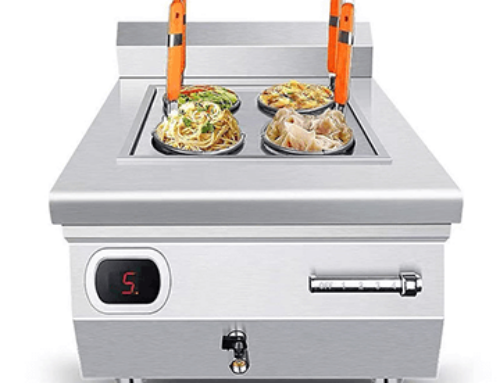
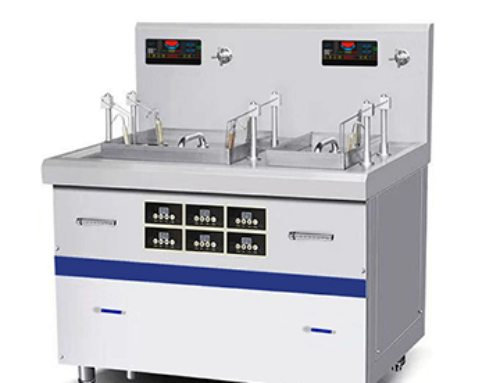
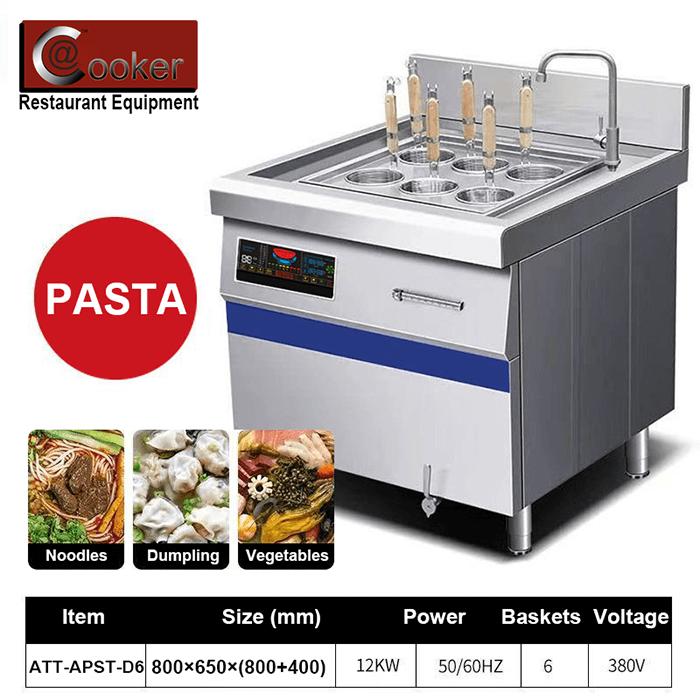
Wgląd dyrektora AT Cooker: Using frozen noodles is a smart logistical choice for high-volume kitchens, but it presents a thermodynamic nightmare: Thermal Shock. Dropping -18°C pasta into boiling water kills the boil, resulting in soggy, clumpy noodles. The solution? Cooking frozen noodles in a commercial kitchen requires power density. The AT Cooker Freestanding Induction Noodle Cooker ATT-APST D6 uses 15KW of direct magnetic energy to maintain a rolling boil even under the heaviest frozen loads. We explain how.
For modern restaurant chains, central kitchens, and busy Ramen shops, frozen noodles offer consistency and inventory control. However, they come with a heavy cost: they act like ice cubes in your boiler. When you drop a basket of frozen udon or ramen into a standard gas boiler, the water temperature plummets.
If the water stops boiling, the mechanical agitation stops. The noodles settle, stick, and absorb water passively, creating a mushy exterior and a raw core. To combat this, you need a machine with exceptional commercial induction noodle boiler efficiency. The AT Cooker ATT-APST D6 is engineered specifically to overcome the latent heat of fusion, turning ice-cold noodles into perfectly cooked meals without a second of downtime.
In this technical guide, we will explore the physics of thermal shock and how our heavy-duty induction systems provide the solution.
Komercyjny sprzęt kuchenny - od AT Cooker
- Jako producent profesjonalnego komercyjnego sprzętu do gotowania indukcyjnego, AT Cooker odpowiada na potrzeby restauracji i hoteli, badając normatywny komercyjny sprzęt do gotowania przy użyciu najnowszej technologii indukcyjnej.
- Ten bezszwowy, prawdziwie komercyjny sprzęt do gotowania wysokiej jakości daje nam możliwość włączenia wybranego przez nas sprzętu do jednego bezszwowego, wielofunkcyjnego sprzętu do gotowania, tworząc wydajną, tanią, bezpieczną, ekologiczną i zrównoważoną komercyjną kuchnię. Posiadamy standardowy sprzęt, który może obsłużyć wiele komercyjnych kuchni.
- AT Cooker zawsze oferuje profesjonalną obsługę. Od materiału, projektu, po produkcję, skupiamy się na jakości, wydajności i niezawodności, aby zapewnić najlepsze rozwiązanie dla każdego z naszych klientów. Posiadasz komercyjną kuchnię? Będziemy jednym z Twoich najlepszych partnerów.
Napięcie robocze
| Jednofazowy | Trójfazowy |
|---|---|
| 120V, 220V | 208V/ 240V, 380V, 480V |
Globalny stan magazynowy + szybki odbiór
| USA | Wielka Brytania | Niemcy | Francja |
|---|---|---|---|
| Włochy | Hiszpania | Belgia | Bułgaria |
1. The Thermodynamics of Thermal Shock: Dropping -18°C Noodles into 100°C Water
Cooking is a battle of energy. When you introduce a frozen mass (-18°C) into boiling water (100°C), a massive amount of heat is absorbed instantly to melt the ice (latent heat of fusion) and then raise the dough temperature. This phenomenon is called “Thermal Shock.”
In a standard gas boiler, this shock causes the water temperature to plummet below 90°C. The boiling stops. The water becomes still. This is the danger zone where noodles become gluey. The ATT-APST D6, with its 12KW/15KW induction generator, provides enough raw power to counteract this shock, maintaining a boil even as the ice melts.
2. Why a Continuous Rolling Boil is Non-Negotiable for Preventing Noodle Sticking
A “Rolling Boil” is not just for show; it is a mechanical function. The violent bubbles agitate the noodles, keeping them separated and tumbling. This prevents the starch on the surface from bonding the strands together.
If the boil dies due to frozen ingredients, the noodles settle at the bottom and clump. Maintaining rolling boil frozen pasta capability is the primary reason high-volume chains are switching to the superior torque of AT Cooker induction units.
3. Comparing Thermal Recovery Speeds: Induction Sensors vs. Gas Thermostats
Gas thermostats are slow. They react to the tank wall cooling down, which happens po the water cools. Induction uses advanced sensors that detect the load change instantly.
⏱️ Recovery Benchmark
Bojler gazowy: 45-60 seconds to recover boil after a frozen drop.
Kuchenka AT Indukcyjna: 8-12 seconds to recover boil.
Ta high speed pasta cooker recovery time ensures that the noodles spend almost zero time in “still water,” preserving their texture.
4. The “Mush Factor”: How Slow Temperature Recovery Destroys Gluten Structure
Wheat noodles rely on gluten for their chewiness. If cooked too slowly (because the water isn’t boiling), the gluten structure relaxes and absorbs too much water. The result is a noodle that is mushy on the outside but potentially raw on the inside.
By hitting the frozen noodles with intense, immediate heat, the outside seals quickly, and the gluten structure sets firmly, delivering that desirable “al dente” bite.
5. Calculating the Ideal Water-to-Product Ratio for Frozen Batches to Maintain Heat
Even with induction, physics applies. You need enough thermal mass (water) to buffer the cold shock. The ATT-APST D6 features a large 108L Net Capacity tank.
This high volume of water acts as a thermal battery. When you drop 1kg of frozen ramen, the 108kg of hot water absorbs the shock with minimal temperature loss. Small countertop fryers or pots simply don’t have this mass, making them unsuitable for frozen production.
5-letnia gwarancja | 2-letnia bezpłatna wymiana | 1-roczny bezpłatny zwrot
6. Preventing “Starch Clouding”: How Rapid Recovery Keeps Cooking Water Clearer
When noodles sit in non-boiling water, they leach excess starch. This turns your cooking water into a thick, cloudy glue. This “starch soup” raises the boiling point and affects the taste of subsequent batches.
By maintaining a vigorous boil, the AT Cooker unit seals the noodle surface faster, reducing starch bleed. This keeps your water cleaner for longer, reducing the frequency of water changes during a rush.

7. Energy Consumption Spikes: The Cost of Re-Boiling vs. Maintaining Temperature
Gas burners run at 100% to recover temperature, wasting huge amounts of energy heating the kitchen air. Induction puts 95% of the energy into the water.
While the power spike to recover from a frozen load is high, it is short. The commercial induction noodle boiler efficiency means you pay for the surge only for the few seconds it is needed, rather than running a gas burner on high all day to compensate for slow recovery.
8. Optimizing Basket Loading Techniques to Minimize Immediate Temperature Impact
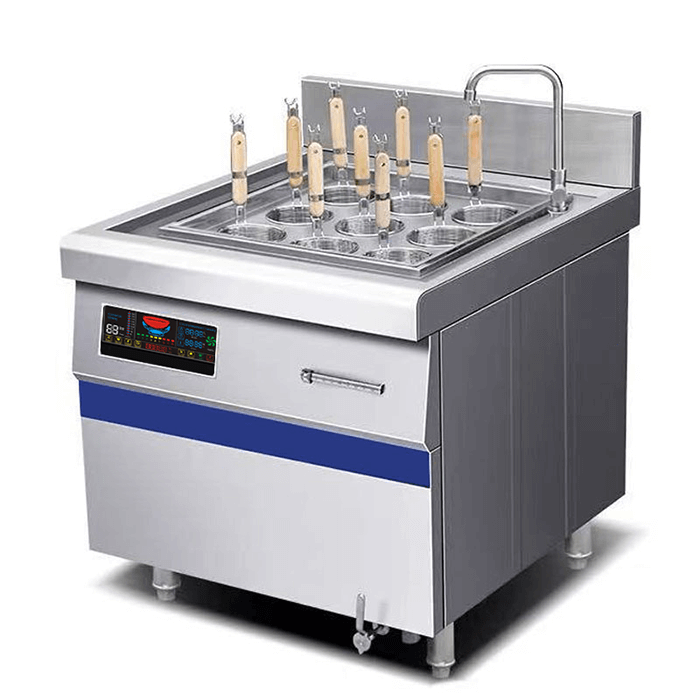
Using the 6-basket configuration of the ATT-APST D6 allows for “Staggered Loading.” Instead of dropping 6kg of frozen noodles at once (which would challenge any machine), you drop 1kg every 30 seconds.
This rhythm ensures the water temperature remains stable, as the 15KW generator can easily recover from the smaller micro-shocks, maintaining a continuous workflow.
9. The Role of High-KW Power Density in Counteracting Frozen Mass Inertia
Power density matters. A 5KW unit might eventually boil water, but it cannot fight a block of ice. The 12KW/15KW 380V specification of the ATT-APST D6 is chosen specifically for this battle.
This level of power provides the “thermal torque” necessary to push energy into the water faster than the frozen noodles can suck it out. It is the engine power required for heavy-duty commercial lifting.
10. Achieving the Coveted “Q-Texture” (Elasticity) Even with Frozen Ingredients
“Q-Texture” (Springiness) is the holy grail of noodle cooking. It requires rapid gelatinization. If you cook frozen noodles slowly, they become “dead” dough.
The violent agitation provided by the AT Cooker induction boil mimics the “Dagu” (beating) effect, ensuring that even frozen noodles develop the snappy, elastic texture customers expect from fresh pasta.
11. Standardizing Cook Times: Why Frozen Noodles Require More Precision than Fresh
Frozen noodles are unforgiving. A 30-second error on fresh pasta is forgivable; on frozen, it means an uncooked center or a mushy mess. The Large LED screen and digital timer on the D6 allow for precise programming.
You can set the exact time required to thaw and cook the noodle, ensuring consistent results regardless of who is working the station.
12. Troubleshooting Quality Issues: Solving the “Raw Core, Overcooked Surface” Dilemma
The most common failure with frozen noodles is a cooked exterior and a frozen center. This happens when water isn’t hot enough to penetrate the core quickly.
By maintaining a 100°C rolling boil, the heat penetrates the frozen core rapidly. This, combined with the movement of the water, ensures uniform heat distribution, solving the raw core dilemma permanently.
| Wydajność | Kocioł gazowy | Indukcyjny palnik AT |
|---|---|---|
| Frozen Recovery | Slow (>45 sec) | Fast (<15 sec) |
| Boil Maintenance | Struggles | Ciągły |
| Water Clarity | Clouds Quickly | Stays Clearer |
| Texture Result | Niespójny | Perfect “Q” |
5-letnia gwarancja | 2-letnia bezpłatna wymiana | 1-roczny bezpłatny zwrot
Końcowe przemyślenia od AT Cooker
Cooking frozen noodles shouldn’t mean compromising on quality. With the raw power and precision of the ATT-APST D6 Commercial Induction Noodle Cooker, you can serve premium texture at high speed, even from a frozen state.
We stock these high-performance units in the USA, Niemczech, Francji, Wielkiej Brytanii, Belgii, Włoszech, Hiszpanii i Bułgarii. Don’t let your boiler be the bottleneck. Upgrade to AT Cooker today. Visit our O nas stronę, aby dowiedzieć się więcej.