Escolhendo o certo vaporizador elétrico capacity is a make-or-break decision for commercial kitchens—too small, and you face bottlenecks; too large, and you waste energy and money. The key is aligning production capacity with expected meal volume. AT Cooker offers models from 3-tray countertop to 48-tray industrial systems.
1. Low-Volume Operations (Under 100 Meals/Day): Compact 2-4 Pan Countertop
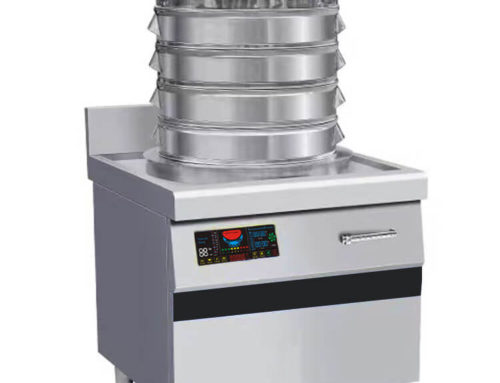
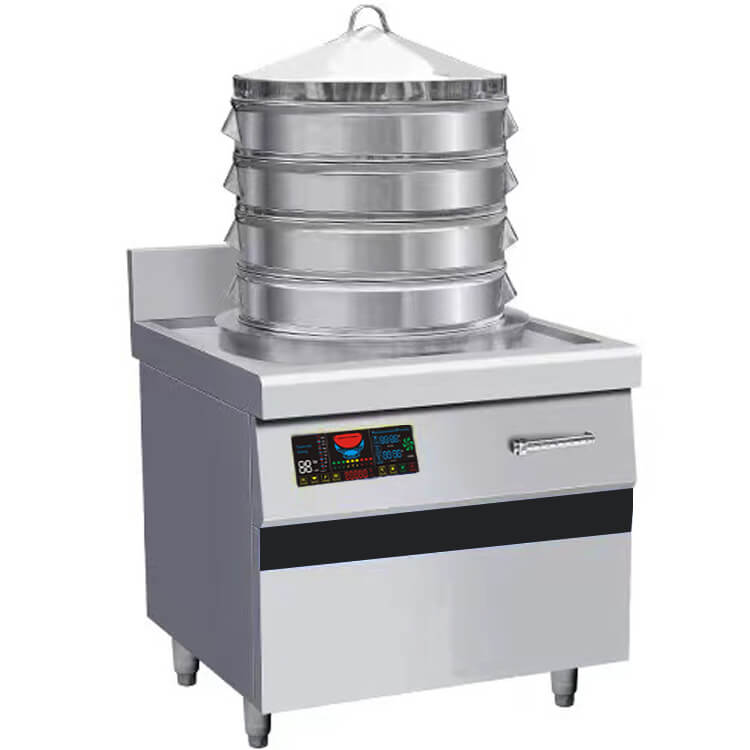
Low-volume kitchens—small cafés, food trucks, boutique bakeries—serve 50–100 meals daily. A compact countertop vaporizador elétrico (2–4 trays) is ideal: fits limited space, uses less energy, produces enough batches without overcomplicating.
AT Cooker’s ZFGT-E1 (3 trays, 6 KW, W65×D73×H75 cm) produces ~150 servings daily. A Portland café: “We steam rice, dumplings, veggies for breakfast and lunch. One batch for breakfast (30 servings), two for lunch (60)—no rush, no waste.”
Fórmula: Daily meals × 1.2 (20% buffer) ÷ Servings per batch = Required batches/day. For 80 meals: 96 ÷ 37.5 = ~2.5 batches → 3-tray steamer is enough.
2. Medium-Volume Kitchens (100–300 Meals/Day): 6–8 Pan Stackable
Mid-sized restaurants, hotels, school cafeterias serve 100–300 meals daily. AT Cooker offers two models:
- ZFGT-E3 (9 Trays, 9 KW): ~450 servings daily. Footprint W73×D80×H161 cm. A Denver hotel: “100 servings rice for breakfast, 150 dim sum for dinner—one batch breakfast, two batches dinner. No more scrambling.”
- ZFGT-E6 (18 Trays, 36 KW): ~900 servings daily. Ideal for adding dinner service or expanding menu.
| Modelo AT Cooker | Trays | Daily Capacity | Peak Hourly | Potência | Ideal Kitchen |
|---|---|---|---|---|---|
| ZFGT-E1 (Bancada) | 3 | 150–200 | 75–100 | 6 KW | Cafés (50–100) |
| ZFGT-E3 (Autônomo) | 9 | 450–500 | 225–250 | 9 KW | Restaurants (100–300) |
| ZFGT-E6 (Autoportante) | 18 | 900–1,000 | 450–500 | 36 KW | Large restaurants (300–600) |
| ZFGT-R 24 (Industrial) | 24–48 | 1,200–2,400 | 600–1,200 | 20–25 KW | Stadiums (600+) |
3. High-Capacity Operations (300+ Meals/Day): 10–20 Pan Modular
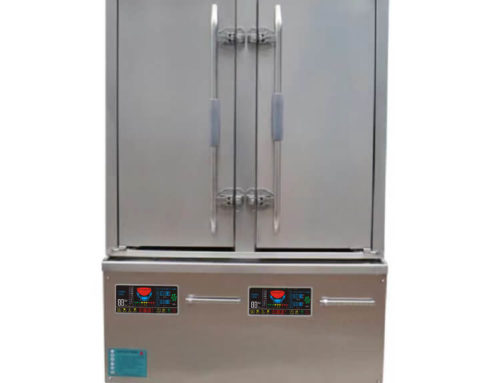
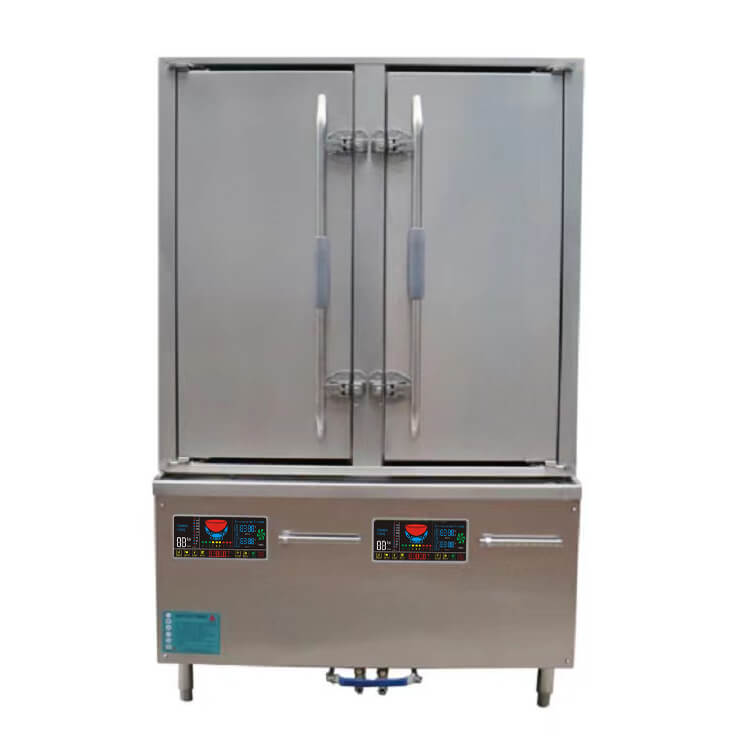
Banquet halls, stadiums, catering companies serve 300+ meals daily. AT Cooker’s ZFGT-R 24 (24–48 trays, expandable) produces 1,200–2,400 servings daily.
- Modular Design: Start 24 trays, add up to 48 as demand grows.
- Auto-Fill Water: 50L tank with auto-refill for uninterrupted 4-hour banquet services.
- Multi-Zone Temp: Independent chambers: rice 100℃, seafood 95℃, dim sum 98℃ simultaneously.
Case Study: LA catering company: “48-tray ZFGT-R 24 for 1,500+ weddings. 500 rice, 300 dumplings, 700 veggies in 3 batches—saving 4 hours prep. Use 24 trays for smaller events.”
4. Batch Cooking Capacity: Service Continuity During Peak Hours
Production capacity isn’t just daily output—it’s batch size and recovery speed. AT Cooker’s features:
- Fast Recovery: 36 KW boilers generate full steam in 2–3 min—70% less wait vs traditional.
- Acesso Fácil às Bandejas: Sliding racks for 1–2 min swap, no heavy lifting.
- Cook/Hold: Hold at 90–95℃ up to 4 hours—cook in advance, serve as needed.
Chicago Diner: ZFGT-E3 (9 trays): “Old steamer: 30 servings/batch, 10 min recovery. ZFGT-E3: 450 servings/batch, 2 min recovery. 50% more customers during lunch rush.”
5. Modular Steamers: Expanding Capacity as Volume Grows
Fixed-capacity steamers lead to costly replacements. AT Cooker’s modular options:
- ZFGT-R 24 Modular: 24 trays → add 12-tray modules to 36 or 48. No new wiring/plumbing.
- Unidades Empilháveis: Two ZFGT-E3 = 18 trays, 900 servings/day, same floor space.
Start
200 meals/day
Grow
400 meals/day
Scale
800 meals/day
Austin Restaurant: “Started with 9-tray ZFGT-E3 (200 meals/day). Added second unit after 6 months (400 meals). If we grow to 600, add 18-tray ZFGT-E6—no need to sell old unit.”
6. Cook/Hold Functionality: Supporting Staggered Services
Hospitals, schools, hotels have staggered service (breakfast 7–10 AM, lunch 12–2 PM). AT Cooker’s cook/hold (ZFGT-E6, ZFGT-R 24): cook at optimal temp, auto-reduce to 90–95℃ for up to 4 hours, moisture retention keeps food fresh.
Boston Hospital: “300 patients over 3 hours. Cook 300 servings rice at 6 AM, hold until 9 AM—tastes freshly cooked. Before: 3 separate batches, wasting 2 hours staff time.”
7. Diversidade de Cardápio: Ajustando a Capacidade para Itens Mistos
A restaurant serving 300 meals (50% rice, 30% dumplings, 20% seafood) needs separate tray allocation: rice 3 trays, dumplings 3, seafood 2 = 8 trays total. A 9-tray ZFGT-E3 suffices.
- Adjustable Heights: ZFGT-E6/ZFGT-R 24 widen gaps for tall items.
- Multi-Zone: ZFGT-R 24 has 3 independent chambers (100℃/98℃/95℃).
- Bandejas Especializadas: Perforated for seafood, non-stick for dumplings.
NY Dim Sum: “10 types daily, 3 chambers cook 3 items at once. Cut cooking time 40% vs 3 separate steamers.”
8. Energy Efficiency: Balancing Capacity and Costs
AT Cooker’s energy-saving features: heat recovery (22% boiler savings), VFD (adjust power by batch size), 3-layer insulation (70% less heat loss).
- ZFGT-E1 (6 KW): $7.20/day → $216/month.
- ZFGT-E3 (9 KW): $10.80/day → $324/month.
- ZFGT-R 24 (25 KW): $30/day → $900/month → $0.60/meal (vs $1.08 for ZFGT-E3).
Tip: Choose ENERGY STAR models (like ZFGT-E6) for $500–$1,000 utility rebates.
9. Layout da Cozinha: Garantindo que o Vaporizador Caiba no Seu Espaço
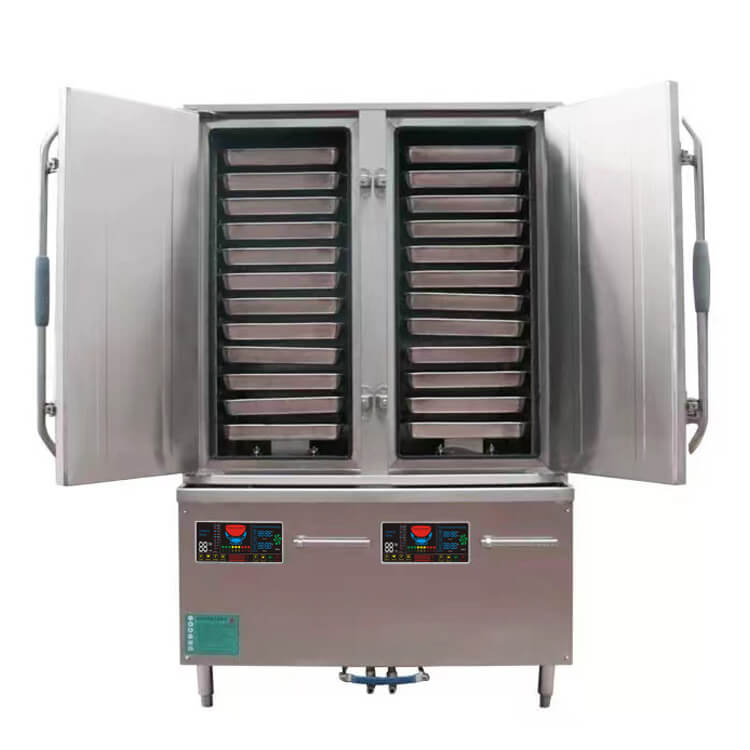
AT Cooker’s models for different spaces:
- Countertop (ZFGT-E1): W65×D73×H75 cm. Standard 24″ countertops. Miami food truck: “6-foot kitchen, fits perfectly next to grill.”
- Freestanding (ZFGT-E3/E6): W73–148×D80×H161 cm. Leave 30 cm clearance.
- Industrial (ZFGT-R 24): W120×D110×H185–220 cm. Large open kitchens.
10. Capacidade de Buffer: Planejando para Picos de Volume Inesperados
Always add 20–30% buffer to expected volume. Examples:
- 100 meals/day + 30% = 130 → ZFGT-E1 (150–200).
- 300 meals/day + 30% = 390 → ZFGT-E3 (450–500).
- 1,000 meals/day + 30% = 1,300 → ZFGT-R 24 (1,200–2,400).
Seattle Café: “Expected 80 meals/day, got 120 after viral food blog review. ZFGT-E1 (150/day) handled the surge.”
11. Escalabilidade a Longo Prazo: Investindo em Crescimento
Think 1–3 years ahead. AT Cooker’s scalable options: modular trays (add 12-tray modules), stackable units (add second ZFGT-E3), compatible accessories (specialized trays, water tanks).
Restaurant Chain: 5 locations standardized on ZFGT-E6: “200 meals/day at start → 1,000 meals/day across 5 locations. Same model everywhere, simplifying training. Add trays or stack as each location grows.”
What electric steamer capacity do I need for a small café?
For a small café serving 50–100 meals daily, a 3-tray countertop electric steamer (like AT Cooker ZFGT-E1, 6 KW) is ideal. It produces 150–200 servings daily, fits on standard countertops, and plugs into standard 220V outlets without electrical upgrades.
How do I calculate the right steamer capacity for my meal volume?
Use this formula: Daily meals × 1.2 (20% buffer) ÷ Servings per batch = Required batches/day. For example, 300 meals × 1.2 = 360 ÷ 50 servings per tray = 7.2 trays needed. A 9-tray freestanding steamer handles this comfortably.
What is the advantage of modular electric steam?
Modular steamers let you start with 24 trays and add 12-tray modules to reach 36 or 48 as demand grows—no need to replace the entire unit. The cost of adding a module ($1,500) is far less than buying a new 48-tray steamer ($8,000).
How does menu diversity affect steamer capacity?
A diverse menu (rice, dumplings, seafood) requires separate tray allocation for each item. A 300-meal restaurant with 50% rice, 30% dumplings, 20% seafood needs 8 trays total. Multi-zone chambers let you cook different items at different temperatures simultaneously.
What buffer capacity should I add for volume surges?
Add 20–30% buffer to your expected daily volume. For 100 meals/day, plan for 130 meals/day capacity. For 1,000 meals/day, plan for 1,300. This handles holidays, events, and unexpected growth without bottlenecks.
Escolha a Capacidade Certa de Vaporizador Elétrico para o Seu Volume de Refeições
Share your expected daily meal volume, menu diversity, and kitchen space—we’ll recommend the ideal AT Cooker steamer.