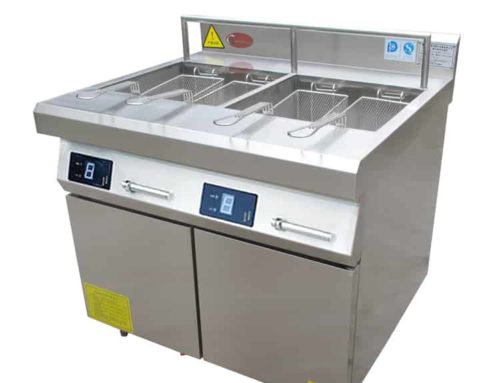
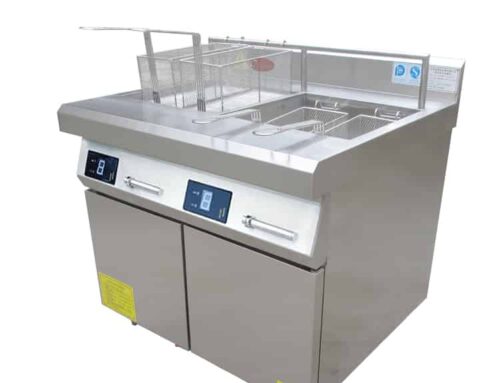
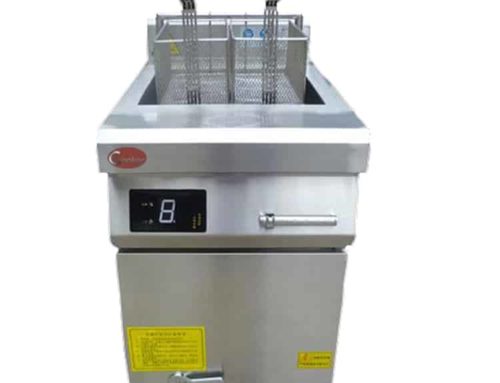
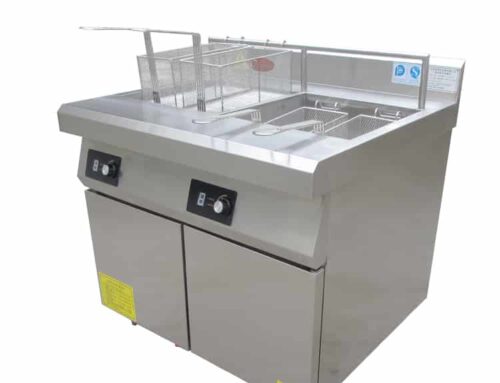
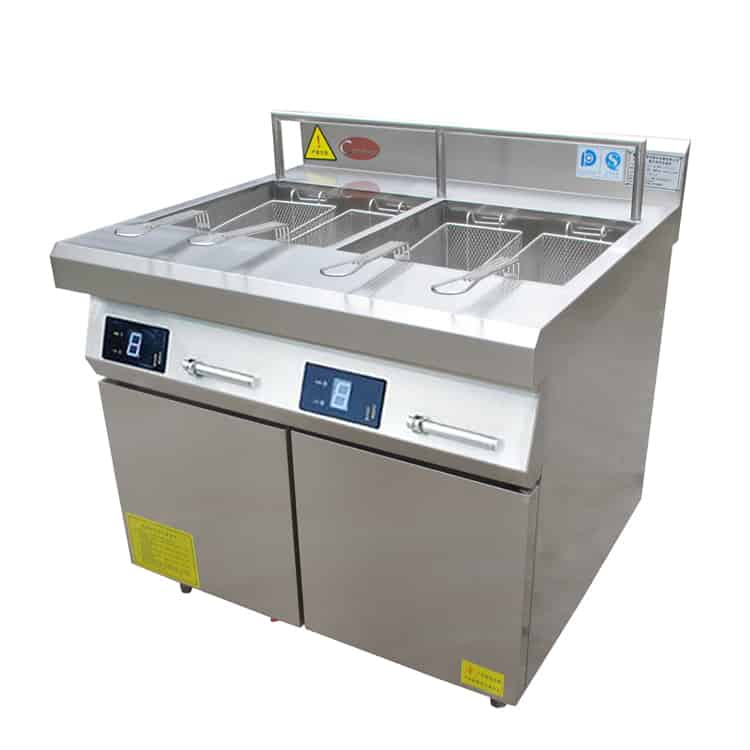
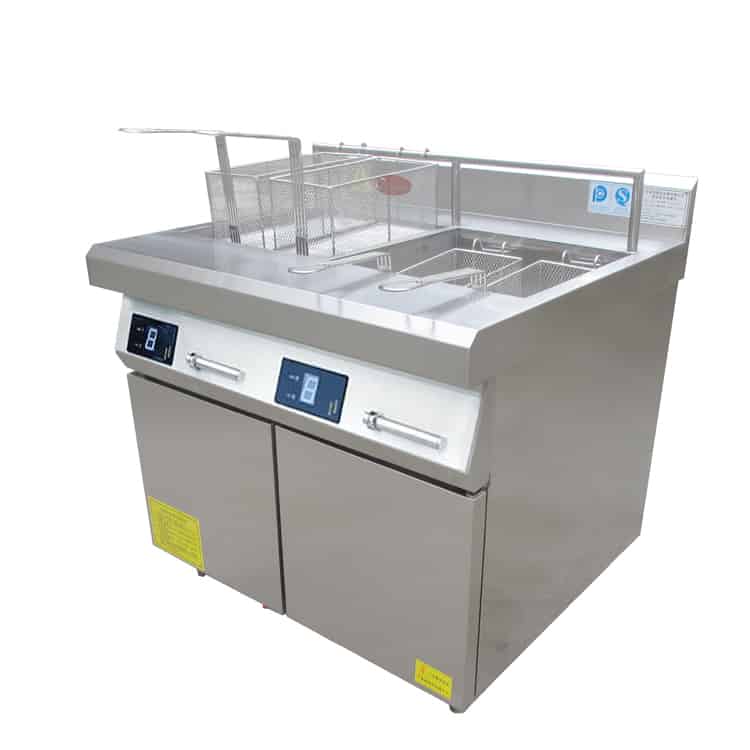
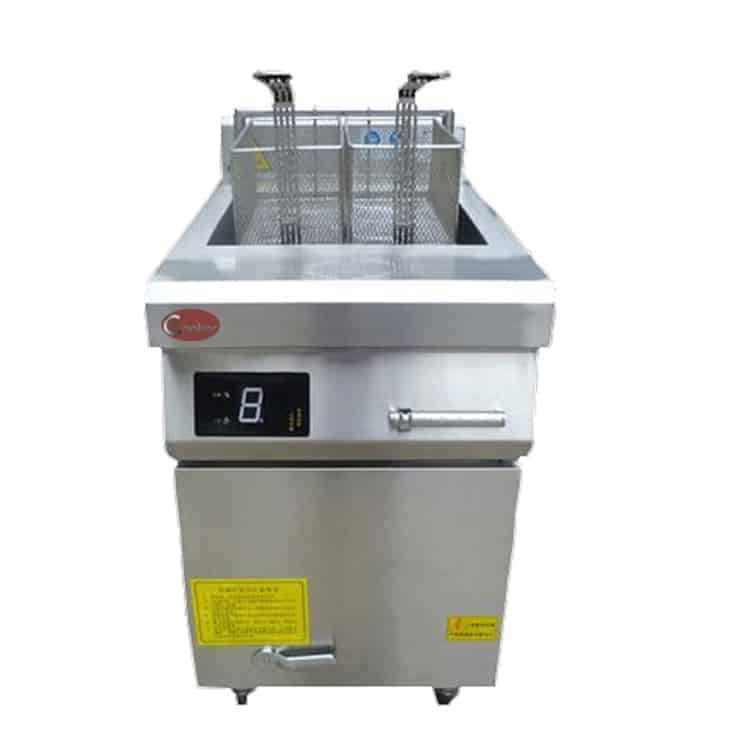
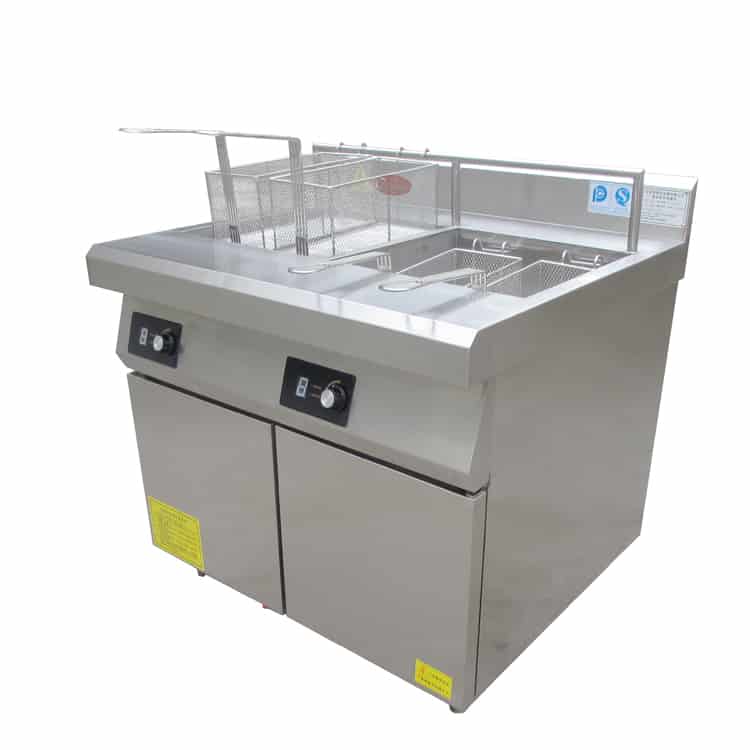
Gewerbliche Fritteusen – Gas, Elektro oder Induktion – sind das Rückgrat von Restaurants und Catering. Die Wahl hängt ab von Geschwindigkeit, Präzision, Kosten, Sicherheit, Wartung. AT Cooker bietet Gas (Propan) und Elektro (Induktion) von 15L Tischgerät bis 50L Standgerät. Nachfolgend 14 entscheidende Unterschiede.
Aufheizgeschwindigkeit: Gas heizt schneller
Gas: offene Flamme, 350-375°F in 6-8 Min. Elektro: Heizelemente, 10-12 Min. AT Cooker’Propan ATT-LP-F50: 30L auf 375°F in 7 Min. Ein Austin-Burger-Lokal: “Kaltes Öl bis zum Frittieren in 7 Min – entscheidend für den 11-Uhr-Ansturm. Alte Elektro brauchte 12 Min.” Die Lücke vergrößert sich bei 50L: Gas 9 Min, Elektro 15 Min. Induktion verkürzt auf 8-9 Min.
Gas-
30L auf 375°F
Elektro
30L auf 375°F
Induktion
30L auf 375°F
Temperaturkontrolle: Elektro überlegen präzise
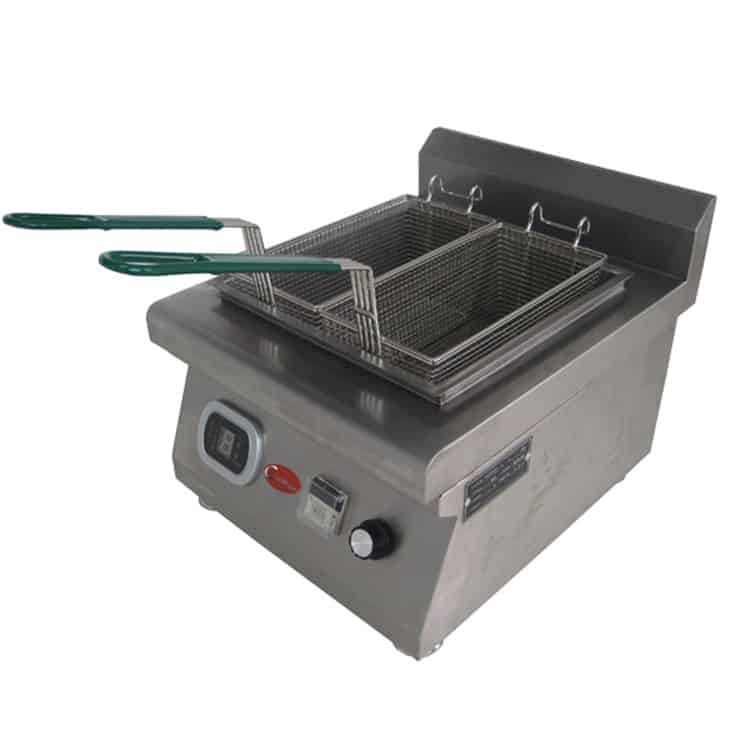
Elektro-Induktion: ±2°F (digitaler PID, 10 Anpassungen/Sek.). Gas: ±5-8°F (mechanisch, Flammenvariabilität). AT Cooker’ATT-ID-F30: PID-Regler hält exakt 350°F. Ein Sushi-Restaurant: “Tempura braucht Präzision. Elektro erreicht 350°F und hält sie. Gas schwankte 340-360°F und ruinierte 15% der Chargen.” Präzision verlängert die Öllebensdauer um 20-30% (spart $150-200/Mon.).
Installation: Gas teurer
Elektro: nur Steckdose ($300 für 240V-Leitung). Gas: Gasleitung + Typ-I-Abzugshaube ($2.000-$5.000+). Ein Chicagoer Café: “15L Elektro-Installation $300. Gas bräuchte $1.200 Leitung + $800 Haube = $2.000.” AT Cooker Induktionsfritteusen arbeiten mit Standard-Gewerbestrom. Ein Hotel: “Keine elektrische Anpassung für 30KW Induktion – an vorhandene 480V angeschlossen.”
Energieeffizienz: Elektro-Induktion überlegen
Elektro-Induktion: 85-90% Energie zum Erhitzen. Gas: 50-60% (40-50% gehen an die Luft verloren). Bei 8 Std./Tag: Induktion $36/Tag; Gas $18/Tag (günstigerer Brennstoff). Aber Induktionseffizienz bedeutet weniger Leerlaufverlust. Eine Fast-Food-Kette: “Elektro-Induktion spart $200/Mon. gegenüber Gas – Öl nur bei Bedarf erhitzen, keine verschwendeten offenen Flammen.” Strom aus erneuerbaren Energien = nahezu null Emissionen.
| Merkmal | Gas-Fritteusen | Elektro-Fritteusen | AT Cooker-Modell |
|---|---|---|---|
| Aufheizen (30L auf 375°F) | 6-8 Min (Flamme) | 10-12 Min; 8-9 (Induktion) | ATT-ID-F30 |
| Temperaturpräzision | ±5-8°F | ±2°F (PID) | ATT-ID-F30 |
| Installationskosten | $1,500-5,000 | $300-1,000 | ATT-ID-F15 |
| Energieeffizienz | 50-60% | 85-90% (Induktion) | ATT-ID-F30 |
| Betrieb (8 Std./Tag) | $540-600/Mon. | $800-1.080/Mon. | Abhängig von Tarifen |
Sicherheit: Elektro weniger Brandgefahren
Elektro eliminiert offene Flammen. AT Cooker Elektro-Fritteusen umfassen:
- Automatische Abschaltung: Schaltet Strom über 400°F oder bei Leerlauf ab
- Überhitzungsschutz: Duale Sensoren überwachen Topf + Öl
- Berührungssichere Außenseite: Isolierte Seiten <120°F
Kundenstory: Maria, Miami: “Kleine Küche, Personal ständig in Bewegung. Offene Gasflammen fühlten sich riskant an. Elektro-Induktion: keine Flamme, automatische Abschaltung. Null Sicherheitsvorfälle in 2 Jahren.”
Betriebskosten: Gas günstiger in gasreichen Regionen
In gasgünstigen Regionen (US-Mittelwesten): Gas 30-50% weniger Betriebskosten. In Regionen mit hohen Strompreisen (Europa): Elektro-Induktion kann günstiger sein. Eine Burger-Kette (TX + CA): “Texas: Gas $450/Mon., Elektro $900. Kalifornien: Elektro $600/Mon., Gas $700.” AT Cooker hilft bei der ROI-Berechnung basierend auf lokalen Tarifen.
Wärmerückgewinnung: Elektro-Induktion schneller
Nach Zugabe von kaltem Gargut: Induktion erholt sich in 30-60 Sek.; Gas 60-90 Sek. AT Cooker’30KW Induktion: 350°F auf 375°F in 45 Sek.; Gas 75 Sek. Eine Hähnchen-Kette: “50 Chargen/Tag – schnellere Erholung = 10 mehr Kunden/Stunde. Gas kam nicht hinterher, lange Schlangen.” Ideal für kontinuierliches Frittieren.
Wartung: Elektro einfacher
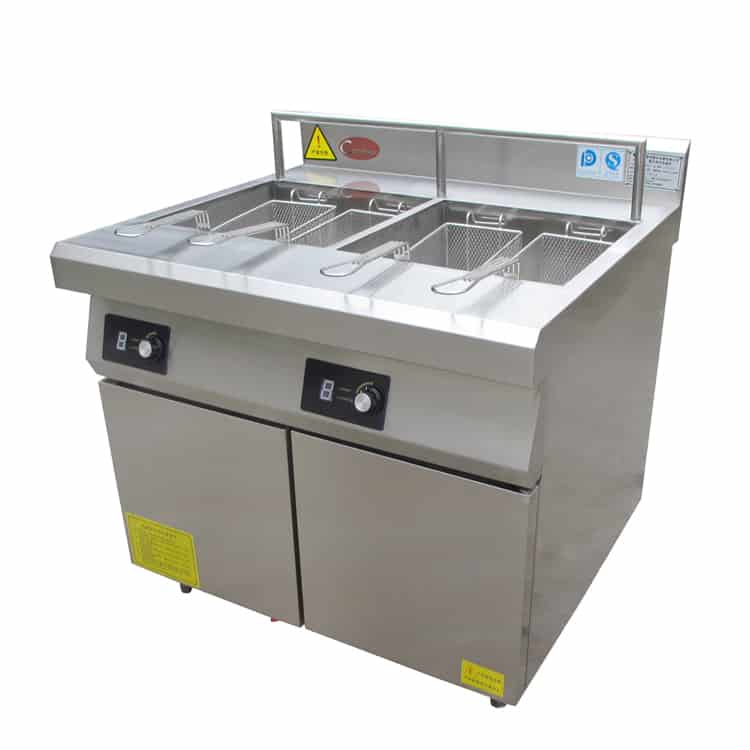
Gas: monthly (clean burners, check lines, replace electrodes). Electric: quarterly (check elements, wipe coils, calibrate thermostats).
- Gas: $150/fryer/month (10 fryers = $12,000/yr)
- Electric: $50/fryer/quarter (10 fryers = $2,000/yr)
AT Cooker electric elements: 15-min replacement, no service call. A restaurant: “Replaced element during lunch break. Gas repair would shut us down half day.”
9. Noise: Electric Quieter
Gas: 70-75 dB (burner whoosh + ventilation). Electric induction: 55-60 dB (no moving parts). A café with open kitchen: “Gas so loud, customers complained. Electric quiet enough for no soundproofing.” A hotel lounge: “Fry near bar—electric silent, guests don’t hear over music.”
10. Power Outage: Gas Works Without Electricity
Gas advantage: works during outages (manual ignition). Electric: shuts down completely. A Florida coastal restaurant: “3-day outage after storm—gas fryer let us serve while others closed.” AT Cooker propane fryers have manual ignition. A caterer: “Outdoor events, no generators needed. Electric would need 5KW generator.”
11. Oil Longevity: Electric Extends Oil Life
Electric precision extends oil life 20-30%. A fried chicken restaurant: “Gas: change oil every 3 days (50L = $100). Electric: every 4 days, saving $800/month.” AT Cooker electric fryers have built-in filtration: “Filter cleans oil overnight—extra day per batch, cutting oil costs 25%.”
12. Kitchen Layout: Electric More Flexible
Gas: must be near gas line + hood. Electric: anywhere with outlet. A food truck: “Can’t run gas line in truck—electric plugs into 240V generator, fits next to grill.” AT Cooker 15-20L countertop: only 24” wide. A café: “Kitchen 8 feet wide—electric fits small counter; gas needs dedicated 3-foot space near hood.”
13. Durability: Gas Burners vs. Electric Elements
Gas burners: 5-7 years (SS, corrosion-resistant). Electric elements: 3-4 years. Induction coils: 6-8 years (longest). A diner: “Gas burners 10 years, still work. Replaced electric elements twice. Induction coil 5-year warranty—expect it to outlast gas.” AT Cooker uses Incoloy elements (heat-resistant alloy).
14. Environmental Impact: Electric Greener
Gas emits CO₂ and NOx. Electric: zero direct emissions; near-zero with renewables. A university (solar): “Electric fryers zero emissions—gas would add 5 tons CO₂/year.” AT Cooker induction fryers ENERGY STAR certified (15% less energy). A corporate café: “Save 10,000 kWh/year, reduce footprint 7 tons.”
Which is faster: gas or electric deep fryer?
Gas deep fryers heat up faster (6-8 minutes for 30L to 375°F) vs electric (10-12 minutes). However, electric induction fryers recover heat faster after adding food (30-60 seconds vs 60-90 seconds for gas), making them better for continuous high-volume frying.
Are electric deep fryers more energy efficient than gas?
Yes. Electric induction fryers convert 85-90% of energy into heat, while gas fryers only convert 50-60% (the rest is lost to the kitchen). However, gas fuel is often cheaper per unit, so operating costs depend on local electricity vs gas prices.
What is the temperature precision difference between gas and electric fryers?
Electric fryers with digital PID controllers maintain ±2°F accuracy, while gas fryers fluctuate ±5-8°F due to flame variability. This precision reduces oil degradation by 20-30% and produces more consistent frying results.
Which deep fryer is safer for a small kitchen?
Electric deep fryers are safer for small kitchens because they have no open flame, auto shut-off above 400°F, overheat protection with dual sensors, and cool-touch exterior below 120°F. Many fire codes require electric fryers in high-traffic areas like mall food courts.
How much does it cost to install a gas vs electric deep fryer?
Electric fryers cost $300-$1,000 to install (just an electrical outlet). Gas fryers cost $1,500-$5,000+ (gas line + Type I ventilation hood). For large gas fryers without existing gas infrastructure, installation can exceed $5,000.
Choose Between Gas & Electric Deep Fryers
Share your frying volume, fuel costs, and kitchen layout—we’ll recommend the right type.