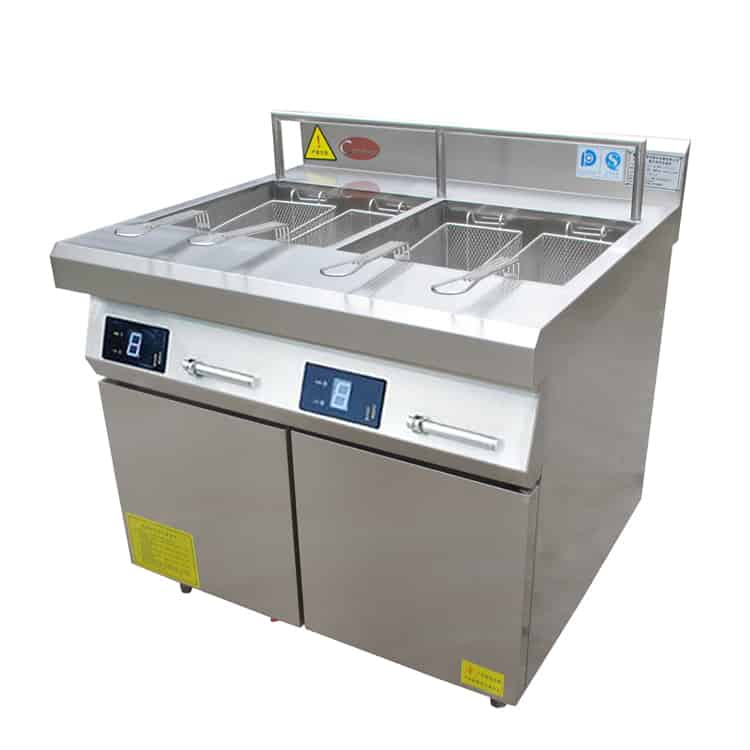
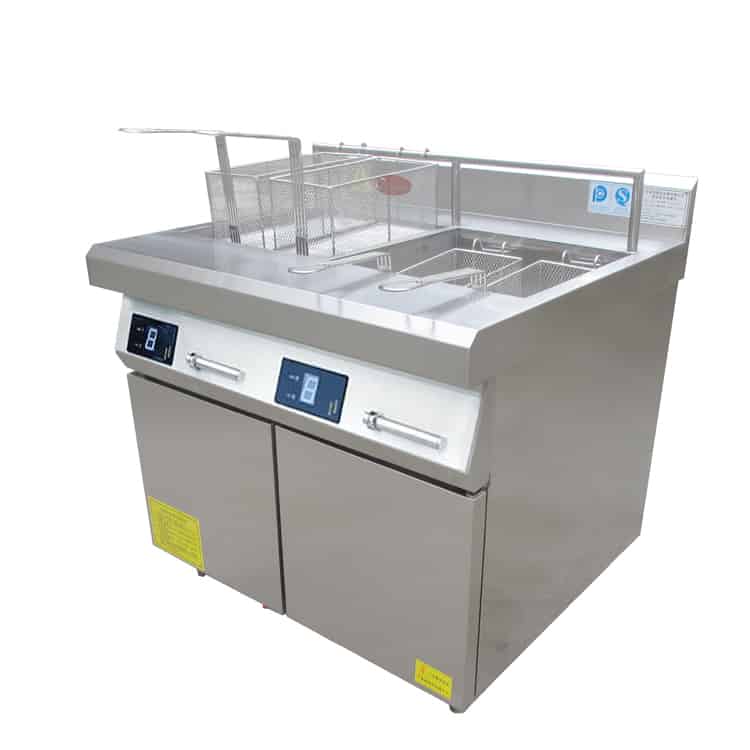
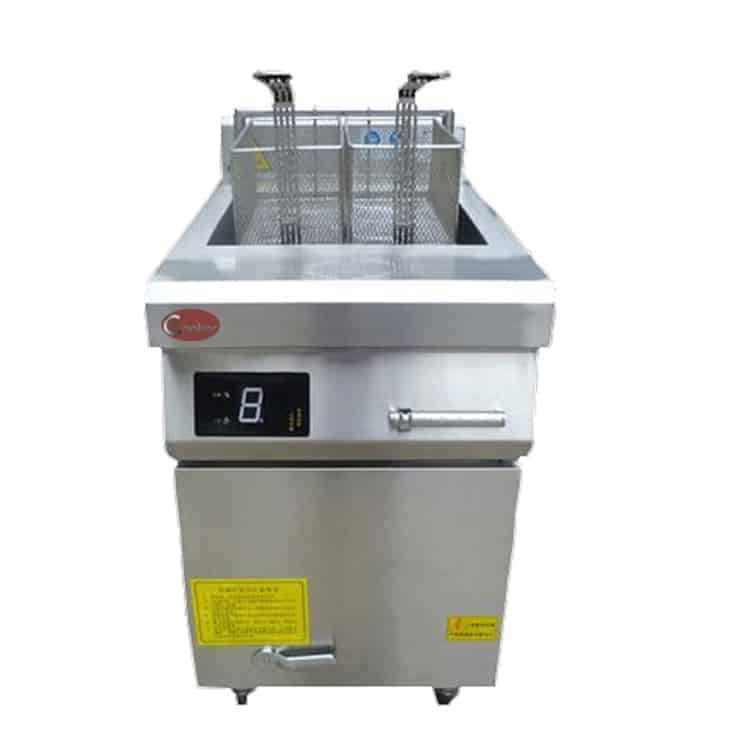
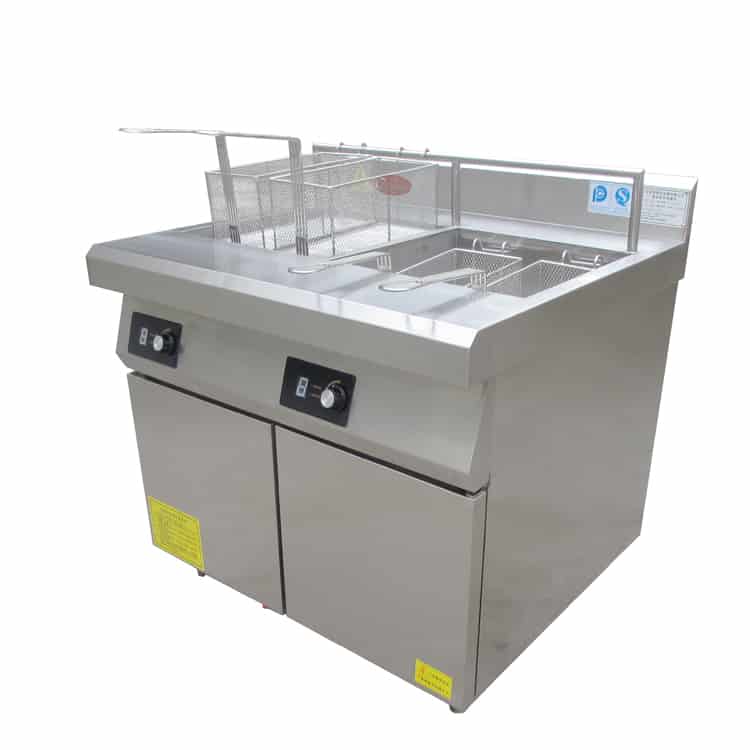
Le friggitrici commerciali—a gas, elettriche o a induzione—sono la spina dorsale di ristoranti e catering. La scelta dipende da velocità, precisione, costo, sicurezza e manutenzione. AT Cooker offre modelli a gas (propano) ed elettrici (induzione) da 15L da banco a 50L a pavimento. Di seguito, 14 differenze fondamentali.
Velocità di riscaldamento: il gas scalda più velocemente
Gas: fiamma libera, 350-375°F in 6-8 min. Elettrico: resistenze, 10-12 min. AT Cooker’ATT-LP-F50 a propano: 30L a 375°F in 7 min. Un hamburgeria di Austin: “Olio freddo a patatine pronte in 7 min—fondamentale per il picco delle 11. Il vecchio elettrico impiegava 12 min.” Il divario aumenta a 50L: gas 9 min, elettrico 15 min. L'induzione si riduce a 8-9 min.
Gas
30L a 375°F
Elettrica
30L a 375°F
Induzione
30L a 375°F
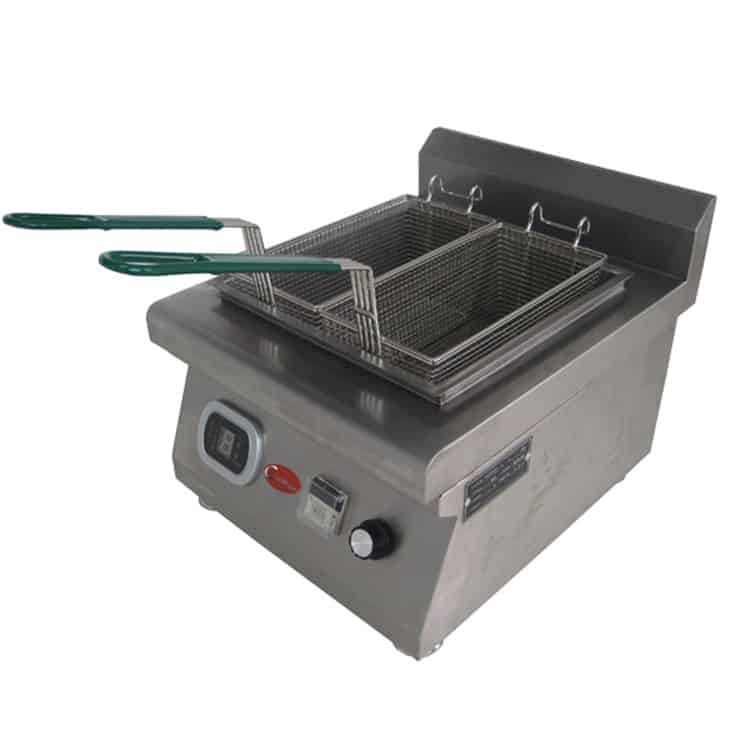
Controllo della temperatura: precisione superiore nell'elettrico
Induzione elettrica: ±2°F (PID digitale, 10 regolazioni/sec). Gas: ±5-8°F (meccanico, variabilità della fiamma). AT Cooker’ATT-ID-F30: il controller PID mantiene esattamente 350°F. Un ristorante di sushi: “La tempura richiede precisione. L'elettrico raggiunge 350°F e ci resta. Il gas oscillava tra 340-360°F, rovinando 15% delle cotture.” La precisione prolunga la vita dell'olio del 20-30% (risparmia $150-200/mese).
Installazione: il gas costa di più
Elettrico: solo presa ($300 per linea 240V). Gas: linea gas + cappa Tipo I ($2.000-$5.000+). Un caffè di Chicago: “Installazione elettrica 15L: $300. Il gas avrebbe richiesto linea $1.200 + cappa $800 = $2.000.” AT Cooker Le friggitrici a induzione funzionano con l'impianto elettrico commerciale standard. Un hotel: “Nessuna modifica elettrica per induzione 30KW—collegata all'esistente 480V.”
Efficienza energetica: l'induzione elettrica è superiore
Induzione elettrica: 85-90% di energia per il riscaldamento. Gas: 50-60% (40-50% dispersi nell'aria). A 8 ore/giorno: induzione $36/giorno; gas $18/giorno (carburante più economico). Ma l'efficienza dell'induzione significa meno sprechi a vuoto. Una catena fast-food: “L'induzione elettrica risparmia $200/mese rispetto al gas—scalda l'olio solo quando serve, nessuna fiamma libera sprecata.” Elettrico da fonti rinnovabili = emissioni quasi zero.
| Caratteristica | Friggitrici a gas | Friggitrici elettriche | Perché |
|---|---|---|---|
| Riscaldamento (30L a 375°F) | 6-8 min (fiamma) | 10-12 min; 8-9 (induzione) | ATT-ID-F30 |
| Precisione temperatura | ±5-8°F | ±2°F (PID) | ATT-ID-F30 |
| Costo installazione | $1,500-5,000 | $300-1,000 | ATT-ID-F15 |
| Efficienza energetica | 50-60% | 85-90% (induzione) | ATT-ID-F30 |
| Esercizio (8 ore/giorno) | $540-600/mese | $800-1.080/mese | Dipende dalle tariffe |
Sicurezza: l'elettrico riduce i rischi d'incendio
L'elettrico elimina le fiamme libere. AT Cooker Le friggitrici elettriche includono:
- Spegnimento automatico: Taglia l'alimentazione sopra 400°F o se vuota
- Protezione da surriscaldamento: Doppi sensori monitorano vasca + olio
- Esterno a contatto freddo: Lati isolati <120°F
Storia del cliente: Maria, Miami: “Cucina piccola, personale in continuo movimento. Le fiamme libere del gas sembravano rischiose. Induzione elettrica: nessuna fiamma, spegnimento automatico. Zero incidenti di sicurezza in 2 anni.”
Costi operativi: il gas costa meno nelle regioni ricche di gas
Nelle regioni con gas economico (Midwest USA): il gas costa 30-50% in meno per l'esercizio. Nelle zone con elettricità cara (Europa): l'induzione elettrica può essere più economica. Una catena di hamburger (TX + CA): “Texas: gas $450/mese, elettrico $900. California: elettrico $600/mese, gas $700.” AT Cooker aiuta a calcolare il ROI in base alle tariffe locali.
Recupero termico: l'induzione elettrica è più rapida
Dopo l'aggiunta di cibo freddo: l'induzione recupera in 30-60 sec; il gas in 60-90 sec. AT Cooker’Induzione 30KW: da 350°F a 375°F in 45 sec; gas 75 sec. Una catena di pollo: “50 cotture/giorno—recupero più rapido = 10 clienti in più/ora. Il gas non stava al passo, code lunghe.” Ideale per la frittura continua.
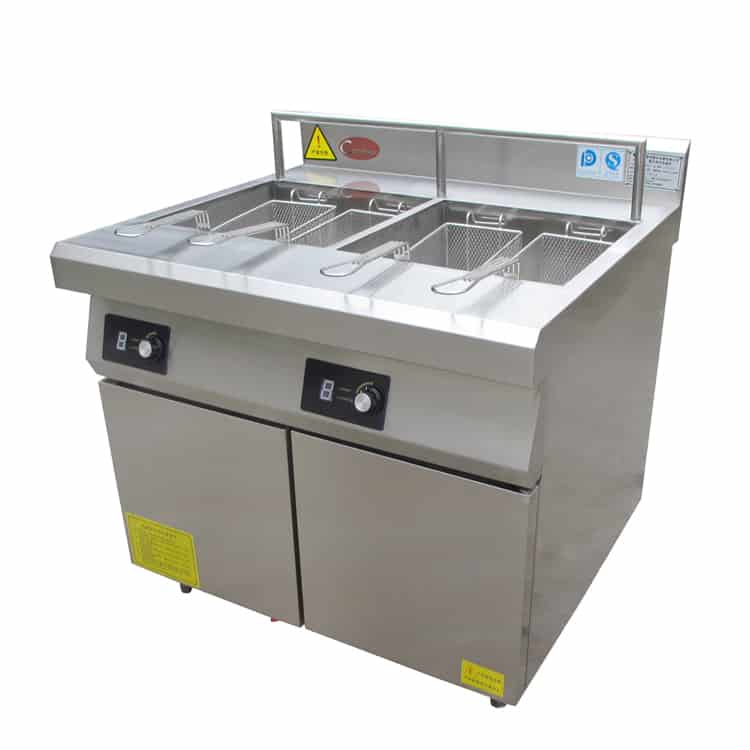
8. Maintenance: Electric Easier
Gas: monthly (clean burners, check lines, replace electrodes). Electric: quarterly (check elements, wipe coils, calibrate thermostats).
- Gas: $150/fryer/month (10 fryers = $12,000/yr)
- Electric: $50/fryer/quarter (10 fryers = $2,000/yr)
AT Cooker electric elements: 15-min replacement, no service call. A restaurant: “Replaced element during lunch break. Gas repair would shut us down half day.”
9. Noise: Electric Quieter
Gas: 70-75 dB (burner whoosh + ventilation). Electric induction: 55-60 dB (no moving parts). A café with open kitchen: “Gas so loud, customers complained. Electric quiet enough for no soundproofing.” A hotel lounge: “Fry near bar—electric silent, guests don’t hear over music.”
10. Power Outage: Gas Works Without Electricity
Gas advantage: works during outages (manual ignition). Electric: shuts down completely. A Florida coastal restaurant: “3-day outage after storm—gas fryer let us serve while others closed.” AT Cooker propane fryers have manual ignition. A caterer: “Outdoor events, no generators needed. Electric would need 5KW generator.”
11. Oil Longevity: Electric Extends Oil Life
Electric precision extends oil life 20-30%. A fried chicken restaurant: “Gas: change oil every 3 days (50L = $100). Electric: every 4 days, saving $800/month.” AT Cooker electric fryers have built-in filtration: “Filter cleans oil overnight—extra day per batch, cutting oil costs 25%.”
12. Kitchen Layout: Electric More Flexible
Gas: must be near gas line + hood. Electric: anywhere with outlet. A food truck: “Can’t run gas line in truck—electric plugs into 240V generator, fits next to grill.” AT Cooker 15-20L countertop: only 24” wide. A café: “Kitchen 8 feet wide—electric fits small counter; gas needs dedicated 3-foot space near hood.”
13. Durability: Gas Burners vs. Electric Elements
Gas burners: 5-7 years (SS, corrosion-resistant). Electric elements: 3-4 years. Induction coils: 6-8 years (longest). A diner: “Gas burners 10 years, still work. Replaced electric elements twice. Induction coil 5-year warranty—expect it to outlast gas.” AT Cooker uses Incoloy elements (heat-resistant alloy).
14. Environmental Impact: Electric Greener
Gas emits CO₂ and NOx. Electric: zero direct emissions; near-zero with renewables. A university (solar): “Electric fryers zero emissions—gas would add 5 tons CO₂/year.” AT Cooker induction fryers ENERGY STAR certified (15% less energy). A corporate café: “Save 10,000 kWh/year, reduce footprint 7 tons.”
Which is faster: gas or electric deep fryer?
Gas deep fryers heat up faster (6-8 minutes for 30L to 375°F) vs electric (10-12 minutes). However, electric induction fryers recover heat faster after adding food (30-60 seconds vs 60-90 seconds for gas), making them better for continuous high-volume frying.
Are electric deep fryers more energy efficient than gas?
Yes. Electric induction fryers convert 85-90% of energy into heat, while gas fryers only convert 50-60% (the rest is lost to the kitchen). However, gas fuel is often cheaper per unit, so operating costs depend on local electricity vs gas prices.
What is the temperature precision difference between gas and electric fryers?
Electric fryers with digital PID controllers maintain ±2°F accuracy, while gas fryers fluctuate ±5-8°F due to flame variability. This precision reduces oil degradation by 20-30% and produces more consistent frying results.
Which deep fryer is safer for a small kitchen?
Electric deep fryers are safer for small kitchens because they have no open flame, auto shut-off above 400°F, overheat protection with dual sensors, and cool-touch exterior below 120°F. Many fire codes require electric fryers in high-traffic areas like mall food courts.
How much does it cost to install a gas vs electric deep fryer?
Electric fryers cost $300-$1,000 to install (just an electrical outlet). Gas fryers cost $1,500-$5,000+ (gas line + Type I ventilation hood). For large gas fryers without existing gas infrastructure, installation can exceed $5,000.
Choose Between Gas & Electric Deep Fryers
Share your frying volume, fuel costs, and kitchen layout—we’ll recommend the right type.