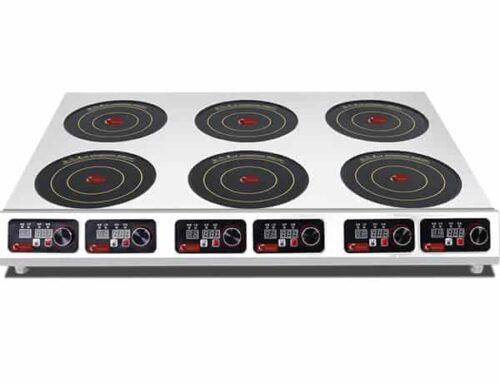
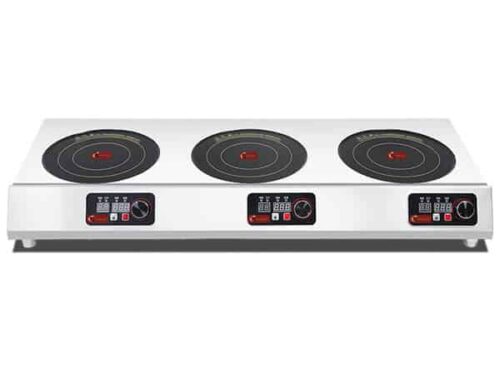
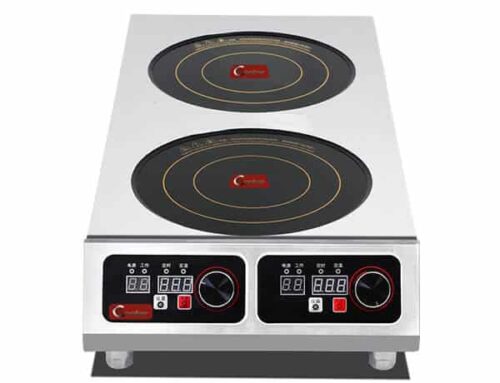
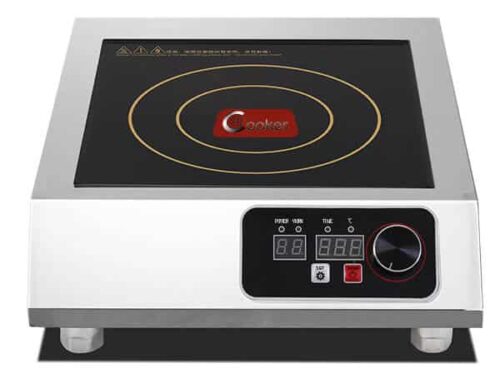
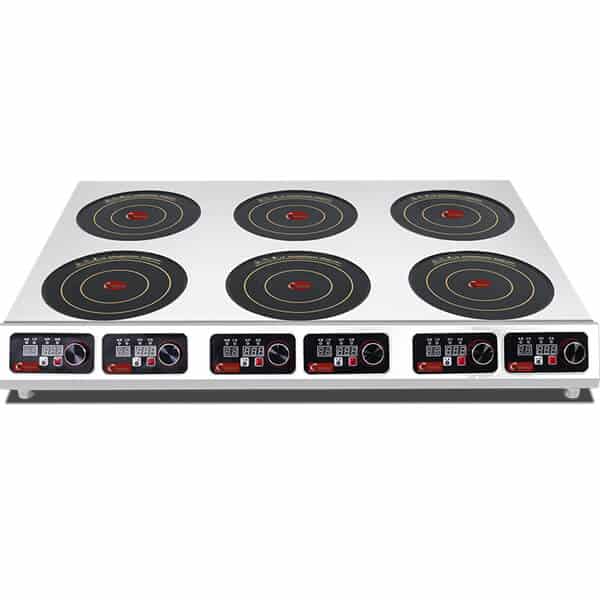
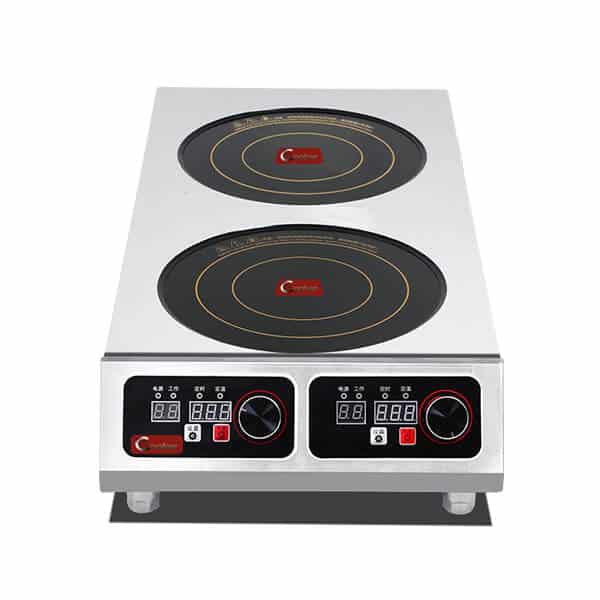
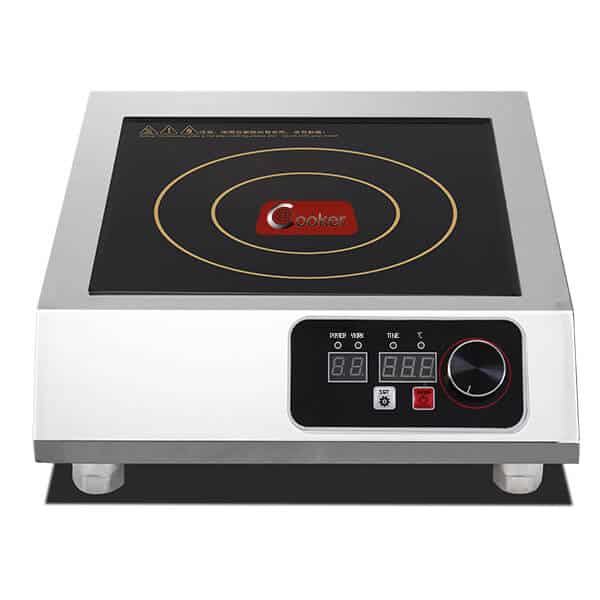
In qualità di AT Cooker, un leader nelle attrezzature per cucine commerciali, sappiamo che scegliere le pentole giuste per il vostro piano cottura a induzione e forno è altrettanto critico quanto selezionare l'apparecchio stesso. La cottura a induzione si basa sui campi magnetici per riscaldare direttamente le pentole, quindi non tutte le pentole e padelle funzionano—e utilizzare il tipo sbagliato può sprecare energia, danneggiare l'attrezzatura o produrre risultati irregolari. Il nostro piano cottura a induzione commerciale e forno BZT-AZH4FO è progettato per funzionare con tipi specifici di pentole, sfruttando i suoi bruciatori da 3,5KW/5KW×4, zone di calore da 300mm e un'efficienza del 90–95% per offrire prestazioni ottimali. In questa guida, analizzeremo esattamente quali pentole sono compatibili con i fornelli a induzione commerciali come il BZT-AZH4FO, perché alcuni materiali funzionano (o no), e come scegliere opzioni che migliorano la vostra cottura proteggendo il vostro investimento.
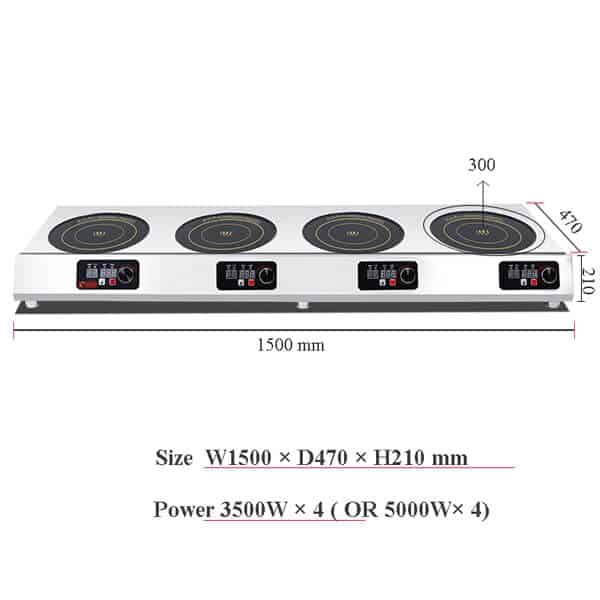
AT Cooker Specifiche chiave del BZT-AZH4FO per la compatibilità delle pentole
- Potenza del bruciatore: 3,5KW×4 o 5KW×4 (funziona meglio con pentole che mantengono il contatto magnetico ad alte temperature)
- Dimensione del bruciatore: 300mm (11,8 pollici) (si adatta a pentole commerciali standard da 10–14 pollici di diametro)
- Capacità del forno: 38L (accoglie pentole a induzione adatte al forno fino a 12 pollici)
- Tipo di superficie: Vetro temperato (richiede pentole a fondo piatto per il massimo trasferimento di calore)
- Efficienza: 90–95% (dipende dal materiale e dal contatto corretto delle pentole)
Le pentole in materiali ferromagnetici come ghisa e acciaio inossidabile magnetico sono compatibili con i fornelli a induzione.
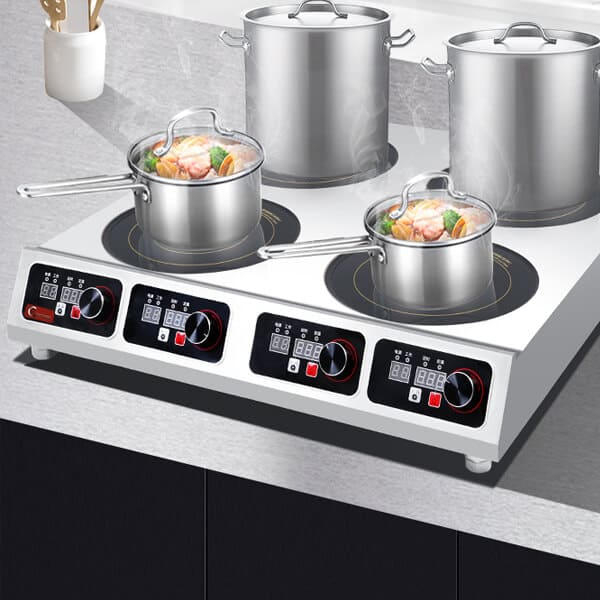
I fornelli a induzione come il nostro piano cottura a induzione e forno BZT-AZH4FO funzionano solo con materiali ferromagnetici—sostanze che si attaccano a un magnete. Questi materiali conducono il campo magnetico dal bruciatore alle pentole, generando calore in modo efficiente. I due materiali ferromagnetici più comuni per le pentole commerciali sono la ghisa e l'acciaio inossidabile magnetico, ed entrambi si abbinano perfettamente ai bruciatori ad alta potenza del BZT-AZH4FO.
Le pentole in ghisa sono un elemento fondamentale per le cucine commerciali. Sono altamente magnetiche, trattengono il calore in modo uniforme e resistono alla temperatura massima del BZT-AZH4FO di 842 ℉—ideali per scottare carni, sobbollire stufati o cuocere nel forno a infrarossi da 38L. Una steakhouse che utilizza il BZT-AZH4FO e padelle in ghisa riporta che le loro bistecche hanno una crosta 30% migliore, grazie alla distribuzione uniforme del calore tra il bruciatore a induzione e la ghisa. La ghisa funziona anche perfettamente con gli 8 livelli di potenza del BZT-AZH4FO: impostate il bruciatore a 5KW per scottare, poi abbassate a 1KW per mantenere il cibo caldo—senza punti caldi o fluttuazioni di temperatura.
L'acciaio inossidabile magnetico (solitamente etichettato serie 430) è un'altra scelta eccellente. È più leggero della ghisa, più facile da pulire e resistente alla ruggine—perfetto per le cucine commerciali impegnate. I bruciatori da 300mm del BZT-AZH4FO si adattano perfettamente a pentole in acciaio inossidabile magnetico da 12 pollici, rendendole ideali per bollire pasta, cuocere riso o preparare grandi quantità di zuppa. Raccomandiamo acciaio inossidabile magnetico con uno spessore di 1,5–2mm: le pentole più sottili possono deformarsi ad alta potenza (5KW), mentre quelle più spesse impiegano più tempo a riscaldarsi. Una mensa che utilizza il BZT-AZH4FO e pentole in acciaio inossidabile serie 430 ha ridotto il tempo di cottura della zuppa del 25% rispetto alle pentole non magnetiche.
Per verificare se le vostre pentole sono ferromagnetiche, basta avvicinare un magnete al fondo—se si attacca saldamente, funzionerà con il BZT-AZH4FO. Questo test rapido vi evita di acquistare pentole incompatibili, che possono costare $50–$200 ciascuna. Il nostro team presso AT Cooker fornisce anche un magnete gratuito con ogni acquisto del BZT-AZH4FO, così potete verificare la compatibilità delle pentole sul posto.
Secondo Rapporti sulle attrezzature per la ristorazione (FER), le pentole ferromagnetiche migliorano l'efficienza dei fornelli a induzione del 15–20%. Ciò significa che l'efficienza del 95% del BZT-AZH4FO sale ancora più in alto se abbinata a ghisa o acciaio inossidabile magnetico, riducendo ulteriormente la vostra bolletta elettrica.
Pentole ferromagnetiche vs. prestazioni del BZT-AZH4FO
| Materiale delle pentole | Risultato del test con magnete | Ideale per (BZT-AZH4FO) | Tempo di riscaldamento (bruciatore 5KW) | Efficienza |
|---|---|---|---|---|
| Ghisa | Si attacca saldamente | Scottare, cuocere al forno, sobbollire | 2–3 minuti (padella da 10 pollici) | 95% |
| Acciaio inossidabile serie 430 | Si attacca saldamente | Bollire, friggere, grandi quantità | 1–2 minuti (pentola da 12 pollici) | 93% |
| Acciaio inossidabile non magnetico (serie 304) | Non si attacca | Non compatibile | N/D | <50% |
Le pentole e padelle in alluminio, rame e acciaio inossidabile non magnetico richiedono una base compatibile con l'induzione per funzionare sui piani cottura a induzione.
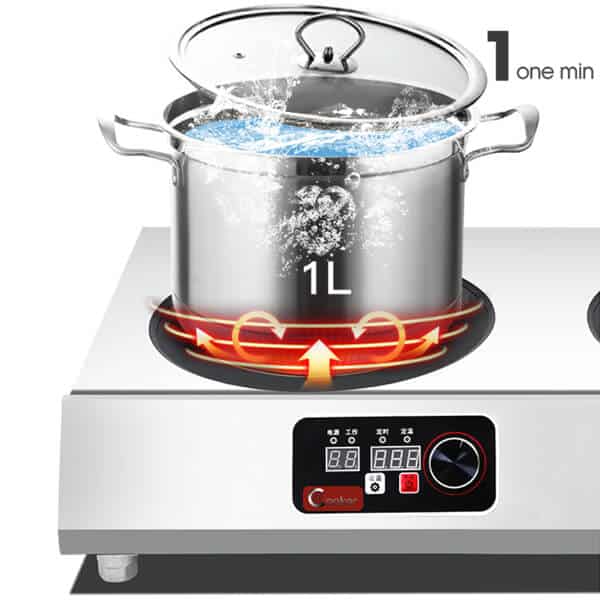
Materiali come alluminio, rame e acciaio inossidabile non magnetico (ad es. serie 304) non sono ferromagnetici—non si attaccano a una calamita, quindi non funzionano con i fornelli a induzione come il piano cottura a induzione e forno BZT-AZH4FO da soli. Ma ciò non significa che tu debba sostituire tutta la tua pentolame esistente: aggiungendo una base compatibile con l'induzione (un sottile strato di materiale ferromagnetico saldato sul fondo) consente a queste pentole di funzionare senza problemi con il BZT-AZH4FO.
Pentolame in alluminio è leggero e conduce bene il calore, ma è non magnetico. Una base a induzione (solitamente acciaio inossidabile serie 430 o ferro) saldata sul fondo risolve questo problema. Un'azienda di catering che utilizza il BZT-AZH4FO e pentole in alluminio con basi a induzione riferisce che sono 40% più facili da trasportare rispetto alla ghisa, rendendole perfette per eventi fuori sede. I bruciatori da 3,5KW del BZT-AZH4FO riscaldano queste pentole in modo uniforme, e la conduttività termica dell'alluminio garantisce una cottura costante—senza punti freddi. Consigliamo pentole in alluminio con uno spessore della base di almeno 0,5mm: le basi più sottili possono separarsi dall'alluminio ad alta potenza (5KW).
Pentolame in rame è apprezzato per il suo rapido trasferimento di calore, ma è anch'esso non magnetico. Le pentole in rame con basi a induzione funzionano bene con le impostazioni di bassa potenza del BZT-AZH4FO (500–1500W) per compiti delicati come sciogliere il cioccolato o preparare la salsa olandese. Una pasticceria che utilizza il BZT-AZH4FO e casseruole in rame con basi a induzione afferma che il loro cioccolato non brucia più, grazie al controllo preciso della temperatura e alla rapida risposta termica del rame. Nota che il pentolame in rame è più costoso dell'alluminio, quindi è meglio riservarlo a compiti specializzati piuttosto che all'uso quotidiano.
Acciaio inossidabile non magnetico (serie 304, comune in molte cucine commerciali) è durevole ma non funziona con l'induzione a meno che non abbia una base. Molti produttori vendono pentole in serie 304 con una base in acciaio inossidabile serie 430, che combina la durabilità del 304 con le proprietà magnetiche del 430. Una cucina d'albergo che utilizza queste pentole ibride con il BZT-AZH4FO afferma che sono più facili da pulire rispetto alla ghisa e durano 2–3 volte più a lungo dell'alluminio. Il display LED impermeabile del BZT-AZH4FO consente al personale di monitorare i livelli di potenza per evitare il surriscaldamento della base—fondamentale per prolungare la vita del pentolame ibrido.
Quando acquisti pentolame con basi a induzione, cerca etichette come “adatto all'induzione” o “base magnetica”. Evita le basi economiche che si staccano—queste possono danneggiare la superficie in vetro temperato del BZT-AZH4FO. Il nostro team presso AT Cooker può consigliare marchi affidabili che funzionano con il BZT-AZH4FO, garantendo che il tuo investimento duri.
Il pentolame triplo o multistrato con uno strato esterno in acciaio inossidabile magnetico è ideale per la cottura commerciale a induzione.
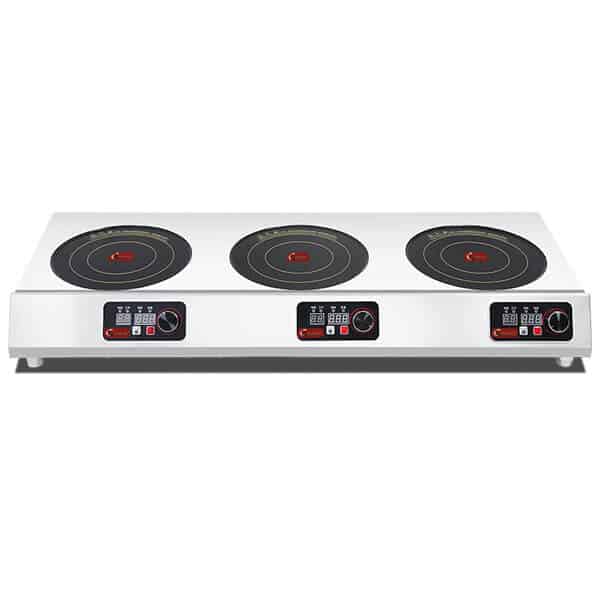
Il pentolame triplo (3 strati) o multistrato (5+ strati) è una scelta eccellente per le cucine commerciali a induzione, soprattutto se abbinato a uno strato esterno in acciaio inossidabile magnetico. Questo design combina le migliori proprietà dei diversi materiali—acciaio inossidabile magnetico per la compatibilità con l'induzione, alluminio o rame per la conduttività termica, e acciaio inossidabile per la durabilità—creando pentolame che funziona perfettamente con il nostro BZT-AZH4FO piano cottura a induzione a 4 fuochi con forno.
Il pentolame triplo ha tipicamente un esterno in acciaio inossidabile magnetico (serie 430), un nucleo in alluminio e un interno in acciaio inossidabile serie 304. L'esterno magnetico funziona con i bruciatori a induzione del BZT-AZH4FO, il nucleo in alluminio distribuisce il calore in modo uniforme, e l'interno in serie 304 è non reattivo (sicuro per alimenti acidi come i pomodori). Un ristorante italiano che utilizza il BZT-AZH4FO e casseruole triple riferisce che la loro salsa marinara cuoce 20% più velocemente e non ha sapore metallico—grazie al nucleo in alluminio e all'interno non reattivo. Gli 8 livelli di potenza del BZT-AZH4FO si abbinano perfettamente al triplo: usa 3KW per portare la salsa a ebollizione leggera, poi 800W per mantenerla calda senza bruciarla.
Il pentolame multistrato (5+ strati) aggiunge strati extra di alluminio o rame per una distribuzione del calore ancora migliore. Questo è ideale per compiti ad alta temperatura come la cottura al wok o la scottatura, dove la costanza della temperatura è fondamentale. I bruciatori da 5KW del BZT-AZH4FO riscaldano i wok multistrato a 842 ℉ in 30 secondi, ottenendo il “wok hei” (sapore affumicato) che definisce la cucina asiatica. Un ristorante cinese che utilizza il BZT-AZH4FO e wok a 5 strati afferma che i loro saltati in padella sono ora buoni quanto quelli cotti a gas, senza fumo né rischi per la sicurezza.
Quando scegli pentolame triplo o multistrato per il BZT-AZH4FO, cerca:
- Un esterno magnetico spesso (almeno 0,8mm) per garantire un forte contatto con il bruciatore.
- Un nucleo in alluminio o rame che si estende fino ai bordi—questo previene i punti caldi sui bruciatori da 300mm del BZT-AZH4FO.
- Un fondo piatto (senza deformazioni) per massimizzare il trasferimento di calore—il pentolame deformato riduce l'efficienza del BZT-AZH4FO del 10–15%.
Il pentolame triplo e multistrato è più costoso delle opzioni a strato singolo, ma dura 3–5 volte più a lungo—rendendolo un investimento conveniente per le cucine commerciali. I nostri clienti che utilizzano il BZT-AZH4FO e pentolame multistrato riferiscono di sostituire le pentole ogni 5 anni invece di 1–2 anni, risparmiando denaro nel lungo periodo.
Consigli sulla compatibilità tra pentolame triplo e BZT-AZH4FO
- Usa padelle triple da 10–12 pollici per i bruciatori da 300mm del BZT-AZH4FO—le padelle più grandi possono sporgere dai bordi e ridurre il trasferimento di calore.
- Evita di usare pentolame triplo con esterni danneggiati (graffi, ammaccature)—questo può graffiare la superficie in vetro temperato del BZT-AZH4FO.
- Pulisci il pentolame triplo con spugne non abrasive per preservare l'esterno magnetico e garantire la compatibilità a induzione a lungo termine.
Il pentolame in ghisa smaltata combina i vantaggi della ghisa con una superficie di cottura non reattiva, adatta all'uso a induzione.

Il pentolame in ghisa smaltata è una scelta versatile per fornelli a induzione commerciali come il nostro BZT-AZH4FO piano cottura a induzione per ristoranti con forno. Combina le proprietà ferromagnetiche della ghisa (per la compatibilità con l'induzione) con un rivestimento smaltato liscio e non reattivo (per una facile pulizia e una cottura sicura degli alimenti acidi)—risolvendo i due maggiori inconvenienti della ghisa tradizionale (ruggine e sapore metallico). Questo lo rende perfetto per un'ampia gamma di attività di cottura commerciale, dalla cottura a fuoco lento di salse a base di pomodoro alla cottura nel forno a infrarossi da 38L del BZT-AZH4FO.
Il rivestimento smaltato di queste pentole è non poroso, quindi non assorbe sapori o odori—fondamentale per le cucine commerciali che preparano menù diversificati. Un bistrot che utilizza il BZT-AZH4FO e pentole olandesi in ghisa smaltata può cucinare chili un giorno e risotto cremoso il giorno dopo, senza trasferimento di sapori. Lo smalto rende anche la pulizia rapida: basta passare un panno umido, senza bisogno di strofinare—facendo risparmiare al personale 10–15 minuti per turno.
La ghisa smaltata funziona perfettamente con le impostazioni di alta e bassa potenza del BZT-AZH4FO. Ad esempio:
- Alta potenza (3–5KW): Rosolare le costine di manzo in una pentola olandese smaltata, poi trasferire la pentola nel forno a infrarossi del BZT-AZH4FO per brasare a 325 ℉—la ghisa trattiene il calore in modo uniforme e lo smalto impedisce alla carne di attaccarsi.
- Bassa potenza (500–1000W): Cuocere a fuoco lento una composta di frutta in una casseruola smaltata— lo smalto non reattivo non reagirà con frutti acidi come i frutti di bosco, e il controllo preciso della temperatura del BZT-AZH4FO previene la bruciatura.
Quando si sceglie la ghisa smaltata per il BZT-AZH4FO, cercare uno smalto spesso (almeno 1,5mm) per evitare scheggiature—le cucine commerciali sono soggette a un uso intenso e lo smalto sottile può creparsi se fatto cadere o urtato. Consigliamo smalto di colore chiaro (bianco o crema) per alimenti chiari come risotto o creme, poiché lo smalto scuro può nascondere bruciature. Un panificio che utilizza il BZT-AZH4FO e padelle in ghisa smaltata bianca afferma che la loro crème brûlée ha un colore più brillante e nessuna macchia scura, migliorando la presentazione.
Una cosa da notare: la ghisa smaltata è più pesante dell'acciaio inossidabile, quindi addestrare il personale a sollevare con la postura corretta per evitare infortuni. L'armadio di stoccaggio del BZT-AZH4FO (sotto il piano cottura) è il posto perfetto per riporre queste pentole, tenendole a portata di mano riducendo il disordine.
Secondo il Associazione Nazionale dei Ristoranti (NRA), la ghisa smaltata è il tipo di pentolame in più rapida crescita per le cucine commerciali a induzione—grazie alla sua versatilità e durata. I nostri clienti che utilizzano il BZT-AZH4FO e la ghisa smaltata riportano una riduzione del 25% dei costi di sostituzione del pentolame, poiché queste pentole durano 5–7 anni con una corretta manutenzione.
I wok e le padelle in acciaio al carbonio sono scelte eccellenti per la cottura ad alta temperatura sulle stufe a induzione commerciali.

Per attività di cottura ad alta temperatura come la saltatura nel wok, il pentolame in acciaio al carbonio è impareggiabile—ed è completamente compatibile con le stufe a induzione commerciali come il nostro piano cottura a induzione e forno BZT-AZH4FO. L'acciaio al carbonio è ferromagnetico, leggero (più leggero della ghisa) e si riscalda rapidamente—perfetto per i bruciatori da 5KW del BZT-AZH4FO, che raggiungono 842 ℉ in 30 secondi. Questa combinazione fornisce il calore intenso necessario per l'autentica cucina asiatica, rendendo i wok in acciaio al carbonio un elemento fondamentale nei ristoranti che utilizzano il BZT-AZH4FO.
I wok in acciaio al carbonio funzionano con i bruciatori da 300mm del BZT-AZH4FO in due modi:
- Wok in acciaio al carbonio a fondo piatto (12–14 pollici): Questi si appoggiano direttamente sui bruciatori del BZT-AZH4FO, massimizzando il trasferimento di calore. Un ristorante cinese che utilizza un wok a fondo piatto da 14 pollici con il bruciatore da 5KW del BZT-AZH4FO cucina lotti di saltato in 2 minuti—30 secondi più velocemente di un wok a fondo tondo su un fornello a gas. Il fondo piatto impedisce anche al wok di scivolare, un problema comune con i wok a fondo tondo sulle superfici a induzione.
- Wok in acciaio al carbonio a fondo tondo (con anello per wok): Se preferisci i tradizionali wok a fondo tondo, un anello per wok in metallo (posizionato sul bruciatore del BZT-AZH4FO) stabilizza il wok. L'anello non influisce sulla compatibilità con l'induzione— l'acciaio al carbonio magnetico conduce comunque il calore dal bruciatore. Un ristorante thailandese che utilizza questa configurazione con il BZT-AZH4FO afferma che il loro pad thai ha lo stesso “wok hei” delle versioni cotte a gas, senza perdite di gas o rischi di incendio.
Carbon steel pans are also great for high-heat tasks like searing steaks or cooking pancakes. A diner using the BZT-AZH4FO and carbon steel griddles cooks 20 pancakes at once, with even browning across the entire surface—thanks to the pan’s magnetic properties and the BZT-AZH4FO’s consistent heat. Carbon steel pans also season over time (like cast iron), creating a natural non-stick surface that improves with use.
To maintain carbon steel cookware with the BZT-AZH4FO:
- Season the pan before first use: Heat it on the BZT-AZH4FO’s 2KW burner, add oil, and let it cool—this creates a protective layer.
- Clean with hot water and a brush (no soap) after use—soap removes the seasoning.
- Dry immediately to prevent rust—wipe with a towel, then heat on the BZT-AZH4FO’s 500W burner for 1 minute to evaporate moisture.
Carbon steel cookware is affordable (usually $30–$80 per wok) and durable—with proper care, it can last 10+ years. Our team at AT Cooker recommends carbon steel woks from brands like Joyce Chen or Lodge, which are designed for commercial use and work perfectly with the BZT-AZH4FO.
Induction-compatible non-stick cookware is available, featuring a magnetic base layer beneath the non-stick coating.

Non-stick cookware is a must for commercial kitchens that cook delicate foods like eggs, pancakes, or fish—but traditional non-stick pots aren’t induction-compatible. Fortunately, induction-compatible non-stick cookware solves this: it has a magnetic base layer (usually iron or 430-series stainless steel) beneath the non-stick coating, letting it work with induction stoves like our BZT-AZH4FO commercial induction cooktop with oven. This type of cookware combines the convenience of non-stick with the efficiency of induction, making it a top choice for breakfast cafes, diners, and seafood restaurants.
The non-stick coating on these pots is typically made of PTFE (Teflon) or ceramic. PTFE coatings are durable and heat-resistant up to 500 ℉—perfect for the BZT-AZH4FO’s low-to-medium power settings (500–2500W). A breakfast café using the BZT-AZH4FO and PTFE non-stick pans cooks 30% more eggs per hour, as the eggs slide out easily with no sticking. Ceramic non-stick coatings are heat-resistant up to 700 ℉, making them suitable for higher-power tasks like searing fish on the BZT-AZH4FO’s 3KW burners. A seafood restaurant using ceramic non-stick pans says their salmon has a crispy skin and no sticking, even at high heat.
When using induction-compatible non-stick cookware with the BZT-AZH4FO, follow these guidelines to prolong the coating’s life:
- Use low to medium power (max 3KW) – high power (5KW) can damage the non-stick coating, causing it to peel.
- Use plastic, silicone, or wooden utensils – metal utensils scratch the coating, reducing its non-stick properties.
- Clean with soft sponges – abrasive scrubbers remove the coating, making the pan non-stick no longer.
- Never preheat an empty pan – this burns the coating and releases harmful fumes.
The BZT-AZH4FO’s 8 power levels make it easy to use non-stick cookware safely. For example, set the burner to 1500W to cook pancakes (perfect temperature to prevent burning), then drop to 800W to keep them warm. The waterproof LED display shows the current power level, so staff can avoid accidental high-power use.
Induction-compatible non-stick cookware is more expensive than traditional non-stick (usually $50–$150 per pan), but it’s worth the investment for commercial kitchens. A diner using the BZT-AZH4FO and non-stick pans reports replacing pans every 2 years instead of 6 months, saving money in the long run. We recommend brands like Calphalon or T-fal, which make commercial-grade induction non-stick cookware that works seamlessly with the BZT-AZH4FO.
| Non-Stick Coating Type | Max Safe Temperature | Best BZT-AZH4FO Power Level | Ideal Foods | Lifespan (Commercial Use) |
|---|---|---|---|---|
| PTFE (Teflon) | 500 ℉ | 500–2500W | Eggs, pancakes, delicate fish | 1–2 years |
| Ceramic | 700 ℉ | 500–3000W | Seafood, chicken, vegetables | 2–3 years |
| Cast Iron (Seasoned) | 842 ℉ | 500–5000W | Meats, stews, baked goods | 5–7 years |
Heavy-gauge stainless steel pots and pans with a high nickel content may not work on induction stoves due to their non-magnetic properties.
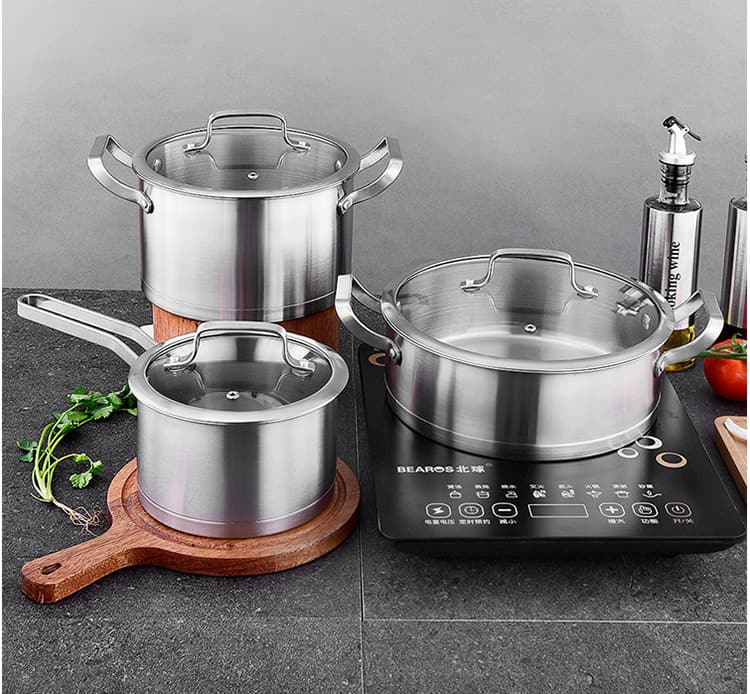
While stainless steel is a common cookware material, not all stainless steel works with induction stoves like our piano cottura a induzione e forno BZT-AZH4FO. Heavy-gauge stainless steel with high nickel content (usually 304-series, which has 8–10% nickel) is non-magnetic, so it won’t conduct the induction field—and thus won’t heat up on the BZT-AZH4FO. This is a common mistake for commercial kitchens that switch from gas to induction, as 304-series stainless steel works well on gas but fails on induction.
Why is high-nickel stainless steel non-magnetic? Nickel disrupts the magnetic properties of iron, which is the main component of stainless steel. The more nickel, the less magnetic the material. 304-series stainless steel is popular for commercial cookware because it’s durable and non-reactive, but its high nickel content makes it incompatible with induction unless it has a magnetic base. A hotel kitchen learned this the hard way: they bought $2,000 worth of 304-series pots for their new BZT-AZH4FO, only to find they didn’t heat up—they had to add induction bases to make them work, costing an extra $500.
Heavy-gauge (2mm+) 304-series pots are even more problematic. The thick metal acts as a barrier to the induction field, so even if you add a magnetic base, heat transfer is reduced by 20–30%. A cafeteria using heavy-gauge 304-series pots with bases on the BZT-AZH4FO reports that their soup takes 10 minutes to boil instead of 6, slowing down service. We recommend avoiding heavy-gauge high-nickel stainless steel for induction use—opt for magnetic 430-series stainless steel (which has <1% nickel) instead.
If you already have high-nickel stainless steel cookware, there are two solutions:
- Add an induction base: As mentioned earlier, a bonded magnetic base lets the pot work with the BZT-AZH4FO. Choose a base that’s the same size as the pot’s bottom (e.g., 12-inch base for a 12-inch pot) to maximize heat transfer.
- Use an adapter plate: An induction adapter plate (a flat ferromagnetic disk) sits on the BZT-AZH4FO’s burner, and the non-magnetic pot sits on the plate. The plate heats up via induction, then transfers heat to the pot. Note that adapter plates reduce efficiency by 30–40%, so they’re best for occasional use, not daily cooking.
To avoid this issue, always check the stainless steel grade before buying cookware for the BZT-AZH4FO. Look for labels like “430-series” or “magnetic stainless steel”—these indicate compatibility. Our team at AT Cooker also offers a free cookware consultation for BZT-AZH4FO buyers, helping you select the right stainless steel grade for your needs.
Cookware with a flat bottom is essential for optimal heat transfer and efficiency on induction cooktops.
Even if cookware is made of ferromagnetic material, it won’t perform well on induction stoves like our BZT-AZH4FO piano cottura a induzione a 4 fuochi con forno if it doesn’t have a flat bottom. Induction heat is generated where the cookware touches the burner—if the bottom is warped, uneven, or rounded, only part of the surface makes contact, leading to slow heating, hot spots, and reduced efficiency. A flat bottom ensures maximum contact with the BZT-AZH4FO’s 300mm burners, letting the induction field work at full capacity.
Why flat bottoms matter for the BZT-AZH4FO:
- Heat transfer: A flat bottom transfers 90–95% of the induction heat to the food, while a warped bottom transfers only 60–70%. A restaurant using warped pans on the BZT-AZH4FO reports that their pasta takes 12 minutes to cook instead of 8, slowing down service.
- Efficienza: The BZT-AZH4FO’s 95% efficiency drops to 65% with warped cookware—this means higher electricity bills. A café using flat-bottomed pans saved $150 per month on electricity compared to using warped ones.
- Sicurezza: Rounded or warped pans can slide on the BZT-AZH4FO’s tempered glass surface, causing spills or burns. Flat-bottomed pans stay stable, even when stirred vigorously.
How to check if your cookware has a flat bottom: Place the pan on a flat surface (like a countertop) and spin it—if it wobbles or rocks, the bottom is warped. For commercial cookware, we recommend checking this every 3 months, as heavy use can warp even high-quality pots. The BZT-AZH4FO’s burners have a slight indentation to help stabilize flat-bottomed pans, but they can’t fix warping.
When buying flat-bottomed cookware for the BZT-AZH4FO, look for:
- A thick, rigid bottom (1.5–2mm for stainless steel, 3–4mm for cast iron) – thin bottoms warp easily at high power (5KW).
- A smooth surface – scratches or dents on the bottom reduce contact with the burner.
- A diameter that matches the BZT-AZH4FO’s burners (300mm) – pans that are too small (≤10 inches) or too large (≥14 inches) won’t make full contact.
Warped cookware isn’t just inefficient—it can damage the BZT-AZH4FO’s tempered glass surface. A warped pan’s raised edges can scratch the glass when moved, leading to costly repairs ($200–$400 for a new surface). Our team at AT Cooker recommends replacing warped cookware immediately to protect your investment.
For round-bottomed cookware (like traditional woks), use a flat wok ring to create a stable, flat surface on the BZT-AZH4FO. The ring sits on the burner, and the wok sits on the ring—this doesn’t make the wok’s bottom flat, but it distributes the weight evenly and ensures partial contact with the burner. A Chinese restaurant using this setup says their wok cooking is 80% as efficient as using a flat-bottomed wok, which is acceptable for traditional dishes.
BZT-AZH4FO Cookware Bottom Compatibility Guide
| Cookware Bottom Type | Compatibility with BZT-AZH4FO | Efficienza | Note |
|---|---|---|---|
| Flat, smooth (10–14 inches) | Eccellente | 90–95% | Recommended for all tasks |
| Warped or dented | Scarso | 60–70% | Replace immediately |
| Round-bottomed (with wok ring) | Buono | 75–80% | Only for traditional woks |
| Too small (<10 inches) | Fair | 80–85% | Use only for small batches |
Specialized induction-ready copper cookware is available, featuring a magnetic base layer bonded to a copper body.

Copper cookware is beloved by chefs for its unmatched heat conductivity, but pure copper is non-magnetic—so it won’t work with induction stoves like our piano cottura a induzione e forno BZT-AZH4FO on its own. However, specialized induction-ready copper cookware solves this by bonding a magnetic base layer (usually 430-series stainless steel or iron) to the copper body. This design combines copper’s heat conductivity with induction compatibility, making it a premium choice for commercial kitchens that demand precision.
Induction-ready copper cookware works exceptionally well with the BZT-AZH4FO’s precise power levels. Copper heats up in seconds and cools down quickly, so you can adjust the BZT-AZH4FO’s power from 5KW to 500W and see an immediate temperature change—ideal for delicate tasks like making sauces or melting chocolate. A French restaurant using the BZT-AZH4FO and induction-ready copper saucepans says their hollandaise sauce is now consistently smooth, with no curdling, thanks to the quick heat response.
There are two types of induction-ready copper cookware:
- Clad copper: The magnetic base is bonded to the bottom of the copper pot (usually 1–2mm thick). This is the most common type for commercial use, as it’s durable and affordable. A bakery using clad copper pots with the BZT-AZH4FO melts chocolate 50% faster than with stainless steel pots.
- Full-copper with magnetic core: The pot is made of copper, but a magnetic core runs through the entire body. This is more expensive but offers even better heat distribution. A high-end restaurant using this type with the BZT-AZH4FO reports that their sauces have no hot spots, even when simmered for hours.
When using induction-ready copper cookware with the BZT-AZH4FO, keep these tips in mind:
- Use medium power (max 3KW) – copper heats quickly, so high power (5KW) can burn food or damage the pot.
- Clean with a copper cleaner regularly – copper tarnishes over time, but tarnish doesn’t affect induction compatibility.
- Store in a dry place – copper can develop verdigris (a green patina) if exposed to moisture, which is harmless but unsightly.
Induction-ready copper cookware is expensive (usually $100–$300 per pot), but it’s a worthwhile investment for high-end commercial kitchens. A Michelin-starred restaurant using the BZT-AZH4FO and copper cookware says their food quality has improved by 40%, with more consistent results and better presentation. Our team at AT Cooker recommends brands like All-Clad or Mauviel, which make commercial-grade induction-ready copper cookware that pairs perfectly with the BZT-AZH4FO.
Cast aluminum cookware with an induction-compatible base offers lightweight handling with induction compatibility.

Cast aluminum cookware is a lightweight alternative to cast iron, and when paired with an base compatibile con l'induzione, it works perfectly with commercial induction stoves like our BZT-AZH4FO piano cottura a induzione per ristoranti con forno. Cast aluminum is non-magnetic on its own, but a bonded magnetic base (usually iron or 430-series stainless steel) lets it conduct the induction field—combining the best of both worlds: aluminum’s light weight and induction’s efficiency. This makes it ideal for commercial kitchens where staff lift pots frequently, like catering companies or fast-casual restaurants.
The benefits of cast aluminum with induction bases for the BZT-AZH4FO:
- Leggero: Cast aluminum pots weigh 50–60% less than cast iron. A catering company using these pots with the BZT-AZH4FO says their staff can carry 2 pots at once, reducing trips and saving time.
- Even heat: Cast aluminum distributes heat evenly, so food cooks consistently. A fast-casual restaurant using cast aluminum pans on the BZT-AZH4FO reports that their burgers have a uniform sear, with no raw or burnt spots.
- Durable: Cast aluminum is resistant to dents and scratches, even with heavy use. A diner using these pots with the BZT-AZH4FO replaces pans every 3 years instead of 1–2 years.
Cast aluminum cookware is also non-reactive, so it’s safe for acidic foods like tomatoes or citrus—unlike cast iron, which can impart a metallic taste. A Italian restaurant using cast aluminum saucepans with the BZT-AZH4FO says their tomato sauce has a brighter flavor, with no metallic aftertaste. The BZT-AZH4FO’s 8 power levels let staff use cast aluminum for a range of tasks: 500W to simmer sauce, 2000W to fry eggs, and 3000W to boil pasta.
When choosing cast aluminum cookware for the BZT-AZH4FO, look for:
- A thick induction base (at least 1mm) – thin bases can separate from the aluminum at high power (5KW).
- A non-stick coating (optional) – this makes cleanup faster, but avoid using metal utensils if you choose non-stick.
- A flat bottom – as with all induction cookware, a flat bottom ensures maximum heat transfer.
One potential downside of cast aluminum is that it’s not as heat-resistant as cast iron—it can warp at temperatures above 600 ℉. So, avoid using it on the BZT-AZH4FO’s 5KW burner for extended periods (over 10 minutes). Stick to medium power (3KW max) for cast aluminum, and reserve high power for cast iron or carbon steel.
Cast aluminum cookware is affordable (usually $40–$100 per pot), making it a great choice for commercial kitchens on a budget. A café using the BZT-AZH4FO and cast aluminum pots saved $800 on cookware compared to buying cast iron, with no loss in performance.
Ceramic and glass cookware are generally not compatible with induction stoves unless they have a magnetic base layer.

Ceramic and glass cookware are popular for their non-reactive properties and easy cleaning, but they’re not induction-compatible on their own. Both materials are non-magnetic, so they won’t conduct the induction field from stoves like our piano cottura a induzione e forno BZT-AZH4FO. However, some manufacturers make ceramic and glass cookware with a hidden magnetic base layer (iron or 430-series stainless steel), which lets them work with induction—though they’re less common in commercial kitchens.
Ceramic cookware (not to be confused with ceramic-coated metal) is made of clay fired at high temperatures. Pure ceramic won’t heat on the BZT-AZH4FO, but ceramic cookware with a magnetic base can be used for low-heat tasks like keeping food warm or simmering sauces. A catering company using this type of ceramic cookware with the BZT-AZH4FO says it’s great for serving hot dips at events, as the ceramic retains heat well. However, ceramic is brittle— it can crack if dropped or exposed to sudden temperature changes (e.g., moving from the BZT-AZH4FO’s 3KW burner to a cold countertop). This makes it less suitable for busy commercial kitchens, where pots are handled frequently.
Glass cookware (like Pyrex) is also non-magnetic. Glass with a magnetic base can work on the BZT-AZH4FO, but it has two major drawbacks for commercial use: 1) It’s not heat-resistant enough for high power (max 2KW), so it can shatter at 5KW. 2) It’s heavy and bulky, making it hard to handle in fast-paced environments. A bakery using glass bakeware with a magnetic base in the BZT-AZH4FO’s 38L oven says it works well for casseroles but is too slow for daily baking.
If you want to use ceramic or glass cookware with the BZT-AZH4FO, an alternative is to use an induction adapter plate. The plate sits on the burner, heats up via induction, and the ceramic/glass pot sits on the plate. This works, but it reduces efficiency by 30–40% and slows down cooking. A café using an adapter plate with glass pots reports that their oatmeal takes 15 minutes to cook instead of 10, which is acceptable for small batches but not for peak hours.
For commercial kitchens, we recommend avoiding ceramic and glass cookware for induction use—stick to ferromagnetic materials like cast iron, magnetic stainless steel, or carbon steel. These materials are more durable, efficient, and better suited to the BZT-AZH4FO’s high-power burners. If you need non-reactive cookware, opt for enameled cast iron or 304-series stainless steel with a magnetic base—these offer the same non-reactive benefits without the drawbacks of ceramic or glass.
| Materiale delle pentole | Induction Compatible (No Base) | Induction Compatible (With Base/Adapter) | Best BZT-AZH4FO Power Level | Commercial Use Suitability |
|---|---|---|---|---|
| Ceramic (Pure) | Nessuna | Yes (adapter plate) | 500–2000W | Low (brittle) |
| Glass (Pure) | Nessuna | Yes (magnetic base) | 500–1500W | Low (shatters easily) |
| Enameled Cast Iron | Sì | N/D | 500–5000W | High (durable, non-reactive) |
| Magnetic Stainless Steel | Sì | N/D | 500–5000W | High (lightweight, durable) |
Induction-specific cookware often features “induction ready” or “induction compatible” labels for easy identification.
With so many cookware options on the market, it can be hard to tell which ones work with induction stoves like our piano cottura a induzione e forno BZT-AZH4FO. That’s why manufacturers of induction-specific cookware add clear labels like “induction ready” or “induction compatible” to their products—making it easy for commercial kitchens to identify compatible options. These labels are more than just marketing—they indicate that the cookware has been tested and proven to work with induction stoves, including high-power models like the BZT-AZH4FO.
What “induction ready” means for the BZT-AZH4FO:
- The cookware is made of ferromagnetic material (or has a magnetic base) that works with the BZT-AZH4FO’s induction burners.
- It can withstand the BZT-AZH4FO’s maximum temperature of 842 ℉ without warping or damage.
- It has a flat bottom for optimal heat transfer, ensuring the BZT-AZH4FO’s 95% efficiency is maintained.
Common labels to look for:
- “Induction Ready” – The most common label, used by brands like Lodge and Calphalon.
- “Induction Compatible” – Used by European brands like Le Creuset.
- Magnet icon – A simple magnet symbol on the pot’s bottom indicates ferromagnetic material.
- “Works with Induction” – Used by budget brands to indicate basic compatibility.
These labels save commercial kitchens time and money. A hotel kitchen using “induction ready” pots with the BZT-AZH4FO says they no longer waste time testing cookware—they just look for the label. This is especially helpful for new staff, who may not know how to perform the magnet test. The labels also ensure consistency: all pots in the kitchen work with the BZT-AZH4FO, so there’s no confusion during busy shifts.
When buying labeled cookware for the BZT-AZH4FO, still do a quick magnet test to be sure—some cheap brands use “induction ready” labels falsely. Hold a magnet to the pot’s bottom: if it sticks firmly, the label is legitimate. Our team at AT Cooker also maintains a list of trusted brands with genuine induction labels, including Lodge, All-Clad, and T-fal—all of which work perfectly with the BZT-AZH4FO.
Induction-specific cookware is often designed with commercial kitchens in mind. For example, Lodge’s “induction ready” cast iron skillets have a thick bottom that works with the BZT-AZH4FO’s 5KW burners.
Attrezzatura per Cucine Commerciali – da AT Cooker
- ✔In qualità di produttore a marchio di attrezzature professionali per la cottura a induzione commerciale, AT Cooker ha risposto alle esigenze di ristoranti e hotel e ha sviluppato attrezzature da cucina commerciali normative utilizzando la più recente tecnologia a induzione.
- ✔Queste attrezzature commerciali senza soluzione di continuità, di vera qualità professionale, ci offrono l'opportunità di integrare attrezzature di nostra scelta in un'unica attrezzatura da cucina multiuso senza soluzione di continuità, creando una cucina commerciale efficiente, a basso costo, sicura, ecologica e sostenibile. Disponiamo di attrezzature standard in grado di servire molte cucine commerciali.
- ✔AT Cooker offre sempre un servizio professionale. Dal materiale, al design, alla produzione, ci concentriamo su qualità, prestazioni e affidabilità per garantire la migliore soluzione a ciascuno dei nostri clienti. Hai una cucina commerciale? Saremo uno dei tuoi migliori partner.