Presso AT Cooker, collaboriamo con centinaia di gestori di cucine commerciali che chiedono regolarmente informazioni sui piano cottura a induzione consumi energetici. Non si tratta solo di elettricità: si tratta di preventivare le bollette, garantire la capacità elettrica e scegliere modelli efficienti dal punto di vista energetico. Dopo aver testato dozzine dei nostri piastre a induzione e analizzato i dati dei clienti, abbiamo raccolto indicazioni pratiche sui consumi energetici delle piastre commerciali.
Le piastre commerciali consumano tipicamente da 1.200 a 3.000 Watt
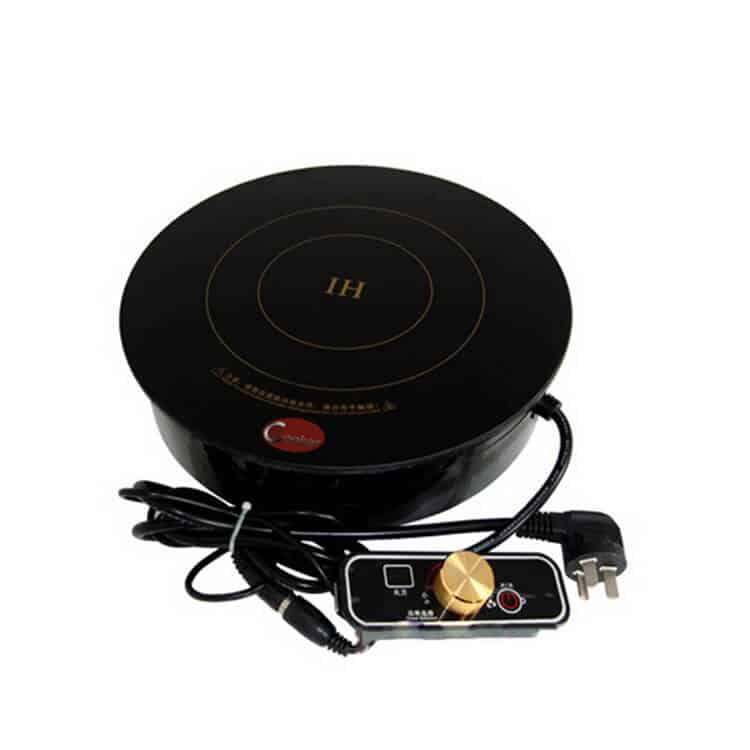
Il consumo energetico varia in base a dimensioni e design. Le piastre elettriche tradizionali a spirale vanno da 1.200-2.500W, mentre quelle a piastre a induzione induzione si attestano tra 1.500-3.000W. Il nostro modello più popolare, l'AT-CHP18 (monofuoco a piano cottura a induzioneinduzione), utilizza 1.800W: perfetto per cucine di piccole e medie dimensioni. La maggior parte delle volte si utilizzano impostazioni più basse (500-1.000W), quindi il consumo effettivo è inferiore alla potenza massima.
Storia del cliente: Food truck per la colazione a Denver: “Uso l'AT-CHP18 per 6 ore al giorno, la bolletta elettrica è aumentata solo di $15: molto meno del previsto.”
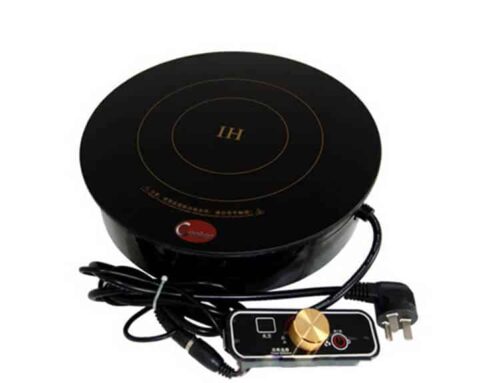
AT Cooker 1 fuoco
AT-CHP18 max
Resistenza elettrica
Non a induzione

Le piastre a induzione sono più efficienti dal punto di vista energetico (1.500-2.500W)
Le piastre a induzione convertono l'85-90% dell'energia in calore rispetto al 50-60% delle spirali elettriche. Un modello a induzione da 2.000W fa bollire 2L d'acqua in 6 min (0,2 kWh) rispetto ai 12 min (0,4 kWh) di una spirale: il doppio dell'energia. Un ristorante di Chicago ha registrato una riduzione del 35% nei consumi elettrici di cottura dopo il passaggio.
| Tipo | Potenza massima | Efficienza | Bollire 2L | Energia |
|---|---|---|---|---|
| AT Cooker Induzione (AT-CHP20) | 000W | 88% | 6 min | 0,2 kWh |
| Resistenza elettrica | 000W | 55% | 12 min | 0,4 kWh |
| Gas | 000 BTU | 45% | 8 min | ≈2,5 kWh eq |
Storia del cliente: Maria, ristorante di Chicago: “Prima spendevamo $400 al mese per l'energia delle piastre. Ora sono $260: tutto perché l'induzione usa l'energia in modo più efficiente.”
Il consumo energetico varia in base alle impostazioni di temperatura e al carico di cottura
Il consumo effettivo dipende dall'utilizzo. Le nostre piastre a induzione piastre a induzione hanno 8 impostazioni: 300W (cottura lenta 140-180°F), 800W (media 250-300°F), 1.800W (alta 400-450°F). Un caffè a Seattle: “Il consumo energetico giornaliero è di soli 1,2 kWh: circa $0,18 al giorno.” Anche il carico di cottura conta: il carico pieno assorbe il 20-30% in più rispetto al mezzo carico.
| Attività | Potenza | Tempo | Energia |
|---|---|---|---|
| Mantenere caldo il latte | 300 W | 4 ore | 1,2 kWh |
| Cuocere panini | 800W | 0,5 ore | 0,9 kWh |
| Riscaldare la zuppa | 800 W | 1 ora | 0,8 kWh |
| Totale giornaliero | — | 5,5 ore | 2,9 kWh ($0,44) |
Le piastre multifuoco possono assorbire fino a 4.000W o più
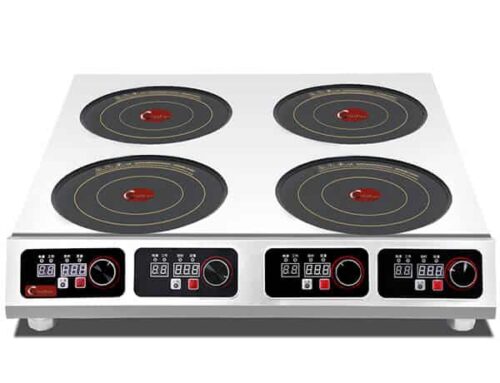
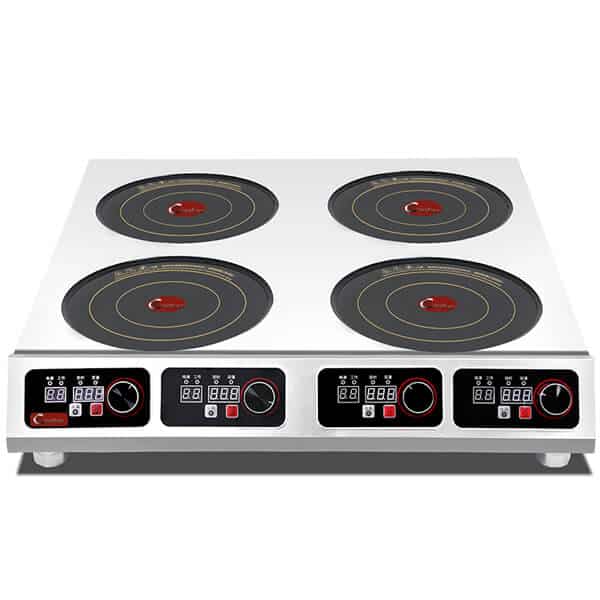
Le nostre piastre a 2 fuochi piastre a induzione (AT-CHP2x20) utilizzano 4.000W totali (2.000W per fuoco); quella a 4 fuochi (AT-CHP4x18) utilizza 7.200W. Le unità multifuoco non utilizzano sempre la potenza massima per tutti i fuochi contemporaneamente. Un ospedale di Atlanta: “L'assorbimento medio è di 3.600W, non 7.200W.” Verificare la capacità elettrica della cucina prima di scegliere una piastra multifuoco.

Storia del cliente: Un ristorante di Boston stava per acquistare il modello da 7.200W ma il circuito supportava solo 5.000W. Abbiamo consigliato invece quello a 2 fuochi da 4.000W: la soluzione perfetta.
5. Induction Hot Plates Convert Up to 90% of Energy into Heat
Induction uses magnetic fields to heat cookware directly—almost no energy wasted. Our induction heating hot plate models convert 85-90% of electricity into usable heat vs 50-60% (coil) and 40-45% (gas). A 2,000W induction at 8hrs/day wastes only 200-300W/hr vs 800-1,000W/hr for coil.
Storia del cliente: Mike, Sunshine Diner (Orlando): “Kitchen is 10°F cooler after switching to induction. AC bill dropped $150/month on top of $100 hot plate energy savings.” A 50-location fast-food chain saw 28% drop in cooking energy costs.
6. Adjustable Power Levels to Optimize Energy Use
Tutti i modelli AT Cooker piano cottura a induzione models have 8 adjustable power levels (10%-100%). AT-CHP25 Pro has 16 levels + smart presets. A bakery in Portland: “Presets take guesswork out—we pick the preset and let the hot plate do the rest.” Adjustable levels are essential for catering on generators (limit to 800W to avoid tripping breakers).
| Level | Watts | Temp | Tasks |
|---|---|---|---|
| 1 (10%) | 180W | 120-140°F | Keeping warm |
| 3 (30%) | 540W | 180-220°F | Simmer sauces |
| 5 (50%) | 900W | 250-300°F | Rice, oatmeal |
| 8 (80%) | 1,440W | 350-400°F | Sauté, eggs |
| 10 (100%) | 800W | 400-450°F | Boil, sear, fry |
7. Continuous High Settings Increase Overall Consumption
2,000W at 100% for 8hrs = 16 kWh/day vs 8 kWh at 50%. A 24hr Chicago diner spent $288/month at full power. After using lower settings for warming, cost dropped to $192—33% savings. Recommendations: use low/medium for non-high tasks, turn off when not in use, use warming tray instead of hot plate on low.
8. Energy-Saving Modes Reduce Power During Idle Periods
AT Cooker Pro series auto-lowers power to 100W if no cookware detected for 5 min, then shuts off after another 5 min. A NYC café saves 0.5 kWh/day ($27/year). Eco-mode limits max power to 80%—a Las Vegas hotel reported 15% drop in hot plate energy during off-peak hours.
Standby Power
Pro models (vs 1,800W)
Eco-Mode Savings
Per hot plate
9. Single-Burner Models Typically Operate Around 1,800 Watts
1,800W is the sweet spot: powerful enough for most tasks but won’t strain electrical systems. Our AT-CHP18 is used by thousands of businesses. Compatible with most 20-amp 240V outlets (up to 4,800W capacity). A food truck in Austin: “1,800W is perfect—cooks burgers and fries without draining generator.”

10. Digital Controls Allow Precise Power Management
Digital displays show current watts, temperature, total kWh used, and cooking time. A San Francisco restaurant: “We noticed 2,500W for pasta was overkill—2,000W works just as well, saving 0.5 kWh/day ($27/year).” Some models allow power limits (e.g., max 1,500W) to prevent overuse. A 20-location hotel chain set 2,000W limit and saw 12% company-wide energy drop.
11. Power Requirements Must Match Kitchen Electrical Capacity
Common mistake: buying a hotplate induction that exceeds electrical capacity. Most commercial units need 240V. Amps: 1,500W=6.25A (10A circuit), 1,800W=7.5A (10A), 2,500W=10.4A (15A), 4,000W 2-burner=16.7A (20A), 7,200W 4-burner=30A (30A). We provide free electrical checklists.
Storia del cliente: Lisa, Seattle bakery: “We tried 2,500W on 10-amp circuit—breaker tripped every time. $200 upgrade to 15A fixed it. Should have checked first.”
12. Regular Maintenance Ensures Efficient Energy Use
Dust and debris increase consumption by 10-15%. AT Cooker recommends: daily surface clean (soft cloth + mild detergent), quarterly coil inspection (compressed air), monthly cord check, annual control calibration. A Miami diner neglected cleaning for 6 months—energy increased 12%. After cleaning, returned to normal. Well-maintained hot plates last 7+ years vs 4-5 years.
13. Certification Labels Guarantee Energy Standard Compliance
AT Cooker certifications: CE (EU EN 60335-2-9), ETL (UL 197/CSA), Energy Star (some models, 15% less energy), FCC (EMI standards). A California hotel chain bought 50 Energy Star units and received $10,000 rebate—covering 20% of purchase. Avoid non-certified: poor efficiency (70-75%), may not meet safety standards.
AT Cooker’s Advice for Managing Hot Plate Power Consumption
Managing piano cottura a induzione power is about choosing right wattage + smart use + maintenance.
- Choose right wattage: 1,500-1,800W for small tasks; 2,000-2,500W for large batches
- Use power levels: Low for warming, medium for cooking, high for boiling—cuts energy 30-40%
- Digital controls: Precise management with monitoring and presets
- Maintain regularly: Clean surface/coil, inspect cord, calibrate controls
- Check electrical capacity: Ensure circuit handles requirements
We provide custom energy-use estimates and free electrical assessments.
Domande frequenti
How much power does a commercial induction hot plate use?
Commercial induction hot plates typically consume 1,200-3,000 watts depending on size and model. AT Cooker’s most popular single-burner model (AT-CHP18) uses 1,800 watts at maximum power. However, most cooking tasks use lower settings (300-1,440W), so actual daily energy consumption is typically 2-4 kWh.
Are induction hot plates more energy-efficient than traditional electric hot plates?
Yes. Induction hot plates convert 85-90% of electrical energy into usable heat, compared to 50-60% for traditional electric coil hot plates. A 2,000W induction model boils 2 liters of water in 6 minutes using 0.2 kWh, while the same wattage electric coil takes 12 minutes using 0.4 kWh—twice the energy.
How much does it cost to run a commercial hot plate per day?
Based on typical café usage (300W warming 4hrs + 1,800W cooking 0.5hrs + 800W heating 1hr), daily energy is about 2.9 kWh, costing approximately $0.44/day at $0.15/kWh. For a restaurant using a 2,000W induction hot plate 8 hours/day at mixed settings, monthly cost is typically $60-$100.
What electrical circuit do I need for a commercial induction hot plate?
Most commercial induction hot plates require a 240V circuit. A 1,800W single-burner needs 7.5 amps (10-amp circuit); a 2,500W model needs 10.4 amps (15-amp circuit); a 4,000W 2-burner needs 16.7 amps (20-amp circuit). Always check your kitchen’s electrical capacity before purchasing.
How can I reduce the power consumption of my commercial hot plate?
Key strategies: use adjustable power levels (low for warming, high only when needed), take advantage of energy-saving modes that auto-reduce power during idle periods, maintain the unit regularly (clean surface and coil), and use digital controls for precise power management. These practices can reduce energy use by 30-40%.