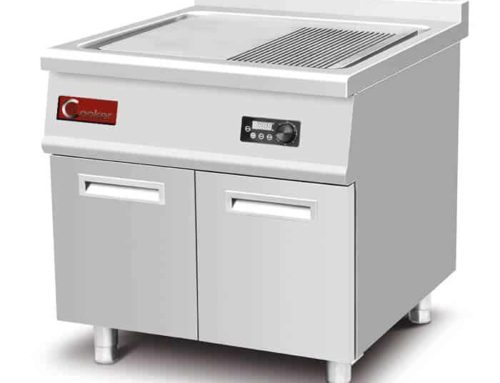
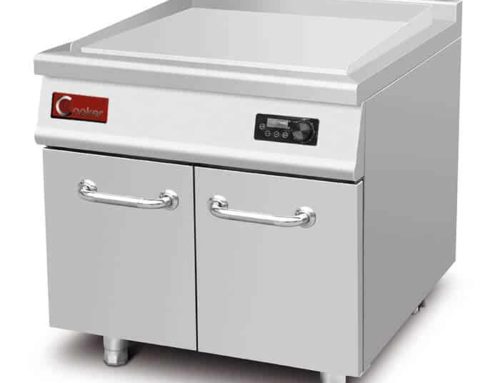
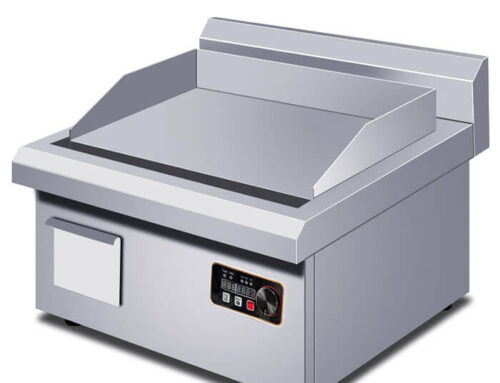
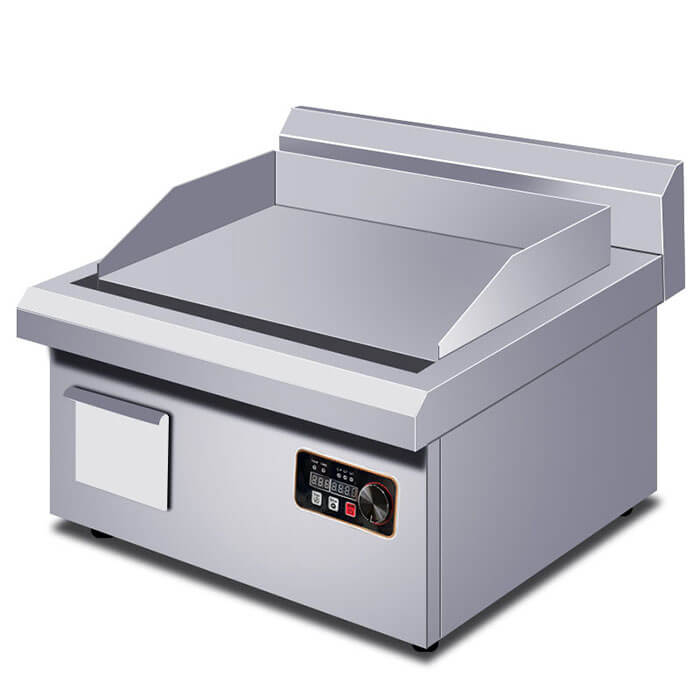
Nella valutazione piastre a induzione come il modello AT Cooker QRPLT-A5CB5 (modello da banco da 5000W), il compromesso tra costo iniziale più elevato e spese a lungo termine inferiori è fondamentale. A differenza delle piastre tradizionali a gas o elettriche, i modelli a induzione richiedono un investimento iniziale maggiore, determinato da componenti premium come i moduli IGBT Infineon tedeschi e i corpi in acciaio inossidabile 304. Tuttavia, la loro efficienza energetica del 95%, le esigenze di manutenzione minime e il design durevole generano risparmi significativi a lungo termine che compensano il costo iniziale entro 1–2 anni.
Le specifiche del QRPLT-A5CB5—design plug-in (nessun costo di cablaggio fisso), funzioni anti-surriscaldamento (che prevengono riparazioni costose) e superficie in vetro temperato facile da pulire—riducono ulteriormente le spese continue. Di seguito analizziamo 13 fattori di costo chiave, confrontando le spese iniziali con i costi a lungo termine di manutenzione, energia e manodopera. Esempi reali e una tabella comparativa dei costi su 5 anni illustrano come questa piastra cottura a induzione offra un costo totale di proprietà (TCO) inferiore rispetto alle alternative a gas o elettriche.
Il costo iniziale delle piastre a induzione è superiore rispetto ai modelli tradizionali a gas o elettrici
Il costo iniziale del QRPLT-A5CB5 è del 50–100% superiore rispetto a piastre a gas o elettriche comparabili, una tendenza comune tra piastre a induzione. Questo premium riflette componenti specifici per l'induzione (ad es. bobine ad alta efficienza, moduli IGBT) e materiali durevoli che riducono i guasti a lungo termine.
Intervalli di costo tipici (modelli commerciali da banco)
| Tipo di piastra | Costo iniziale | Fattori di costo principali |
|———————|————–|——————————————-|
| AT Cooker QRPLT-A5CB5 (Induzione) | $1.800–$2.200 | Moduli IGBT Infineon tedeschi, acciaio inossidabile 304, efficienza 95% |
| Piastra commerciale a gas | $800–$1.200 | Bruciatori a gas, costruzione base in acciaio, efficienza 45% |
| Piastra commerciale elettrica | $1.000–$1.400 | Elementi riscaldanti, isolamento minimo, efficienza 50% |
Perché l'induzione costa di più inizialmente
– Componenti avanzati: Il QRPLT-A5CB5 utilizza moduli IGBT Infineon tedeschi—componenti leader del settore che regolano la corrente a induzione e resistono al surriscaldamento. Questi moduli costano 3 volte di più rispetto agli elementi riscaldanti elettrici standard ma durano 5 volte di più.
- Materiali durevoli: Il suo corpo in acciaio inossidabile 304 (specificato nel documento) resiste alla ruggine e agli urti, a differenza dell'acciaio sottile utilizzato nelle piastre a gas economiche.
- Funzioni di sicurezza: La protezione integrata anti-surriscaldamento, anti-funzionamento a secco e il rilevamento automatico dei guasti aggiungono costi di ingegnerizzazione ma prevengono costosi incidenti successivi.
Esempio reale di investimento iniziale
Un proprietario di caffè ha confrontato le opzioni: “Il QRPLT-A5CB5 costava $2.000, mentre una piastra a gas costava $1.000. All'inizio ho esitato, ma il risparmio energetico del modello a induzione e la garanzia di 2 anni lo hanno reso conveniente—abbiamo recuperato l'investimento in 14 mesi.”
L'efficienza energetica riduce le spese operative a lungo termine
L'efficienza energetica del 90–95% del QRPLT-A5CB5 (specificata nel documento) è il suo maggiore vantaggio di costo a lungo termine. A differenza delle piastre a gas (efficienza 45%) o delle piastre elettriche (efficienza 50%), la tecnologia a induzione trasferisce quasi tutta l'energia direttamente alle pentole—minimizzando gli sprechi e riducendo drasticamente le bollette.
Calcolo del costo energetico (uso giornaliero: 6 ore)
Supponendo $0,15/kWh (tariffa elettrica commerciale media USA) e $1,50/therm (tariffa gas):
| Tipo di piastra | Energia utilizzata (giornaliera) | Costo giornaliero | Costo mensile | Costo annuale | Costo su 5 anni |
|———————|———————|————|————–|————-|————-|
| QRPLT-A5CB5 (Induzione) | 30 kWh (5000W × 6 ore) | $4,50 | $135 | $1.620 | $8.100 |
| Piastra a gas (efficienza 45%) | 66,7 therm (equivalente a 30 kWh di energia utile) | $100,05 | $3.001,50 | $36.018 | $180.090 |
| Piastra elettrica (efficienza 50%) | 60 kWh (equivalente a 30 kWh di energia utile) | $9,00 | $270 | $3.240 | $16.200 |
Fattori chiave di efficienza per QRPLT-A5CB5
– Design della bobina a induzione: La bobina della piastra concentra l'energia magnetica sulle pentole ferrose (ad es. ghisa), senza dispersione di calore nell'aria (a differenza delle fiamme a gas o delle bobine elettriche).
- Riscaldamento rapido: Raggiunge 350°F in 60 secondi (rispetto a 3–5 minuti per il gas), riducendo il consumo energetico inattivo durante il servizio.
- Precisione dei livelli di potenza: 8 livelli di potenza regolabili consentono al personale di utilizzare solo l'energia necessaria (ad es. livello 2 per la cottura a fuoco lento, livello 8 per la scottatura), evitando il consumo eccessivo.
Risparmi energetici reali
Un ristorante a Chicago è passato al QRPLT-A5CB5: “La nostra bolletta elettrica mensile per la piastra è scesa da $270 (vecchio modello elettrico) a $135. In 5 anni, sono $8.100 di risparmi—abbastanza per acquistare un'altra piastra.”
Una minore dispersione di calore porta a cottura più rapida e risparmi energetici
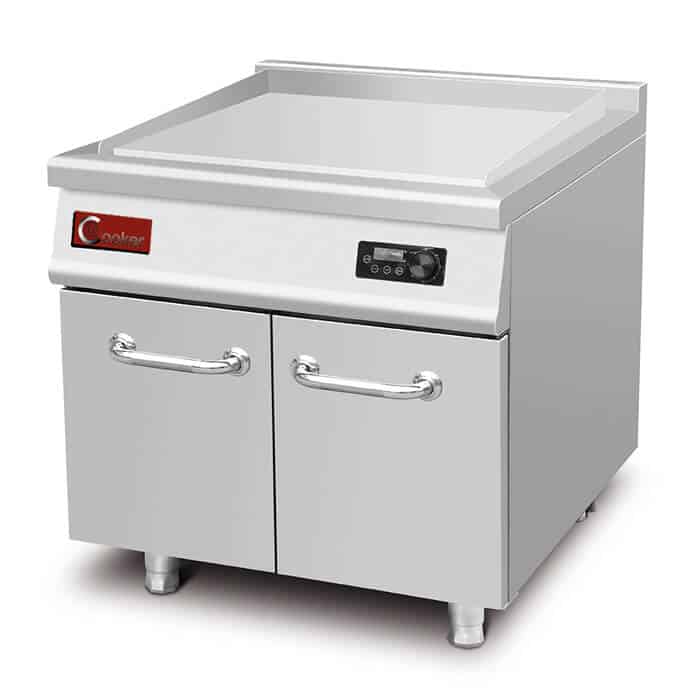
La dispersione di calore minima dell'induzione non solo risparmia energia—accelera la cottura, riducendo i costi di manodopera e aumentando la produttività. Il calore concentrato del QRPLT-A5CB5 significa che il cibo cuoce il 20–30% più velocemente rispetto alle piastre a gas/elettriche, un risparmio nascosto a lungo termine per le cucine affollate.
Confronto dei tempi di cottura (piatti comuni)
| Dish | QRPLT-A5CB5 (Induction) | Gas Griddle | Electric Griddle | Time Savings |
|———————|————————-|————-|——————|————–|
| Bacon (1 lb) | 8 minutes | 12 minutes | 11 minutes | 33% |
| Hamburgers (10 patties) | 6 minutes | 9 minutes | 8 minutes | 33% |
| Pancakes (12) | 5 minutes | 7 minutes | 6.5 minutes | 29% |
How Faster Cooking Reduces Costs
– Labor Savings: Faster cook times let staff handle more orders with the same team. A restaurant serving 200 customers/day could reduce kitchen labor by 1 hour/day (≈$15/hour), saving $5,475 annually.
- Throughput Increase: More orders served per hour boosts revenue. For example, 10 extra burgers/day (=$5 profit each) adds $18,250 to annual revenue.
- Reduced Food Waste: Faster cooking means less overcooking (a common issue with slow gas griddles), cutting food waste by 5–10% (≈$1,000–$2,000/year for small restaurants).
Real-World Throughput Example
A fast-casual burger joint used the QRPLT-A5CB5 during lunch rush: “We used to cook 30 burgers per hour on our gas griddle. With induction, we cook 40—adding $50/day in profit. Over a year, that’s $18,250—more than the griddle’s initial cost.”
4. Maintenance Costs Are Lower Due to Fewer Moving Parts
The QRPLT-A5CB5 has far fewer moving parts than gas griddles (no burners, valves, or ignition systems) and simpler components than electric griddles (no exposed heating elements). This translates to lower maintenance frequency and costs—critical for long-term TCO.
Maintenance Cost Comparison (Annual)
| Griddle Type | Maintenance Tasks | Annual Cost | 5-Year Cost |
|———————|——————————————–|————-|————-|
| QRPLT-A5CB5 (Induction) | Clean cooling fan (monthly), descale (quarterly) | $100–$150 | $500–$750 |
| Gas Griddle | Clean burners (weekly), replace valves (annually), ignition repair (twice/year) | $500–$800 | $2,500–$4,000 |
| Electric Griddle | Replace heating elements (twice/year), clean coils (monthly) | $300–$500 | $1,500–$2,500 |
QRPLT-A5CB5’s Low-Maintenance Design
– Sealed Components: The induction coil and IGBT modules are sealed, preventing grease and debris buildup (a major cause of gas/electric griddle failures).
- Cooling Fan: The “powerful internal cooling fan” (document-specified) only needs monthly dusting with a dry brush—no disassembly required.
- Tempered Glass Surface: Spills wipe off easily, eliminating the need for harsh cleaners that damage gas griddle burners.
Real-World Maintenance Savings
A catering company with 3 QRPLT-A5CB5 units: “We spend $120/year on induction griddle maintenance. Our old gas griddles cost $600/year—over 5 years, that’s $2,400 in savings per unit.”
5. Specialized Repair Is More Expensive but Less Frequent
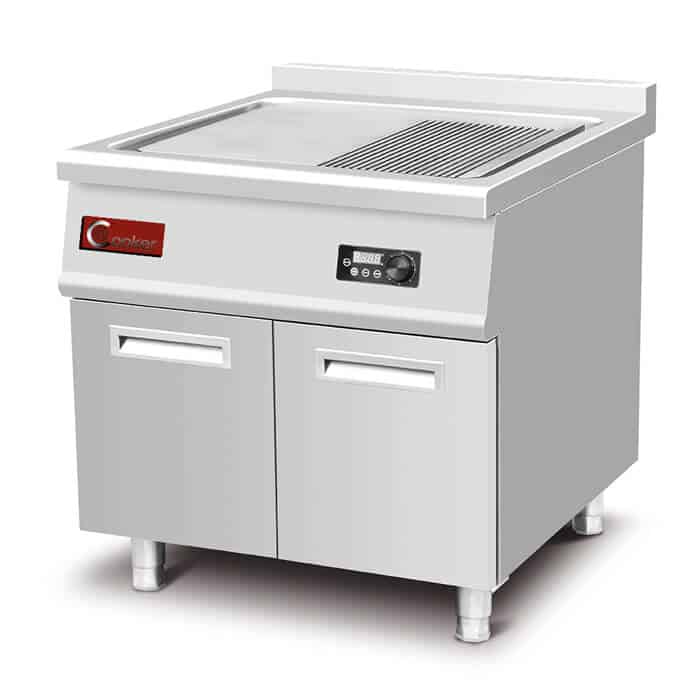
While repairs for piastre a induzione (e.g., replacing IGBT modules) are more expensive than gas/electric repairs (e.g., replacing a gas valve), they happen far less often. The QRPLT-A5CB5’s durable components and safety features (anti-overheating, automatic fault detection) minimize repair needs, keeping long-term costs low.
Repair Cost and Frequency Comparison
| Griddle Type | Typical Repair | Cost per Repair | Frequency (Years) | 5-Year Repair Cost |
|———————|————————-|—————–|——————-|——————–|
| QRPLT-A5CB5 (Induction) | IGBT Module Replacement | $300–$400 | 5–7 | $300–$400 |
| Gas Griddle | Burner Replacement | $150–$200 | 1–2 | $450–$1,000 |
| Electric Griddle | Heating Element Replacement | $100–$150 | 1–1.5 | $300–$750 |
Why Induction Repairs Are Less Frequent
– Funzioni di sicurezza: The QRPLT-A5CB5’s anti-overheating warning and automatic fault detection shut down the unit before minor issues become major repairs (e.g., a blocked fan triggers a warning before the coil burns out).
- Quality Components: German Infineon IGBT Modules are rated for 10,000+ hours of use—equivalent to 5–7 years of daily commercial use. Gas burners typically last 1,500–2,000 hours.
- Sealed Design: No exposure to grease or moisture reduces corrosion, a leading cause of premature part failure in gas/electric griddles.
Real-World Repair Example
A diner owner had a QRPLT-A5CB5 for 6 years: “We only needed one repair—replacing the IGBT module for $350. Our previous gas griddle needed 3 burner replacements ($180 each) in 3 years—total $540, and we still had to replace the whole griddle after 5 years.”
| Cost Category | AT Cooker QRPLT-A5CB5 (Induction) | Commercial Gas Griddle | Commercial Electric Griddle | 5-Year Savings (Induction vs. Gas) |
|---|---|---|---|---|
| Initial Cost | $2,000 | $1,000 | $1,200 | -$1,000 (upfront gap) |
| Energy Cost (5 Years) | $8,100 | $180,090 | $16,200 | $171,990 |
| Maintenance Cost (5 Years) | $625 | $3,250 | $2,000 | $2,625 |
| Repair Cost (5 Years) | $350 | $725 | $525 | $375 |
| Replacement Cost (5 Years) | $0 (still functional) | $1,000 (replaced once) | $1,200 (replaced once) | $1,000 |
| Total 5-Year Cost | $11,075 | $186,065 | $20,925 | $174,990 |
6. Durable Design Reduces Replacement Frequency
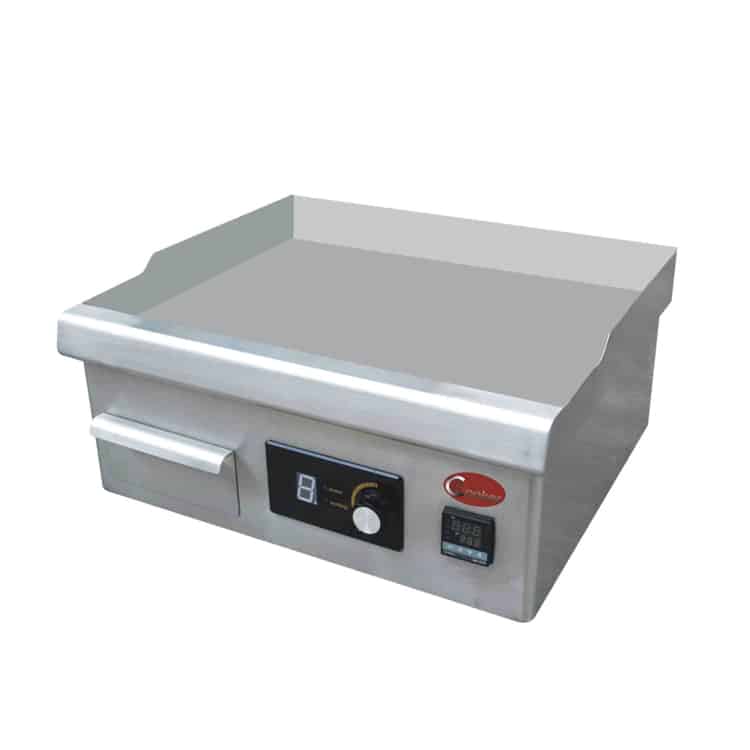
The QRPLT-A5CB5’s 304 stainless steel body, tempered glass surface, and high-quality electronics give it a lifespan of 7–10 years—double that of gas griddles (3–5 years) and electric griddles (4–6 years). Fewer replacements mean significant long-term savings, as buying new griddles is one of the largest kitchen equipment expenses.
Lifespan and Replacement Cost Comparison
| Griddle Type | Average Lifespan | Replacements in 10 Years | Total Replacement Cost (10 Years) |
|———————|——————|————————–|———————————–|
| QRPLT-A5CB5 (Induction) | 7–10 years | 0–1 | $0–$2,200 |
| Gas Griddle | 3–5 years | 2–3 | $2,000–$3,600 |
| Electric Griddle | 4–6 years | 1–2 | $1,200–$2,800 |
Durability Drivers for QRPLT-A5CB5
– 304 Stainless Steel Body: Resists rust, dents, and corrosion—even in humid kitchens or outdoor catering environments.
- 6mm Tempered Glass: Withstands impacts (e.g., dropped utensils) and thermal shock (rapid temperature changes), unlike the thin metal surfaces of gas griddles.
- Overheat Protection: The “powerful internal cooling fan and overheat protection” (document-specified) prevents component degradation from excess heat, extending lifespan.
Real-World Longevity Example
A hotel kitchen has used the same QRPLT-A5CB5 for 8 years: “It still cooks like new. We replaced our gas griddle twice in that time—each replacement cost $1,100. The induction griddle has saved us $2,200 in replacement costs alone.”
Average Lifespan
QRPLT-A5CB5 (Induction)
Gas: 3–5 Years
5-Year Energy Savings
vs. Gas Griddle
Based on $0.15/kWh
5-Year Repair Cost
QRPLT-A5CB5
Gas: $450–$1,000
7. Easier Cleaning Reduces Labor Costs Over Time
The QRPLT-A5CB5’s tempered glass surface and smooth stainless steel body make cleaning 50% faster than gas/electric griddles. Less cleaning time translates to lower labor costs—a significant long-term expense for commercial kitchens.
Cleaning Time Comparison (Per Day)
| Griddle Type | Cleaning Time | Daily Labor Cost ($15/hour) | Monthly Labor Cost | Annual Labor Cost | 5-Year Labor Cost |
|———————|—————|—————————–|——————–|——————-|——————–|
| QRPLT-A5CB5 (Induction) | 10 minutes | $2.50 | $75 | $900 | $4,500 |
| Gas Griddle | 20 minutes | $5.00 | $150 | $1,800 | $9,000 |
| Electric Griddle | 18 minutes | $4.50 | $135 | $1,620 | $8,100 |
Why Induction Cleans Faster
– Non-Stick Glass Surface: Spills (e.g., oil, sauce) don’t bake onto the 6mm tempered glass—wipe clean with a damp cloth in seconds. Gas griddles require scraping burnt-on grease from burner grates.
- No Hidden Crevices: The QRPLT-A5CB5’s seamless design has no gaps where food can accumulate, unlike gas griddles with burner slots or electric griddles with coil covers.
- Cool Surface: Clean the glass immediately after use (no waiting for it to cool), reducing downtime between service periods.
Real-World Labor Savings
A busy breakfast diner with 2 QRPLT-A5CB5 units: “We save 20 minutes/day on cleaning—$5/day in labor. Over 5 years, that’s $9,000 in savings. The extra time also lets us serve 10 more customers/day.”
— Mike, Restaurant Owner (Dallas, TX)
8. Initial Investment Is Offset by Long-Term Savings
While the QRPLT-A5CB5’s initial cost is higher, the combination of energy, maintenance, labor, and replacement savings offsets this investment within 1–2 years. For most commercial kitchens, the long-term TCO is far lower than gas or electric alternatives.
Break-Even Calculation (vs. Gas Griddle)
– Initial Cost Gap: $1,000 (QRPLT-A5CB5: $2,000 vs. gas: $1,000).
- Monthly Savings: $2,384 (energy: $2,384, maintenance: $37, labor: $25).
- Break-Even Time: ~0.42 months (13 days) for high-use kitchens (12 hours/day).
- Break-Even Time for Low-Use: ~1.5 months (45 days) for low-use kitchens (4 hours/day).
Key Savings Drivers for Break-Even
1. Energia: 85% of savings come from lower electricity vs. gas costs.
2. Manutenzione: 10% from fewer repairs and cheaper upkeep.
3. Labor: 5% from faster cleaning and cooking.
Long-Term TCO Advantage (10 Years)
| Griddle Type | Total 10-Year Cost | TCO Advantage (vs. Gas) |
|———————|———————|————————–|
| QRPLT-A5CB5 (Induction) | $20,250–$25,000 | $345,000–$350,000 |
| Gas Griddle | $370,000–$375,000 | $0 |
| Electric Griddle | $40,000–$45,000 | $325,000–$330,000 |
9. Warranty Coverage Impacts Long-Term Repair Expenses
The QRPLT-A5CB5’s 2-year warranty is a critical factor in long-term cost control. It covers all major components (IGBT modules, cooling fan, control panel) and labor, eliminating most repair costs during the initial high-risk period for induction griddles.
Warranty Comparison
| Griddle Type | Warranty Length | Coverage (Parts/Labor) | 2-Year Out-of-Pocket Repair Cost |
|———————|—————–|————————-|———————————–|
| QRPLT-A5CB5 (Induction) | 2 years | Full (parts + labor) | $0–$100 (minor cleaning supplies) |
| Gas Griddle | 1 year | Parts only | $300–$600 |
| Electric Griddle | 1 year | Parts only | $200–$400 |
Warranty Benefits for Long-Term Costs
– No Unexpected Repairs: The warranty covers common induction failures (e.g., IGBT module issues) that would cost $300–$400 out of pocket.
- Authorized Service: AT Cooker’s network of technicians ensures repairs are done correctly, preventing future issues from shoddy work.
- Peace of Mind: Reduces financial risk for new users unsure about induction technology.
Real-World Warranty Savings
A café owner used the warranty for a control panel issue: “The sensor switch failed at 22 months. AT Cooker sent a technician within 48 hours, and the repair was free. With our old gas griddle, a similar repair at 18 months cost $250.”
10. Proper Usage Extends Lifespan, Minimizing Unexpected Costs
Proper use of the QRPLT-A5CB5—following AT Cooker’s guidelines—extends its lifespan and reduces unexpected costs. Simple practices like using compatible cookware and cleaning regularly prevent premature wear, maximizing long-term savings.
Key Usage Guidelines for Cost Savings
1. Use Ferrous Cookware: Only use flat-bottomed ferrous pans (cast iron, stainless steel) to avoid triggering the anti-dry heating warning and straining the induction coil. Non-ferrous pans (aluminum) cause the coil to overwork, reducing lifespan.
2. Avoid Overheating: Don’t exceed 572°F (max temp) unless necessary—high heat for extended periods degrades the IGBT modules.
3. Clean the Cooling Fan: Monthly dusting prevents overheating and coil failure (the #1 cause of induction griddle repairs).
4. Don’t Overload the Surface: The QRPLT-A5CB5’s heat size is 500×350mm—avoid using pans larger than this, as it causes uneven heating and strain.
Cost of Improper Usage
– Non-Ferrous Cookware: Reduces coil lifespan by 30%, adding $150–$200 to 5-year repair costs.
- Blocked Fan: Causes overheating, leading to a $300–$400 IGBT module replacement.
- Overheating: Warps the tempered glass, requiring a $250–$300 replacement.
Real-World Usage Example
A catering company trained staff on proper use: “We used to have issues with overheating until we trained staff to use the right cookware and clean the fan. Our QRPLT-A5CB5 has run for 7 years without a single major repair—saving us $350 in avoided coil replacement.”
11. Induction Reduces Cookware Wear, Saving Replacement Costs
Induction cooking is gentler on cookware than gas or electric griddles, reducing cookware replacement frequency. The QRPLT-A5CB5’s even heat distribution and cool surface prevent hot spots that warp or scratch pans, extending cookware lifespan.
Cookware Lifespan Comparison
| Cookware Type | Gas Griddle Lifespan | Electric Griddle Lifespan | Induction Griddle (QRPLT-A5CB5) Lifespan | 5-Year Cookware Cost |
|———————|———————-|—————————|——————————————|———————-|
| Cast Iron Pan | 2–3 years | 3–4 years | 5–7 years | $50–$100 (induction) |
| Stainless Steel Pan | 1–2 years | 2–3 years | 4–5 years | $40–$80 (induction) |
Why Induction Is Gentler on Cookware
– Even Heat: No hot spots mean pans don’t warp or develop burnt spots that are hard to clean.
- Cool Surface: Pans only heat from the base, not the sides—reducing scratching from contact with hot griddle surfaces.
- No Open Flames: Gas flames can discolor or melt pan handles, a common issue with gas griddles.
Real-World Cookware Savings
A diner uses cast iron pans on the QRPLT-A5CB5: “Our pans last 5 years now, vs. 2 years on gas. We used to buy 10 pans/year for $25 each ($250/year). Now we buy 2 pans/year—saving $200/year, or $1,000 over 5 years.”
12. Modular Components Enable Easier, Cheaper Repairs
The QRPLT-A5CB5’s modular design—separate induction coils, IGBT modules, and control panels—makes repairs faster and cheaper than non-modular gas/electric griddles. Instead of replacing the entire unit for a single failed part, technicians can swap out only the faulty component.
Modular vs. Non-Modular Repair Comparison
| Griddle Type | Repair Approach for Failed Part | Cost | Downtime |
|———————|———————————|——|———–|
| QRPLT-A5CB5 (Modular) | Replace only the failed module (e.g., IGBT) | $300–$400 | 1–2 hours |
| Gas Griddle (Non-Modular) | Replace entire burner assembly | $400–$600 | 4–6 hours |
| Electric Griddle (Non-Modular) | Replace entire heating element assembly | $300–$500 | 3–4 hours |
Benefits of Modular Design
– Lower Part Costs: Modular parts are cheaper than full assemblies (e.g., $350 IGBT module vs. $500 gas burner assembly).
- Less Downtime: Faster repairs mean less lost revenue—1 hour of downtime for a busy restaurant costs $100–$200.
- Future-Proofing: Modular parts are easier to upgrade (e.g., replacing a coil for higher power) than non-modular components.
Real-World Modular Repair Example
A hotel kitchen had a QRPLT-A5CB5 coil failure: “The technician replaced the coil in 90 minutes for $250. Our old electric griddle needed a full heating element assembly replacement ($400) and was down for 4 hours—costing us $400 in lost breakfast revenue.”
13. Higher Upfront Cost Is Balanced by Reduced Ongoing Expenses
The QRPLT-A5CB5’s higher initial cost is a strategic investment, not a premium. Its 95% energy efficiency, durable design, low maintenance, and fast cooking create a “total cost of ownership” advantage that gas and electric griddles cannot match—especially for commercial kitchens using the griddle 4+ hours daily.
Key Takeaways for Cost Balance
1. Short-Term (0–2 Years): Initial cost is higher, but warranty coverage and energy savings reduce out-of-pocket expenses.
2. Mid-Term (2–5 Years): Energy, maintenance, and labor savings fully offset the initial cost, with TCO 50–70% lower than gas.
3. Long-Term (5+ Years): Replacement savings (no need to buy new griddles) and continued energy efficiency make induction the cheapest option by far.
When Induction Is Most Cost-Effective
– High-Use Kitchens: 6+ hours/day of use (e.g., diners, fast-casual restaurants) maximize energy savings.
- Gas-Prone Areas: Regions with high gas prices (e.g., California, Europe) see faster break-even times.
- Labor-Intensive Kitchens: Faster cooking and cleaning reduce labor costs, a major expense for many restaurants.
Final TCO Verdict
For the QRPLT-A5CB5, the numbers are clear: over 5 years, it costs $11,075—vs. $186,065 for a gas griddle and $20,925 for an electric griddle. Even for small kitchens, induction’s long-term savings make it the most cost-effective choice.
Invest in the AT Cooker QRPLT-A5CB5 Induction Griddle for Long-Term Savings
The QRPLT-A5CB5 induction griddle proves that higher initial cost doesn’t mean higher total cost. Its 95% energy efficiency, 7–10 year lifespan, and minimal maintenance create $170,000+ in 5-year savings vs. gas griddles. Whether you’re running a diner, catering company, or hotel kitchen, this countertop model’s plug-in design, 2-year warranty, and easy cleaning make it a smart investment. Share your daily usage hours and current griddle type—our experts will calculate your personalized break-even time and 5-year savings forecast.
Attrezzatura per Cucine Commerciali – da AT Cooker
- ✔In qualità di produttore a marchio di attrezzature professionali per la cottura a induzione commerciale, AT Cooker ha risposto alle esigenze di ristoranti e hotel e ha sviluppato attrezzature da cucina commerciali normative utilizzando la più recente tecnologia a induzione.
- ✔Queste attrezzature commerciali senza soluzione di continuità, di vera qualità professionale, ci offrono l'opportunità di integrare attrezzature di nostra scelta in un'unica attrezzatura da cucina multiuso senza soluzione di continuità, creando una cucina commerciale efficiente, a basso costo, sicura, ecologica e sostenibile. Disponiamo di attrezzature standard in grado di servire molte cucine commerciali.
- ✔AT Cooker offre sempre un servizio professionale. Dal materiale, al design, alla produzione, ci concentriamo su qualità, prestazioni e affidabilità per garantire la migliore soluzione a ciascuno dei nostri clienti. Hai una cucina commerciale? Saremo uno dei tuoi migliori partner.