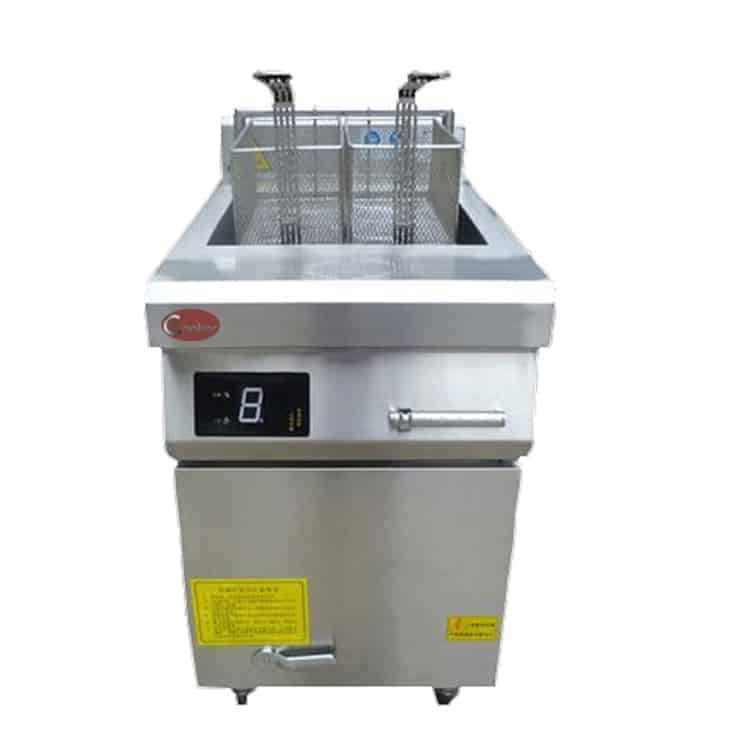
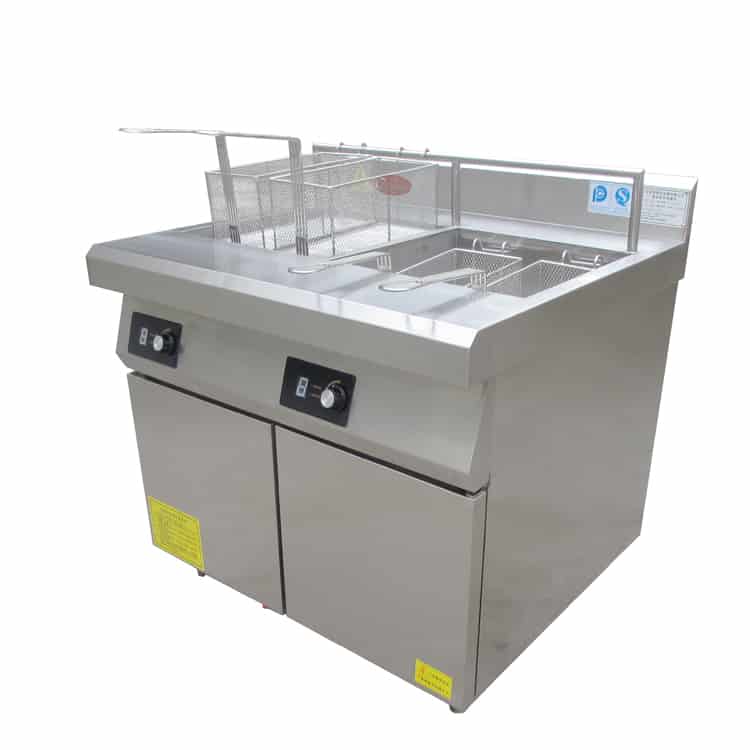
Commercial fryers’ oil hold capacity spans a wide range, and consumption rates vary drastically based on usage. AT Cooker offers models from 10L countertop to 80L dual-tank. Below, 14 factors that determine how much oil your fryer holds and how fast it consumes.
1. Commercial Fryers Typically Hold 15 to 60 Pounds of Oil
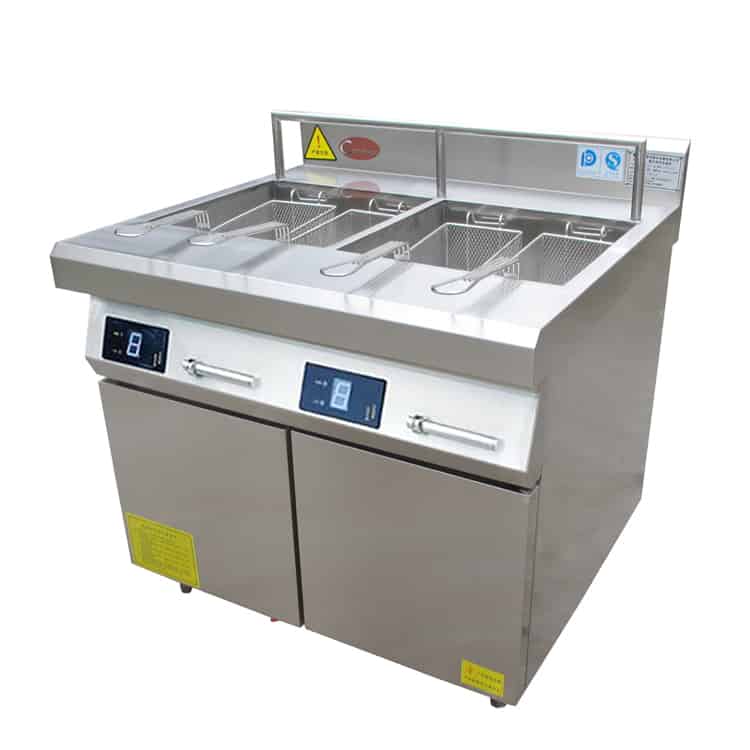
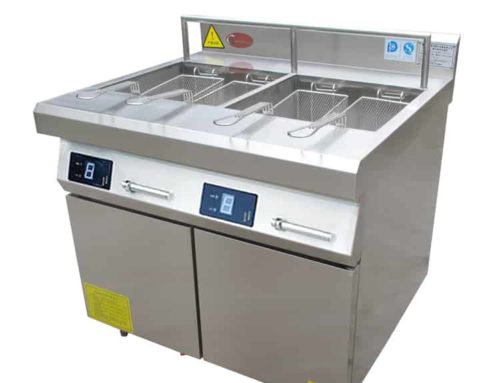
Most standard models fall between 15–60 lbs (17–65L), while industrial-grade units (like AT Cooker’s 40L×2 model) can hold up to 73 lbs (80L). The key is matching capacity to output: a small café needs far less oil than a busy burger chain.
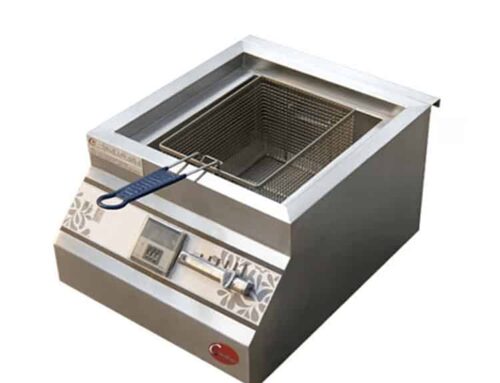
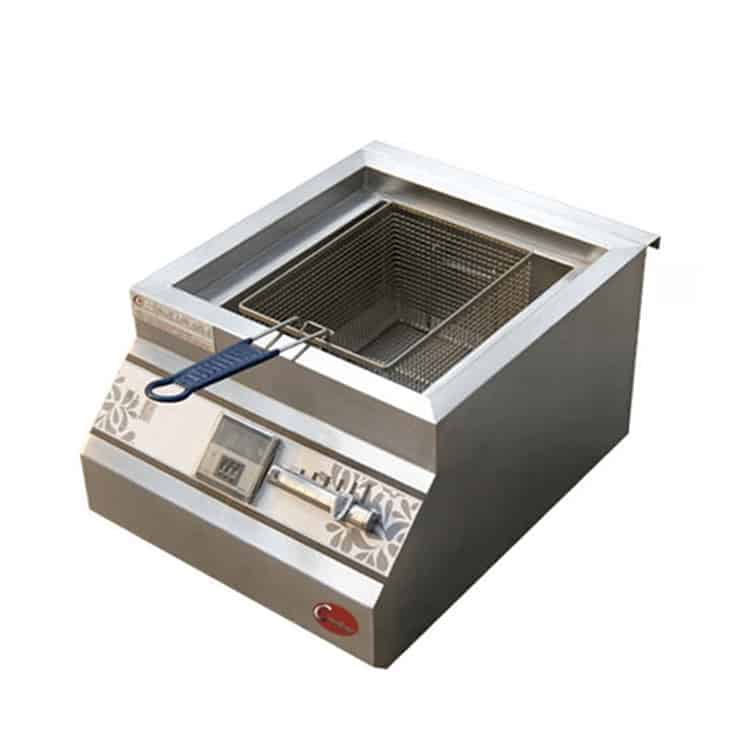
- Compact Countertop (5KW): 8.5–13.8 lbs (10–15L). Perfect for cafés or food trucks frying 50–100 portions daily.
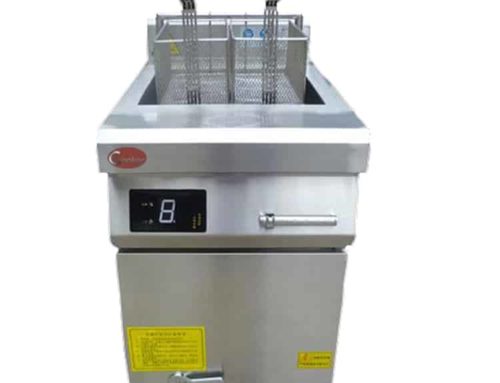
- Mid-Volume Freestanding (8–15KW): 19.5–21.16 lbs (23L). The 23L induction fryer is a bestseller—enough for 200–300 portions daily.
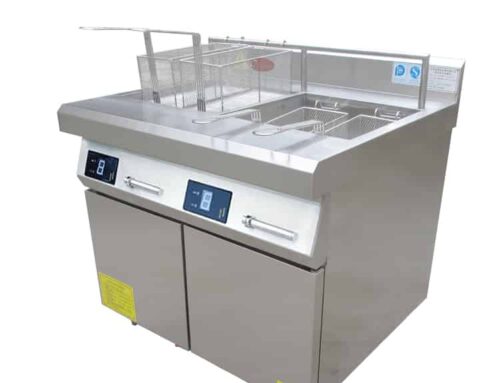
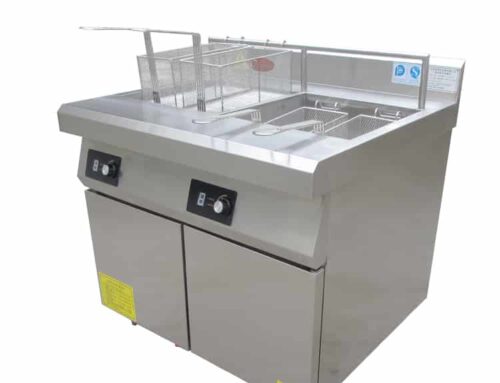
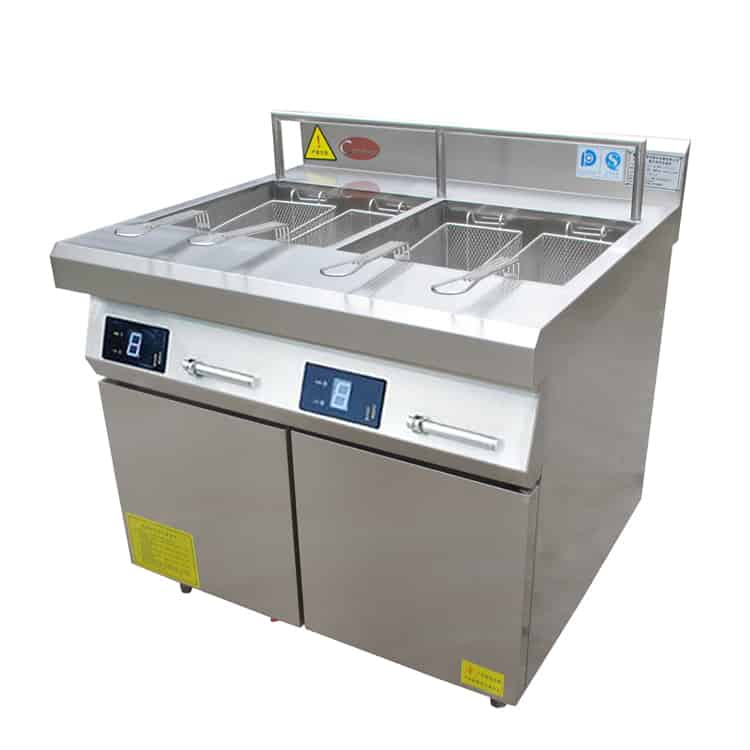
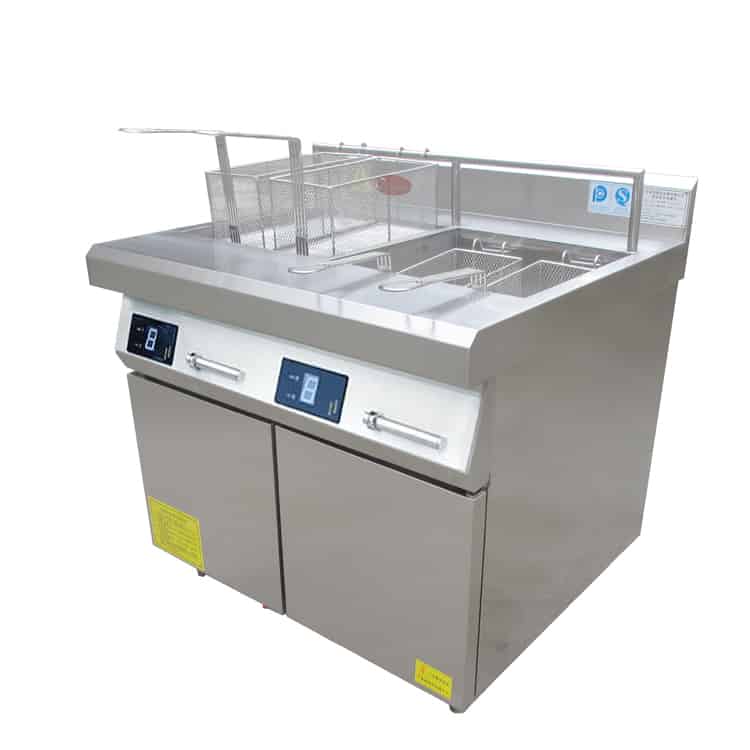
- High-Volume Dual-Tank (10–12KW×2): 68–73.6 lbs (80L total). Handles 500+ portions with separate tanks.
Oil Conversion: 1L vegetable oil = ~0.85 lbs; 1L peanut oil = ~0.92 lbs. All AT Cooker specs reference net oil capacity (usable volume).
| รุ่นหม้อต้ม AT | ความจุของน้ำมัน (ลิตร) | Oil Capacity (lbs) | กำลังไฟ | Ideal Kitchen | Daily Output |
|---|---|---|---|---|---|
| 5KW Single-Basket Countertop | 10 ลิตร | 8.5 ปอนด์ | 5KW | Cafés, food trucks | 50–100 |
| 5KW Dual-Basket Countertop | 15 ลิตร | 12.75 ปอนด์ | 5KW | Small restaurants | 100–150 |
| 23L Freestanding Induction | 23 ลิตร | 19.55 ปอนด์ | 8–15KW | Mid-sized restaurants | 200–300 |
| 40L×2 Dual-Tank | 80L (40L×2) | 68 ปอนด์ | 10–12KW×2 | Stadiums, hotels | 500+ |
2. อัตราการใช้น้ำมันขึ้นอยู่กับความถี่ในการใช้งาน
High-volume operations (4+ hours daily) consume oil 2–3x faster than low-volume kitchens (1–2 hours daily). AT Cooker’s popular models and typical replacement cycles (vegetable oil):
- Low-Volume (1–2 hrs/day): 10L countertop, oil replacement every 5–7 days. ~42–60L monthly.
- Mid-Volume (3–4 hrs/day): 23L freestanding, replacement every 3–4 days. ~172–228L monthly.
- High-Volume (5+ hrs/day): 40L×2, replacement every 2–3 days. ~780–1,200L monthly.
FFA Threshold: Once free fatty acid exceeds 1%, oil produces off-flavors and smoke. AT Cooker’s 10-hour auto-shutoff timer reduces idle degradation by 15%.
3. การกรองอย่างสม่ำเสมอช่วยยืดอายุการใช้งานน้ำมัน ลดการบริโภค
Food particles left in oil accelerate degradation by burning and releasing acids. Filtration removes these particles, extending oil life by 30–50%. AT Cooker’s fryers simplify filtration with built-in faucet drains, cool-touch oil handles, and compatibility with commercial filtration machines.
| Filtration Method | Replacement Cycle | Monthly Consumption |
|---|---|---|
| ไม่มีการกรอง | 3 days | 230L |
| การกรองทุกวัน | 5 days | 138L |
| การกรองเครื่องจักร | 6 days | 115L |
Case Study: A catering company in Miami: with daily filtration (10 min after closing), oil replacement went from every 3 days to every 5 days—saving 40% on oil costs monthly. For a 23L fryer, that’s $192/month savings.
4. Induction Precise Temperature Control Slows Oil Degradation
Oil degradation accelerates above 375°F (190°C). AT Cooker’s induction fryers use PID controllers adjusting heat 10 times/sec, maintaining ±2°F—far more precise than gas (±5–8°F) or standard electric (±3–4°F). Result: oil lasts longer.
A chicken chain: “Gas fryer bounced 360–385°F, oil degraded every 2 days. Induction stays at 370°F exactly, oil lasts 4 days. Cut oil costs in half.” Anti-high-temperature warnings alert staff if oil nears 390°F, saving 10–15L monthly.
5. Oil Capacity Is Proportional to Fryer Size
Larger fryers hold more oil because they’re designed for higher demand. AT Cooker’s dimensions:
- Countertop 10L: 400×400×450mm, tank 200×280×180mm.
- Freestanding 23L: 500×800×950mm, tank 340×340×200mm.
- Dual-Tank 80L: 1000×800×1100mm, tank 400×400×250mm×2.
Lesson: A Las Vegas hotel: “Bought a small countertop fryer with 20L tank—weighed 60 lbs full, couldn’t move it. Switched to AT Cooker’s 15L countertop, lightweight enough to store when not in use.”
6. Food Type Influences Oil Consumption
Breaded/battered foods shed crumbs and absorb more oil, accelerating degradation. Plain foods produce fewer particles. A kitchen frying mostly breaded foods replaces oil 20–30% more frequently.
- Breaded (chicken): 23L fryer, oil every 3 days. Monthly: 230L. “Breading sheds crumbs that burn in oil.”
- Plain (fries): Same 23L fryer, oil every 4 days. Monthly: 172L. “Fries produce almost no crumbs.”
Tip: AT Cooker recommends separate fryers for breaded and plain foods. A Chicago diner: “Separate fryers let us keep fry oil 4 days, chicken oil 3 days—saving 15L monthly.”
7. ระบบจัดการน้ำมันขั้นสูง ตรวจสอบคุณภาพ
Modern fryers include oil quality sensors measuring FFA levels or conductivity in real time. AT Cooker’s 40L×2 offers an optional sensor integrated with digital display:
- Measures conductivity every 15 minutes.
- Displays “Quality Score” (1–10): 10=fresh, 3=replace soon, 1=replace immediately.
- Alert at score 3, giving staff time to plan replacement.
ผลลัพธ์: A hotel with 10 fryers: “Before, changed oil every 3 days regardless. Now only when sensor says so—sometimes lasts 4 days, saving 50L monthly.”
8. Electric Fryers’ Consistent Heat Lowers Consumption
Gas fryers have hot spots (areas of higher temperature) that cause oil to degrade faster locally. AT Cooker’s induction fryers use magnetic heating across the entire tank bottom, eliminating hot spots.
- แก๊ส: Hot spots 390°F, rest 370°F. FFA 1.5% in hot spots vs 0.8% elsewhere—entire batch replaced, wasting 50%.
- หม้อต้มเหนี่ยวนำ AT: 370°F uniform. FFA 0.8% everywhere—no wasted oil.
Hidden Benefit: Electric fryer users replace oil 15–20% less frequently than gas users. A 20-location chain: “Switched from gas—went from 10,000L to 8,500L monthly.”
9. อัตราการหมุนเวียนน้ำมันส่งผลต่อคุณภาพและการบริโภค
High turnover (large volumes daily) means oil doesn’t degrade much. Low turnover means oil sits longer, degrading from idle heat. Two kitchens with the same fryer can have drastically different consumption.
- High Turnover: Burger chain, 23L, 300 portions/day. Oil lasts 3 days (7.6L/day). Monthly: 228L.
- Low Turnover: Café, same 23L, 50 portions/day. Oil lasts 4 days (5.75L/day). Monthly: 172L. But quality is lower.
Optimization: A Seattle café: “Switched from 23L to 10L fryer for 50 portions/day. Oil lasts 3 days, tastes fresh. Monthly use dropped 172L to 100L.”
10. Environmental Factors Increase Evaporation
High ambient temperature (>80°F) or humidity (>60%) accelerates oil evaporation—5–10% of monthly consumption. AT Cooker’s 23L fryer has 3-layer insulation reducing evaporation by 70%.
Florida Test: “Old uninsulated fryer lost 1L/day to evaporation. AT Cooker insulated fryer loses 0.3L daily—saving 21L monthly ($63).”
Tips: keep lid closed when not in use, install exhaust fans, monitor levels weekly. An Arizona bakery: “Lid closed + exhaust fan—evaporation 0.8L to 0.4L daily. 146L saved/year.”
11. การบำรุงรักษาช่วยยืดอายุการใช้งานของน้ำมัน
AT Cooker recommends three maintenance areas:
- การทำความสะอาดถัง: Weekly (non-abrasive cleaner + soft brush). Dirty tank reduces oil life by 20%.
- Element Inspection: Quarterly. Faulty elements cause hot spots. AT Cooker induction coils are sealed—just wipe with dry cloth.
- การเปลี่ยนซีล: Annually. Worn seal increases evaporation and temperature fluctuations.
Case Study: School cafeteria with 5 AT Cooker fryers: “Before maintenance, oil every 3 days. After weekly cleaning + quarterly checks, oil lasts 4 days—saving 50L monthly.”
12. ปริมาณน้ำมันเริ่มต้นเทียบกับการบริโภคจริง
Initial fill = one-time cost to fill to max level. Actual consumption = recurring replacement. Confusing the two leads to budget errors.
- 10L Countertop: Initial = 10L. Daily consumption = ~1.4–2L.
- 23L Freestanding: Initial = 23L. Daily consumption = ~5.75–7.6L.
- 40L×2 Dual-Tank: Initial = 80L. Daily consumption = ~26–40L.
Budget Tip: A new restaurant owner: “Budgeted for 23L initial fill ($69) but forgot monthly consumption (172L = $516). AT Cooker helped adjust budget to include both.” Use their Consumption Calculator on the website.
13. เซ็นเซอร์วัดระดับน้ำมันป้องกันการใช้งานมากเกินไปและการหก
AT Cooker’s fryers have two sensor types:
- เซ็นเซอร์น้ำมันต่ำ: Alerts when below minimum safe level. Prevents overheating and degradation. Displays “Low Oil” on screen.
- Overfill Sensor (high-end): Stops oil flow at max level. Prevents spills during cooking.
Real Impact: A fast-food chain: “Low oil sensor saved us from ruining oil multiple times. Used to waste 5L monthly from overheating; now zero.”
14. การวิเคราะห์ต้นทุน: ค่าใช้จ่ายในการซื้อ + การกำจัดน้ำมัน
Total oil costs include both purchase and disposal (hidden cost, 10–15% of total). Monthly analysis for AT Cooker’s 23L fryer (172L consumption):
| Cost Item | Calculation | Monthly |
|---|---|---|
| Oil Purchase | 172L × $3/L | $516 |
| Disposal | 172L × $0.30/L | $51.60 |
| Total | $567.60 |
Many AT Cooker customers partner with biodiesel companies for free pickup + $0.10/L rebate. A Miami hotel: “Cuts disposal to zero, adds $17.20/month.” Optimizing both can reduce total oil costs 15–20% annually ($1,021–$1,362 for a $6,811/yr kitchen).
5-year Warranty | 2-year Free Exchangeable | 1-year Free Return
ความจุน้ำมันที่เหมาะสมที่สุดสำหรับเครื่องทอดแบบจุ่มเชิงพาณิชย์คือเท่าใด?
เครื่องทอดแบบจุ่มเชิงพาณิชย์มักมีความจุน้ำมันตั้งแต่ 10 ถึง 50 ลิตร ความจุที่เหมาะสมที่สุดขึ้นอยู่กับปริมาณการทอดต่อวันของคุณ ร้านอาหารที่มีปริมาณมากจะได้ประโยชน์จากถังขนาด 30-50 ลิตร ขณะที่ร้านขนาดเล็กสามารถใช้เครื่องขนาด 10-20 ลิตร AT Cooker มีรุ่นตั้งแต่ 15 ลิตรถึง 40 ลิตรเพื่อให้เหมาะกับขนาดธุรกิจที่แตกต่างกัน.
ควรเปลี่ยนน้ำมันเครื่องทอดเชิงพาณิชย์บ่อยแค่ไหน?
ความถี่ในการเปลี่ยนน้ำมันขึ้นอยู่กับปริมาณการใช้งานและประเภทของอาหาร การใช้งานปริมาณมาก (ทอด 4+ ชั่วโมงต่อวัน) ควรเปลี่ยนน้ำมันทุก 3-5 วัน การใช้งานปานกลาง (2-3 ชั่วโมงต่อวัน) สามารถเปลี่ยนได้ทุก 5-7 วัน ควรตรวจสอบคุณภาพน้ำมันเสมอโดยใช้แถบทดสอบหรือตรวจสอบด้วยสายตาหาสีคล้ำ ฟอง หรือกลิ่นผิดปกติ.
ปัจจัยใดที่ส่งผลต่ออัตราการใช้น้ำมันของเครื่องทอด?
ปัจจัยสำคัญได้แก่: อุณหภูมิในการทอด (อุณหภูมิสูงเร่งการเสื่อมสภาพ) ความชื้นในอาหาร (อาหารเปียกนำน้ำเข้าไป) การดูดซับของแป้ง/เกล็ดขนมปัง ความถี่ในการกรอง และประเภทของน้ำมัน เครื่องทอดแบบเหนี่ยวนำที่มีการควบคุมอุณหภูมิที่แม่นยำสามารถลดการใช้น้ำมันได้ 15-20% เมื่อเทียบกับรุ่นที่ใช้แก๊ส.
ฉันจะลดการใช้น้ำมันในเครื่องทอดเชิงพาณิชย์ได้อย่างไร?
แนวปฏิบัติที่ดีที่สุด: รักษาอุณหภูมิที่เหมาะสม (175-190°C) กรองน้ำมันทุกวันเพื่อกำจัดเศษอาหาร หลีกเลี่ยงการใส่ตะกร้ามากเกินไป ใช้น้ำมันคุณภาพสูงที่มีจุดเกิดควันสูง ปิดเครื่องทอดเมื่อไม่ใช้งานเพื่อป้องกันการเกิดออกซิเดชัน และเลือกเครื่องทอดแบบเหนี่ยวนำเพื่อการควบคุมอุณหภูมิที่แม่นยำและประหยัดพลังงาน.
ความแตกต่างระหว่างประสิทธิภาพน้ำมันของเครื่องทอดแบบเหนี่ยวนำและแบบแก๊สคืออะไร?
เครื่องทอดแบบเหนี่ยวนำมีประสิทธิภาพพลังงาน 90-95% เทียบกับ 30-45% สำหรับรุ่นที่ใช้แก๊ส การควบคุมอุณหภูมิที่แม่นยำลดการเสื่อมสภาพของน้ำมัน ยืดอายุการใช้งานน้ำมันได้ 20-30% การเหนี่ยวนำยังกำจัดจุดร้อนที่ทำให้เกิดการไหม้ของน้ำมันเฉพาะจุด ผลลัพธ์คือการใช้น้ำมันที่ลดลง คุณภาพอาหารที่ดีขึ้น และต้นทุนการดำเนินงานที่ลดลงเมื่อเวลาผ่านไป.
เลือกหม้อทอดเชิงพาณิชย์ที่เหมาะสมกับความจุและปริมาณการใช้น้ำมันของคุณ
Share your daily frying volume, food type, and kitchen size—we’ll recommend the ideal fryer to minimize consumption and costs.