At AT Cooker, we work with hundreds of commercial kitchen operators who regularly ask about induksionli plita power consumption. This isn’t just about electricity—it’s about budgeting utility bills, ensuring electrical capacity, and choosing energy-efficient models. After testing dozens of our induksion issiq plitalarimizni sinovdan o'tkazgandan and analyzing customer data, we’ve compiled practical insights into commercial hot plate power consumption.
1. Commercial Hot Plates Typically Consume 1,200 to 3,000 Watts
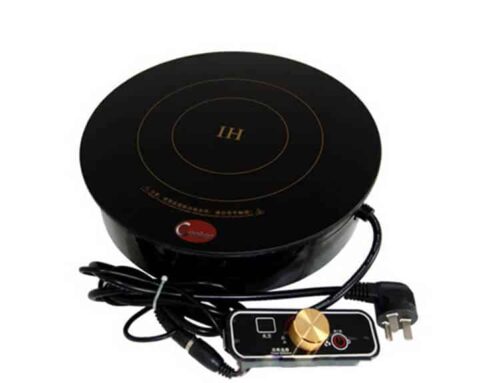
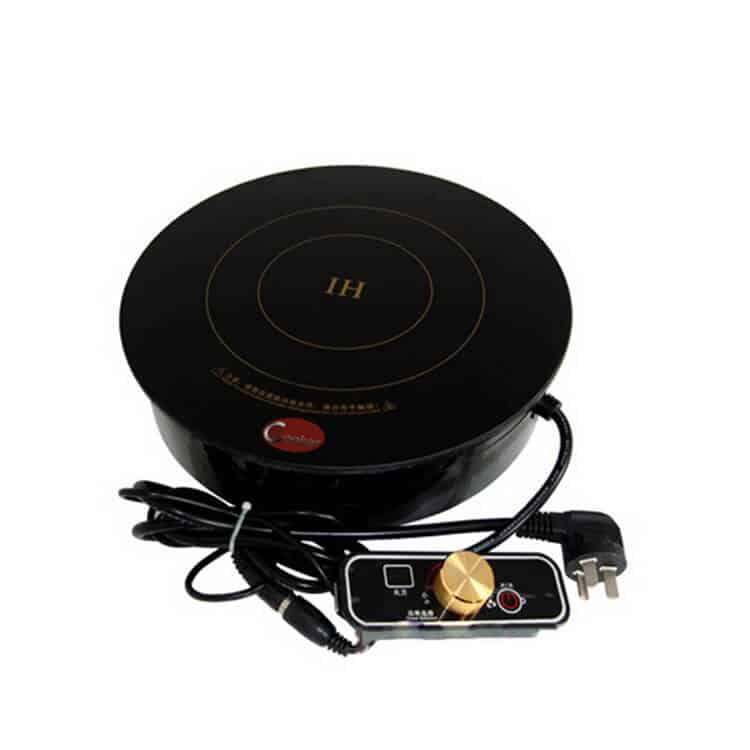
Power consumption varies by size and design. Traditional electric coil hot plates range from 1,200-2,500W, while induksion issiq plitalarimizni sinovdan o'tkazgandan fall between 1,500-3,000W. Our most popular model, the AT-CHP18 (single-burner induksionli plita), uses 1,800W—perfect for small to mid-sized kitchens. Most of the time you’ll use lower settings (500-1,000W), so actual energy use is less than max rating.
Customer Story: Denver breakfast food truck: “I use the AT-CHP18 for 6 hours daily, electricity bill only went up $15—way less than expected.”
AT Cooker 1-Burner
AT-CHP18 max
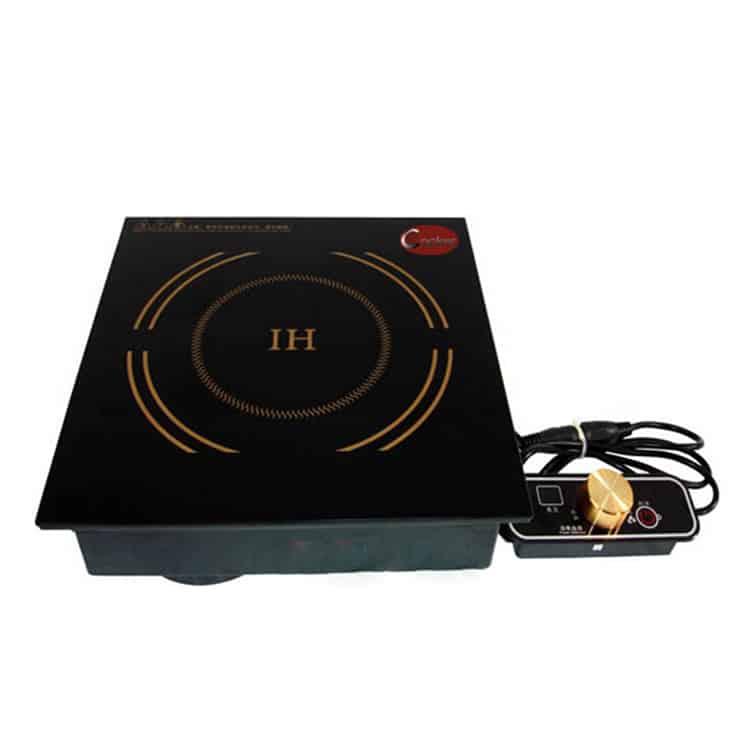
Elektr spiral
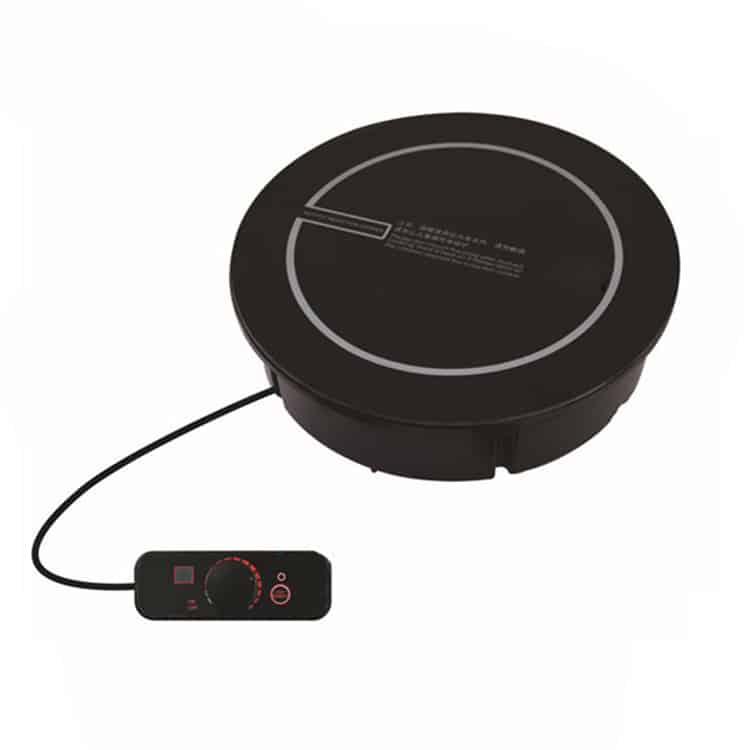
Non-induction

2. Induction Hot Plates Are More Energy-Efficient (1,500-2,500W)
Induction hot plates convert 85-90% of energy into heat vs 50-60% for electric coil. A 2,000W induction model boils 2L water in 6 min (0.2 kWh) vs 12 min (0.4 kWh) for coil—twice the energy. A Chicago restaurant reported 35% drop in cooking electricity after switching.
| Tur | Max Wattage | Самарадорлик | Boil 2L | Energiya |
|---|---|---|---|---|
| AT Cooker Induction (AT-CHP20) | 2000 Vt | 88% | 6 min | 0.2 kWh |
| Elektr spiral | 2000 Vt | 55% | 12 min | 0.4 kWh |
| Gaz | 10,000 BTU | 45% | 8 min | ≈2.5 kWh eq |
Customer Story: Maria, Chicago restaurant: “We used to spend $400/month on hot plate energy. Now it’s $260—all because induction uses power more efficiently.”
3. Quvvat sarfi harorat sozlamalari va pishirish yukiga qarab o'zgaradi
Actual consumption depends on usage. Our induksion issiq plitalarimizni sinovdan o'tkazgandan have 8 settings: 300W (low simmer 140-180°F), 800W (medium 250-300°F), 1,800W (high 400-450°F). A café in Seattle: “Daily energy use is only 1.2 kWh—about $0.18/day.” Cooking load also matters: full load draws 20-30% more power than half load.
| Vazifa | Quvvat | Time | Energiya |
|---|---|---|---|
| Sutni isitib turing | 300 Vt | 4 hrs | 1,2 kVt/soat |
| Cook sandwiches | 1800 Vt | 0.5 hrs | 0,9 kVt/soat |
| Sho'rva qaylasi | 800 Vt | 1 hr | 0,8 kVt/soat |
| Kunlik kunlik | — | 5.5 hrs | 2.9 kWh ($0.44) |
4. Multi-Burner Hot Plates Can Draw Up to 4,000W or More
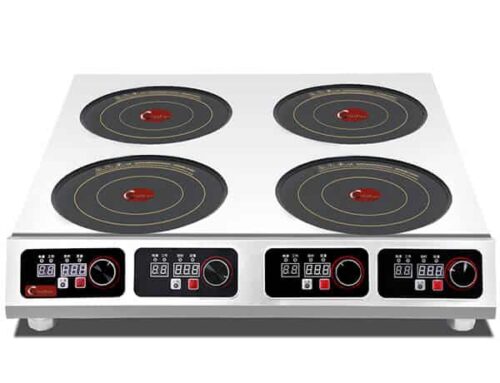
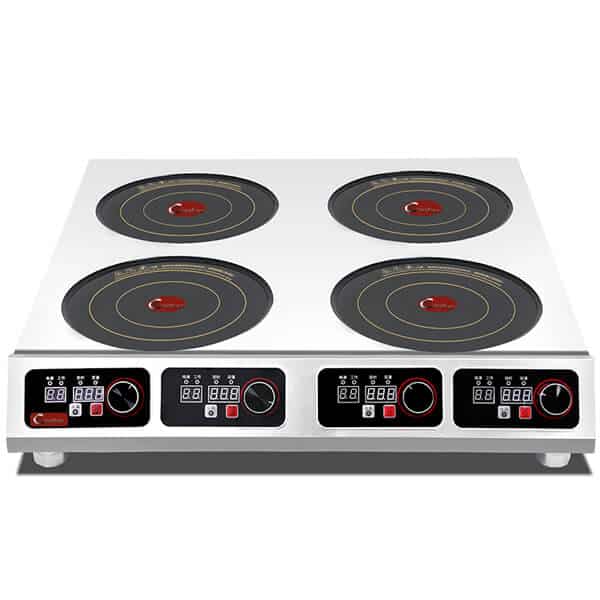
Our 2-burner induksion issiq plitalarimizni sinovdan o'tkazgandan (AT-CHP2x20) use 4,000W total (2,000W per burner); 4-burner (AT-CHP4x18) uses 7,200W. Multi-burner units don’t always use max power for all burners simultaneously. A hospital in Atlanta: “Average draw is 3,600W, not 7,200W.” Check kitchen electrical capacity before choosing multi-burner.

Customer Story: A Boston restaurant almost bought 7,200W model but circuit only handled 5,000W. We recommended 2-burner 4,000W instead—perfect fit.
5. Induction Hot Plates Convert Up to 90% of Energy into Heat
Induction uses magnetic fields to heat cookware directly—almost no energy wasted. Our induksion isitishli issiq plita models convert 85-90% of electricity into usable heat vs 50-60% (coil) and 40-45% (gas). A 2,000W induction at 8hrs/day wastes only 200-300W/hr vs 800-1,000W/hr for coil.
Customer Story: Mike, Sunshine Diner (Orlando): “Kitchen is 10°F cooler after switching to induction. AC bill dropped $150/month on top of $100 hot plate energy savings.” A 50-location fast-food chain saw 28% drop in cooking energy costs.
6. Adjustable Power Levels to Optimize Energy Use
Barcha AT Cooker induksionli plita models have 8 adjustable power levels (10%-100%). AT-CHP25 Pro has 16 levels + smart presets. A bakery in Portland: “Presets take guesswork out—we pick the preset and let the hot plate do the rest.” Adjustable levels are essential for catering on generators (limit to 800W to avoid tripping breakers).
| Level | Watts | Temp | Tasks |
|---|---|---|---|
| 1 (10%) | 180 Vt | 120-140°F | Keeping warm |
| 3 (30%) | 540 Vt | 180-220°F | Simmer sauces |
| 5 (50%) | 900 Vt | 250-300°F | Rice, oatmeal |
| 8 (80%) | 1,440 Vt | 350-400°F | Sauté, eggs |
| 10 (100%) | 1800 Vt | 400-450°F | Boil, sear, fry |
7. Continuous High Settings Increase Overall Consumption
2,000W at 100% for 8hrs = 16 kWh/day vs 8 kWh at 50%. A 24hr Chicago diner spent $288/month at full power. After using lower settings for warming, cost dropped to $192—33% savings. Recommendations: use low/medium for non-high tasks, turn off when not in use, use warming tray instead of hot plate on low.
8. Energy-Saving Modes Reduce Power During Idle Periods
AT Cooker Pro series auto-lowers power to 100W if no cookware detected for 5 min, then shuts off after another 5 min. A NYC café saves 0.5 kWh/day ($27/year). Eco-mode limits max power to 80%—a Las Vegas hotel reported 15% drop in hot plate energy during off-peak hours.
Standby Power
Pro models (vs 1,800W)
Eco-Mode Savings
Per hot plate
9. Single-Burner Models Typically Operate Around 1,800 Watts
1,800W is the sweet spot: powerful enough for most tasks but won’t strain electrical systems. Our AT-CHP18 is used by thousands of businesses. Compatible with most 20-amp 240V outlets (up to 4,800W capacity). A food truck in Austin: “1,800W is perfect—cooks burgers and fries without draining generator.”

10. Digital Controls Allow Precise Power Management
Digital displays show current watts, temperature, total kWh used, and cooking time. A San Francisco restaurant: “We noticed 2,500W for pasta was overkill—2,000W works just as well, saving 0.5 kWh/day ($27/year).” Some models allow power limits (e.g., max 1,500W) to prevent overuse. A 20-location hotel chain set 2,000W limit and saw 12% company-wide energy drop.
11. Power Requirements Must Match Kitchen Electrical Capacity
Common mistake: buying a plita induksion that exceeds electrical capacity. Most commercial units need 240V. Amps: 1,500W=6.25A (10A circuit), 1,800W=7.5A (10A), 2,500W=10.4A (15A), 4,000W 2-burner=16.7A (20A), 7,200W 4-burner=30A (30A). We provide free electrical checklists.
Customer Story: Lisa, Seattle bakery: “We tried 2,500W on 10-amp circuit—breaker tripped every time. $200 upgrade to 15A fixed it. Should have checked first.”
12. Regular Maintenance Ensures Efficient Energy Use
Dust and debris increase consumption by 10-15%. AT Cooker recommends: daily surface clean (soft cloth + mild detergent), quarterly coil inspection (compressed air), monthly cord check, annual control calibration. A Miami diner neglected cleaning for 6 months—energy increased 12%. After cleaning, returned to normal. Well-maintained hot plates last 7+ years vs 4-5 years.
13. Certification Labels Guarantee Energy Standard Compliance
AT Cooker certifications: CE (EU EN 60335-2-9), ETL (UL 197/CSA), Energy Star (some models, 15% less energy), FCC (EMI standards). A California hotel chain bought 50 Energy Star units and received $10,000 rebate—covering 20% of purchase. Avoid non-certified: poor efficiency (70-75%), may not meet safety standards.
AT Cooker’s Advice for Managing Hot Plate Power Consumption
Managing induksionli plita power is about choosing right wattage + smart use + maintenance.
- Choose right wattage: 1,500-1,800W for small tasks; 2,000-2,500W for large batches
- Use power levels: Low for warming, medium for cooking, high for boiling—cuts energy 30-40%
- Digital controls: Precise management with monitoring and presets
- Muntazam parvarish qiling: Clean surface/coil, inspect cord, calibrate controls
- Elektr quvvatini tekshiring: Ensure circuit handles requirements
We provide custom energy-use estimates and free electrical assessments.
Tez-tez so'raladigan savollar
How much power does a commercial induction hot plate use?
Commercial induction hot plates typically consume 1,200-3,000 watts depending on size and model. AT Cooker’s most popular single-burner model (AT-CHP18) uses 1,800 watts at maximum power. However, most cooking tasks use lower settings (300-1,440W), so actual daily energy consumption is typically 2-4 kWh.
Are induction hot plates more energy-efficient than traditional electric hot plates?
Yes. Induction hot plates convert 85-90% of electrical energy into usable heat, compared to 50-60% for traditional electric coil hot plates. A 2,000W induction model boils 2 liters of water in 6 minutes using 0.2 kWh, while the same wattage electric coil takes 12 minutes using 0.4 kWh—twice the energy.
How much does it cost to run a commercial hot plate per day?
Based on typical café usage (300W warming 4hrs + 1,800W cooking 0.5hrs + 800W heating 1hr), daily energy is about 2.9 kWh, costing approximately $0.44/day at $0.15/kWh. For a restaurant using a 2,000W induction hot plate 8 hours/day at mixed settings, monthly cost is typically $60-$100.
What electrical circuit do I need for a commercial induction hot plate?
Most commercial induction hot plates require a 240V circuit. A 1,800W single-burner needs 7.5 amps (10-amp circuit); a 2,500W model needs 10.4 amps (15-amp circuit); a 4,000W 2-burner needs 16.7 amps (20-amp circuit). Always check your kitchen’s electrical capacity before purchasing.
How can I reduce the power consumption of my commercial hot plate?
Key strategies: use adjustable power levels (low for warming, high only when needed), take advantage of energy-saving modes that auto-reduce power during idle periods, maintain the unit regularly (clean surface and coil), and use digital controls for precise power management. These practices can reduce energy use by 30-40%.