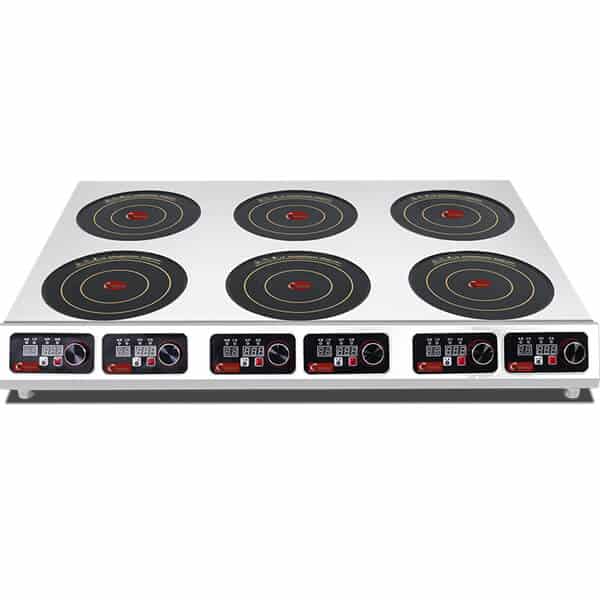
Scegliere il tipo giusto piano cottura a induzione commerciale richiede il confronto dei modelli in base alle esigenze specifiche della vostra cucina—che siate un piccolo bar che necessita di un'unità compatta o un ristorante ad alto volume che richiede una potenza elevata. Non esistono due modelli identici: differenze nella potenza erogata, nelle zone di cottura, nel design (da incasso vs. a libera installazione) e nelle funzionalità speciali possono influire drasticamente sulle prestazioni e sui costi. AT Cooker, produttore affidabile di attrezzature per la cottura a induzione, offre una gamma di modelli adatti a diverse esigenze commerciali—dal 10KW QRPT-A10B (da incasso/da banco) alle cucine a libera installazione a 6 fuochi. In questa guida confronteremo modelli specifici di cucine a induzione commerciali (con focus sulla gamma AT Cooker, incluso il QRPT-A10B) su parametri chiave, aiutandovi a identificare quale modello si allinea con il vostro stile di cottura, lo spazio e il budget.
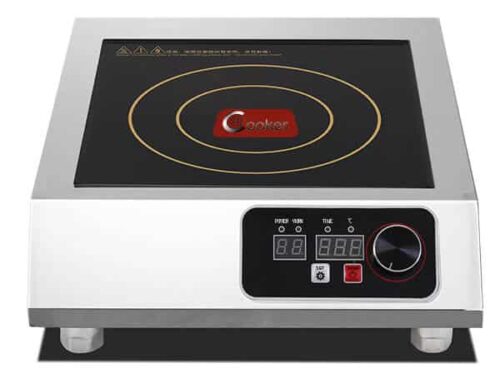
Specifiche chiave della cucina a induzione commerciale AT Cooker QRPT-A10B (modello base)
- Potenza erogata: 10KW (fuoco singolo, alimentazione trifase)
- Progettazione: Doppio uso (da incasso + da banco), facile da spostare tramite interruttore di collegamento
- Qualità costruttiva: Corpo in acciaio inox 304#, comandi impermeabili
- Caratteristiche: 8 livelli di potenza, display in tempo reale di potenza/temperatura, avvisi anti-surriscaldamento/funzionamento a secco
- Efficienza: 90–95% (risparmia 50%+ di energia rispetto ai fornelli a gas)
- Dimensioni: 500×500×350mm (prodotto), compatibile con pentole ≥40cm
- Certificazione: Certificato CE, sicuro per uso commerciale
I modelli di fascia alta spesso offrono un controllo della temperatura più preciso e intervalli di potenza più ampi rispetto alle unità di fascia entry-level.
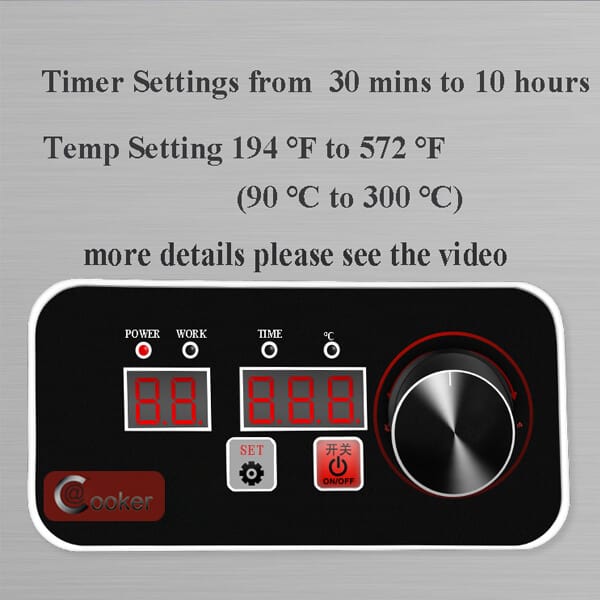
La precisione e l'intervallo di potenza sono le differenze distintive tra i modelli di fascia alta e quelli entry-level piano cottura a induzione commerciale Le unità entry-level (ad es. il modello a fuoco singolo da 3.5KW di AT Cooker) offrono tipicamente un controllo base della temperatura (194℉–572℉) e 5–6 livelli di potenza, adatti a compiti semplici come bollire o friggere. I modelli di fascia alta come il AT Cooker QRPT-A10B e il BZT-A6C6 a 6 fuochi, tuttavia, garantiscono precisione e flessibilità superiori.
Il QRPT-A10B (fuoco singolo di fascia alta) è dotato di display della temperatura in tempo reale e 8 livelli di potenza, consentendo agli chef di regolare il calore con incrementi ridotti—fondamentale per compiti delicati come la cottura a fuoco lento di salse o lo scioglimento del cioccolato a 122℉. Al contrario, un modello entry-level da 3.5KW può mostrare solo i livelli di potenza (1–5) senza letture della temperatura, rendendo più difficile la cottura precisa. Ad esempio, una pasticceria che utilizza il QRPT-A10B riferisce che la loro ganache al cioccolato è ora costantemente liscia, mentre il modello entry-level causava spesso bruciature a causa del controllo impreciso del calore.
Anche l'intervallo di potenza differisce: i modelli entry-level arrivano a 3.5KW, mentre le unità di fascia alta come il QRPT-A10B raggiungono i 10KW—ideali per compiti gravosi come la scottatura di grandi tagli di carne o l'ebollizione di pentole da 40cm di zuppa. Una steakhouse che utilizza il QRPT-A10B può scottare una ribeye da 5kg in 8 minuti, rispetto ai 15 minuti con una cucina entry-level da 3.5KW. Questa velocità si traduce in un servizio più rapido e in una maggiore capacità di servizio clienti.
Un'altra funzionalità di precisione nei modelli di fascia alta è il mantenimento della temperatura: il QRPT-A10B può mantenere una temperatura impostata (ad es. 140℉ per la cottura sous vide) per ore, mentre i modelli entry-level non dispongono di questa funzione. Un'azienda di catering che utilizza la funzione di mantenimento del QRPT-A10B mantiene il cibo a temperature di servizio sicure durante gli eventi, riducendo gli sprechi e migliorando la qualità del cibo.
Precisione e potenza: modelli AT Cooker di fascia alta vs. entry-level
| Caratteristica | AT Cooker QRPT-A10B (fuoco singolo di fascia alta) | AT Cooker 3.5KW entry-level a fuoco singolo | Vantaggio per le cucine commerciali |
|---|---|---|---|
| Intervallo di potenza | 1KW–10KW (8 livelli) | 5KW–3.5KW (5 livelli) | La fascia alta gestisce sia compiti delicati che gravosi |
| Controllo della temperatura | 122℉–842℉ (display in tempo reale) | 194℉–572℉ (senza display) | La fascia alta consente una cottura precisa e costante |
| Funzionalità speciali | Mantenimento della temperatura, riscaldamento anti-secco | Accensione/spegnimento base, livelli di potenza | La fascia alta riduce gli sprechi e migliora la sicurezza |
| Compiti ideali | Scottatura, cottura a fuoco lento, scioglimento, cottura in grandi quantità | Ebollizione, frittura, riscaldamento semplice | La fascia alta si adatta a esigenze di menu diverse |
Alcune cucine a induzione commerciali offrono più zone di cottura, mentre altre sono progettate come unità a fuoco singolo.
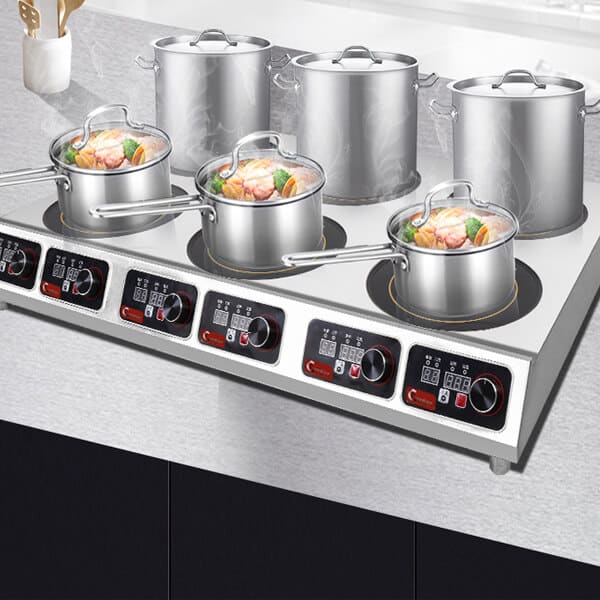
Il numero di zone di cottura è una distinzione primaria tra i piano cottura a induzione commerciale modelli—unità a fuoco singolo (come il QRPT-A10B) vs. cucine multi-zona (2–6 fuochi). Questa differenza influisce direttamente su quanto potete cucinare contemporaneamente, rendendola fondamentale per le cucine con esigenze di volume variabili.
Modelli a fuoco singolo (ad es. QRPT-A10B, entry-level 3.5KW): sono compatti, salvaspazio e ideali per piccole cucine, food truck o come stazioni supplementari. La potenza di 10KW del QRPT-A10B lo rende un'opzione a fuoco singolo per impieghi gravosi—adatta a compiti ad alto volume come l'ebollizione di grandi pentole di zuppa, mentre i fuochi singoli entry-level da 3.5KW funzionano per contorni o catering. Un food truck che utilizza il QRPT-A10B cucina pentole da 40cm di paella per oltre 20 clienti contemporaneamente, grazie alla sua elevata potenza e alle dimensioni compatte di 500×500mm.
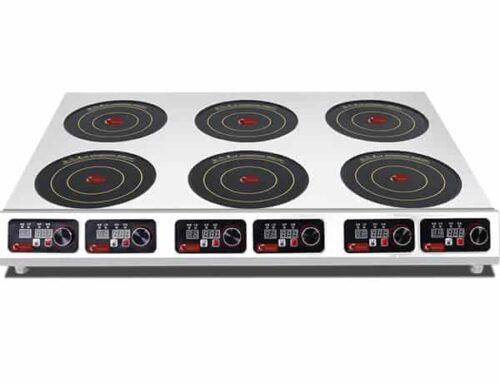
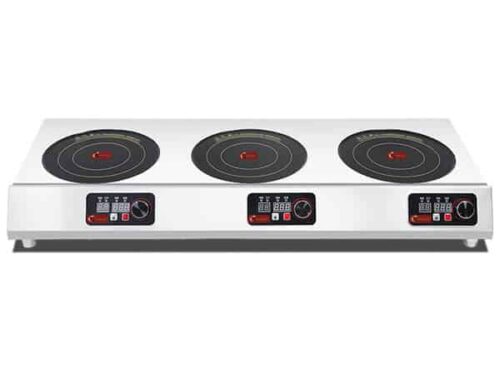
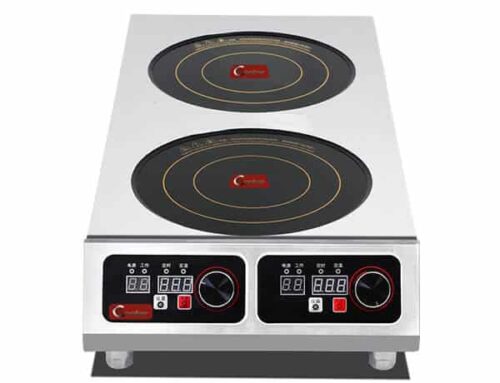
Modelli multi-zona (ad es. AT Cooker BZT-AZH4F a 4 fuochi, BZT-A6C6 a 6 fuochi): sono progettati per cucine commerciali impegnate che necessitano di cucinare più piatti contemporaneamente. Il BZT-AZH4F a 4 fuochi (3.5KW/5KW per zona) ospita 4 pentole da 30cm, mentre il BZT-A6C6 a 6 fuochi gestisce 6 piatti contemporaneamente—perfetto per hotel, buffet o grandi ristoranti. Un hotel che utilizza il BZT-A6C6 serve oltre 300 ospiti a colazione ogni giorno, cucinando uova, bacon e porridge su zone separate senza ritardi.
Principali compromessi tra modelli a fuoco singolo e multi-zona:
- Spazio: i fuochi singoli (500×500mm) si adattano a cucine minuscole; i 6 fuochi (1200×800mm) richiedono più spazio sul bancone.
- Flessibilità: le multi-zone consentono di cucinare piatti diversi contemporaneamente; i fuochi singoli richiedono una cottura sequenziale.
- Costo: I modelli a bruciatore singolo sono più convenienti ($500–$1.000); i modelli a 6 bruciatori costano $2.000–$3.500.
- Potenza: I modelli a bruciatore singolo come il QRPT-A10B offrono una potenza per zona superiore (10KW) rispetto ai modelli multi-zona (max 5KW per zona).
Molte cucine utilizzano una combinazione: un ristorante potrebbe abbinare il QRPT-A10B (per zuppe in grandi quantità) a un piano cottura a 4 bruciatori (per i piatti principali), massimizzando potenza e flessibilità. Questa combinazione consente di gestire i picchi di servizio senza colli di bottiglia.
Alcuni modelli integrano funzioni di memoria programmabile per memorizzare le impostazioni di cottura utilizzate più frequentemente.
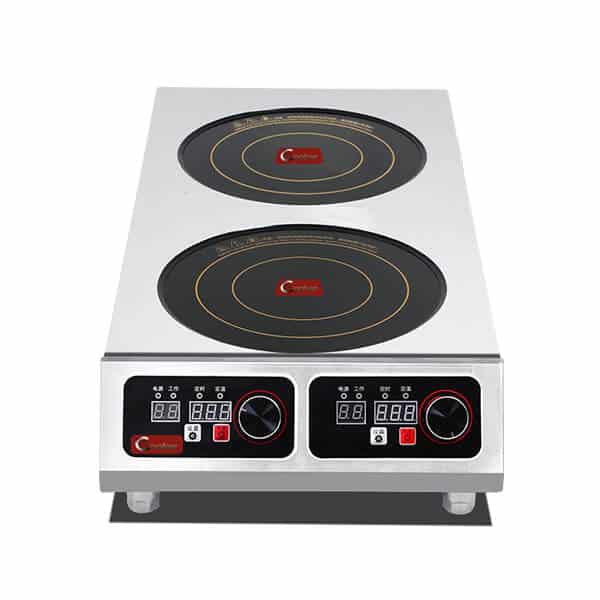
Le funzioni di memoria programmabile sono una caratteristica premium in modelli selezionati, piano cottura a induzione commerciale progettate per risparmiare tempo e garantire coerenza nelle cucine con attività ripetitive. Queste funzioni consentono agli chef di memorizzare da 3 a 10 impostazioni di potenza/temperatura utilizzate frequentemente (ad es. 3KW per saltare in padella, 1KW per la cottura a fuoco lento) e richiamarle con la semplice pressione di un pulsante—eliminando le regolazioni manuali e riducendo l'errore umano.
Nella gamma AT Cooker, i modelli multi-zona di fascia alta come il BZT-A6C6 a 6 bruciatori includono 6 slot di memoria programmabile (uno per zona), mentre il QRPT-A10B a bruciatore singolo ne offre 3. I modelli entry-level (ad es. bruciatore singolo da 3,5KW) non dispongono di questa funzione, richiedendo al personale di reimpostare i parametri per ogni attività. Una catena di ristoranti che utilizza il BZT-A6C6 riporta che le funzioni di memoria riducono i tempi di preparazione del 20%—gli chef non perdono più tempo a regolare i livelli di potenza per piatti standard come pasta o hamburger.
Come funzionano le funzioni di memoria nella pratica: una pizzeria memorizza le seguenti impostazioni sul proprio BZT-A6C6:
- Zona 1: 4KW (per bollire la salsa per pizza)
- Zona 2: 3KW (per sciogliere il formaggio)
- Zona 3: 2KW (per mantenere caldo l'impasto)
- Zone 4–6: Riservate ai piatti del giorno (riprogrammabili facilmente)
All'apertura, il personale preme un unico pulsante “Pizza Prep” per attivare tutte le impostazioni memorizzate—nessuna regolazione manuale necessaria. Questa coerenza garantisce che ogni salsa per pizza sia cotta allo stesso modo, indipendentemente dallo chef in servizio.
Al contrario, un ristorante che utilizza un modello entry-level senza funzioni di memoria si affida al personale per ricordare le impostazioni, causando incoerenze (ad es. salsa troppo cotta in un turno, poco cotta in quello successivo). Questo non solo influisce sulla qualità del cibo ma aumenta anche gli sprechi—fino al 15% dei lotti di salsa veniva scartato prima di passare al BZT-A6C6 dotato di memoria.
Le funzioni di memoria sono particolarmente preziose per catene o ristoranti con menu standardizzati. Una catena di hamburger fast-casual con 20 sedi utilizza i modelli AT Cooker dotati di memoria per garantire che ogni hamburger sia cotto a 3,5KW per 4 minuti—creando un prodotto uniforme in tutte le sedi.
La potenza erogata dei piani cottura a induzione commerciali può variare significativamente, tipicamente da 1.800 a 3.500 watt per bruciatore.

La potenza erogata è uno dei fattori più critici nel confronto tra piano cottura a induzione commerciale modelli—da 1.800W (bruciatore singolo entry-level) a 10.000W (bruciatore singolo heavy-duty come il QRPT-A10B) e 3.500–5.000W per bruciatore per i piani multi-zona. Questa variazione influisce direttamente sulla velocità di cottura, sulla dimensione dei lotti e sui tipi di attività che un modello può gestire.
Modelli entry-level (1.800W–3.500W): Sono progettati per attività leggere come bollire acqua, friggere uova o riscaldare piccole quantità di cibo. Il bruciatore singolo entry-level da 3,5KW di AT Cooker è popolare tra piccoli caffè e food truck, dove spazio e budget sono limitati. Un caffè che utilizza questo modello bolle pentole da 2L di caffè in 5 minuti, il che è sufficiente per il picco mattutino. Tuttavia, fatica con grandi quantità—bollire una pentola da 10L di zuppa richiede 20 minuti, troppo lento per un servizio ad alto volume.
Modelli di fascia media (3.500W–5.000W per bruciatore): I piani multi-zona come il AT Cooker BZT-AZH4F (4 bruciatori, 3,5KW/5KW per zona) rientrano in questa categoria. Bilanciano potenza e flessibilità, adatti a ristoranti di medie dimensioni. I bruciatori da 5KW bollono pentole da 10L di zuppa in 10 minuti, mentre le zone da 3,5KW gestiscono cottura a fuoco lento o frittura. Un ristorante familiare utilizza il BZT-AZH4F per cucinare 4 piatti contemporaneamente—pasta, verdure, salsa e carne—riducendo i tempi di preparazione del 30% rispetto al loro vecchio bruciatore singolo da 3,5KW.
Modelli heavy-duty (5.000W–10.000W): Le unità a bruciatore singolo come il QRPT-A10B (10KW) sono costruite per attività di tipo industriale—scottare grandi carni, bollire pentole da 40cm di zuppa o saltare in wok commerciali. Un ristorante cinese che utilizza il QRPT-A10B cucina wok da 14 pollici di manzo e broccoli in 2 minuti, raggiungendo il calore elevato necessario per il “wok hei” (sapore affumicato). Questa velocità consente di servire oltre 50 piatti al wok all'ora, impossibile con i modelli entry-level.
La potenza erogata influisce anche sull'efficienza energetica—i modelli a wattaggio più elevato come il QRPT-A10B mantengono comunque un'efficienza del 90–95% (rispetto al 45% dei fornelli a gas), quindi una cottura più rapida non significa bollette energetiche più alte. Una steakhouse che utilizza il QRPT-A10B riporta che la loro bolletta elettrica mensile è $200 inferiore rispetto al vecchio fornello a gas, anche se il modello a induzione ha una potenza erogata superiore.
| Modello | Potenza erogata | Tempo di ebollizione (10L di acqua) | Tipo di cucina ideale | Costo energetico mensile (4 ore/giorno) |
|---|---|---|---|---|
| AT Cooker 3.5KW entry-level a fuoco singolo | 500W | 20 minuti | Piccoli caffè, food truck | $80–$100 |
| AT Cooker BZT-AZH4F a 4 bruciatori | 500W/5.000W per zona | 10 minuti (zona 5KW) | Ristoranti di medie dimensioni, hotel | $150–$180 |
| AT Cooker QRPT-A10B a bruciatore singolo | 000W | 5 minuti | Ristoranti ad alto volume, cucine industriali | $120–$150 |
Alcuni modelli avanzati dispongono di rilevamento automatico della pentola e spegnimento automatico per una maggiore sicurezza ed efficienza energetica.
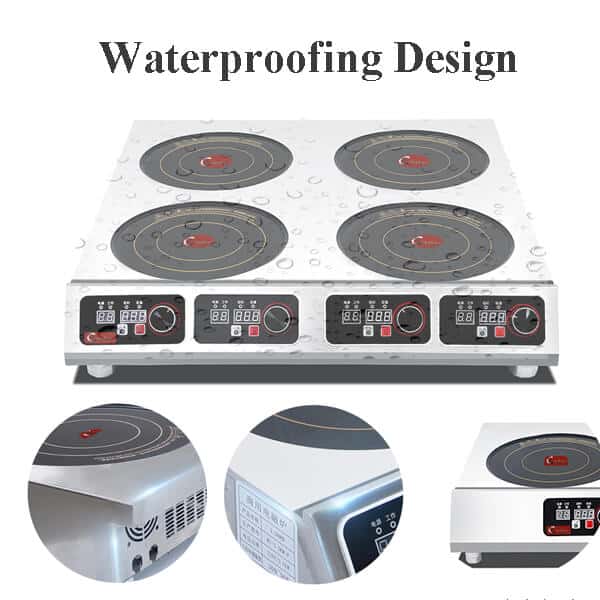
Il rilevamento automatico della pentola e lo spegnimento automatico sono funzioni avanzate di sicurezza/efficienza energetica presenti nei modelli di fascia medio-alta piano cottura a induzione commerciale —inclusi il QRPT-A10B, il BZT-AZH4F e il BZT-A6C6 di AT Cooker. Queste funzioni affrontano due preoccupazioni chiave delle cucine commerciali: prevenire incidenti (ad es. surriscaldamento) e ridurre gli sprechi energetici delle unità inattive.
Rilevamento automatico della pentola: Questa funzione utilizza sensori per rilevare se una pentola compatibile è presente sul bruciatore. Se non è presente alcuna pentola (o se la pentola non è magnetica/troppo piccola), il fornello interrompe l'alimentazione alla zona. Il rilevamento pentola del QRPT-A10B è altamente sensibile: riconosce pentole ≥40cm e ignora alluminio o rame non magnetici. Un ristoratore che utilizza il QRPT-A10B riferisce che questa funzione ha eliminato lo spreco energetico da “bruciatore vuoto”: in precedenza, il personale lasciava accidentalmente accesi i bruciatori a gas, sprecando oltre $100 al mese. Con il QRPT-A10B, le zone inutilizzate si spengono automaticamente, riducendo i costi energetici del 15%.
Spegnimento automatico: Questa funzione spegne il bruciatore dopo un periodo prestabilito di inattività (ad es. 10 minuti senza movimento della pentola) o se il fornello rileva un surriscaldamento (ad es. una pentola a secco). Il QRPT-A10B include due modalità di spegnimento:
- Spegnimento anti-riscaldamento a secco: Si attiva se la pentola bolle a secco, prevenendo danni al fornello e alla pentola. Un panificio che utilizza il QRPT-A10B per sciogliere il burro afferma che questa funzione ha salvato la loro padella in ghisa $200 dalla bruciatura dopo che un membro del personale si è distratto.
- Inactivity shut-off: Turns off the burner if no pan is detected for 10 minutes. A hotel kitchen using this feature reduces overnight energy waste—staff no longer forget to turn off burners after closing.
Entry-level models (e.g., AT Cooker’s 3.5KW basic single-burner) lack these features, relying on manual monitoring. A café using this entry-level model had to replace a burnt pot after a staff member left it on an active burner—costing $50 and causing a 30-minute service delay. Upgrading to the QRPT-A10B eliminated these issues.
Secondo il Associazione Nazionale dei Ristoranti (NRA), automatic safety features reduce kitchen accidents by 40% and energy waste by 20%. AT Cooker’s clients confirm this: a chain of diners using pan detection-equipped models saw a 35% drop in energy bills and zero pan-related accidents in their first year.
Durability and build quality can differ greatly between budget-friendly and premium commercial induction stoves.
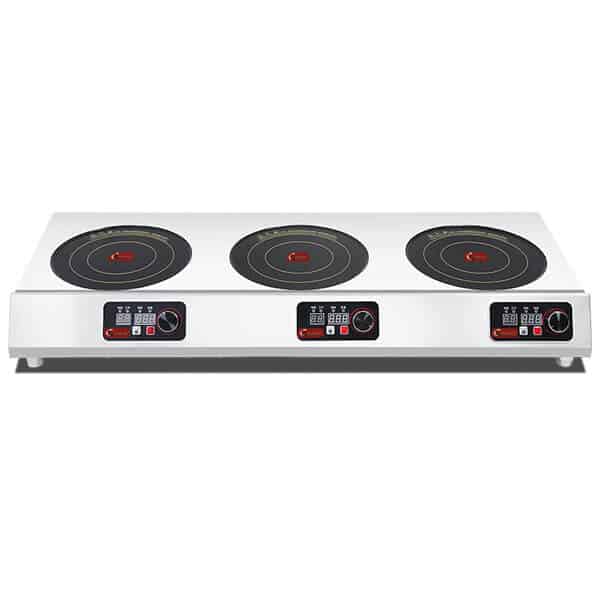
Durability and build quality are make-or-break factors for piano cottura a induzione commerciale models—budget-friendly units often use low-grade materials (thin steel, plastic controls) that wear out in 1–2 years, while premium models like the QRPT-A10B and BZT-A6C6 feature industrial-grade components designed to withstand 5–10 years of heavy commercial use.
Budget-friendly models: These typically have thin stainless steel bodies (≤1mm), plastic control knobs, and basic cooling systems. An entry-level 3.5KW model from a generic brand might cost $300–$500, but it won’t stand up to daily commercial use. A food truck owner reported that their budget stove’s plastic knobs cracked after 6 months, and the steel body rusted within a year—requiring a full replacement for $400. This “cheap” upfront cost turned into frequent expenses.
Premium models (AT Cooker QRPT-A10B, BZT-A6C6): These use 304# stainless steel (2mm thick) for the body—rust-resistant, scratch-resistant, and able to withstand impacts from pots or utensils. The QRPT-A10B’s knobs are made of high-impact plastic with rubber gaskets (waterproof and heat-resistant), and the cooling system features back-mounted powerful fans that prevent overheating. A restaurant using the QRPT-A10B for 3 years reports no rust, no cracked knobs, and only one minor repair (a fan replacement under warranty).
Key build quality differences:
- Superficie del piano cottura: Premium models use 6mm thick tempered glass (resistant to scratches and thermal shock), while budget models use 3mm glass that cracks easily. The QRPT-A10B’s glass surface survived a 2kg pot being dropped on it, while a budget model’s glass shattered under the same impact.
- Internal components: Premium models use German Infineon IGBT modules (for stable power delivery), while budget models use generic modules that fail frequently. The QRPT-A10B’s IGBT module is rated for 10,000+ hours of use, vs. 2,000 hours for budget modules.
- Sealing and waterproofing: Premium models like the QRPT-A10B have IPX4 waterproof ratings (resistant to splashes), while budget models lack proper sealing—liquid can seep into controls and cause short circuits. A café using a budget model had to replace the control board after a sauce spill, costing $150.
While premium models cost more upfront ($1,000–$3,500), they save money in the long run. A hotel that switched from budget stoves to AT Cooker’s premium models reduced replacement costs by 70%—they now replace stoves every 5 years instead of 2.
Build Quality: AT Cooker Premium vs. Budget Stoves
| Componente | AT Cooker QRPT-A10B (Premium) | Budget Commercial Induction Stove | Durata |
|---|---|---|---|
| Materiale corpo | 2mm 304# stainless steel | 1mm low-grade steel | 5–10 years vs. 1–2 years |
| Superficie del piano cottura | 6mm tempered glass (IPX4) | 3mm glass (no waterproofing) | 5+ years vs. 6–12 months |
| Control Knobs | High-impact plastic + rubber gaskets | Basic plastic | 3+ years vs. 3–6 months |
| IGBT Module | German Infineon (10,000+ hours) | Generic (2,000+ hours) | 5+ years vs. 6–12 months |
Certain brands focus on compact designs for space-saving in small commercial kitchens.
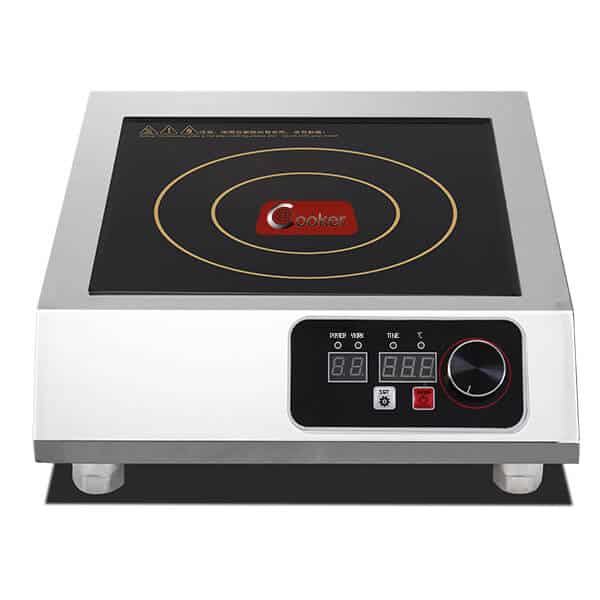
Space is a precious commodity in small commercial kitchens (e.g., food trucks, kiosks, small cafés), so many brands—including AT Cooker—offer piano cottura a induzione commerciale models with compact designs. These units prioritize small footprints without sacrificing critical features like power or safety, making them ideal for tight spaces.
AT Cooker’s compact models include the QRPT-A10B (500×500×350mm) and the 3.5KW entry-level single-burner (480×570×310mm). Both are dual-use (built-in + tabletop), so they can be mounted under counters or used on limited counter space. A food truck owner using the QRPT-A10B says it fits perfectly in their 150sq. ft. truck, leaving room for prep tables and storage—something a 6-burner range (1200×800mm) could never do.
Compact models often include space-saving features like:
- Vertical cooling fans: The QRPT-A10B’s back-mounted fans (instead of side-mounted) reduce width, making it easier to fit between cabinets.
- Detachable power cords: For easy storage when not in use—critical for food trucks that need to maximize space during transport.
- Low profile: The QRPT-A10B’s 350mm height fits under standard commercial counters (≥400mm), unlike tall freestanding ranges.
Despite their small size, compact models like the QRPT-A10B don’t compromise on power. Its 10KW output lets a small sushi restaurant boil 40cm pans of rice in 8 minutes—enough to serve 30+ customers per hour. This is a big advantage over compact gas stoves, which are less powerful and require ventilation (taking up more space).
Comparing compact vs. full-size models:
- Footprint: Compact (500×500mm) vs. full-size 6-burner (1200×800mm)—saves 68% space.
- Installazione: Compact models are plug-and-play; full-size ranges may require hardwiring and extra ventilation.
- Portability: Compact models like the QRPT-A10B are lightweight (25kg) and easy to move; full-size ranges weigh 50–100kg.
A kiosk selling noodles uses the QRPT-A10B as their primary cooking unit—its compact size fits in their 100sq. ft. space, and its 10KW power cooks large batches of noodles quickly. They report that the stove has helped them increase sales by 25% due to faster service.
Some models offer specialized functions like a low-temperature hold feature for delicate sauces or melting chocolate.

Specialized functions like low-temperature hold set high-end piano cottura a induzione commerciale models apart from basic ones. These features are tailored to specific cooking tasks that require precision—like melting chocolate (122℉), simmering delicate sauces (140℉), or keeping food warm (165℉)—and are critical for restaurants with diverse menus (e.g., patisseries, fine-dining establishments).
AT Cooker’s QRPT-A10B and BZT-A6C6 6-burner models include a low-temperature hold function, while entry-level models do not. The QRPT-A10B’s hold function maintains temperatures between 122℉ and 212℉ for hours, with real-time display to ensure accuracy. A patisserie using the QRPT-A10B melts 2kg of chocolate at 122℉ daily—no more seizing or burning, which was a common issue with their old entry-level stove. The hold function also lets them prepare chocolate ganache in advance, saving time during peak service.
How low-temperature hold works in practice: A fine-dining restaurant uses the QRPT-A10B to simmer a red wine reduction at 140℉ for 2 hours. The stove automatically adjusts power to maintain the set temperature, ensuring the sauce thickens evenly without scorching. With an entry-level model, the chef would have to monitor the sauce constantly, adjusting power manually every 10 minutes—taking time away from other tasks.
Other specialized functions in high-end AT Cooker models:
- Boost mode: The BZT-A6C6’s 5KW burners include a 1-minute boost to 6KW for rapid heating—ideal for searing meats or bringing water to a boil quickly. A steakhouse uses this mode to sear steaks in 1 minute, achieving a crispy crust.
- Sous vide mode: The QRPT-A10B can hold temperatures as low as 104℉ for sous vide cooking—perfect for restaurants offering precision-cooked dishes like tender pork chops or poached eggs.
- Timer-linked hold: The BZT-AZH4F’s 4-burner model lets users set a timer (e.g., 30 minutes for soup), then automatically switches to hold mode (165℉) when the timer ends. A catering company uses this to cook soup in advance, knowing it will stay warm until serving.
Entry-level models lack these functions, limiting their versatility. A café that added the QRPT-A10B to their kitchen now offers homemade chocolate desserts and sous vide eggs—menu items they couldn’t handle with their old entry-level stove. This has increased their average order value by $3 per customer.
The user interface complexity varies, with some models featuring simple dial controls and others using digital touchscreens.
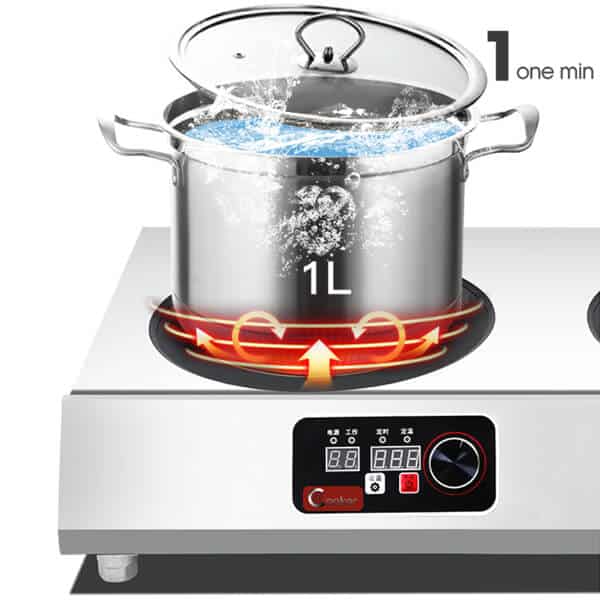
User interface (UI) design is a key differentiator between piano cottura a induzione commerciale models—ranging from simple dial controls (entry-level to mid-range) to advanced digital touchscreens (high-end). This variation impacts ease of use, training time, and the ability to access advanced features.
Simple dial controls: Models like the QRPT-A10B and entry-level 3.5KW single-burner use旋钮 (knob) controls—intuitive, durable, and ideal for kitchens with high staff turnover. The QRPT-A10B’s knobs have clear markings for power levels (1–8) and temperature, so new staff can learn to use the stove in 5 minutes. A diner with frequent staff changes reports that dial controls have reduced training time by 40% compared to their old touchscreen stove. Dials are also waterproof and easy to clean—sauce spills can be wiped off with a damp cloth, no risk of damaging electronic components.
Digital touchscreens: High-end multi-zone models like the BZT-A6C6 6-burner offer touchscreen UIs with features like programmable memory, timer links, and real-time energy usage tracking. The touchscreen displays all zones at once, making it easy to monitor multiple dishes. A hotel kitchen using the BZT-A6C6’s touchscreen says it’s “like having a command center” for their buffet—they can adjust 6 zones simultaneously and save settings for future use. However, touchscreens require more training (1–2 hours for new staff) and are more vulnerable to damage from spills or impacts. A café using a touchscreen model had to replace the screen after a water spill, costing $300.
Key UI tradeoffs:
- Ease of use: Dials are simpler for daily tasks; touchscreens are better for complex functions.
- Durabilità: Dials (mechanical) last 3–5 years; touchscreens (electronic) may need replacement after 2–3 years.
- Feature access: Dials require scrolling to access settings; touchscreens let users tap directly into functions like hold mode or boost.
- Visibility: Dials have physical markings (visible in low light); touchscreens have backlit displays (better for bright kitchens).
AT Cooker offers both options to suit different needs: Dials for small kitchens or those prioritizing simplicity, touchscreens for large operations needing advanced features. A chain of fast-food restaurants uses dial-equipped models (QRPT-A10B) in their locations, while their central kitchen uses a touchscreen BZT-A6C6 for batch cooking—balancing simplicity and functionality across their operations.
High-performance models may include features like boost modes for rapid heating or precision temperature probes.

High-performance piano cottura a induzione commerciale models—like AT Cooker’s QRPT-A10B and BZT-A6C6—incorporate advanced features to enhance speed and precision: boost modes for rapid heating and precision temperature probes for accurate cooking. These features are designed for high-volume or fine-dining kitchens where every second and degree matters.
Boost mode: This feature temporarily increases power output (e.g., from 5KW to 6KW on the BZT-A6C6) for 1–5 minutes, cutting heating time by 30%. The QRPT-A10B’s boost mode pushes its 10KW burner to 11KW for 2 minutes, ideal for searing large cuts of meat or bringing 40cm pans of water to a boil quickly. A steakhouse using the QRPT-A10B’s boost mode sears a 3kg ribeye in 90 seconds—30 seconds faster than without boost—achieving a perfect Maillard reaction (crispy crust) without overcooking the interior.
Boost mode is especially valuable during peak service. A Chinese restaurant using the BZT-AZH4F 4-burner model (with boost) cooks 20% more wok dishes per hour—boosting a 5KW burner to 6KW lets them stir-fry batches in 90 seconds instead of 2 minutes. This speed increase lets them handle rush-hour orders without delays.
Precision temperature probes: High-end models like the BZT-A6C6 offer optional wireless probes that insert into food, sending real-time temperature data to the stove. The stove automatically adjusts power to maintain the target temperature (e.g., 145℉ for medium-rare steak), eliminating guesswork. A fine-dining restaurant using this feature reports that 95% of their steaks are cooked to the correct temperature, up from 75% with manual monitoring. The probes also reduce staff time—chefs no longer need to check meat with a thermometer every minute.
Entry-level and mid-range models lack these features. A café using a 3.5KW entry-level stove takes 3 minutes to boil a 2L pot of water, while the QRPT-A10B with boost does it in 90 seconds. This may seem like a small difference, but it adds up to 10–15 minutes saved per hour during peak service.
These high-performance features also improve food quality. A hotel using the BZT-A6C6’s temperature probes serves consistently cooked lamb chops, which has led to a 15% increase in positive reviews. Guests frequently comment on the “perfectly cooked” meat—a difference that sets the hotel apart from competitors.
Some commercial induction stoves are designed for front-of-house cooking, with sleek designs and quieter operation.

Front-of-house cooking (e.g., open kitchens, buffet stations, or live cooking shows) requires piano cottura a induzione commerciale models that balance performance with aesthetics and quiet operation. These models differ from back-of-house units by featuring sleek designs, low noise levels, and minimal visual clutter—ensuring they enhance the dining experience rather than distract from it.
AT Cooker’s front-of-house models include the QRPT-A10B (compact, sleek design) and the BZT-A6C6 (6-burner with tempered glass surface). Key front-of-house features:
- Sleek aesthetics: The QRPT-A10B’s 304# stainless steel body and black tempered glass surface blend with modern restaurant decor. Unlike industrial-looking back-of-house ranges, it has no exposed vents or bulky controls. A restaurant with an open kitchen reports that customers frequently compliment the “clean, modern look” of the QRPT-A10B.
- Quiet operation: Front-of-house models have enhanced sound-dampening (e.g., insulated cooling fans) to keep noise below 55dB—quieter than a normal conversation. The QRPT-A10B’s fan runs at 50dB, so diners can talk easily even when the stove is in use. Back-of-house models like the BZT-AZH4F are slightly louder (58dB), which is acceptable for busy kitchens but not for front-of-house.
- Low heat emission: Induction stoves heat cookware, not the surrounding air—critical for front-of-house, where guests are nearby. The QRPT-A10B’s surface stays below 150℉ during use, so diners don’t feel overheated. A buffet using the QRPT-A10B for live pasta cooking says guests no longer complain about “hot spots” near the station.
- Easy cleaning: The QRPT-A10B’s seamless glass surface wipes clean in 60 seconds—important for front-of-house, where appearance matters. Staff can quickly clean spills between batches, keeping the station looking tidy.
Back-of-house models lack these features. A restaurant that tried using a back-of-house 4-burner range in their open kitchen received complaints about noise (65dB) and the “industrial look”—they switched to the QRPT-A10B and saw a 10% increase in customer satisfaction.
Front-of-house models also prioritize safety. The QRPT-A10B’s anti-overheating and pan detection features prevent accidents (e.g., burnt pans) that could disrupt the dining experience. A hotel using the QRPT-A10B in their lobby buffet has had zero safety incidents in 2 years, thanks to these features.
Certain models are specifically engineered for heavy-duty use in high-volume commercial kitchens.

High-volume commercial kitchens (e.g., large restaurants, hotels, catering companies) require piano cottura a induzione commerciale models engineered for heavy-duty use—24/7 operation, frequent high-power cooking, and minimal downtime. These models differ from standard units in their robust construction, enhanced cooling systems, and industrial-grade components.
AT Cooker’s heavy-duty models include the QRPT-A10B (10KW single-burner) and BZT-A6C6 (6-burner, 3.5KW/5KW per zone). Key heavy-duty features:
- Industrial-grade components: The QRPT-A10B uses a double-wound induction coil (vs. single-wound in standard models) that withstands 10,000+ hours of use. A catering company using the QRPT-A10B for 12-hour events, 7 days a week, reports no coil degradation after 2 years.
- Enhanced cooling systems: The BZT-A6C6 has 6 independent cooling fans (one per zone) and a heat-dissipating stainless steel body—preventing overheating during extended use. A hotel kitchen using the BZT-A6C6 for 16-hour buffet service has never experienced overheating warnings, unlike their old standard model (which shut down twice weekly).
- High weight capacity: The QRPT-A10B’s glass surface supports pans up to 50kg (vs. 20kg for standard models)—ideal for large stock pots. A soup kitchen using the QRPT-A10B boils 40kg pots of soup daily, with no damage to the stove.
- Quick recovery time: Heavy-duty models regain full power faster after use. The QRPT-A10B returns to 10KW in 30 seconds after boiling a pot of water, vs. 1 minute for standard models. This speed is critical for high-volume service, where every second counts.
Standard models (e.g., 3.5KW entry-level single-burner) can’t handle heavy-duty use. A large restaurant that tried using 4 standard models in their kitchen saw frequent breakdowns—coils failed every 3 months, and fans overheated during peak service. Switching to 2 QRPT-A10B units reduced repairs by 90% and cut downtime from 10 hours monthly to 1 hour.
Heavy-duty models also offer better warranty coverage. AT Cooker’s 5-year warranty for the QRPT-A10B includes parts and labor for industrial use, while standard models have 1–2 year warranties. A hospital kitchen using the QRPT-A10B had a fan replaced under warranty after 3 years—no cost, and the repair was done on-site in 2 hours.
Heavy-Duty vs. Standard AT Cooker Models
| Caratteristica | AT Cooker QRPT-A10B (Heavy-Duty) | AT Cooker 3.5KW Standard Single-Burner | High-Volume Kitchen Benefit |
|---|---|---|---|
| Coil Design | Double-wound (10,000+ hours) | Single-wound (2,000+ hours) | Less frequent coil replacement |
| Sistema di raffreddamento | Dual back fans + heat-dissipating body | Single side fan | No overheating during 24/7 use |
| Weight Capacity | 50kg | 20kg | Handles large stock pots |
| Tempo di recupero | 30 seconds | 60 seconds | Faster cooking during peak service |
| Garanzia | 5 years (industrial use) | 1 year (light use) | Lower long-term repair costs |
The availability of compatible cookware can influence the choice between different induction stove models and brands.

Compatible cookware is a critical, often overlooked factor when comparing piano cottura a induzione commerciale models. Induction cooking requires ferromagnetic cookware (e.g., cast iron, magnetic stainless steel), but specific models may have additional requirements (e.g., minimum pan size, flat bottoms) that vary by brand and power output. These requirements can influence which model you choose, especially if you already have existing cookware.
AT Cooker models have clear cookware compatibility guidelines, making it easy to match stoves to your existing pots and pans:
- QRPT-A10B (10KW single-burner): Requires pans ≥40cm in diameter (to match its large heating zone) and flat bottoms ≥3mm thick (for optimal heat transfer). Magnetic materials (cast iron, 430-series stainless steel) are mandatory. A restaurant with existing 40cm cast iron stock pots found the QRPT-A10B a perfect match—no need to buy new cookware.
- BZT-AZH4F (4-burner, 3.5KW/5KW): Works with pans ≥30cm (standard commercial size) and flat bottoms ≥2mm thick. It’s compatible with most commercial ferromagnetic cookware, including 12–14 inch woks. A Chinese restaurant using existing 30cm woks with the BZT-AZH4F reports no compatibility issues—woks heat evenly and fit perfectly on the burners.
- Entry-level 3.5KW single-burner: Fits pans ≥22cm, making it suitable for small commercial cookware (e.g., 10-inch frying pans). A café with existing 22cm stainless steel pans could use them with the entry-level model, saving $500 on new cookware.
Other brands may have stricter or less clear guidelines. A restaurant that purchased a generic 5KW model found it required pans ≥35cm—their existing 30cm pans didn’t work, forcing them to buy new ones for $800. AT Cooker’s detailed compatibility charts (available on their website and in user manuals) prevent these costly surprises.
For kitchens without existing cookware, AT Cooker offers a range of compatible commercial cookware—cast iron pans, stainless steel pots, and woks—designed to work seamlessly with their stoves. A new restaurant that bought the QRPT-A10B and matching 40cm cast iron pot saved 15% on their cookware purchase (bundle discount) and ensured perfect compatibility.
Compatibility also affects performance. Using incompatible cookware (e.g., non-magnetic aluminum, warped pans) with induction stoves reduces efficiency by 30–40% and can damage the stove. A diner using non-magnetic pans with their QRPT-A10B noticed the stove overheated frequently—switching to magnetic cast iron pans resolved the issue and restored 95% efficiency.
Attrezzatura per Cucine Commerciali – da AT Cooker
- ✔In qualità di produttore a marchio di attrezzature professionali per la cottura a induzione commerciale, AT Cooker ha risposto alle esigenze di ristoranti e hotel e ha sviluppato attrezzature da cucina commerciali normative utilizzando la più recente tecnologia a induzione.
- ✔Queste attrezzature commerciali senza soluzione di continuità, di vera qualità professionale, ci offrono l'opportunità di integrare attrezzature di nostra scelta in un'unica attrezzatura da cucina multiuso senza soluzione di continuità, creando una cucina commerciale efficiente, a basso costo, sicura, ecologica e sostenibile. Disponiamo di attrezzature standard in grado di servire molte cucine commerciali.
- ✔AT Cooker offre sempre un servizio professionale. Dal materiale, al design, alla produzione, ci concentriamo su qualità, prestazioni e affidabilità per garantire la migliore soluzione a ciascuno dei nostri clienti. Hai una cucina commerciale? Saremo uno dei tuoi migliori partner.